Kirjojen hintavertailu. Mukana 11 627 373 kirjaa ja 12 kauppaa.

Kirjahaku

Etsi kirjoja tekijän nimen, kirjan nimen tai ISBN:n perusteella.

1000 tulosta hakusanalla Gary H. Karp

Against Gravity

Against Gravity

Gary Gibson

Tor
2011
pokkari
In the late twenty-first century, you will find a very different world. Little is as it used to be, and many are not what they seem. Kendrick Gallmon, survivor of an infamous research facility called the Maze, is trying to pick up the pieces of his life, even though he knows the Labrat augments are slowly killing him. Then one day his heart stops beating, forever, and a ghost urges him to return to the source of all his nightmares, a long-abandoned military complex filled with entirely real voices of the dead.
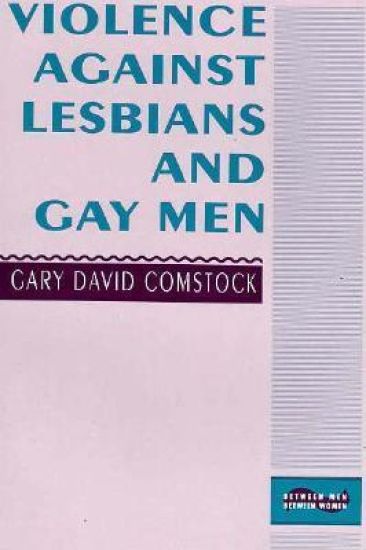
Violence Against Lesbians and Gay Men

Violence Against Lesbians and Gay Men

Gary David Comstock

Columbia University Press
1992
pokkari
Violence Against Lesbians and Gay Men is the first book to reveal the shocking problem of anti-gay/lesbian violence. Beginning with an overview of the emergence of lesbian and gay neighborhoods in major U.S. cities after World War II, Comstock describes how the increased visibility of lesbians and gay men was followed by physical attacks that were illegal but socially sanctioned. He presents results of his survey on present-day violence and then studies the perpetrators, using information supplied by survey participants as well as reports from the media, court records, and personal interviews. Finally, Comstock proposes a sociological explanation for the fact that adolescent males are the group most prone to violence against lesbians and gay men.
The Columbia Guide to Modern Japanese History

The Columbia Guide to Modern Japanese History

Gary Allinson

Columbia University Press
1999
sidottu
Japan's transformation from an isolated society to a military empire and, after a crushing defeat in World War II, into one of the world's foremost economic powers is one of the most fascinating stories of modern history. Although much has been written about modern Japan, no reference book has analyzed its political, economic, social, and cultural history to render a holistic account of the sweeping changes Japan has undergone since 1850. Now, with The Columbia Guide to Modern Japanese History, Gary D. Allinson presents this much-needed learning resource for students of Japanese society and for lay readers seeking to better understand the economic powerhouse of East Asia during the 150 years that have catapulted it to international preeminence. The Columbia Guide to Modern Japanese History is a unique work in which readers will find: * a balanced narrative treating each facet of Japanese history-political, social, economic, and cultural-across four periods covering the years from 1850 to the present; * an encyclopedia-style topical compendium including more than 150 entries on such key subjects as Japan's emperors, political leaders, business enterprises, social organizations, and leading writers; * excerpts from important historical documents; * a chronology and list of prime ministers, providing easy reference to important historical dates, periods, and people; * an annotated guide to further research, including print, film, and electronic resources. Readily accessible to all readers, Allinson's reference will be one that citizens, teachers, students, and academicians will consult often as they seek information on scores of topics. The Columbia Guide to Modern Japanese History will endure as a valuable reference and learning tool for many years to come.
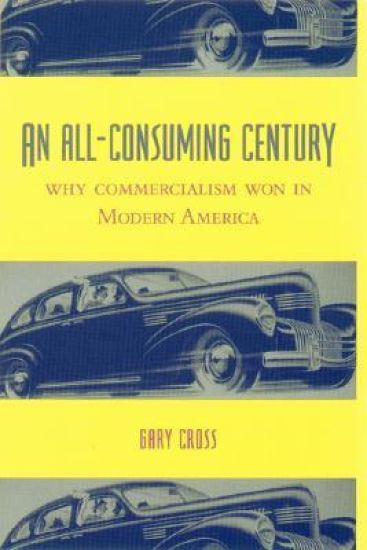
An All-Consuming Century

An All-Consuming Century

Gary Cross

Columbia University Press
2000
sidottu
The unqualified victory of consumerism in America was not a foregone conclusion. The United States has traditionally been the home of the most aggressive and often thoughtful criticism of consumption, including Puritanism, Prohibition, the simplicity movement, the '60s hippies, and the consumer rights movement. But at the dawn of the twenty-first century, not only has American consumerism triumphed, there isn't even an "ism" left to challenge it. An All-Consuming Century is a rich history of how market goods came to dominate American life over that remarkable hundred years between 1900 and 2000 and why for the first time in history there are no practical limits to consumerism. By 1930 a distinct consumer society had emerged in the United States in which the taste, speed, control, and comfort of goods offered new meanings of freedom, thus laying the groundwork for a full-scale ideology of consumer's democracy after World War II. From the introduction of Henry Ford's Model T ("so low in price that no man making a good salary will be unable to own one") and the innovations in selling that arrived with the department store (window displays, self service, the installment plan) to the development of new arenas for spending (amusement parks, penny arcades, baseball parks, and dance halls), Americans embraced the new culture of commercialism-with reservations. However, Gary Cross shows that even the Depression, the counterculture of the 1960s, and the inflation of the 1970s made Americans more materialistic, opening new channels of desire and offering opportunities for more innovative and aggressive marketing. The conservative upsurge of the 1980s and '90s indulged in its own brand of self-aggrandizement by promoting unrestricted markets. The consumerism of today, thriving and largely unchecked, no longer brings families and communities together; instead, it increasingly divides and isolates Americans. Consumer culture has provided affluent societies with peaceful alternatives to tribalism and class war, Cross writes, and it has fueled extraordinary economic growth. The challenge for the future is to find ways to revive the still valid portion of the culture of constraint and control the overpowering success of the all-consuming twentieth century.
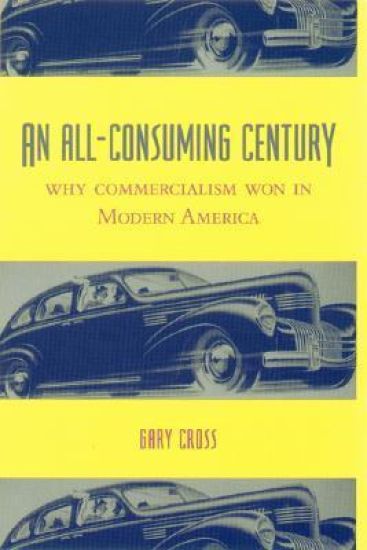
An All-Consuming Century

An All-Consuming Century

Gary Cross

Columbia University Press
2002
pokkari
The unqualified victory of consumerism in America was not a foregone conclusion. The United States has traditionally been the home of the most aggressive and often thoughtful criticism of consumption, including Puritanism, Prohibition, the simplicity movement, the '60s hippies, and the consumer rights movement. But at the dawn of the twenty-first century, not only has American consumerism triumphed, there isn't even an "ism" left to challenge it. An All-Consuming Century is a rich history of how market goods came to dominate American life over that remarkable hundred years between 1900 and 2000 and why for the first time in history there are no practical limits to consumerism. By 1930 a distinct consumer society had emerged in the United States in which the taste, speed, control, and comfort of goods offered new meanings of freedom, thus laying the groundwork for a full-scale ideology of consumer's democracy after World War II. From the introduction of Henry Ford's Model T ("so low in price that no man making a good salary will be unable to own one") and the innovations in selling that arrived with the department store (window displays, self service, the installment plan) to the development of new arenas for spending (amusement parks, penny arcades, baseball parks, and dance halls), Americans embraced the new culture of commercialism-with reservations. However, Gary Cross shows that even the Depression, the counterculture of the 1960s, and the inflation of the 1970s made Americans more materialistic, opening new channels of desire and offering opportunities for more innovative and aggressive marketing. The conservative upsurge of the 1980s and '90s indulged in its own brand of self-aggrandizement by promoting unrestricted markets. The consumerism of today, thriving and largely unchecked, no longer brings families and communities together; instead, it increasingly divides and isolates Americans. Consumer culture has provided affluent societies with peaceful alternatives to tribalism and class war, Cross writes, and it has fueled extraordinary economic growth. The challenge for the future is to find ways to revive the still valid portion of the culture of constraint and control the overpowering success of the all-consuming twentieth century.

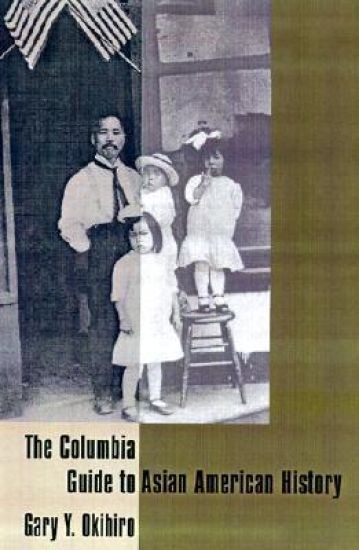
The Columbia Guide to Asian American History

The Columbia Guide to Asian American History

Gary Okihiro

Columbia University Press
2001
sidottu
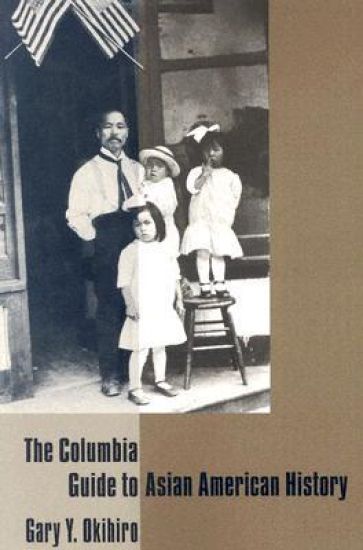
Offering a rich and insightful road map of Asian American history as it has evolved over more than 200 years, this book marks the first systematic attempt to take stock of this field of study. It examines, comments, and questions the changing assumptions and contexts underlying the experiences and contributions of an incredibly diverse population of Americans. Arriving and settling in this nation as early as the 1790s, with American-born generations stretching back more than a century, Asian Americans have become an integral part of the American experience; this cleverly organized book marks the trajectory of that journey, offering researchers invaluable information and interpretation. * Part 1 offers a synoptic narrative history, a chronology, and a set of periodizations that reflect different ways of constructing the Asian American past. * Part 2 presents lucid discussions of historical debates-such as interpreting the anti-Chinese movement of the late 1800s and the underlying causes of Japanese American internment during World War II-and such emerging themes as transnationalism and women and gender issues. * Part 3 contains a historiographical essay and a wide-ranging compilation of book, film, and electronic resources for further study of core themes and groups, including Chinese, Japanese, Filipino, Hmong, Indian, Korean, Vietnamese, and others.
The Columbia Guide to Asian American History

The Columbia Guide to Asian American History

Gary Okihiro

Columbia University Press
2005
pokkari
Offering a rich and insightful road map of Asian American history as it has evolved over more than 200 years, this book marks the first systematic attempt to take stock of this field of study. It examines, comments, and questions the changing assumptions and contexts underlying the experiences and contributions of an incredibly diverse population of Americans. Arriving and settling in this nation as early as the 1790s, with American-born generations stretching back more than a century, Asian Americans have become an integral part of the American experience; this cleverly organized book marks the trajectory of that journey, offering researchers invaluable information and interpretation. * Part 1 offers a synoptic narrative history, a chronology, and a set of periodizations that reflect different ways of constructing the Asian American past. * Part 2 presents lucid discussions of historical debates-such as interpreting the anti-Chinese movement of the late 1800s and the underlying causes of Japanese American internment during World War II-and such emerging themes as transnationalism and women and gender issues. * Part 3 contains a historiographical essay and a wide-ranging compilation of book, film, and electronic resources for further study of core themes and groups, including Chinese, Japanese, Filipino, Hmong, Indian, Korean, Vietnamese, and others.
The Columbia History of American Television

The Columbia History of American Television

Gary Edgerton

Columbia University Press
2007
sidottu
Television is a form of media without equal. It has revolutionized the way we learn about and communicate with the world and has reinvented the way we experience ourselves and others. More than just cheap entertainment, TV is an undeniable component of our culture and contains many clues to who we are, what we value, and where we might be headed in the future. Media historian Gary R. Edgerton follows the technological developments and increasing cultural relevance of TV from its prehistory (before 1947) to the Network Era (1948-1975) and the Cable Era (1976-1994). He begins with the laying of the first telegraph line in 1844, which gave rise to the idea that images and sounds could be transmitted over long distances. He then considers the remodeling of television's look and purpose during World War II; the gender, racial, and ethnic components of its early broadcasts and audiences; its transformation of postwar America; and its function in the political life of the country. He talks of the birth of prime time and cable, the influence of innovators like Sylvester "Pat" Weaver, Roone Arledge, and Ted Turner, as well as television's entrance into the international market, describing the ascent of such programs as Dallas and The Cosby Show, and the impact these exports have had on transmitting American culture abroad. Edgerton concludes with a discerning look at our current Digital Era (1995-present) and the new forms of instantaneous communication that continue to change America's social, political, and economic landscape. Richly researched and engaging, Edgerton's history tracks television's growth into a convergent technology, a global industry, a social catalyst, a viable art form, and a complex and dynamic reflection of the American mind and character. It took only ten years for television to penetrate thirty-five million households, and by 1983, the average home kept their set on for more than seven hours a day. The Columbia History of American Television illuminates our complex relationship with this singular medium and provides historical and critical knowledge for understanding TV as a technology, an industry, an art form, and an institutional force.
The Columbia History of American Television

The Columbia History of American Television

Gary Edgerton

Columbia University Press
2009
pokkari
Television is a form of media without equal. It has revolutionized the way we learn about and communicate with the world and has reinvented the way we experience ourselves and others. More than just cheap entertainment, TV is an undeniable component of our culture and contains many clues to who we are, what we value, and where we might be headed in the future. Media historian Gary R. Edgerton follows the technological developments and increasing cultural relevance of TV from its prehistory (before 1947) to the Network Era (1948-1975) and the Cable Era (1976-1994). He begins with the laying of the first telegraph line in 1844, which gave rise to the idea that images and sounds could be transmitted over long distances. He then considers the remodeling of television's look and purpose during World War II; the gender, racial, and ethnic components of its early broadcasts and audiences; its transformation of postwar America; and its function in the political life of the country. He talks of the birth of prime time and cable, the influence of innovators like Sylvester "Pat" Weaver, Roone Arledge, and Ted Turner, as well as television's entrance into the international market, describing the ascent of such programs as Dallas and The Cosby Show, and the impact these exports have had on transmitting American culture abroad. Edgerton concludes with a discerning look at our current Digital Era (1995-present) and the new forms of instantaneous communication that continue to change America's social, political, and economic landscape. Richly researched and engaging, Edgerton's history tracks television's growth into a convergent technology, a global industry, a social catalyst, a viable art form, and a complex and dynamic reflection of the American mind and character. It took only ten years for television to penetrate thirty-five million households, and by 1983, the average home kept their set on for more than seven hours a day. The Columbia History of American Television illuminates our complex relationship with this singular medium and provides historical and critical knowledge for understanding TV as a technology, an industry, an art form, and an institutional force.
The Playful Crowd

The Playful Crowd

Gary Cross; John Walton

Columbia University Press
2005
sidottu
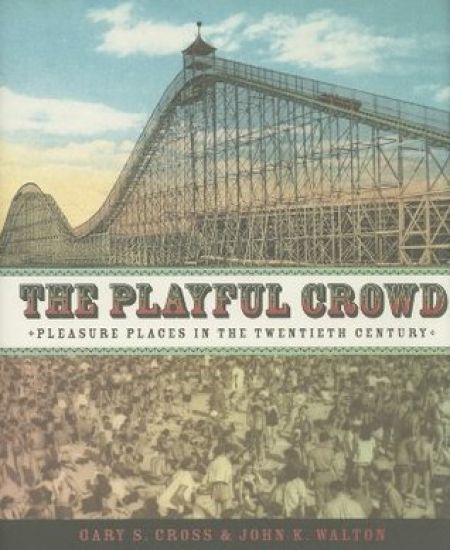
During the first part of the twentieth century thousands of working-class New Yorkers flocked to Coney Island in search of a release from their workaday lives and the values of bourgeois society. On the other side of the Atlantic, British workers headed off to the beach resort of Blackpool for entertainment and relaxation. However, by the middle of the century, a new type of park began to emerge, providing well-ordered, squeaky-clean, and carefully orchestrated corporate entertainment. Contrasting the experiences of Coney Island and Blackpool with those of Disneyland and Beamish, Gary S. Cross and John K. Walton explore playful crowds and the pursuit of pleasure in the twentieth century to offer a transatlantic perspective on changing ideas about leisure, class, and mass culture. Blackpool and Coney Island were the definitive playgrounds of the industrial working class. Teeming crowds partook of a gritty vulgarity that offered a variety of pleasures and thrills from roller coaster rides and freak shows to dance halls and dioramas of exotic locales. Responding to the new money and mobility of the working class, the purveyors of Coney Island and Blackpool offered the playful crowd an "industrial saturnalia."Cross and Walton capture the sights and sounds of Blackpool and Coney Island and consider how these "Sodoms by the sea" flouted the social and cultural status quo. The authors also examine the resorts' very different fates as Coney Island has now become a mere shadow of its former self while Blackpool continues to lure visitors and offer new attractions. The authors also explore the experiences offered at Disneyland and Beamish, a heritage park that celebrates Britain's industrial and social history. While both parks borrowed elements from their predecessors, they also adapted to the longings and concerns of postwar consumer culture. Appealing to middle-class families, Disney provided crowds a chance to indulge in child-like innocence and a nostalgia for a simpler time. At Beamish, crowds gathered to find an escape from the fragmented and hedonistic life of modern society in a reconstructed realm of the past where local traditions and nature prevail.
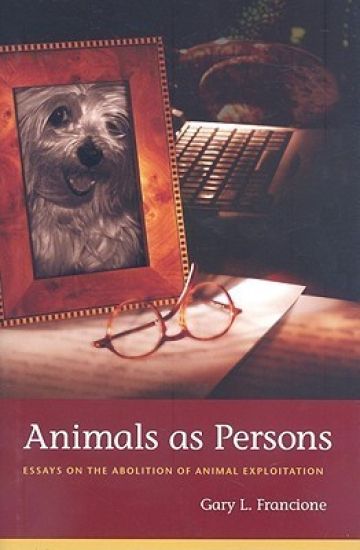
Animals as Persons

Animals as Persons

Gary Francione; Gary Steiner

Columbia University Press
2008
sidottu
A prominent and respected philosopher of animal rights law and ethical theory, Gary L. Francione is known for his criticism of animal welfare laws and regulations, his abolitionist theory of animal rights, and his promotion of veganism and nonviolence as the baseline principles of the abolitionist movement. In this collection, Francione advances the most radical theory of animal rights to date. Unlike Peter Singer, Francione maintains that we cannot morally justify using animals under any circumstances, and unlike Tom Regan, Francione's theory applies to all sentient beings, not only to those who have more sophisticated cognitive abilities.
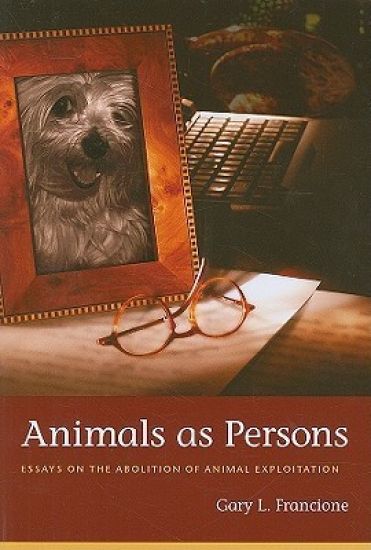
Animals as Persons

Animals as Persons

Gary Francione; Gary Steiner

Columbia University Press
2009
pokkari
A prominent and respected philosopher of animal rights law and ethical theory, Gary L. Francione is known for his criticism of animal welfare laws and regulations, his abolitionist theory of animal rights, and his promotion of veganism and nonviolence as the baseline principles of the abolitionist movement. In this collection, Francione advances the most radical theory of animal rights to date. Unlike Peter Singer, Francione maintains that we cannot morally justify using animals under any circumstances, and unlike Tom Regan, Francione's theory applies to all sentient beings, not only to those who have more sophisticated cognitive abilities.
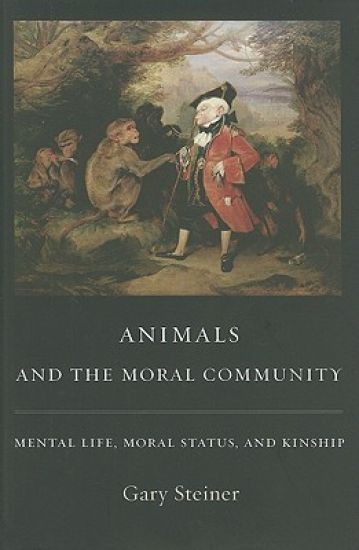
Animals and the Moral Community

Animals and the Moral Community

Gary Steiner

Columbia University Press
2008
sidottu
Gary Steiner argues that ethologists and philosophers in the analytic and continental traditions have largely failed to advance an adequate explanation of animal behavior. Critically engaging the positions of Marc Hauser, Daniel Dennett, Donald Davidson, John Searle, Martin Heidegger, and Hans-Georg Gadamer, among others, Steiner shows how the Western philosophical tradition has forced animals into human experiential categories in order to make sense of their cognitive abilities and moral status and how desperately we need a new approach to animal rights. Steiner rejects the traditional assumption that a lack of formal rationality confers an inferior moral status on animals vis-a-vis human beings. Instead, he offers an associationist view of animal cognition in which animals grasp and adapt to their environments without employing concepts or intentionality. Steiner challenges the standard assumption of liberal individualism according to which humans have no obligations of justice toward animals. Instead, he advocates a "cosmic holism" that attributes a moral status to animals equivalent to that of people. Arguing for a relationship of justice between humans and nature, Steiner emphasizes our kinship with animals and the fundamental moral obligations entailed by this kinship.
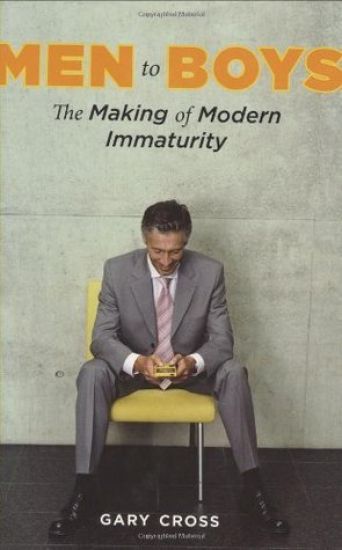
Men to Boys

Men to Boys

Gary Cross

Columbia University Press
2008
sidottu
Adam Sandler movies, HBO's Entourage, and such magazines as Maxim and FHM all trade in and appeal to one character--the modern boy-man. Addicted to video games, comic books, extreme sports, and dressing down, the boy-man would rather devote an afternoon to Grand Theft Auto than plan his next career move. He would rather prolong the hedonistic pleasures of youth than embrace the self-sacrificing demands of adulthood. When did maturity become the ultimate taboo? Men have gone from idolizing Cary Grant to aping Hugh Grant, shunning marriage and responsibility well into their twenties and thirties. Gary Cross, renowned cultural historian, identifies the boy-man and his habits, examining the attitudes and practices of three generations to make sense of this gradual but profound shift in American masculinity. Cross matches the rise of the American boy-man to trends in twentieth-century advertising, popular culture, and consumerism, and he locates the roots of our present crisis in the vague call for a new model of leadership that, ultimately, failed to offer a better concept of maturity. Cross does not blame the young or glorify the past. He finds that men of the "Greatest Generation" might have embraced their role as providers but were confused by the contradictions and expectations of modern fatherhood. Their uncertainty gave birth to the Beats and men who indulged in childhood hobbies and boyish sports. Rather than fashion a new manhood, baby-boomers held onto their youth and, when that was gone, embraced Viagra. Without mature role models to emulate or rebel against, Generation X turned to cynicism and sensual intensity, and the media fed on this longing, transforming a life stage into a highly desirable lifestyle. Arguing that contemporary American culture undermines both conservative ideals of male maturity and the liberal values of community and responsibility, Cross concludes with a proposal for a modern marriage of personal desire and ethical adulthood.
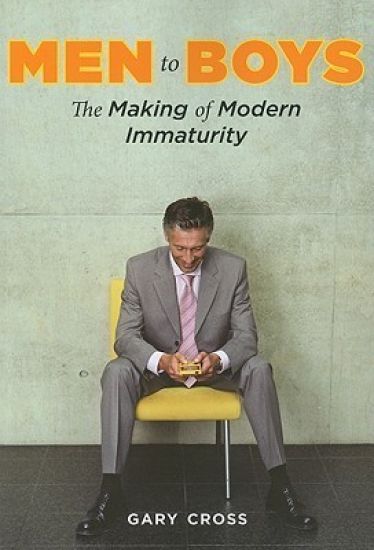
Men to Boys

Men to Boys

Gary Cross

Columbia University Press
2010
pokkari
Adam Sandler movies, HBO's Entourage, and such magazines as Maxim and FHM all trade in and appeal to one character--the modern boy-man. Addicted to video games, comic books, extreme sports, and dressing down, the boy-man would rather devote an afternoon to Grand Theft Auto than plan his next career move. He would rather prolong the hedonistic pleasures of youth than embrace the self-sacrificing demands of adulthood. When did maturity become the ultimate taboo? Men have gone from idolizing Cary Grant to aping Hugh Grant, shunning marriage and responsibility well into their twenties and thirties. Gary Cross, renowned cultural historian, identifies the boy-man and his habits, examining the attitudes and practices of three generations to make sense of this gradual but profound shift in American masculinity. Cross matches the rise of the American boy-man to trends in twentieth-century advertising, popular culture, and consumerism, and he locates the roots of our present crisis in the vague call for a new model of leadership that, ultimately, failed to offer a better concept of maturity. Cross does not blame the young or glorify the past. He finds that men of the "Greatest Generation" might have embraced their role as providers but were confused by the contradictions and expectations of modern fatherhood. Their uncertainty gave birth to the Beats and men who indulged in childhood hobbies and boyish sports. Rather than fashion a new manhood, baby-boomers held onto their youth and, when that was gone, embraced Viagra. Without mature role models to emulate or rebel against, Generation X turned to cynicism and sensual intensity, and the media fed on this longing, transforming a life stage into a highly desirable lifestyle. Arguing that contemporary American culture undermines both conservative ideals of male maturity and the liberal values of community and responsibility, Cross concludes with a proposal for a modern marriage of personal desire and ethical adulthood.
The Animal Rights Debate

The Animal Rights Debate

Gary Francione; Robert Garner

Columbia University Press
2010
sidottu
Gary L. Francione is a law professor and leading philosopher of animal rights theory. Robert Garner is a political theorist specializing in the philosophy and politics of animal protection. Francione maintains that we have no moral justification for using nonhumans and argues that because animals are property--or economic commodities--laws or industry practices requiring "humane" treatment will, as a general matter, fail to provide any meaningful level of protection. Garner favors a version of animal rights that focuses on eliminating animal suffering and adopts a protectionist approach, maintaining that although the traditional animal-welfare ethic is philosophically flawed, it can contribute strategically to the achievement of animal-rights ends. As they spar, Francione and Garner deconstruct the animal protection movement in the United States, the United Kingdom, Europe, and elsewhere, discussing the practices of such organizations as PETA, which joins with McDonald's and other animal users to "improve" the slaughter of animals. They also examine American and European laws and campaigns from both the rights and welfare perspectives, identifying weaknesses and strengths that give shape to future legislation and action.
The Animal Rights Debate

The Animal Rights Debate

Gary Francione; Robert Garner

Columbia University Press
2010
pokkari
Gary L. Francione is a law professor and leading philosopher of animal rights theory. Robert Garner is a political theorist specializing in the philosophy and politics of animal protection. Francione maintains that we have no moral justification for using nonhumans and argues that because animals are property--or economic commodities--laws or industry practices requiring "humane" treatment will, as a general matter, fail to provide any meaningful level of protection. Garner favors a version of animal rights that focuses on eliminating animal suffering and adopts a protectionist approach, maintaining that although the traditional animal-welfare ethic is philosophically flawed, it can contribute strategically to the achievement of animal-rights ends. As they spar, Francione and Garner deconstruct the animal protection movement in the United States, the United Kingdom, Europe, and elsewhere, discussing the practices of such organizations as PETA, which joins with McDonald's and other animal users to "improve" the slaughter of animals. They also examine American and European laws and campaigns from both the rights and welfare perspectives, identifying weaknesses and strengths that give shape to future legislation and action.