Kirjojen hintavertailu. Mukana 11 699 587 kirjaa ja 12 kauppaa.

Kirjahaku

Etsi kirjoja tekijän nimen, kirjan nimen tai ISBN:n perusteella.

1000 tulosta hakusanalla Gene Gordon

A Boy Named Gene

A Boy Named Gene

Louis F Newcomb

iUniverse
2005
pokkari
Gene Ivenetti is a shy, skinny kid of 10. He is constantly harassed and bullied by older peers as a result of his skinny frame. A resilient attitude compels him to fight back. In doing so, he discovers that he has remarkable punching power. Learning to box, he ultimately becomes hurt and lapses into a deep coma lasting two year's. During his personal dilemma, a mysterious person named 'Herbie" enters his young life through crafty notes and elusive phone calls while claiming responsibility for his punching power amongst other unusual oddities. Such as, causing his nemesis to disappear. The enigma of 'Herbie" also causes the modest young boy much frustration since he has never met this so-called 'Herbie" in person. Eventually, the controversial events cause Gene to go from being the neighborhood jackass to a hero in the eyes of the entire neighborhood. His poignant story will amuse, inspire, and captivate the reader with fascination until its astonishing and happy ending.
My Disquiet Gene 5-29-12

My Disquiet Gene 5-29-12

Jerry Heintzberger

Ash Grey
2012
pokkari
With the changing barometer of time, many of us Gays will be more resolute as we accept ourselves as we are amid our intuition. We are healers and doers.I am grateful that I can acknowledge greater concerns. There are core values for human dignity The heartfelt experiences of my early happy home life while being rebellious at a Catholic elementary school may have quickened my spiritual insights.In his autobiography, brother Henry wrote, re St Joseph School," they were happy years for all of us." My undiagnosed disability to learn how to read caused painful learning blocks. Although I felt demoralized re my failure at school, I refused to allow that to dictate my worth. The tentacles of control from the church and school were far reaching. The crazed authoritarians came from the Vatican, the diocese, the local parish.The Apostle's Creed, was repugnant to me as a youngster and appalling to me as a spiritual seeker
The Prophesy Gene

The Prophesy Gene

Stuart D. Schooler

Carleo Publishing LLC
2012
nidottu
While investigating the real-life 1980s Aral Sea environmental disaster in Uzbekistan, doctoral student Sarah and her cousin Michael, a science journalist, discover that while it may be possible to map the human genome, some of the locations are still full of surprises. Under inexplicable conditions, a rare shared genetic trait imposes their trait-sharing ancestors' memories upon them.The first cousins and best friends are bound by more than genetics. Though glib and impulsive, Michael's brilliant ghostwriting masks Sarah's learning disabilities, while alluring and perceptive Sarah helps Michael through his perpetually awkward phase with women. The two pursue individual success, both with and in spite of each other. For Sarah and Michael, their ancestors' memories offer a cryptic roadmap that leads them on a worldwide odyssey revealing tantalizing truths about the earth's ancient history and life's earliest evolution. Sarah embarks on a quest to unlock these secrets, convinced that it will provide her with scientific proof that humankind is destroying itself and the planet with reckless genetic engineering.The cousins' sibling-like banter and steadfast loyalty provide the counterpoint to their divergent agendas. Michael seeks to vindicate his faltering career as an investigative journalist, but he soon learns that his obsession to understand how these memories came to be stored in a massive data center in "the cloud" is far more dangerous. As they awkwardly globetrot from Antarctica, to ancient healing caves of the Inuit people above the Arctic Circle, and then through war-torn Sudan to the toxic sulfur springs of Portugal, Sarah and Michael discover the role that evolution plays in their genetic link to the past. In a stark portrayal of mankind's hubris, to preserve that link they and perhaps much of medical science may have to pay the ultimate price. If you believe that biological and nuclear weapons are the last frontier for global annihilation and that medical science has improved the quality of life, The Prophesy Gene's scientifically valid premise about evolution will have you questioning your entire belief system.
Route Maps in Gene Technology

Route Maps in Gene Technology

Mark Walker; Ralph Rapley

Blackwell Science Ltd
1997
nidottu
Route Maps in Gene Technology is an exciting new introductory textbook for first-year undergraduates in molecular biology and molecular genetics. The subject is broken down into 140 to 150 key concepts or topics, each of which is dealt with in one doublepaged spread. These range from basic introductory principles to applied topics at the cutting edge of research. A control strip along the top of the page shows the student which pages need to have been read beforehand and which topics may be followed afterward. In addition, at the front of the book are a selection of 'routes,' which the student or teacher may choose in order to study a particular topic. Because courses have become more 'modular' and many students arrive at college with little or no biology background, this approach enables teachers and students to structure a course of study to best suit their disparate exposure to biology. An exciting new concept in textbook design, allowing unparalleled flexibility on the part of the student and the teacherCovers the full range of modern molecular biology, from basic principles to the latest applicationsAttractive, clear and simple presentation with copious two-colour illustrations
The Century of the Gene

The Century of the Gene

Evelyn Fox Keller

Harvard University Press
2002
nidottu
In a book that promises to change the way we think and talk about genes and genetic determinism, Evelyn Fox Keller, one of our most gifted historians and philosophers of science, provides a powerful, profound analysis of the achievements of genetics and molecular biology in the twentieth century, the century of the gene. Not just a chronicle of biology’s progress from gene to genome in one hundred years, The Century of the Gene also calls our attention to the surprising ways these advances challenge the familiar picture of the gene most of us still entertain.Keller shows us that the very successes that have stirred our imagination have also radically undermined the primacy of the gene—word and object—as the core explanatory concept of heredity and development. She argues that we need a new vocabulary that includes concepts such as robustness, fidelity, and evolvability. But more than a new vocabulary, a new awareness is absolutely crucial: that understanding the components of a system (be they individual genes, proteins, or even molecules) may tell us little about the interactions among these components.With the Human Genome Project nearing its first and most publicized goal, biologists are coming to realize that they have reached not the end of biology but the beginning of a new era. Indeed, Keller predicts that in the new century we will witness another Cambrian era, this time in new forms of biological thought rather than in new forms of biological life.
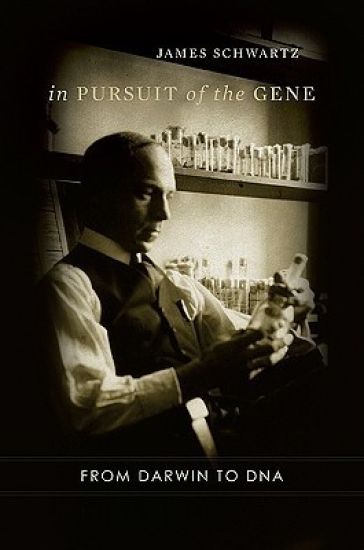
In Pursuit of the Gene

In Pursuit of the Gene

James Schwartz

Harvard University Press
2009
nidottu
The mystery of inheritance has captivated thinkers since antiquity, and the unlocking of this mystery—the development of classical genetics—is one of humanity’s greatest achievements. This great scientific and human drama is the story told fully and for the first time in this book.Acclaimed science writer James Schwartz presents the history of genetics through the eyes of a dozen or so central players, beginning with Charles Darwin and ending with Nobel laureate Hermann J. Muller. In tracing the emerging idea of the gene, Schwartz deconstructs many often-told stories that were meant to reflect glory on the participants and finds that the “official” version of discovery often hides a far more complex and illuminating narrative. The discovery of the structure of DNA and the more recent advances in genome science represent the culmination of one hundred years of concentrated inquiry into the nature of the gene. Schwartz’s multifaceted training as a mathematician, geneticist, and writer enables him to provide a remarkably lucid account of the development of the central ideas about heredity, and at the same time bring to life the brilliant and often eccentric individuals who shaped these ideas.In the spirit of the late Stephen Jay Gould, this book offers a thoroughly engaging story about one of the oldest and most controversial fields of scientific inquiry. It offers readers the background they need to understand the latest findings in genetics and those still to come in the search for the genetic basis of complex diseases and traits.
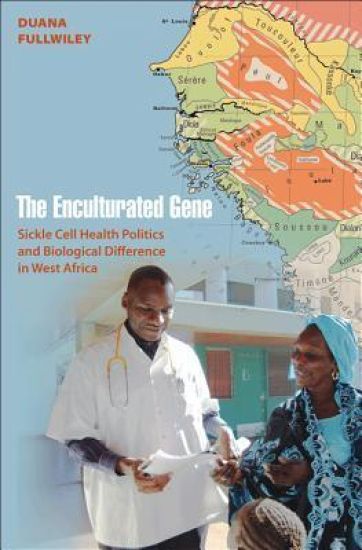
The Enculturated Gene

The Enculturated Gene

Duana Fullwiley

Princeton University Press
2011
pokkari
In the 1980s, a research team led by Parisian scientists identified several unique DNA sequences, or haplotypes, linked to sickle cell anemia in African populations. After casual observations of how patients managed this painful blood disorder, the researchers in question postulated that the Senegalese type was less severe. The Enculturated Gene traces how this genetic discourse has blotted from view the roles that Senegalese patients and doctors have played in making sickle cell "mild" in a social setting where public health priorities and economic austerity programs have forced people to improvise informal strategies of care. Duana Fullwiley shows how geneticists, who were fixated on population differences, never investigated the various modalities of self-care that people developed in this context of biomedical scarcity, and how local doctors, confronted with dire cuts in Senegal's health sector, wittingly accepted the genetic prognosis of better-than-expected health outcomes. Unlike most genetic determinisms that highlight the absoluteness of disease, DNA haplotypes for sickle cell in Senegal did the opposite. As Fullwiley demonstrates, they allowed the condition to remain officially invisible, never to materialize as a health priority. At the same time, scientists' attribution of a less severe form of Senegalese sickle cell to isolated DNA sequences closed off other explanations of this population's measured biological success. The Enculturated Gene reveals how the notion of an advantageous form of sickle cell in this part of West Africa has defined--and obscured--the nature of this illness in Senegal today.
The Spirit Gene

The Spirit Gene

Mark Alan Reynolds

Mark A. Reynolds
2018
pokkari
A molecular biologist travels to the Amazon rainforest to investigate a genomic link to human spirituality....Sparked by a mysterious hallucinogenic experience, Brett Roberts catches his first glimpse of a portal to spiritual awareness. Desperate to find a biological explanation, he enters the field of biotechnology and dabbles in one experiment after another as the field matures. Brett's quest eventually leads him to the indigenous tribes of the Amazon rainforest, where under the guidance of a Yanomami shaman, his next encounter with the drug yopo proves much more enlightening. An answer to the ultimate question is within Brett's grasp, but not if Alfredo Ruiz can prevent it, a nefarious scientist from S o Paulo who has been following Brett's experiments for years.
The Killing Gene

The Killing Gene

E.M. Davey

Duckworth
2019
nidottu
OUT OF AFRICA, INTO DARKNESS... When an archaeologist goes missing in the Congo basin, Professor Randolph Harkness and young tearaway Ross McCartney go in search of her – only to stumble upon a conspiracy to conceal ancient horrors lost to the passage of time. Evading spies and trained killers, can they expose this cover-up? Or will they be buried with it? An unputdownable thriller, The Killing Gene reveals the story of our species, the paradox of the modern mind and our innate predilection for murder...
Narrow Roads of Gene Land: Volume 1: Evolution of Social Behaviour
Why is `blood thicker than water'? Are we innately violent or pacific? What is the best sex ratio? Why are plants and animals sexual? Why do we grow old and die? Over what do our chromosomes quarrel? Such questions have motivated the life-work of W.D. Hamilton, widely acknowledged as the most important theoretical biologist of the 20th century. His papers continue to exert an enormous influence and they are now being republished for the first time. Each one is introduced by an autobiographical essay written especially for this collection. This first volume contains all of Hamilton's publications prior to 1981, a set especially relevant to social behaviour, kinship theory, sociobiology, and the notion of `selfish genes'. It includes several of the most read and famous papers of modern biology. A forthcoming volume will be devoted to the second half of Hamilton's life's work, on sex and sexual selection. Narrow Roads of Gene Land will be welcomed by professionals, graduate students, and undergraduates from a variety of disciplines, including evolution, population genetics, animal behaviour, genetics, anthropology, and ecology. The essays are accessible to non-specialists and will fascinate and entertain general readers with an interest in evolution and behaviour.
Raiding the Gene Pool

Raiding the Gene Pool

Jill Olumide

Pluto Press
2002
pokkari
High profile 'mixed race' stars like Tiger Woods have brought the politics of identity into the mainstream. Jill Olumide argues that we must examine the contradictions inherent in the term 'mixed race' in order to reach a fuller understanding of the variety in human experience and identity. Olumide demonstrates that there are distinctive features of mixed race experience that span time and place. By comparing contemporary experiences of mixed race, collected through interviews and workshops, with those of past populations in different parts of the world, she explains how its meaning alters with national boundary, historical context, class, gender and ethnicity. Showing how different communities are linked by social ambiguity, dependency and the denial of social space, she reveals that the underlying ideology is transformed by social, economic and political change. As mixed race groups across the world call for the right of self-definition, this book reveals that it is through understanding the plurality of the category of mixed race that we are best able to transcend the idea of 'race' and challenge the racial axes of social division.
Raiding the Gene Pool

Raiding the Gene Pool

Jill Olumide

Pluto Press
2002
sidottu
High profile 'mixed race' stars like Tiger Woods have brought the politics of identity into the mainstream. Jill Olumide argues that we must examine the contradictions inherent in the term 'mixed race' in order to reach a fuller understanding of the variety in human experience and identity. Olumide demonstrates that there are distinctive features of mixed race experience that span time and place. By comparing contemporary experiences of mixed race, collected through interviews and workshops, with those of past populations in different parts of the world, she explains how its meaning alters with national boundary, historical context, class, gender and ethnicity. Showing how different communities are linked by social ambiguity, dependency and the denial of social space, she reveals that the underlying ideology is transformed by social, economic and political change. As mixed race groups across the world call for the right of self-definition, this book reveals that it is through understanding the plurality of the category of mixed race that we are best able to transcend the idea of 'race' and challenge the racial axes of social division.
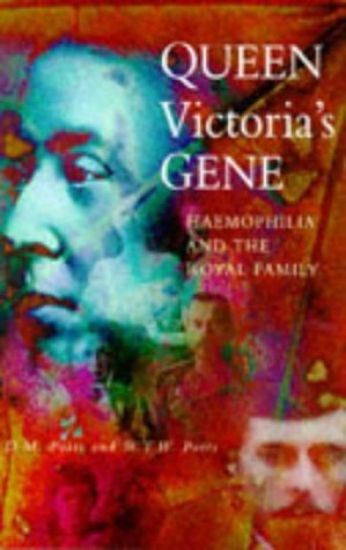
Queen Victoria's Gene

Queen Victoria's Gene

D M Potts; W T W Potts

The History Press Ltd
1999
nidottu
Queen Victoria's son, Prince Leopold, died from haemophilia, but no member of the royal family before his generation had suffered from the condition. Medically, there are only two possibilities: either one of Victoria's parents had a 1 in 50,000 random mutation, or Victoria was the illegitimate child of a haemophiliac man. However the haemophilia gene arose, it had a profound effect on history. Two of Victoria's daughters were silent carriers who passed the disease to the Spanish and Russian royal families. The disease played a role in the origin of the Spanish Civil War; and the tsarina's concern over her only son's haemophilia led to the entry of Rasputin into the royal household, contributing directly to the Russian Revolution. Finally, if Queen Victoria was illegitimate, who should have inherited the British throne? The answer is astonishing.
Genetics and Gene Therapy

Genetics and Gene Therapy

Ashgate Publishing Limited
2005
sidottu
Genetics and Gene Therapy shows the wide range of the debate and the very real significance that genetics and its associated developments have for human beings, individually and collectively. Few areas of science and medicine have resulted in the volume of academic and popular literature as has genetics. The so-called revolution in understanding of the causes of disease states, and even behavioural traits, has focussed public attention on the influence of genes in making us what we are. Rapidly, however, the potential benefits of such understanding were overtaken, in the public mind at least, by the question of the possible (negative) implications of genetic knowledge and associated technologies. The chapters in this volume show just how wide-ranging concern has become, ranging from regulation to cloning, with the fear of discrimination in between. Part One begins with a range of general discussions of about the genetic enterprise itself, followed by consideration of some specific questions. Part Two then addresses cutting edge debates in genetics.
The Selfish Gene Pool

The Selfish Gene Pool

D. M. Wonderly

University Press of America
1996
nidottu
The Selfish Gene Pool was written to encourage dialogue on the issue of the claim that all people are destined to act selfishly in all situations, whether they are aware of it or not, because their fitness in resulting generations depends on it. This book provides an overview of a motivation model designed to support a positive interpretation of altruistic behavior. It specifically denies the claims of sociobiologists' 'selfish gene' theory, and provides a thorough rebuttal of their argument. Unfortunately, the sociobiological analysis of behavior ignores the influence of a moral sense, and the fact that altruistic behavior (which they deny exists) is directed not toward the resident gene, but toward the totality of the relevant gene pool. In spite of the criticism that has been leveled at sociobiologist extremists, nothing has appeared in print that represents an alternative explanation for altruistic behavior.
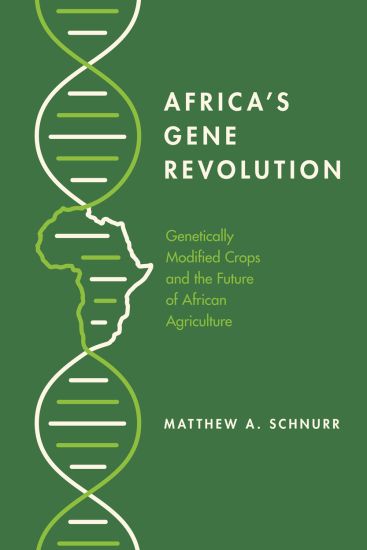
Africa's Gene Revolution

Africa's Gene Revolution

Matthew A. Schnurr

McGill-Queen's University Press
2019
sidottu
As development donors invest hundreds of millions of dollars into improved crops designed to alleviate poverty and hunger, Africa has emerged as the final frontier in the global debate over agricultural biotechnology. The first data-driven assessment of the ecological, social, and political factors that shape our understanding of genetic modification, Africa's Gene Revolution surveys twenty years of efforts to use genomics-based breeding to enhance yields and livelihoods for African farmers. Matthew Schnurr considers the full range of biotechnologies currently in commercial use and those in development - including hybrids, marker-assisted breeding, tissue culture, and genetic engineering. Drawing on interviews with biotechnology experts alongside research conducted with more than two hundred farmers across eastern, western, and southern Africa, Schnurr reveals a profound incongruity between the optimistic rhetoric that accompanies genetic modification technology and the realities of the smallholder farmers who are its intended beneficiaries. Through the lens of political ecology, this book demonstrates that the current emphasis on improved seeds discounts the geographic, social, ecological, and economic contexts in which the producers of these crops operate. Bringing the voices of farmers to the foreground of this polarizing debate, Africa's Gene Revolution contends that meaningful change will come from a reconfiguration not only of the plant's genome, but of the entire agricultural system.
Africa's Gene Revolution

Africa's Gene Revolution

Matthew A. Schnurr

McGill-Queen's University Press
2019
nidottu
As development donors invest hundreds of millions of dollars into improved crops designed to alleviate poverty and hunger, Africa has emerged as the final frontier in the global debate over agricultural biotechnology. The first data-driven assessment of the ecological, social, and political factors that shape our understanding of genetic modification, Africa's Gene Revolution surveys twenty years of efforts to use genomics-based breeding to enhance yields and livelihoods for African farmers. Matthew Schnurr considers the full range of biotechnologies currently in commercial use and those in development - including hybrids, marker-assisted breeding, tissue culture, and genetic engineering. Drawing on interviews with biotechnology experts alongside research conducted with more than two hundred farmers across eastern, western, and southern Africa, Schnurr reveals a profound incongruity between the optimistic rhetoric that accompanies genetic modification technology and the realities of the smallholder farmers who are its intended beneficiaries. Through the lens of political ecology, this book demonstrates that the current emphasis on improved seeds discounts the geographic, social, ecological, and economic contexts in which the producers of these crops operate. Bringing the voices of farmers to the foreground of this polarizing debate, Africa's Gene Revolution contends that meaningful change will come from a reconfiguration not only of the plant's genome, but of the entire agricultural system.
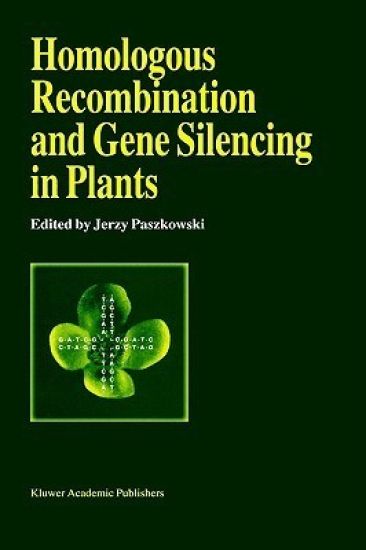
Homologous Recombination and Gene Silencing in Plants
Higher eukaryotes are characterized by the allocation of distinct functions to numerous types of differentiated cells. Whereas in animals the well-defined, protected cells of the germ line separate early, germ cells in plants differentiate from somatic cells only after many cycles of mitotic division. Therefore somatic mutations in plants can be transmitted via the germ cells to the progeny. There is thus a clear need for somatic tissues to maintain their genetic integrity in the face of environmental challenges, and two types of interactions have been shown to play important roles in the conservation as well as flexibility of plant genomes: homologous recombination of repeated sequences and silencing of multiplied genes. Sensitive methods have been developed that allow greater insights into the dynamics of the genome. This book summarizes current knowledge and working hypotheses about the frequencies and mechanisms of mitochondrial, plastid, nuclear and viral recombination and the inactivation of repeated genes in plants. Despite rapid developments in the field, it is often not possible to provide final answers. Thus, it is an additional task of this book to define the open questions and future challenges. The book is addressed to scientists working on plant biology and recombination, to newcomers in the field and to advanced biology students.