Kirjojen hintavertailu. Mukana 11 244 527 kirjaa ja 12 kauppaa.

Kirjahaku

Etsi kirjoja tekijän nimen, kirjan nimen tai ISBN:n perusteella.

1000 tulosta hakusanalla George Barrell Cheever

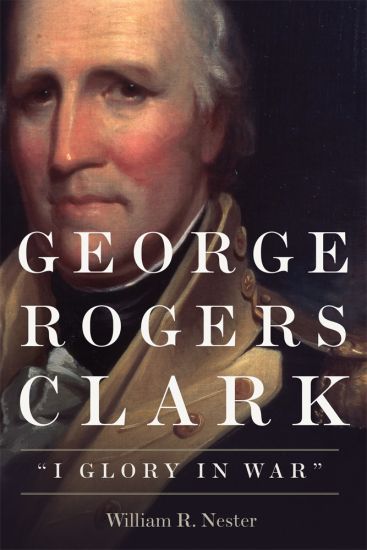
George Rogers Clark

George Rogers Clark

William R. Nester

University of Oklahoma Press
2018
nidottu
George Rogers Clark (1752-1818) led four victorious campaigns against the Indians and British in the Ohio Valley during the American Revolution, but his most astonishing coup was recapturing Fort Sackville in 1779, when he was only twenty-six. For eighteen days, in the dead of winter, Clark and his troops marched through bone-chilling nights to reach the fort. With a deft mix of guile and violence, Clark led his men to triumph, without losing a single soldier. Although historians have ranked him among the greatest rebel commanders, Clark's name is all but forgotten today. William R. Nester resurrects the story of Clark's triumphs and his downfall in this, the first full biography of the man in more than fifty years.Nester attributes Clark's successes to his drive and daring, good luck, charisma, and intellect. Born of a distinguished Virginia family, Clark wielded an acute understanding of human nature, both as a commander and as a diplomat. His interest in the natural world was an inspiration to lifelong friend Thomas Jefferson, who asked him in 1784 to lead a cross-country expedition to the Pacific and back. Clark turned Jefferson down. Two decades later, his youngest brother, William, would become the Clark celebrated as a member of the Corps of Discovery.By the beginning of the nineteenth century, though, George Rogers Clark may not have been fit to command any expedition. After the revolution, he raged against the government and pledged fealty to other nations, leading to his arrest under the Sedition Act.The inner demons that fueled Clark's anger also drove him to excessive drinking. He died at the age of sixty-five, bitter, crippled, and alcoholic. He was, Nester shows, a self-destructive hero: a volatile, multidimensional man whose glorying in war ultimately engaged him in conflicts far removed from the battlefield and against himself.
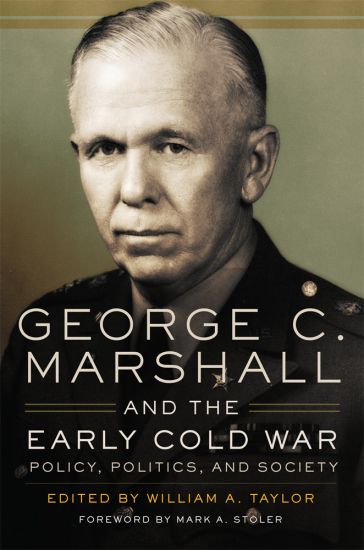
George C. Marshall and the Early Cold War

George C. Marshall and the Early Cold War

Mark A. Stoler

University of Oklahoma Press
2020
nidottu
Though best known for his central part in the American war effort from 1939 to 1945, George C. Marshall's critical role in the early Cold War was probably at least as important in shaping the policies and politics of the postwar western world - and in cementing his place as a pivotal figure in twentieth-century American history. This book places Marshall squarely at the center of the story of the American century by examining his tenure in key policymaking positions during this period, including army chief of staff, special presidential envoy to China, secretary of state, and secretary of defense, among others.George C. Marshall and the Early Cold War brings together a diverse and accomplished group of scholars - including military, diplomatic, and institutional historians - to explore how Marshall, Time magazine's 'Man of the Year' in both 1943 and 1947 and the 1953 Nobel Peace Prize winner, molded debates on all the major issues of his day, such as universal military training, China's civil war, an independent air force, the National Security Act of 1947, nuclear weapons, European Recovery Program, North Atlantic Treaty, Korean War, and racial integration of the U.S. military. With a focus on Marshall's public service at the intersection of American policy, politics, and society, the authors provide a comprehensive historical account of his central role in shaping America during a tumultuous yet formative period in the nation's history. Their work fills a void in the scholarship of American military history and American history generally, providing context for the consideration of broader questions about American power and the place of the military within American society.
George Washington Grayson and the Creek Nation, 1843-1920

George Washington Grayson and the Creek Nation, 1843-1920

Mary Jane Warde

University of Oklahoma Press
2021
nidottu
A confederate soldier, pioneer merchant, rancher, newspaper publisher, and town builder, George Washington Grayson also served for six decades as a leader of the Creek Nation. His life paralleled the most tumultuous events in Creek Indian and Oklahoma history, from the aftermath of the Trail of Tears through World War I.As a diplomat representing the Creek people, Grayson worked to shape Indian policy. As a cultural broker, he explained its ramifications to his people. A self-described progressive who advocated English education, constitutional government, and economic development, Grayson also was an Indian nationalist who appreciated traditional values. When the Creeks faced allotment and loss of sovereignty, Grayson sought ways to accommodate change without sacrificing Indian identity.Mary Jane Warde bases her portrait of Grayson on a wealth of primary and secondary sources, including the extensive writings of Grayson himself.
George Hearst

George Hearst

Matthew Bernstein

University of Oklahoma Press
2021
sidottu
Rising from a Missouri boyhood and meager prospecting success to owning the most productive copper, silver, and gold mines in the world and being elected a United States senator, George Hearst (1820-91) spent decades veering between the heights of prosperity and the depths of financial ruin. In George Hearst: Silver King of the Gilded Age, Matthew Bernstein captures Hearst’s ascent, casting light on his actions during the Civil War, his tempestuous marriage to his cousin Phoebe, his role as disciplinarian and doting father to future media magnate William Randolph Hearst, and his devious methods of building the greatest mining empire in the West. Whether driving a pack of mules laden with silver from the Comstock Lode to San Francisco, bribing jurors in Pioche and Deadwood, or unearthing bonanzas in Utah and Montana Territories, Hearst’s cunning, energy, and industry were always evident, along with occasional glimmers of the villainy ascribed to him in the television series Deadwood. In this first full-length biography, George Hearst emerges in all his human dimensions and historical significance-an ambitious, complex, flawed, and quintessentially American character.
George Hearst

George Hearst

Matthew Bernstein

University of Oklahoma Press
2021
nidottu
Rising from a Missouri boyhood and meager prospecting success to owning the most productive copper, silver, and gold mines in the world and being elected a United States senator, George Hearst (1820-91) spent decades veering between the heights of prosperity and the depths of financial ruin. In George Hearst: Silver King of the Gilded Age, Matthew Bernstein captures Hearst’s ascent, casting light on his actions during the Civil War, his tempestuous marriage to his cousin Phoebe, his role as disciplinarian and doting father to future media magnate William Randolph Hearst, and his devious methods of building the greatest mining empire in the West. Whether driving a pack of mules laden with silver from the Comstock Lode to San Francisco, bribing jurors in Pioche and Deadwood, or unearthing bonanzas in Utah and Montana Territories, Hearst’s cunning, energy, and industry were always evident, along with occasional glimmers of the villainy ascribed to him in the television series Deadwood. In this first full-length biography, George Hearst emerges in all his human dimensions and historical significance-an ambitious, complex, flawed, and quintessentially American character.
George W. Cable

George W. Cable

Arlin Turner

Louisiana State University Press
1966
nidottu
George Washington Cable, compared in his lifetime to Dickens and Daudet and praised in Moscow as a disciple of Turgenev, was more than a local colourist of Creole days in New Orleans. He was a crusader as well - and a crusader for a dangerously unpopular cause. Originally published in 1956 by Duke University Press, this biography won the Charles S. Sydnor Award given by the Southern Historical Association for the best book in Southern History over a two-year period.
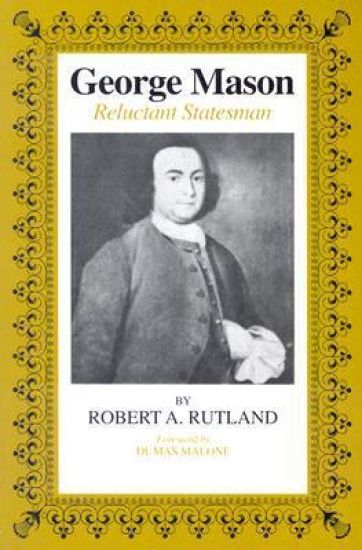
George Mason

George Mason

Robert A. Rutland

Louisiana State University Press
1980
nidottu
George Mason of Gunston Hall was a scholarly craftsman of government during America's crucial formative years. His Virginia Declaration of Rights provided a sense of purpose and direction to the rebellious colonies, and his vigorous insistence on the protection of personal liberties in the Constitution is reflected in the document's first ten amendments, the Bill of Rights. Fellow Virginian Thomas Jefferson said of Mason that he ""was of the first order of greatness.""Few Americans who have served their country, however, have met with as little recognition. Essentially a private person who cared nothing for political prestige, Mason had been overshadowed by the other founders of the Republic, although most of them had turned to him for advice and direction. In a concise, cogently written biography, a distinguished historian restores the ""reluctant statesman"" to his proper place in the pantheon of America's greatest citizens.
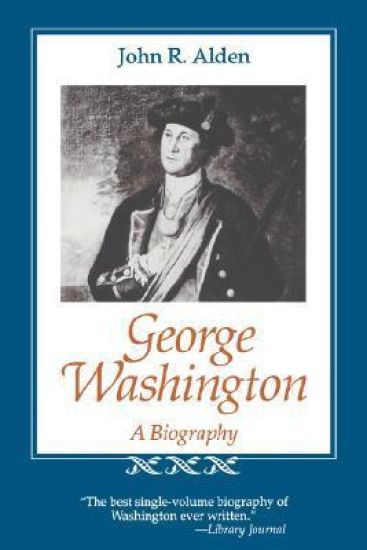
George Washington

George Washington

John Richard Alden

Louisiana State University Press
1996
nidottu
In this highly acclaimed and enduring biography, John R. Alden traces the interwoven histories of George Washington and the nation he helped to create, defend, and guide toward the future. Alden revisits the major events of Washington's personal and professional life, including his boyhood in rural Virginia, his early careers as a surveyor and then a soldier in the French and Indian War, and his staid but lasting marriage. The core of the biography concerns Washington's leadership roles, his assumption of the post of commander in chief of the Continental Army, his part in the Constitutional Convention, and his presidency. As Alden reveals, Washington's greatness lay in his total devotion to the cause of the American nation and in his wisdom as a leader.
George Henry White

George Henry White

Benjamin R. Justesen; G. K. Butterfield

Louisiana State University Press
2012
nidottu
Although he was one of the most important African American political leaders during the last decade of the nineteenth century, George Henry White has been one of the least remembered. A North Carolina representative from 1897 to 1901, White was the last man of his race to serve in the Congress during the post-Reconstruction period, and his departure left a void that would go unfilled for nearly thirty years. At once the most acclaimed and reviled symbol of the freed slaves whose cause he heralded, White remains today largely a footnote to history. In this exhaustively researched biography, Benjamin R. Justesen rescues from obscurity the fascinating story of this compelling figure's life and accomplishments.The mixed-race son of a free turpentine farmer, White became a teacher, lawyer, and prosecutor in rural North Carolina. From these modest beginnings he rose in 1896 to become the only black member of the House of Representatives and perhaps the most nationally visible African American politician of his time. White was outspoken in his challenge to racial injustice, but, as Justesen shows, he was no militant racial extremist as antagonistic white democrats charged. His plea was always for simple justice in a nation whose democratic principles he passionately loved. A conservative by philosophy, he was a dedicated Republican to the end. After he retired from Congress, he remained active in the fight against racial discrimination, working with national leaderas of both races, from Booker T. Washington to the founders of the NAACP. Through judicious use of public documents, White's speeches, newspapers, letters, and secondary sources, Justesen creates an authoritative and balanced portrait of this complex man and proves him to be a much more effective leader than previously believed.
George Washington Carver

George Washington Carver

Christina Vella

LOUISIANA STATE UNIVERSITY PRESS
2022
pokkari
Nearly every American can cite at least one of the accomplishments of George Washington Carver. The many tributes honoring his contributions to scientific advancement and black history include a national monument bearing his name, a U.S.-minted coin featuring his likeness, and induction into the National Inventors Hall of Fame. Born into slavery, Carver earned a master's degree at Iowa State Agricultural College and went on to become that university's first black faculty member. A keen painter who chose agricultural studies over art, he focused the majority of his research on peanuts and sweet potatoes. His scientific breakthroughs with the crops—both of which would replenish the cotton-leached soil of the South—helped spare multitudes of sharecroppers from poverty. Despite Carver's lifelong difficulties with systemic racial prejudice, when he died in 1943, millions of Americans mourned the passing of one of the nation's most honored and well-known scientists. Scores of children's books celebrate the contributions of this prolific botanist, but no biographer has fully examined both his personal life and career until now.Christina Vella offers a thorough biography of George Washington Carver, including in-depth details of his relationships with his friends, colleagues, supporters, and those he loved. Despite the exceptional trajectory of his career, Carver was not immune to the racism of the Jim Crow era or the privations and hardships of the Great Depression and two world wars. Yet throughout this tumultuous period, his scientific achievements aligned him with equally extraordinary friends, including Teddy Roosevelt, Mohandas Gandhi, Henry A. Wallace, and Henry Ford.In pursuit of the man behind the historical figure, Vella discovers an unassuming intellectual with a quirky sense of humor, striking eccentricities, and an unwavering religious faith. She explores Carver's anguished dealings with Booker T. Washington across their nineteen years working together at the Tuskegee Institute—a turbulent partnership often fraught with jealousy. Uneasy in personal relationships, Carver lost one woman he loved to suicide and, years later, directed his devotion toward a white man.A prodigious and generous scholar whose life was shaped by struggle and heartbreak as well as success and fame, George Washington Carver remains a key figure in the history of southern agriculture, botanical advancement, and the struggle for civil rights. Vella's extensively researched biography offers a complex and compelling portrait of one of the most brilliant men of the last century.
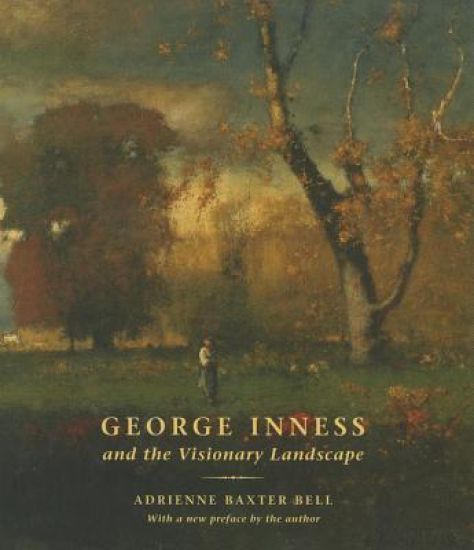
George Inness and the Visionary Landscape

George Inness and the Visionary Landscape

Adrienne Baxter Bell

George Braziller Inc
2015
sidottu
This eloquent examination of Innes's most important paintings illuminates the artist's philosophical and religious preoccupations. It provides an overview of his life and situates Inness within the contexts of key issues in American history, such as the Hudson River School, Transcendentalism, Swedenborgianism, and the work of William James. It explains for the first time how Inness treated landscape painting as a form of philosophical inquiry that could communicate his holistic belief in the unity of nature and spirit. "Bell's handsomely illustrated, eloquently written, and well-documented text considerably expands previous scholarship...[A] firstrate study. Highly recommended." Choice
George Croghan

George Croghan

Wainwright Nicholas B.

The University of North Carolina Press
2012
nidottu
George Croghan--land speculator, Indian trader, and prominent Indian agent--was a man of fascinating, if dubious, character whose career epitomized the history of the West before the Revolution. This study is based on Croghan's long-lost personal papers that were found by the author in an old Philadelphia attic.Originally published in 1959.A UNC Press Enduring Edition -- UNC Press Enduring Editions use the latest in digital technology to make available again books from our distinguished backlist that were previously out of print. These editions are published unaltered from the original, and are presented in affordable paperback formats, bringing readers both historical and cultural value.
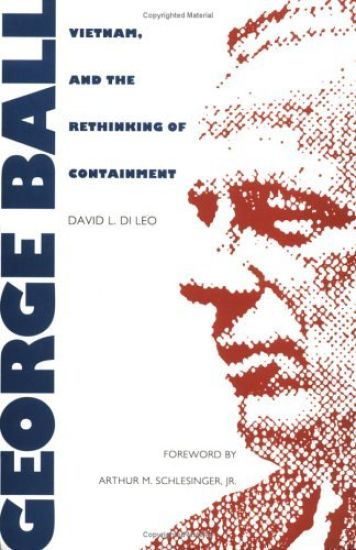
George Ball, Vietnam, and the Rethinking of Containment

George Ball, Vietnam, and the Rethinking of Containment

DiLeo David L.

The University of North Carolina Press
1991
nidottu
During his tenure as undersecretary of state from 1961 to 1966, George Ball was the only presidential adviser who systematically opposed American military intervention in Southeast Asia. In George Ball, Vietnam, and the Rethinking of Containment David DiLeo profiles Ball's opposition to the United States' role in Vietnam and evaluates the impact of this dissent on the Kennedy, Johnson, and Nixon administrations.At the height of the Cold War, Ball questioned the validity of the domino theory and was virtually alone in challenging the idea that containment was an attainable or even desirable goal of American foreign policy. He asserted that the nation's foreign policy must respect material as well as moral limitations, and he was skeptical of the use of military power as a political instrument. American intervention in Vietnam, he believed, was the inevitable and tragic consequence of the uncritical globalism that had marked the thinking of policymakers since World War II.DiLeo analyzes Ball's contention that Presidents Kennedy and Johnson exaggerated the global significance of the Vietnam conflict by perceiving it as a struggle of the Free World against a monolithic communism. He examines Ball's repeated warnings about the futility of strategic bombing and his sobering assertions about the possibility of Chinese and Soviet intervention, assesses the influence of his bold declarations that the United States would be defeated, and traces his frustrated quest to find another advisor within the Johnson administration to confirm these judgments.Proving a comprehensive picture of Ball's actions and motivations, DiLeo draws upon personal papers of key participants in the Kennedy and Johnson administrations, Ball's office telephone transcripts and personal archive, National Security Council memorandums, and more than forty personal interviews. The result is a fascinating book that illuminates why Ball is generally recognized as one of the most original and insightful strategists of the past quarter-century.Originally published in 1991.A UNC Press Enduring Edition - UNC Press Enduring Editions use the latest in digital technology to make available again books from our distinguished backlist that were previously out of print. These editions are published unaltered from the original, and are presented in affordable paperback formats, bringing readers both historical and cultural value.
George Eliot and the Landscape of Time

George Eliot and the Landscape of Time

Mary Wilson Carpenter

The University of North Carolina Press
1986
nidottu
Carpenter discusses apocalytptic narrative schemes in Romola, Adam Bede, Middlemarch, Daniel Deronda, and The Legend of Jubal. In the context of nineteenth-century British interpretation of the prophesies, this study reveals an unsuspected visionary poetics in Eliot's writings and demonstrates that her later works rewrite Protestant apocalyptics in both romantic and satiric styles, suggesting a new approach to Victorian narrative form.A UNC Press Enduring Edition -- UNC Press Enduring Editions use the latest in digital technology to make available again books from our distinguished backlist that were previously out of print. These editions are published unaltered from the original, and are presented in affordable paperback formats, bringing readers both historical and cultural value.
George S. Messersmith

George S. Messersmith

Stiller Jesse

The University of North Carolina Press
2011
nidottu
George Strausser Messersmith (1883-1960) was a favorite of President Franklin D. Roosevelt and the quintessential New Deal diplomat. A voluble, courageous, and indefatigable man, his remarkable career took him to ten posts on three continents. Figuring prominently in European and Latin American policy, his influence also reached the State Department. His life was a crusade for political and economic democracy both at home and abroad.A UNC Press Enduring Edition -- UNC Press Enduring Editions use the latest in digital technology to make available again books from our distinguished backlist that were previously out of print. These editions are published unaltered from the original, and are presented in affordable paperback formats, bringing readers both historical and cultural value.
George W. Smalley

George W. Smalley

The University of North Carolina Press
2012
nidottu
One of the most widely read American foreign correspondents of the nineteenth century, Smalley was greatly admired, especially for his revolutionary handling of war news. Working more than thirty-five years for the New York Tribune and later as American representative for the London Times, he wrote innovative profiles of Theodore Roosevelt and French socialist Louis Blanc; his dispatches from the Battle of Antietam, the 1880 opening of Parliament, and Queen Victoria's Golden Jubilee are examples of the best journalism of the time.A UNC Press Enduring Edition -- UNC Press Enduring Editions use the latest in digital technology to make available again books from our distinguished backlist that were previously out of print. These editions are published unaltered from the original, and are presented in affordable paperback formats, bringing readers both historical and cultural value.
George Herbert

George Herbert

Paulist Press International,U.S.
1981
nidottu
"the publishers should be congratulated for their newest...event. By making sixty of the greatest spiritual classics easily available in their new series, they have done much to further the spiritual renewal of the Church." The Christian World GEORGE HERBERT-THE COUNTRY PARSON, THE TEMPLE edited, with an introduction and foreword by John N. Wall, Jr. preface by A.M. Allchin The Sun arising in the East, Though he give light, and th' East perfume; If they should offer to contest With thy arising, they presume. George Herbert (1593-1633) George Herbert (1593-1633) lived in England during the tempestuous reigns of James I and Charles I that saw the nation racked by conflict among Catholics, Hugh Churchmen, and Puritans. A member of a politically-active family, Herbert rejected a promising career as a member of Parliament for the simple life of a country parson. While busily involved in his pastoral duties he produced works of poetry and prose that have earned him a long-established place in English literary history. Collected here are two works originally published after Herbert's death at Bemerton in 1633: The Country Parson, a prose treatise on the duties, joys, and hardships of a pastor's life; and The Temple, a collection of poems. In them the literary genius of this humble priest whose spirituality was a synthesis of Evangelical and Catholic piety is revealed. Herbert's appeal for today is summed up by A.M. Allchin in his preface to this volume: "Without glossing over the fragility and brokenness of man's experience of life in time, he managed to reaffirm the great unities of Christian faith and prayer. These are the unities which draw together the separated strands in the Christian heritage, which draw together past and present in a living an creative appropriation of tradition." †
George Sanders, Zsa Zsa, and Me

George Sanders, Zsa Zsa, and Me

David R. Slavitt

Northwestern University Press
2009
nidottu
Taking its inspiration from Sanders' own autobiography ""Memoirs of a Professional Cad"" (1960), this book is part witty, bawdy, and irreverent memoir, part moving meditation on the price of fame; like most of David Slavitt's work, it defies easy categorization. In George Sanders, ""Zsa Zsa, and Me"", Slavitt looks back to his career as a film critic in the glamorous - at least superficially - world of 1950s Hollywood, when he traveled in circles that included the talented British actor George Sanders (1906-1972) and his then-wife, Zsa Zsa Gabor, who was talented at, well, being famous. Sanders, who seemed to maintain an ironic detachment from roles that were often beneath him, nonetheless couldn't bear the decline of his later years and committed suicide at the age of sixty-five. Darkly humorous to the end, his note read, 'Dear World, I am leaving because I am bored. I feel I have lived long enough. I am leaving you with your worries in this sweet cesspool. Good luck'. Zsa Zsa, on the other hand, remains in the headlines (with her dubiously named husband Frederic Prinz von Anhalt) at age ninety-two. Although he punctuates his story with witty asides - the author's encounter with Marilyn Monroe is particularly memorable - Slavitt turns a critic's eye toward questions of talent and art, while also tackling the difficult and universal questions of aging, relationships, and mortality.
George Eliot's Religious Imagination

George Eliot's Religious Imagination

Marilyn Orr

Northwestern University Press
2018
nidottu
George Eliot's Religious Imagination addresses the much-discussed question of Eliot’s relation to Christianity in the wake of the sociocultural revolution triggered by the spread of theories of evolution. The standard view is that the author of Middlemarch and Silas Marner “lost her faith” at this time of religious crisis. Orr argues for a more nuanced understanding of the continuity of Eliot’s work, as one not shattered by science, but shaped by its influence.Orr’s wide-ranging and fascinating analysis situates George Eliot in the fertile intellectual landscape of the nineteenth century, among thinkers as diverse as Ludwig Feuerbach, David Strauss, and Søren Kierkegaard. She also argues for a connection between George Eliot and the twentieth-century evolutionary Christian thinker Pierre Teilhard de Chardin. Her analysis draws on the work of contemporary philosopher Richard Kearney as well as writers on mysticism, particularly Karl Rahner.The book takes an original look at questions many believe settled, encouraging readers to revisit George Eliot’s work. Orr illuminates the creative tension that still exists between science and religion, a tension made fruitful through the exercise of the imagination. Through close readings of Eliot's writings, Orr demonstrates how deeply the novelist's religious imagination continued to operate in her fiction and poetry.