Kirjojen hintavertailu. Mukana 11 699 587 kirjaa ja 12 kauppaa.

Kirjahaku

Etsi kirjoja tekijän nimen, kirjan nimen tai ISBN:n perusteella.

1000 tulosta hakusanalla George Cartwright

The Papers of George Washington

The Papers of George Washington

George Washington

University of Virginia Press
1999
sidottu
This volume covers March-September of 1791, when Washington completed a tour of the southern states. On tour and when he returned to the capital, the heads of executive departments regularly reported to him about affairs of state, whilst friends and foreign correspondents sent news from Europe.
George and Martha Washington

George and Martha Washington

Ellen G. Miles (Curator of Painting and Sculpture D.C.)

University of Virginia Press
1999
nidottu
George and Martha Washington sat for about two dozen portraits between 1789 and 1797, collected here in this volume. It suggests that what they all reflect is the great need the new Republic had for portraits of its first chief executive. The book offers a portrait of the original First Couple.
George Washington

George Washington

William M.S. Rasmussen; Robert S. Tilton

University of Virginia Press
1999
nidottu
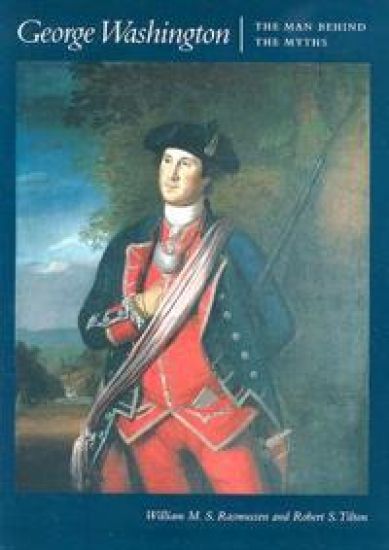
This volume examines the conceptions and misconceptions about George Washington through a collection of documents and images. It includes Washington's own accounts, narratives by the first generation of biographers, and images which were assembled for a major exhibition.
George Washington Reconsidered

George Washington Reconsidered

University of Virginia Press
2001
nidottu
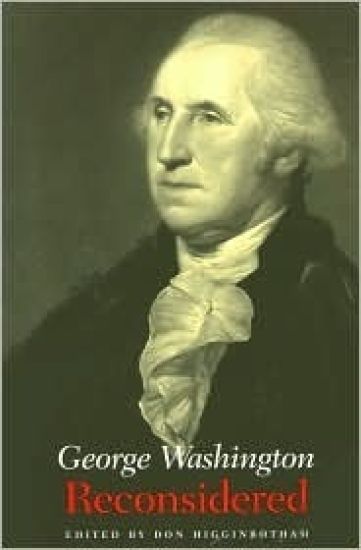
George Washington, heroic general of the Revolution, master of Mount Vemon, and first president of the United States, remains the most enigmatic figure of the founding generation, with historians and the public at large still arguing over the strengths of his character and the nature of his intellectual and political contributions to the early republic. Representing the finest recent scholarship on Washington, these thirteen essays by the leading scholars in the field strike a balance in their focus between Washington's personal life and character and his public life as a soldier and political figure. Editor Don Higginbotham provides an introduction about Washington and his treatment by historians and an afterword devoted to how the American people have viewed Washington, including the 1999 commemorations of the bicentennial of his death. With three essays written specifically for this volume, George Washington Reconsidered is the first collection of its kind to be published in over thirty years.
The Papers of George Washington v.12; Revolutionary War Series;October-December 1777
Volume 12 of the Revolutionary War Series documents Washington's unsuccessful efforts to capitalize on the American victory at Saratoga and his decision to encamp the Continental army for the winter at Valley Forge. The volume opens with the British forces at Philadelphia, where they had returned following the Battle of Germantown, and the Continental army, in Washington's words, ""hovering round them, to distress and retard their operations as much as possible."" Recognizing the importance of restricting communication between General William Howe and the British fleet, Washington dispatched a brigade to New Jersey to assist in the defense of Forts Mifflin and Mercer, key components in the American effort to obstruct the Delaware River. Upon receiving news of the surrender of British general John Burgoyne's army to Major General Horatio Gates at Saratoga, Washington called a council of war to consider his army's options. Although his generals advised against an immediate assault on Philadelphia, Washington perceived an opportunity to defeat Howe and dispatched his aide-de-camp Alexander Hamilton to the northern department to urge upon General Gates the ""absolute necessity"" of sending a ""very considerable"" reinforcement to the main army. If those troops arrived before the British could open a supply route on the Delaware or be reinforced from New York, then the American forces could ""in all probability reduce Genl Howe to the same situation in which Genl Burgoine now is."" There was little further that Washington could do to strengthen the Delaware River defenses, however, and despite the determined efforts of Fort Mifflin's defenders, the Americans were forced to evacuate the fort in mid-November following a sustained bombardment from British land and naval artillery. Moreover, British and Hessian troops from New York arrived before Washington's reinforcement and joined in the British occupation of Fort Mercer a few days later. After the fall of the Delaware River forts, Washington and his generals began extensive deliberations about the related questions of a possible winter campaign and where to quarter the troops for the winter. The generals were nearly unanimous that a winter campaign was not feasible, but they were divided between quartering the troops at Wilmington, Delaware, or in Pennsylvania along a line from Bethlehem to Lancaster. Washington settled on the third option discussed: hutting in the Great Valley of Pennsylvania. Consequently, the volume closes in December with Washington establishing his headquarters at Valley Forge, about twenty miles northwest of Philadelphia.
The Papers of George Washington v.10; Presidential Series;March-August 1792
Volume 10 of the Presidential Series continues the fourth chronological series of The Papers of George Washington. The Presidential Series, when complete, will cover the eight precedent-setting years of Washington's presidency. These volumes present the public papers written by or sent to Washington during his two administrations. Among the documents are Washington's messages to Congress, addresses from public and private bodies, applications for office and letters of recommendation, and documents concerning diplomatic and Indian affairs. Also included are Washington's private papers, consisting of family correspondence, letters to and from friends and acquaintances, and documents relating to the administration of his Mount Vernon plantation and the management of the presidential household. In the period covered by volume 10, the spring and summer of 1792, Washington was busy dealing with a host of foreign and domestic issues. In response to General Arthur St. Clair's disastrous defeat on 4 November 1791, Washington ordered both the preparation of a renewed offensive against the hostile Indian tribes in the Northwest Territory and an attempt to secure peace without further recourse to arms. The first initiative necessitated the selection of a new commanding general and the appointment or promotion of a large number of junior officers. The second induced Washington to invite delegations from several nonhostile Indian nations to Philadelphia in the hopes that they either would support the American military effort or would convince their brethren to make peace with the United States. In addition, both the promulgation of a new French constitution and the recent arrival of the British plenipotentiary George Hammond - who had instructions to settle the outstanding difficulties arising from the Treaty of Paris of 1783 and lay the groundwork for improved Anglo-American commercial relations - required careful handling. Domestically, Washington's veto of the congressional Apportionment Act in April 1792 on the grounds that it was unconstitutional marked the first use of the presidential veto in American history. In the wake of Pierre L'Enfant's dismissal as superintendent of the Federal City, Washington attempted to keep on schedule the construction of the new capital on the Potomac River. Throughout this period Washington wistfully longed to retire to Mount Vernon at the close of his term in office. Although informed by all of his closest advisers that his retirement would have calamitous consequences, Washington instructed James Madison to draft a farewell address for his use if he decided not to stand for reelection.
The Papers of George Washington v. 11; Presidential Series;August 1792-January 1793
Volume 11, which covers the closing months of Washington's first presidential term, opens with Washington at Mount Vernon, tending to both public and private affairs. The implementation of a federal excise tax on domestically produced whiskey provoked opposition that became violent in western Pennsylvania, eliciting Washington's proclamation of 15 September 1792 that called for U.S. citizens to comply peacefully with the law. Returning to Philadelphia in October 1792 for the second session of the Second Congress, Washington encountered a continuing variety of challenges during the fall and early winter. Preparations for war with several of the Indian nations in the Northwest Territory intensified under the leadership of General Anthony Wayne. At the same time, the federal government sponsored a number of peace initiatives to the hostile Indians and attempted to enlist the Iroquois and other Indians as intermediaries in the peace process. Washington also faced problems with Indians in the Southwest Territory and on the frontiers of the southern states who were deeply angered by American incursions on their lands, a hostility that Washington and other American officials believed was encouraged by Spanish agents among the Indians. Washington deplored the growing political factionalism within the United States. He attempted to assuage the increasingly bitter political differences between Alexander Hamilton and Thomas Jefferson, and he also urged Jefferson to delay his resignation as secretary of state. Although Washington continued to long for retirement and a permanent return to Mount Vernon, he reluctantly agreed to serve a second term as president after assuring himself that the public mood of the country favored his staying in office and that his leadership was essential to the success of the new government. The continuing revolution in France and the abolition of the French monarchy provoked a reevaluation of U.S.-French relations by Washington and his cabinet. The current war in Europe, moreover, mandated careful monitoring as Washington sought to maintain the neutral position of the United States. Finally, Washington continued to direct the development of the Federal City and to oversee the management of his estate at Mount Vernon.
Papers George Washington Vol 14 Mar-April 1778

Papers George Washington Vol 14 Mar-April 1778

George Washington

University of Virginia Press
2004
sidottu
Volume 14 of the Revolutionary War Series opens on 1 March 1778 with Washington praising his troops for their "uncomplaining Patience during the scarcity of provisions in Camp" and exhorting them to persevere in the face of any "occasional" shortages that might yet occur. Indeed, the documents generated during these two months of the army's stay at Valley Forge demonstrate that although the crisis had passed, shortages, especially of clothing, continued to concern Washington. The problem was magnified as the commander in chief turned his attention to gathering men and supplies for the upcoming summer campaign. The questionable readiness of the army was a constant theme of his correspondence. The campaign preparations also included training, which was hampered by a serious shortage of officers despite Washington's efforts to discourage resignations and absenteeism. To alleviate that problem, Washington continued to urge Congress to make the reforms that he had recommended to improve the status and organization of the officer corps. Meanwhile, systematic drills commenced under the inspection of Steuben and increased army discipline. Washington and British general William Howe took advantage of the relative inaction of their armies to conduct prisoner exchange negotiations that ultimately broke down over questions about the generals' status and authority, but the months were not without military action. British and American foraging led to significant skirmishes in New Jersey and lesser activity in Pennsylvania. There Washington also wrestled with questions about how to treat those inhabitants who carried goods to sell to the enemy and those, such as the Quakers, who were considered unfriendly to the American cause. The problem of disunity among Americans also leaped to Washington's attention in mid-April when news of a peace initiative in the British Parliament reached Pennsylvania. He urged immediate efforts to counter the "insidious proceeding." By late April, Washington was ready to consult his generals about plans for the ensuing campaign, asking whether it would be best to attempt to drive the British from Philadelphia by assault or siege, to shift the campaign with a strike against New York City, or to remain in camp drilling the army until the British took the field. The generals' replies were instructive, but the "glorious news" of the treaty of alliance with France, which reached Washington as this volume closes, ensured that a subsequent conference, called for early May, would have new factors to consider.
The Papers of George Washington v. 12; Presidential Series;January-May, 1793
Volume 12 of the Presidential Series continues the fourth chronological series of The Papers of George Washington. The Presidential Series, when complete, will cover the eight precedent-setting years of Washington's presidency. This series includes the public papers written by or presented to Washington during his two administrations. Among the documents are Washington's messages to Congress, addresses from public and private bodies, applications for office and letters of recommendation, and documents concerning diplomatic and Indian affairs. Also included are Washington's private papers, consisting of family correspondence, letters to and from friends and acquaintances, and documents relating to the administration of his Mount Vernon plantation and the management of the presidential household. In the period covered by volume 12, mid-January through May 1793, Washington completed his first term as president and began his second term with a modest inauguration ceremony. Washington continued his efforts to keep the United States out of the expanding European war between France and a coalition that now included Great Britain. The behavior of Edmond Genet, the new French minister to the United States, and the presence of French privateers in American waters intensified disagreement among Americans over U.S. foreign policy, especially American obligations under its treaties with France. After extensive consultation with the cabinet, Washington issued a neutrality proclamation in April, but this did little to quell the debate. While the administration made arrangements for a forth-coming peace treaty at Lower Sandusky with the Indians of the Northwest Territory, the U.S. Army under General Anthony Wayne prepared for an Indian war. In addition, Washington monitored the development of the Federal District. He intervened in a dispute between the commissioners for the District of Columbia and their chief surveyor, Andrew Ellicott, and approved the architectural plans for the U.S. Capitol. As always, the president tended to his private financial affairs and the management of his farms at Mount Vernon, a task made more difficult by the death of his nephew and estate manager, George Augustine Washington.
The Papers of George Washington

The Papers of George Washington

George Washington

University of Virginia Press
2006
sidottu
Volume 15 of the ""Revolutionary War Series"" documents a period that includes the Continental Army's last weeks at Valley Forge, the British evacuation of Philadelphia, and the Battle of Monmouth Court House. The volume begins with George Washington's army at Valley Forge, Pennsylvania, celebrating the new alliance between the United States and France. Washington joined in the festivities but did not become complacent, and as the celebrations ended he redirected his attention to winning the war. Over the next few weeks Steuben drilled the soldiers incessantly while Washington and Congress conducted a much-needed overhaul of the army's structure and administration. The benefits of the training became apparent on the evening of 19 May, when a large detachment under Major General Lafayette deftly evaded an attempted British entrapment at Barren Hill, Pennsylvania. Yet Washington had little time to ponder his troops' new efficiency and discipline. The British evacuation of Philadelphia began on the morning of 18 June, as General Henry Clinton's army crossed the Delaware River and marched east-northeast across New Jersey toward a rendezvous with British transport ships at Sandy Hook. The Continentals at first pursued at a respectful distance, but on 24 June Washington overrode the objections of some of his general officers and sent forward a detachment of 5,600 men under Major General Charles Lee to seek opportunities for attack. That opportunity came at Monmouth Court House on 28 June, in the midst of a brutal heat wave that claimed the lives of dozens of soldiers on both sides. Lee's attack at first caught the British by surprise, but General Cornwallis formed up his troops for a counterattack and easily drove Lee's detachment from the field. Washington meanwhile hurried forward with the remainder of his army and encountered Lee and his fleeing troops a short distance west of Monmouth Court House. Berating the dejected Lee for failing to follow orders, Washington stopped the retreat and formed a new line of defense. The remainder of the battle consisted of a series of closely fought encounters as Cornwallis attempted and failed to dislodge the Americans from their positions. That night the British withdrew east with the rest of Clinton's army, marching to Sandy Hook and thence sailing to New York, leaving Washington and his army in possession of the battlefield. Clinton considered the battle a successful delaying action; Washington, with equal certainty, declared it a glorious American victory.