Kirjojen hintavertailu. Mukana 11 699 587 kirjaa ja 12 kauppaa.

Kirjahaku

Etsi kirjoja tekijän nimen, kirjan nimen tai ISBN:n perusteella.

1000 tulosta hakusanalla George Dagg

The Papers of George Washington v.12; Revolutionary War Series;October-December 1777
Volume 12 of the Revolutionary War Series documents Washington's unsuccessful efforts to capitalize on the American victory at Saratoga and his decision to encamp the Continental army for the winter at Valley Forge. The volume opens with the British forces at Philadelphia, where they had returned following the Battle of Germantown, and the Continental army, in Washington's words, ""hovering round them, to distress and retard their operations as much as possible."" Recognizing the importance of restricting communication between General William Howe and the British fleet, Washington dispatched a brigade to New Jersey to assist in the defense of Forts Mifflin and Mercer, key components in the American effort to obstruct the Delaware River. Upon receiving news of the surrender of British general John Burgoyne's army to Major General Horatio Gates at Saratoga, Washington called a council of war to consider his army's options. Although his generals advised against an immediate assault on Philadelphia, Washington perceived an opportunity to defeat Howe and dispatched his aide-de-camp Alexander Hamilton to the northern department to urge upon General Gates the ""absolute necessity"" of sending a ""very considerable"" reinforcement to the main army. If those troops arrived before the British could open a supply route on the Delaware or be reinforced from New York, then the American forces could ""in all probability reduce Genl Howe to the same situation in which Genl Burgoine now is."" There was little further that Washington could do to strengthen the Delaware River defenses, however, and despite the determined efforts of Fort Mifflin's defenders, the Americans were forced to evacuate the fort in mid-November following a sustained bombardment from British land and naval artillery. Moreover, British and Hessian troops from New York arrived before Washington's reinforcement and joined in the British occupation of Fort Mercer a few days later. After the fall of the Delaware River forts, Washington and his generals began extensive deliberations about the related questions of a possible winter campaign and where to quarter the troops for the winter. The generals were nearly unanimous that a winter campaign was not feasible, but they were divided between quartering the troops at Wilmington, Delaware, or in Pennsylvania along a line from Bethlehem to Lancaster. Washington settled on the third option discussed: hutting in the Great Valley of Pennsylvania. Consequently, the volume closes in December with Washington establishing his headquarters at Valley Forge, about twenty miles northwest of Philadelphia.
The Papers of George Washington v.10; Presidential Series;March-August 1792
Volume 10 of the Presidential Series continues the fourth chronological series of The Papers of George Washington. The Presidential Series, when complete, will cover the eight precedent-setting years of Washington's presidency. These volumes present the public papers written by or sent to Washington during his two administrations. Among the documents are Washington's messages to Congress, addresses from public and private bodies, applications for office and letters of recommendation, and documents concerning diplomatic and Indian affairs. Also included are Washington's private papers, consisting of family correspondence, letters to and from friends and acquaintances, and documents relating to the administration of his Mount Vernon plantation and the management of the presidential household. In the period covered by volume 10, the spring and summer of 1792, Washington was busy dealing with a host of foreign and domestic issues. In response to General Arthur St. Clair's disastrous defeat on 4 November 1791, Washington ordered both the preparation of a renewed offensive against the hostile Indian tribes in the Northwest Territory and an attempt to secure peace without further recourse to arms. The first initiative necessitated the selection of a new commanding general and the appointment or promotion of a large number of junior officers. The second induced Washington to invite delegations from several nonhostile Indian nations to Philadelphia in the hopes that they either would support the American military effort or would convince their brethren to make peace with the United States. In addition, both the promulgation of a new French constitution and the recent arrival of the British plenipotentiary George Hammond - who had instructions to settle the outstanding difficulties arising from the Treaty of Paris of 1783 and lay the groundwork for improved Anglo-American commercial relations - required careful handling. Domestically, Washington's veto of the congressional Apportionment Act in April 1792 on the grounds that it was unconstitutional marked the first use of the presidential veto in American history. In the wake of Pierre L'Enfant's dismissal as superintendent of the Federal City, Washington attempted to keep on schedule the construction of the new capital on the Potomac River. Throughout this period Washington wistfully longed to retire to Mount Vernon at the close of his term in office. Although informed by all of his closest advisers that his retirement would have calamitous consequences, Washington instructed James Madison to draft a farewell address for his use if he decided not to stand for reelection.
The Papers of George Washington v. 11; Presidential Series;August 1792-January 1793
Volume 11, which covers the closing months of Washington's first presidential term, opens with Washington at Mount Vernon, tending to both public and private affairs. The implementation of a federal excise tax on domestically produced whiskey provoked opposition that became violent in western Pennsylvania, eliciting Washington's proclamation of 15 September 1792 that called for U.S. citizens to comply peacefully with the law. Returning to Philadelphia in October 1792 for the second session of the Second Congress, Washington encountered a continuing variety of challenges during the fall and early winter. Preparations for war with several of the Indian nations in the Northwest Territory intensified under the leadership of General Anthony Wayne. At the same time, the federal government sponsored a number of peace initiatives to the hostile Indians and attempted to enlist the Iroquois and other Indians as intermediaries in the peace process. Washington also faced problems with Indians in the Southwest Territory and on the frontiers of the southern states who were deeply angered by American incursions on their lands, a hostility that Washington and other American officials believed was encouraged by Spanish agents among the Indians. Washington deplored the growing political factionalism within the United States. He attempted to assuage the increasingly bitter political differences between Alexander Hamilton and Thomas Jefferson, and he also urged Jefferson to delay his resignation as secretary of state. Although Washington continued to long for retirement and a permanent return to Mount Vernon, he reluctantly agreed to serve a second term as president after assuring himself that the public mood of the country favored his staying in office and that his leadership was essential to the success of the new government. The continuing revolution in France and the abolition of the French monarchy provoked a reevaluation of U.S.-French relations by Washington and his cabinet. The current war in Europe, moreover, mandated careful monitoring as Washington sought to maintain the neutral position of the United States. Finally, Washington continued to direct the development of the Federal City and to oversee the management of his estate at Mount Vernon.
Papers George Washington Vol 14 Mar-April 1778

Papers George Washington Vol 14 Mar-April 1778

George Washington

University of Virginia Press
2004
sidottu
Volume 14 of the Revolutionary War Series opens on 1 March 1778 with Washington praising his troops for their "uncomplaining Patience during the scarcity of provisions in Camp" and exhorting them to persevere in the face of any "occasional" shortages that might yet occur. Indeed, the documents generated during these two months of the army's stay at Valley Forge demonstrate that although the crisis had passed, shortages, especially of clothing, continued to concern Washington. The problem was magnified as the commander in chief turned his attention to gathering men and supplies for the upcoming summer campaign. The questionable readiness of the army was a constant theme of his correspondence. The campaign preparations also included training, which was hampered by a serious shortage of officers despite Washington's efforts to discourage resignations and absenteeism. To alleviate that problem, Washington continued to urge Congress to make the reforms that he had recommended to improve the status and organization of the officer corps. Meanwhile, systematic drills commenced under the inspection of Steuben and increased army discipline. Washington and British general William Howe took advantage of the relative inaction of their armies to conduct prisoner exchange negotiations that ultimately broke down over questions about the generals' status and authority, but the months were not without military action. British and American foraging led to significant skirmishes in New Jersey and lesser activity in Pennsylvania. There Washington also wrestled with questions about how to treat those inhabitants who carried goods to sell to the enemy and those, such as the Quakers, who were considered unfriendly to the American cause. The problem of disunity among Americans also leaped to Washington's attention in mid-April when news of a peace initiative in the British Parliament reached Pennsylvania. He urged immediate efforts to counter the "insidious proceeding." By late April, Washington was ready to consult his generals about plans for the ensuing campaign, asking whether it would be best to attempt to drive the British from Philadelphia by assault or siege, to shift the campaign with a strike against New York City, or to remain in camp drilling the army until the British took the field. The generals' replies were instructive, but the "glorious news" of the treaty of alliance with France, which reached Washington as this volume closes, ensured that a subsequent conference, called for early May, would have new factors to consider.
The Papers of George Washington v. 12; Presidential Series;January-May, 1793
Volume 12 of the Presidential Series continues the fourth chronological series of The Papers of George Washington. The Presidential Series, when complete, will cover the eight precedent-setting years of Washington's presidency. This series includes the public papers written by or presented to Washington during his two administrations. Among the documents are Washington's messages to Congress, addresses from public and private bodies, applications for office and letters of recommendation, and documents concerning diplomatic and Indian affairs. Also included are Washington's private papers, consisting of family correspondence, letters to and from friends and acquaintances, and documents relating to the administration of his Mount Vernon plantation and the management of the presidential household. In the period covered by volume 12, mid-January through May 1793, Washington completed his first term as president and began his second term with a modest inauguration ceremony. Washington continued his efforts to keep the United States out of the expanding European war between France and a coalition that now included Great Britain. The behavior of Edmond Genet, the new French minister to the United States, and the presence of French privateers in American waters intensified disagreement among Americans over U.S. foreign policy, especially American obligations under its treaties with France. After extensive consultation with the cabinet, Washington issued a neutrality proclamation in April, but this did little to quell the debate. While the administration made arrangements for a forth-coming peace treaty at Lower Sandusky with the Indians of the Northwest Territory, the U.S. Army under General Anthony Wayne prepared for an Indian war. In addition, Washington monitored the development of the Federal District. He intervened in a dispute between the commissioners for the District of Columbia and their chief surveyor, Andrew Ellicott, and approved the architectural plans for the U.S. Capitol. As always, the president tended to his private financial affairs and the management of his farms at Mount Vernon, a task made more difficult by the death of his nephew and estate manager, George Augustine Washington.
The Papers of George Washington

The Papers of George Washington

George Washington

University of Virginia Press
2006
sidottu
Volume 15 of the ""Revolutionary War Series"" documents a period that includes the Continental Army's last weeks at Valley Forge, the British evacuation of Philadelphia, and the Battle of Monmouth Court House. The volume begins with George Washington's army at Valley Forge, Pennsylvania, celebrating the new alliance between the United States and France. Washington joined in the festivities but did not become complacent, and as the celebrations ended he redirected his attention to winning the war. Over the next few weeks Steuben drilled the soldiers incessantly while Washington and Congress conducted a much-needed overhaul of the army's structure and administration. The benefits of the training became apparent on the evening of 19 May, when a large detachment under Major General Lafayette deftly evaded an attempted British entrapment at Barren Hill, Pennsylvania. Yet Washington had little time to ponder his troops' new efficiency and discipline. The British evacuation of Philadelphia began on the morning of 18 June, as General Henry Clinton's army crossed the Delaware River and marched east-northeast across New Jersey toward a rendezvous with British transport ships at Sandy Hook. The Continentals at first pursued at a respectful distance, but on 24 June Washington overrode the objections of some of his general officers and sent forward a detachment of 5,600 men under Major General Charles Lee to seek opportunities for attack. That opportunity came at Monmouth Court House on 28 June, in the midst of a brutal heat wave that claimed the lives of dozens of soldiers on both sides. Lee's attack at first caught the British by surprise, but General Cornwallis formed up his troops for a counterattack and easily drove Lee's detachment from the field. Washington meanwhile hurried forward with the remainder of his army and encountered Lee and his fleeing troops a short distance west of Monmouth Court House. Berating the dejected Lee for failing to follow orders, Washington stopped the retreat and formed a new line of defense. The remainder of the battle consisted of a series of closely fought encounters as Cornwallis attempted and failed to dislodge the Americans from their positions. That night the British withdrew east with the rest of Clinton's army, marching to Sandy Hook and thence sailing to New York, leaving Washington and his army in possession of the battlefield. Clinton considered the battle a successful delaying action; Washington, with equal certainty, declared it a glorious American victory.
The Papers of George Washington v. 16; July-September 1778

The Papers of George Washington v. 16; July-September 1778

George Washington

University of Virginia Press
2006
sidottu
The massive ""Revolutionary War Series"" (1775-1783) presents in documents and annotation the myriad military and political matters with which Washington dealt during the long war for American independence. Volume 16 documents a time of unusual optimism for Washington and his army. Following the great victory at the Battle of Monmouth, Washington received the welcome news that a French fleet had arrived in American waters. Understanding the advantages usually afforded to the British army by their control of the seas, Washington looked to deliver a decisive blow that might end the war.
The Papers of George Washington  June-August 1793

The Papers of George Washington June-August 1793

George Washington

University of Virginia Press
2007
sidottu
Volume 13 of the ""Presidential Series"" documents the period from 1 June through 31 August 1793, a time when Washington focused his efforts as president on keeping the United States neutral during the war between France and Great Britain. The greatest challenge came from the presence in U.S. ports of both British and French privateers and their prizes. Frequent correspondence with the state governors, especially Thomas Mifflin of Pennsylvania and George Clinton of New York, kept the president informed of the latest arrivals. The cabinet, consisting of Secretary of the Treasury Alexander Hamilton, Secretary of State Thomas Jefferson, Secretary of War Henry Knox, and Attorney General Edmund Randolph, met frequently at Washington's behest, both with and without him. These meetings produced a series of cabinet opinions delineating America's neutrality policy. An effort to solicit the Supreme Court for an opinion on regulations designed to enforce America's neutrality policy, however, failed. The administration also was unsuccessful in its attempt to prosecute American citizens who enlisted for service on French privateers. At the same time, Charles Edmond Genet, the French minister plenipotentiary to the United States, failed to cooperate with the administration's directives concerning French privateers and prizes. This fact, combined with his attempt to influence the American political process, led to the cabinet's decision to ask the French government for Genet's recall. While some Americans opposed the neutrality policies of the administration, others did not, and Washington received numerous letters of support from municipal and civic organizations in the maritime states. Other issues of national concern included Washington's approval of additional foreign loans and the administration's preparations for a peace treaty with hostile Indians in the Northwest Territory. The president also paid considerable attention to the desire of the citizens of South Carolina and Georgia for a military expedition against the Cherokees, Creeks, and other southern Indians. Washington, however, decided against the use of force at this time. In his private life, Washington continued his efforts to manage his Mount Vernon farms while living in Philadelphia. The death of his estate manager in June provided additional anxiety as Washington searched for a replacement. He also continued his role as the patriarch of an extended family. He was particularly engaged in offering advice on estate management to Frances Bassett Washington, the widow of his nephew George Augustine Washington.
The Papers of George Washington  15 September-31 October 1778

The Papers of George Washington 15 September-31 October 1778

George Washington

University of Virginia Press
2008
sidottu
Volume 17 of the ""Revolutionary War Series"" opens with Washington moving his army north from White Plains, New York, into new positions that ran from West Point to Danbury, Connecticut. His purpose in doing so was threefold: to protect his army, to protect the strategically important Hudson highlands, and to shore up the equally vital French fleet anchored at Boston. His new headquarters, located near Fredericksburg, New York, about seventy miles north of New York City, was one of the most obscure of the Revolutionary War. Nevertheless, Washington remained as busy with important tasks during the fall of 1778 as during any other period of the war.It was a time of delicate transition for the new Franco-American alliance and for British strategists yet unwilling to concede defeat. Both circumstances required Washington to exercise the sort of mental agility he had demonstrated during the first three years of the war. Equally pressing were the immediate problems of British raids - threatened and real - in New Jersey and New York and along the extensive American frontier and coastline. Within the Continental army, troubling breakdowns in discipline and morale demanded Washington's close attention, as did the logistical and political difficulties of planning proper troop dispositions for the coming winter - the fourth straight winter that Washington would not see home.Although Washington could not foresee in October 1778 that the British would soon try their hand at conquering the southern states and that the war would last another five years, he sensed that the British Ministry still had both the financial means and the political will to continue the struggle. Ever a realist, Washington recognized that American victory would not come cheaply in what had become a war of attrition as well as an international conflict involving North American, European, and Caribbean theaters. As he had done since 1775, Washington was once more adjusting his thoughts to meet new realities on the long road to American independence.
The Papers of George Washington  1 November 1778 - 14 January 1779

The Papers of George Washington 1 November 1778 - 14 January 1779

George Washington

University of Virginia Press
2008
sidottu
Volume 18 of the ""Revolutionary War"" series covers the period 1 November 1778 through 14 January 1779. It begins with George Washington at Fredericksburg, New York, watching New York City for signs that the British were about to evacuate North America. The British had very different intentions, however, dispatching the first of several amphibious expeditions to invade and conquer the Deep South. Congress meanwhile mulled plans for the formation of a Franco-American army and the invasion of Canada. Washington worked hard to quash these plans, which he considered both impractical and dangerous. On 11 November, he wrote a long letter to Congress laying out the military reasons why the invasion could never succeed.Three days later, he wrote another, private letter to the President of Congress, warning that a French army in Canada might attempt to reestablish France's North American empire, transforming allies into oppressors. While Congress reconsidered and ultimately scrapped its plans, Washington oversaw the transfer of the captive Convention Army from Boston to Charlottesville, Virginia; planned for the dispersal of his own army to winter cantonments across New Jersey; and rode to Philadelphia in late December to open crucial discussions with Congress about the reorganization of the Continental Army and American strategy for the 1779 campaign.
The Papers of George Washington v. 14; 1 September - 31 December 1793
During the last four months of 1793, the period documented by volume 14 of the ""Presidential Series"", George Washington and his administration remained chiefly involved with maintaining the neutrality of the United States. The activities of French privateers in American waters required the administration to respond to requests from state governors for guidance about implementing the neutrality policy and to complaints from British minister George Hammond about seizures of British ships. As a result, the administration had to decide on the extent of America's territorial waters. Another threat to neutrality arose from reports of French-sponsored expeditions into Spanish Florida and Luisiana. These problems were made more difficult by the administration's increasingly public poor relations with French minister Edmond Genet.Other topics of interest include frontier defense and concerns about British retention of northwestern forts; news from Europe, including reports that a truce with Portugal would free corsairs from Algiers to attack American commerce; problems associated with the arrival of refugees from Saint Domingue; and the ubiquitous applications for appointments to federal office. The volume also records the preparation of Washington's annual message - an extended process that involved input from each member of the cabinet.The signature event of these four months, however, was the yellow fever epidemic at Philadelphia. Identified in August, the growing epidemic soon depopulated the city through departures and deaths. Perhaps speeded by the progress of the disease, Washington himself left the city on September 10, making a previously planned trip to Mount Vernon. Some questioned whether Congress could safely meet at the capital in December, and Washington sought advice about whether he had the constitutional power to alter the location at which Congress would convene and about where the government might move. Washington himself took lodgings at Germantown in November, and ultimately, the waning of the disease made action unnecessary.Among personal matters, the management of Mount Vernon claimed much of Washington's attention. He signed a contract with a new farm manager, William Pearce, and his letters to Pearce and to interim manager Howell Lewis convey information and advice. Moreover, in a letter to the English agriculturalist Arthur Young, he broached a proposal to rent out four of the five farms at Mount Vernon to immigrant farmers, describing his estate in considerable detail.
The Papers of George Washington v. 15; 1 January-30 April 1794

The Papers of George Washington v. 15; 1 January-30 April 1794

George Washington

University of Virginia Press
2009
sidottu
Volume 15 documents the period from 1 January through 30 April 1794, a time when Washington continued to focus his efforts as president on preventing the United States from becoming entangled in the continuing war between France and Great Britain. Of particular concern was French and British interference with American shipping, despite claims of neutral rights by the United States. Congress reacted to this problem in late March by declaring a thirty-day embargo on all ships and vessels in American ports, and the Washington administration enforced this resolution, as well as a series of earlier Cabinet decisions regarding the presence of foreign privateers and their prizes in American ports. The threat of U.S. involvement in the war led Congress to pass legislation designed to increase the military strength of the United States. As a result, Washington and Secretary of War Henry Knox directed the construction of coastal fortifications, the establishment of federal armories, and the creation of an American navy. The European war also produced an exodus of refugees to the United States from the French colony of Saint Domingue and a subsequent federal program of monetary relief, which the administration oversaw. The question of neutral rights, the threat of an Indian war in the Northwest Territory, British retention of military posts in American territory, and a desire for a favorable trade agreement prompted Washington to appoint John Jay as envoy extraordinary to Great Britain in order to resolve these issues. At the same time, other U.S. diplomats continued their efforts to reach an understanding with Spain over the right of free navigation of the Mississippi River by Americans, Indian unrest in the Southwest Territory, and the boundary between Georgia and Florida, as well as to obtain a commercial treaty between the two nations. In an effort to manage his Mount Vernon farms while residing in Philadelphia, Washington regularly sent detailed instructions to William Pearce, his newly hired estate manager. Of particular concern were the implementation of a five-year plan of crop rotation designed by Washington in 1793 and the acquisition of a sufficient supply of buckwheat and other seed for spring planting. Washington continued to be a benevolent benefactor for his extended family, particularly his sister, Betty Washington Lewis, and his orphaned niece, Harriot Washington. He also directed the refurbishment of his house in Alexandria, Va., for Frances Bassett Washington, the widow of his nephew George Augustine Washington, and he made arrangements to purchase lots in the new Federal City.
The Papers of George Washington v.19; 15 January - 7 April 1779

The Papers of George Washington v.19; 15 January - 7 April 1779

George Washington

University of Virginia Press
2010
sidottu
The publication of this volume has been supported by a grant from the National Historical Publications and Records Commission. Volume 19 of the ""Revolutionary War Series"" documents Washington's activities during the winter and early spring of 1779, when the bulk of his army was encamped at Middlebrook, New Jersey, strategically situated where the Watchung Mountains rise from the coastal plain in the middle of the state. Washington took advantage of the relative quiet of this period to consult with a congressional committee of conference in Philadelphia. He returned to Middlebrook in early February and devoted himself yet again to reorganizing and reinvigorating the Continental Army. Recruitment problems, disputes among officers over rank, and compensation woes had grown old, but Washington corresponded at length with state officials and Congress in order to keep an effective fighting force in the field. Winter camp also allowed Washington to consider future military operations. Emphasis fell on planning a punitive expedition against Indians of the Six Nations and Loyalists whose raids had terrorized settlers along the Pennsylvania - New York frontier. Washington's most immediate challenge was simply understanding the geography of this largely unknown region, and he sought information from anybody who had direct experience with the terrain and the Indian inhabitants, a group that included army officers, prisoners, land surveyors, interpreters, traders, and missionaries. Washington carefully sifted through these reports, observations, and opinions. To aid analysis, he consolidated the most pertinent materials, in his own handwriting, into a comparative table, and appended significant related items. His final plan called for the main force to cross the Susquehanna River at or near Wyoming, Pennsylvania, and strike into the heart of the border region while a supporting column advanced from near Albany, New York. After Maj. Gen. Horatio Gates declined Washington's offer to command this expedition, citing health reasons, it was accepted by Maj. Gen. John Sullivan, who left his post at Providence, Rhode Island, to begin preparations at Middlebrook. In a late-February reply to Mount Vernon manager Lund Washington's question about selling slaves, the general expressed his confidence in the eventual success of the American struggle for independence as well as his personal resolve, saying, 'if we should ultimately prove unsuccessful (of which I am under no apprehension unless it falls on us as a punishment for our want of public, & indeed private virtue) it would be a matter of very little consequence to me, whether my property is in Negroes, or loan office Certificates, as I shall neither ask for, nor expect any favor from his most gracious Majesty, nor any person acting under his authority'. By every measure, Washington remained indispensable to the Revolutionary cause.
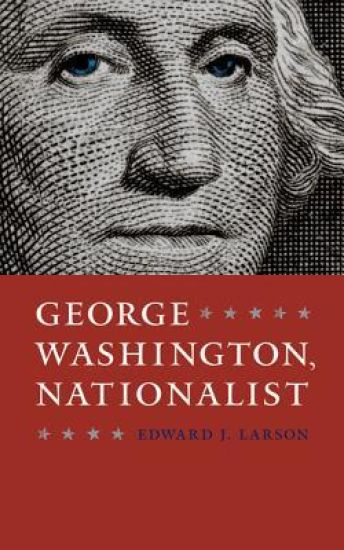
George Washington, Nationalist

George Washington, Nationalist

Edward Larson

University of Virginia Press
2016
sidottu
George Washington was the unanimous choice of his fellow founders for president, and he is remembered to this day as an exceptional leader, but how exactly did this manifest itself during his lifetime? In George Washington, Nationalist, acclaimed author Edward J. Larson reveals the fascinating backstory of Washington’s leadership in the political, legal, and economic consolidation of the new nation, spotlighting his crucial role in forming a more perfect union.The years following the American Revolution were a critical period in American history, when the newly independent states teetered toward disunion under the Articles of Confederation. Looking at a selection of Washington’s most pivotal acts—including conferring with like-minded nationalists, establishing navigational rights on the Potomac, and quelling the near uprising of unpaid revolutionary troops against the Confederation Congress—Larson shows Washington’s central role in the drive for reform leading up to the Constitutional Convention. His leadership at that historic convention, followed by his mostly behind-the-scenes efforts in the ratification process and the first federal election, and culminating in his inauguration as president, complete the picture of Washington as the nation’s first citizen. This important and deeply researched book brings Washington’s unique gift for leadership to life for modern readers, offering a timely addition to the growing body of literature on the Constitution, presidential leadership, executive power, and state-federal relations.
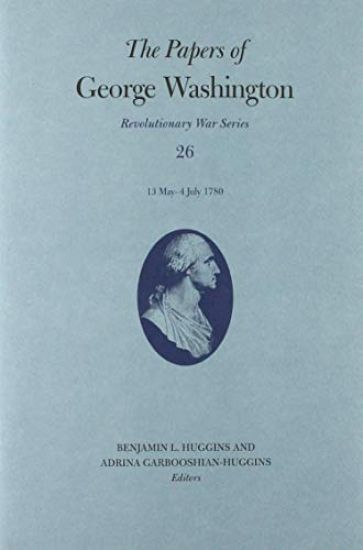
The Papers of George Washington

The Papers of George Washington

George Washington

University of Virginia Press
2017
sidottu
Bad weather plagued Gen. George Washington’s army during its winter encampment near Morristown, N.J., far into the spring of 1780. Finances caused further woes. Commissaries lacked both cash and credit to obtain provisions, and food shortages meant restless troops. Only vigorous exertions b largely anonymous supply officers kept Washington’s army intact. Recognizing these grave financial needs, Congress passed reform legislation in March, but any benefit from the new system lay in the future. Washington tried to be optimistic as he tackled present challenges. Numerous officer resignations worried the general, who felt the loss of such experienced men undercut the army’s effectiveness. Sensitive about morale, he pursued negotiations for a general prisoner exchange. Talks broke down quickly, however, because British negotiators acted only on local military authority rather than on the authority of the king. To Washington, that approach failed to recognize the legitimacy of the United States as a nation. Armed conflict as well as administrative perplexities occupied Washington’s thoughts. At no point could he escape the reality that soldiers fought, soldiers died, and survivors – both comrades and loved ones – grieved. Raids into the patrol areas generally east of Morristown caused significant casualties on 22 March and 16 April. A larger confrontation unfolded around Charleston, S.C., where a British expedition from New York City encircled the city and its defenders under Maj. Gen. Benjamin Lincoln. Washington sent additional reinforcements and encouraged the beleaguered Lincoln, but Charleston’s surrender on 12 May eventually came as no surprise. Washington hoped for better things from a congressional "Committee at Headquarters," appointed to deal directly with the principal army officers to solve vexing supply questions. Such an approach promised some good after previous verbal sniping. Additionally, Major General Lafayette returned to the United States from France to announce the coming of a French expeditionary army. The king wanted this force to serve under Washington. The possibilities for this allied command undoubtedly excited the general, who openly recently had extended himself to pay proper respect to French minister La Luzerne during that official’s visit to Morristown. Army responsibilities left Washington little opportunity to address his personal business, but he doted over a carriage purchase and offered the usual futile financial advice to his stepson John Parke Custis. Legal engagements undertaken years earlier for George William Fairfax and George Mercer provoked headaches. Despite Washington’s conscientious efforts, these entanglements persisted until after the war. Washington never quailed form a personal or public obligation. Very much the realist, he knew that his army faced steep odds. Determined to overcome all obstacles, he strode ahead, fully aware that he shouldered the heaviest burdens of the revolutionary cause.
George Washington's Barbados Diary, 1751-52

George Washington's Barbados Diary, 1751-52

George Washington

University of Virginia Press
2018
sidottu
In the autumn of 1751, at the age of nineteen, George Washington sailed with his older half-brother Lawrence from Virginia to the Caribbean island of Barbados—the one and only time that the future Revolutionary War hero and president would leave the shores of continental North America. Lawrence had long been in poor health and hoped, in vain, that the island climate would prove restorative. The Washingtons landed in early November, and George spent seven weeks on Barbados, recording his impressions of everything from the exotic landscapes and local culture, to the cultivation of sugarcane and the particulars of plantation slavery, before bidding his brother adieu and embarking on the return sail to Virginia. The two sea voyages provided plenty of adventure, at times harrowing, and framed an island interlude that exposed young George to new cultures and new experiences—and also to smallpox. His exposure to the dread disease, and his resulting immunity, would prove fateful a quarter century later when the commander in chief of the ragtag American revolutionary forces blunted a threat more grave than British cannon by directing the immunization of his troops. Technological advances and fresh scholarship make this the most comprehensive and authoritative edition that has ever been-or likely will ever be-published.
The Papers of George Washington

The Papers of George Washington

George Washington

University of Virginia Press
2019
sidottu
Bad weather plagued Gen. George Washington's army during its winter encampment near Morristown, N.J., far into the spring of 1780. Finances caused further woes. Commissaries lacked both cash and credit to obtain provisions, and food shortages meant restless troops. Only vigorous exertions b largely anonymous supply officers kept Washington's army intact. Recognizing these grave financial needs, Congress passed reform legislation in March, but any benefit from the new system lay in the future. Washington tried to be optimistic as he tackled present challenges. Numerous officer resignations worried the general, who felt the loss of such experienced men undercut the army's effectiveness. Sensitive about morale, he pursued negotiations for a general prisoner exchange. Talks broke down quickly, however, because British negotiators acted only on local military authority rather than on the authority of the king. To Washington, that approach failed to recognize the legitimacy of the United States as a nation. Armed conflict as well as administrative perplexities occupied Washington's thoughts. At no point could he escape the reality that soldiers fought, soldiers died, and survivors - both comrades and loved ones - grieved. Raids into the patrol areas generally east of Morristown caused significant casualties on 22 March and 16 April. A larger confrontation unfolded around Charleston, S.C., where a British expedition from New York City encircled the city and its defenders under Maj. Gen. Benjamin Lincoln. Washington sent additional reinforcements and encouraged the beleaguered Lincoln, but Charleston's surrender on 12 May eventually came as no surprise. Washington hoped for better things from a congressional ""Committee at Headquarters,"" appointed to deal directly with the principal army officers to solve vexing supply questions. Such an approach promised some good after previous verbal sniping. Additionally, Major General Lafayette returned to the United States from France to announce the coming of a French expeditionary army. The king wanted this force to serve under Washington. The possibilities for this allied command undoubtedly excited the general, who openly recently had extended himself to pay proper respect to French minister La Luzerne during that official's visit to Morristown. Army responsibilities left Washington little opportunity to address his personal business, but he doted over a carriage purchase and offered the usual futile financial advice to his stepson John Parke Custis. Legal engagements undertaken years earlier for George William Fairfax and George Mercer provoked headaches. Despite Washington's conscientious efforts, these entanglements persisted until after the war. Washington never quailed form a personal or public obligation. Very much the realist, he knew that his army faced steep odds. Determined to overcome al obstacles, he strode ahead, fully aware that he shouldered the heaviest burdens of the revolutionary cause.
The Papers of George Washington Volume 27

The Papers of George Washington Volume 27

George Washington

University of Virginia Press
2020
sidottu
Three major themes dominate George Washington’s correspondence in volume 27 of the Revolutionary War Series: the arrival of a French expeditionary army and navy, the urgent need to prepare the Continental army for a joint Franco-American offensive to take New York City, and the cultivation of Washington’s relationship with Lieutenant General Rochambeau, the commander of the French army. Urgency and vigor typified Washington’s planning throughout, as he raised new Continental troops, obtained militia reinforcements, increased Stocks of ammunition, gathered wagons and horses, and recognized that he and Rochambeau possessed similar views on campaign plans and other matters—a development that would ultimately prove essential to victory at Yorktown and the successful conclusion of the war.