Kirjojen hintavertailu. Mukana 11 244 527 kirjaa ja 12 kauppaa.

Kirjahaku

Etsi kirjoja tekijän nimen, kirjan nimen tai ISBN:n perusteella.

1000 tulosta hakusanalla George Michell

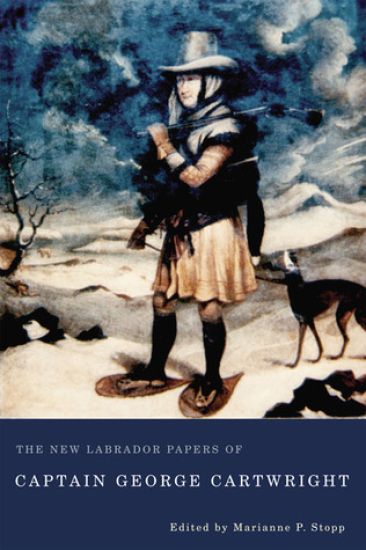
The New Labrador Papers of Captain George Cartwright

The New Labrador Papers of Captain George Cartwright

George Cartwright; Marianne P. Stopp

McGill-Queen's University Press
2013
nidottu
Captain George Cartwright (1739-1819), an English merchant who spent time in Labrador between 1770 and 1786, is best known for the fascinating account of his experiences provided in his Journal of Transactions and Events during a Residence of nearly Sixteen Years on the Coast of Labrador (1792). In recent years more of his papers have been discovered and stand alongside his journal as important source material for the early colonial period in the Atlantic region. Transcribed from original documents and extensively annotated by Marianne Stopp, the new papers deal with practical matters such as how to build a house in a sub-arctic climate, the best methods of sealing, trapping, and salmon fishing, as well as merchant rivalries and trade with Aboriginal groups. Cartwright's papers are of value for what they tell us about early methods and materials; Stopp's detailed introduction provides a history of Cartwright's Labrador and discusses these new papers with respect to early architecture, ethnohistory, material culture, and Inuit studies.
The Complete Poems of George Whalley

The Complete Poems of George Whalley

George Whalley

McGill-Queen's University Press
2016
sidottu
An eminent Canadian man of letters, scholar, naval officer and secret intelligence agent, CBC scriptwriter, musician, biographer, and translator, George Whalley (1915-1983) was also a gifted poet whose work spans five decades. Along with his major critical work, Poetic Process, and his superb biography, The Legend of John Hornby, Whalley's poetry is an important contribution to the emergence and development of twentieth-century modernism. The Complete Poems of George Whalley is the first collection of Whalley's entire poetic oeuvre. It contains the previously published work from his two books of poetry, Poems 1939-1944 and No Man An Island, as well as pieces that appeared in periodicals and edited collections. It gathers all his unpublished poems found in public archives and his personal papers, letters, and journals. This collection reinforces Whalley's place as the foremost Canadian poet of the Second World War, during and immediately after which the majority of these works were written. It also emphasizes the humour and playfulness of his early and late poems. Michael DiSanto's introduction provides an overview of Whalley's life and career, and examines the relationship between his poetics and criticism by consulting his essays, letters, and unpublished papers. Restoring Whalley's poetry and literary contributions to their rightful place in the Canadian canon, this comprehensive collection opens new chapters on mid-twentieth-century modernism and war poetry.
George Cartwright's The Labrador Companion

George Cartwright's The Labrador Companion

George Cartwright

McGill-Queen's University Press
2016
sidottu
New manuscripts directly related to Canada's history rarely come to light. The Labrador Companion, written in 1810 by Captain George Cartwright (1739-1819), and discovered in 2013, is a fascinating and unusual find because of its level of detail, its setting in a hardly studied part of Britain's fur-trade empire, and because it is a personal account rather than a trade outfit ledger or government document. This annotated edition transcribes The Labrador Companion in full. Cartwright documented the everyday work of Labrador's particular kind of fur-trade life based on his experiences operating a series of merchant stations in southern Labrador between 1770 and 1786. Although his focus is firmly on instruction in the manifold ways of capturing animals, he also provides rare glimpses of Innu and Inuit life as well as of housekeeping and gardening. The Labrador Companion includes a lengthy description of Labrador's fauna - of land, sea, and air - that counts among Canada's earliest natural history writing based on first-hand observation. A revealing account of fur-trade-era technology, methods, and materials, conveyed through one man's acquired knowledge and skills, The Labrador Companion gives a close-to-the-ground picture of the resource industries that were at the heart of British, and French, colonial presence in the Canadian northeast.
George Cartwright's The Labrador Companion

George Cartwright's The Labrador Companion

George Cartwright

McGill-Queen's University Press
2016
nidottu
New manuscripts directly related to Canada's history rarely come to light. The Labrador Companion, written in 1810 by Captain George Cartwright (1739-1819), and discovered in 2013, is a fascinating and unusual find because of its level of detail, its setting in a hardly studied part of Britain's fur-trade empire, and because it is a personal account rather than a trade outfit ledger or government document. This annotated edition transcribes The Labrador Companion in full. Cartwright documented the everyday work of Labrador's particular kind of fur-trade life based on his experiences operating a series of merchant stations in southern Labrador between 1770 and 1786. Although his focus is firmly on instruction in the manifold ways of capturing animals, he also provides rare glimpses of Innu and Inuit life as well as of housekeeping and gardening. The Labrador Companion includes a lengthy description of Labrador's fauna - of land, sea, and air - that counts among Canada's earliest natural history writing based on first-hand observation. A revealing account of fur-trade-era technology, methods, and materials, conveyed through one man's acquired knowledge and skills, The Labrador Companion gives a close-to-the-ground picture of the resource industries that were at the heart of British, and French, colonial presence in the Canadian northeast.
George Oppen

George Oppen

Lyn Graham Barzilai

McFarland Co Inc
2006
pokkari
This book offers a detailed look into the life and works of Pulitzer Prize-winning Jewish American poet George Oppen. Born in 1908 in New York State, Oppen spent parts of his life working as a die cutter and carpenter and later running a furniture factory. Like the work he did with his hands during those years, his poetry used basic materials; he favored short, simple nouns and focused on concrete objects rather than abstractions. This book examines the characteristics of Oppen's work, particularly his use of small and often odd phrasings and unusual line formations to express the ultimately inexpressible. The first three chapters delve into his primitive modes, language and materials. Subsequent chapters tackle his subjects: cityscapes, light and water, and then animals and their relation to human history and struggles. His final collection of poems, Primitive, is examined in its own chapter, which is followed by an exploration of recurring specific phrases and concrete images. The author demonstrates how Oppen's poetry restores to readers an essential dimension of communication and experience that has been ignored or forgotten.
George F. Root, Civil War Songwriter

George F. Root, Civil War Songwriter

P.H. Carder

McFarland Co Inc
2008
pokkari
When the Civil War broke out in 1861, "The Battle Cry of Freedom" became perhaps the most common patriotic song echoing throughout the North. The author of that famous tune was George F. Root, and his many other patriotic songs established him as "the musician of the people." This biography follows Root's dual career as a nationally-known traveling teacher and a composer of popular songs. His wartime songs expressed the emotions of the soldiers and of the people at home. His later songs document such events as the assassination of President Lincoln, the settling of the West, the literature and humor of his day, and the many reform movements that defined the values of that era. His biography reveals how he became the musician of the people and how his critics responded.
George W. Alexander and Castle Thunder

George W. Alexander and Castle Thunder

Frances H. Casstevens

McFarland Co Inc
2007
pokkari
Captain George W. Alexander was a controversial figure in Richmond during the Civil War, honored as a hero and condemned as a cruel prison superintendent. He was appointed Provost Marshal and put in charge of Castle Thunder in 1862, after escaping imprisonment at Fort McHenry. At his Confederate prison in Richmond, he oversaw prisoners of all types, including Confederates, women, slaves, Federal deserters, and spies. This biography traces Alexander's life from the U.S. Navy voyage with Commodore Perry to Japan, hiding in Canada after Lee's surrender, editorship of Washington DC's Sunday Gazette to his death in 1895. The main body of the text concentrates on Alexander's time at Castle Thunder, but the book also explores the evolution of the prison system and the provost marshal's department, touching on unusual prisoners and escape attempts. Appendix 1 is a partial list of prisoners at Castle Thunder and when, where, and why they were arrested. Appendix 2 is a transcript of the court martial of Private John R. Jones. Appendix 3 lists prisoners sent from Camp Holmes and appendix 4 is a report of Alexander as Assistant Provost Marshall. Appendix 5 is a pamphlet published by the Republican Party National Committee; it struck at the Democratic Party by scorning its "military prison keepers."
George Burns

George Burns

Lawrence J. Epstein

McFarland Co Inc
2011
pokkari
Having entered the world in 1896 as a poverty-stricken child named Naftaly (Nathan) Birnbaum, George Burns rose from New York's Lower East Side to the uppermost heights of celebrity in the entertainment industry. His storied romance with Gracie Allen led to their success in vaudeville, films, radio and television as one of the greatest comedy teams in history. Burns experienced both tragedy and triumph during his 100-year lifespan, ultimately recovering from the death of his beloved Gracie in 1964 to re-emerge as a solo performer and an Oscar-winning actor. This all-inclusive biography explores George Burns's career against the backdrop of American entertainment history in the 20th century. His loves, his close friendship with Jack Benny, his rivalry with Groucho Marx, and his latter-day success in films are all carefully detailed.
George W. Hamilton, USMC

George W. Hamilton, USMC

Mark Mortensen

McFarland Co Inc
2011
pokkari
In its list of the "Top 10 Badass Marines," Leatherneck magazine declared that Major George W. Hamilton "never asked anyone to do anything he wasn't prepared to do himself...and do better." Indeed, the author of A History of the United States Marine Corps once called Hamilton "the most outstanding Marine Corps hero in World War I." A leader of the first major American assault on June 6, 1918, and the last ranking officer in the American Expeditionary Forces to learn that the war was over, Hamilton remained in the thick of the fighting from start to finish. Although he earned the Distinguished Service Cross, the Navy Cross, the Croix de Guerre, and two Medal of Honor recommendations for his service, Hamilton's fame stalled when he died prematurely in 1922. With this first complete biography, Hamilton takes his rightful place among the first rank of American military heroes.
George Scarbrough, Appalachian Poet

George Scarbrough, Appalachian Poet

Randy Mackin

McFarland Co Inc
2011
pokkari
A writer's writer, East Tennessee poet and novelist George Scarbrough enjoyed a career that spanned eight decades and included numerous awards. This biography makes use of Scarbrough's personal journals to tie his literature to his life and presents previously unpublished poetry, letters, and prose pieces. Somewhat overlooked during his lifetime, he is, as this book demonstrates, among the best poets of the 20th century.
George Foster and the 1977 Reds

George Foster and the 1977 Reds

Mike Shannon

McFarland Co Inc
2019
pokkari
? The Cincinnati Reds are recognized as one of the great teams in baseball history. Left fielder George Foster, an integral part of the Reds' back-to-back 1975 and 1976 World Championships, has never received proper credit for his contribution to their legacy. In 1977, Foster became the most feared slugger in the National League, batting .320, with 52 home runs and 149 runs batted in to win the NL MVP Award, establishing a new single-season home run record for the Reds' franchise that still stands. Yet Foster's big year was not enough to stem the emergence of the Los Angeles Dodgers, who roared out of the gate and ran away with the NL West Division pennant. This book tells the story of Foster's record-setting season and puts his pre-steroid era achievements in their proper perspective. The author chronicles the subsequent decline of the Big Red Machine and the rest of Foster's big league career.
George Raft

George Raft

Everett Aaker

McFarland Co Inc
2013
pokkari
In the early 1930s, George Raft, an actor and dancer from New York City's Hell's Kitchen, gained a name for himself playing stylish and charismatic gangsters in films like 1932's original Scarface. Raft's own real-life connection to the New York mob added frightening authenticity to his portrayals, and his star quality coincided with the peak years of the Hollywood factory to produce a remarkable track record of successful movies. Highly regarded during his lifetime as a performer, his reputation as an actor suffered a steep decline after his death. This definitive study of all of Raft's films offers intimate insight into all of his productions, including casts, characters, technical credits, and story synopses, and dispels a number of myths surrounding his legendary career.
George Washington and the Final British Campaign for the Hudson River, 1779
In the summer of 1779, British general Sir Henry Clinton launched one last attempt to gain control of the Hudson River, the most strategically important waterway during the American Revolution. The campaign involved all of George Washington's main Continental Army and most of the forces around New York City under Clinton's command, but ended without a major battle. Still, the summer saw plenty of action. American cavalry sparred with their British counterparts in eastern New York; thousands of militiamen resisted brutal British raids along the Connecticut coast; and Washington stunned the British with daring night bayonet attacks on the fortified posts of Stony Point and Paulus Hook. This study details the strategy, tactics, officers, soldiers, and spies that shaped this critical campaign, which helped set the stage for America's final victory in the Revolution.
George Altman

George Altman

George Altman; Lew Freedman

McFarland Co Inc
2013
pokkari
George Altman grew up in the segregated South but was able to participate in the sport at more levels of competition than perhaps anyone else who has ever played the game, from the 1940s to the 1970s.Altman played baseball at all the kids' levels, played college baseball at Tennessee State, played for the Kansas City Monarchs during the waning days of the Negro Leagues, played for the U.S. Army in service competition, played winter league ball in Cuba and Panama, spent nine years with the Chicago Cubs, St. Louis Cardinals and New York Mets, a two-time All-Star outfielder--then played in Japan as a regular All-Star. Altman has seen it all and he offers illuminating observations about teams, fans and the game.
George Weiss

George Weiss

Burton A. Boxerman; Benita W. Boxerman

McFarland Co Inc
2016
pokkari
The New York Yankees were the strongest team in the majors from 1948 through 1960, capturing the American League Pennant 10 times and winning seven World Championships. The average fan, when asked who made the team so dominant, will mention Joe DiMaggio, Yogi Berra, Whitey Ford or Mickey Mantle. Some will insist manager Casey Stengel was the key. But pundits at the time, and respected historians today, consider the shy, often taciturn George Martin Weiss the real genius behind the Yankees' success. Weiss loved baseball but lacked the ability to play. He made up for it with the savvy to run a team better than his competitors. He spent more than 50 years in the game, including nearly 30 with the Yankees. Before becoming their general manager, he created their superlative farm system that supplied the club with talented players. When the Yankees retired him at 67, the newly franchised New York Mets immediately hired him to build their team. This book is the first definitive biography of Weiss, a Hall of Famer hailed for contributing "as much to baseball as any man the game could ever know."
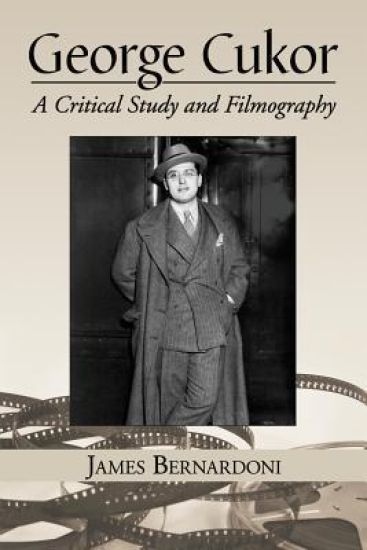
George Cukor

George Cukor

James Bernardoni

McFarland Co Inc
2013
pokkari
This work illuminates the art of George Cukor, the director of some of the most acclaimed and popular films ever to come out of Hollywood. Eight films, ranging in time from David Copperfield (1935) to Rich and Famous (1981) and in mood from the fairy-tale comedy of The Philadelphia Story to the intense melodrama of Cukor's masterpiece, A Star Is Born, are closely analyzed in a search for the elusive secret of Cukor's success. Through his long and varied body of work Cukor was preoccupied with certain themes of enduring significance that found expression through his mastery of film direction. More than a mere Hollywood craftsman or the congenial collaborator of such Hollywood luminaries as Hepburn, Grant, Tracy, and Monroe, George Cukor was a true film artist.
George Owen Squier

George Owen Squier

Paul W. Clark; Laurence A. Lyons

McFarland Co Inc
2014
pokkari
During the 1920s and '30s, Major General George Owen Squier was one of the most famous men in America and abroad, as a scientist, soldier, military strategist, electrical communications expert and inventor, aeronautical pioneer, diplomat, and philanthropist. He rose from humble beginnings in Michigan to the position of Chief Signal Officer of the United States Army. He led the effort in World War I to equip the United States and its allies with American-made airplanes and engines, an effort which started slowly but at the time of the Armistice was rapidly coming to fruition. He also equipped American forces with modern communications, the first belligerent in the war to do so. As an inventor he is not well known today compared to his contemporaries Alexander Graham Bell and the Wright Brothers, who respected his intellect and originality. Yet his inventions in communications technology are fundamental to today's telephone system and were the technical basis for the company he founded, Muzak. Despite his many achievements no biography of George Squier has, before now, been published.
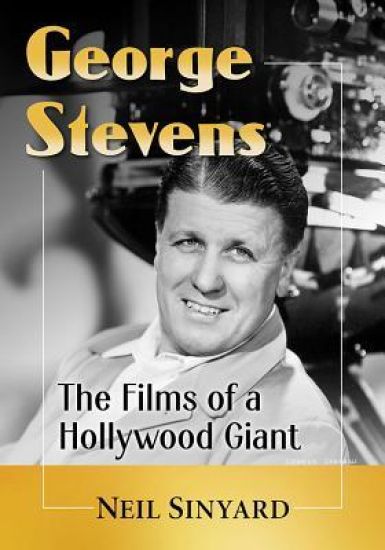
George Stevens

George Stevens

Neil Sinyard

McFarland Co Inc
2019
pokkari
"George Stevens could do anything," said veteran Hollywood producer Pandro S. Berman, "break your heart or make you laugh." Winner of two Best Director Oscars--for A Place in the Sun (1951) and Giant (1956)--Stevens excelled in a range of genres, gave luster to some of Hollywood's brightest stars and was revered by his peers. Yet his work has been largely neglected by critics and scholars. This career retrospective highlights Stevens' achievements, particularly in his sweeping "American Dream" trilogy (A Place in the Sun, Shane (1953) and Giant). His recurrent themes and characteristic style reveal a progressive attitude towards women's experiences and highlight the continued relevance of his films today.
George Washington and the Half-King Chief Tanacharison
George Washington and the Half-King Chief Tanacharison details the events in western Pennsylvania that precipitated the French and Indian War. It describes the interpersonal relationship between 22-year-old, inexperienced, but self-assured George Washington and the 54-year-old wily Iroquois Chief Tanacharison, which led to, as Horace Walpole quipped, Washington firing "a volley in the backwoods of America that set the world on fire." The book explores the history of the French and English rivalry for the trans-Allegheny territory and its impact on the Indians in the area. It shows how Washington and Tanacharison each sought to influence the other to gain support for their respective agendas. Washington wanted the Indians to endorse Virginia's claim to the Ohio territory, while Tanacharison wanted a war between England and France so that the Iroquois could maintain their dominance over the Ohio Indians. The book describes in detail the sequence of events through which the crafty half-king manipulated Washington into starting the war he wanted, and by his actions implicated Washington in nothing less than a cold-blooded murder.