Kirjojen hintavertailu. Mukana 11 627 220 kirjaa ja 12 kauppaa.

Kirjahaku

Etsi kirjoja tekijän nimen, kirjan nimen tai ISBN:n perusteella.

1000 tulosta hakusanalla George Perry

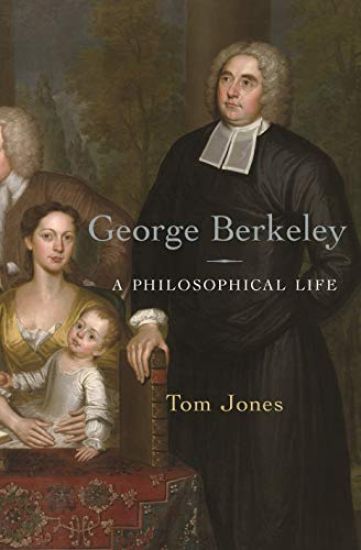
George Berkeley

George Berkeley

Tom Jones

PRINCETON UNIVERSITY PRESS
2025
pokkari
A comprehensive intellectual biography of the Enlightenment philosopherIn George Berkeley: A Philosophical Life, Tom Jones provides a comprehensive account of the life and work of the preeminent Irish philosopher of the Enlightenment. From his early brilliance as a student and fellow at Trinity College Dublin to his later years as Bishop of Cloyne, Berkeley brought his searching and powerful intellect to bear on the full range of eighteenth-century thought and experience.Jones brings vividly to life the complexities and contradictions of Berkeley’s life and ideas. He advanced a radical immaterialism, holding that the only reality was minds, their thoughts, and their perceptions, without any physical substance underlying them. But he put forward this counterintuitive philosophy in support of the existence and ultimate sovereignty of God. Berkeley was an energetic social reformer, deeply interested in educational and economic improvement, including for the indigenous peoples of North America, yet he believed strongly in obedience to hierarchy and defended slavery. And although he spent much of his life in Ireland, he followed his time at Trinity with years of travel that took him to London, Italy, and New England, where he spent two years trying to establish a university for Bermuda, before returning to Ireland to take up an Anglican bishopric in a predominantly Catholic country.Jones draws on the full range of Berkeley’s writings, from philosophical treatises to personal letters and journals, to probe the deep connections between his life and work. The result is a richly detailed and rounded portrait of a major Enlightenment thinker and the world in which he lived.
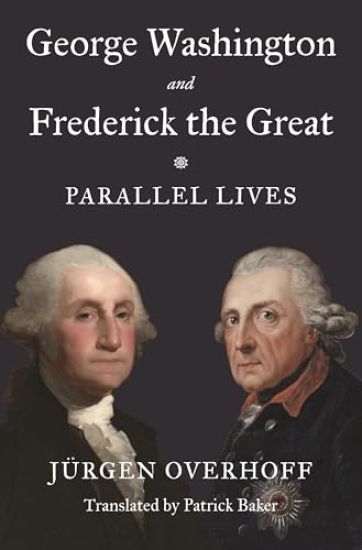
George Washington and Frederick the Great

George Washington and Frederick the Great

Jürgen Overhoff

PRINCETON UNIVERSITY PRESS
2026
sidottu
How Frederick the Great and George Washington embody the competition between liberal democracy and authoritarianism Both Frederick the Great and George Washington saw themselves as model rulers exemplifying different modes of enlightened governance. Frederick, absolute ruler of Prussia, styled himself as the embodiment of “enlightenment from above”; Washington, as the first president of the United States, held himself accountable to Congress, with the power of the presidency subject to checks and balances. In this unique study, Jürgen Overhoff traces the parallel lives of two of the most important and influential statesmen of the eighteenth century, from their early years to their ascension to political power and their historical legacies. Overhoff considers the significance of each man not only in the context of his own country but in the larger geopolitical space of Atlantic history. Overhoff describes how Washington admired Frederick’s actions during the Seven Years’ War (also known as the French and Indian War) in the 1750s, when Frederick allied with the British and North Americans. Later, Frederick was impressed by Washington’s leadership of the Continental Army during the American Revolution. Prussia and the United States even signed a friendship treaty after the war. But, as Overhoff shows, the two men had very different ideas about the principles of the Enlightenment, monarchy, and democracy. Despite his Enlightenment bona fides, Frederick ruled Prussia by edict and decree, always with the goal of maintaining his own power. Washington famously stepped down after two terms in office. Overhoff argues convincingly that the political trajectories of Frederick and Washington shed light on the contemporary clash between authoritarianism and democracy.
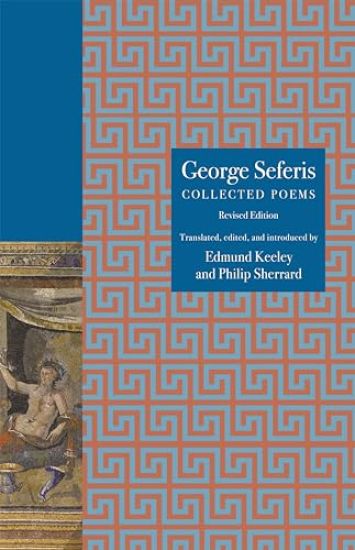
George Seferis

George Seferis

George Seferis

PRINCETON UNIVERSITY PRESS
2024
pokkari
In this new edition of George Seferis's poems, the acclaimed translations by Edmund Keeley and Philip Sherrard are revised and presented in a compact, English-only volume. The revision covers all the poems published in Princeton's earlier bilingual edition, George Seferis: Collected Poems (expanded edition, 1981). Winner of the Nobel Prize for Literature in 1963, George Seferis (1900-1971) has long been recognized as a major international figure, and Keeley and Sherrard are his ideal translators. They create, in the words of Archibald MacLeish, a "translation worthy of Seferis, which is to praise it as highly as it could be praised."Although Seferis was preoccupied with his tradition as few other poets of the same generation were with theirs, and although he was actively engaged in the immediate political aspirations of his nation, his value for readers lies in what he made of this preoccupation and this engagement in fashioning a broad poetic vision. He is also known for his stylistic purity, which allows no embellishment beyond that necessary for precise yet rich poetic statement.
George Eliot and Herbert Spencer

George Eliot and Herbert Spencer

Nancy L. Paxton

Princeton University Press
2014
pokkari
This analysis of the writings of two major Victorian intellectuals examines the crucial place of gender in the larger Victorian debate about nature, religion, and evolutionary theory. Demonstrating the primacy of Herbert Spencer's influence on George Eliot's thought, Nancy Paxton discloses the continuous dialogue between this profoundly learned novelist and one of the most formidable and influential scientific authorities of her time. Using rarely cited first editions of Spencer's published works, Paxton reveals that Eliot and Spencer initially agreed in supporting several of the goals of early Victorian feminism when they met in 1851. Paxton surveys all of Spencer's writing to show when and why he repudiated his early feminism and demonstrates Eliot's determined resistance to the most conservative tendencies of evolutionary theory in her representation of female sexuality, motherhood, feminist ambition, and desire. In comparing Eliot's and Spencer's evolutionary "reconstruction of gender," the book draws on a wide variety of biographical, literary, and critical texts and on interdisciplinary scholarship about the relation between scientific and literary discourse in the nineteenth century. By thus reassessing Eliot's contribution to feminist thought, it presents a revolutionary reading of her novels which is informed by contemporary feminist criticism and the new historicism. "This is an important book because of the questions it raises, the issues it covers, and the illumination it brings to Eliot and Spencer and to crucial problems in the nineteenth century: Paxton looks at the ways scientific data get turned into arguments about the nature of women in society, about women and education, about women and sexuality. This work shows how truly current Eliot's novels are, no matter what their setting."--Barry Qualls, Rutgers University Originally published in 1991. The Princeton Legacy Library uses the latest print-on-demand technology to again make available previously out-of-print books from the distinguished backlist of Princeton University Press. These editions preserve the original texts of these important books while presenting them in durable paperback and hardcover editions. The goal of the Princeton Legacy Library is to vastly increase access to the rich scholarly heritage found in the thousands of books published by Princeton University Press since its founding in 1905.
George Seferis

George Seferis

George Seferis

Princeton University Press
2014
pokkari
This new bilingual edition of George Seferis: Collected Poems both supplements and revises the two earlier editions published in 1967 and 1969. It presents for the first time the complete Notes for a 'Week,' " Three Secret Poems, and three later poems that were not collected by the poet himself but whose English translation he authorized during his lifetime. Originally published in 1982. The Princeton Legacy Library uses the latest print-on-demand technology to again make available previously out-of-print books from the distinguished backlist of Princeton University Press. These editions preserve the original texts of these important books while presenting them in durable paperback and hardcover editions. The goal of the Princeton Legacy Library is to vastly increase access to the rich scholarly heritage found in the thousands of books published by Princeton University Press since its founding in 1905.
George of Bohemia

George of Bohemia

Frederick Gotthold Heymann

Princeton University Press
2015
pokkari
Anarchy followed the Hussite Revolution in Bohemia until George of Podebrady was elected king. Professor Heymann shows how the Roman Catholic Church failed to dislodge George from his royal authority, and how the Bohemian king prevented the destruction of the Czech reformation, enabling it to influence, to an extent not fully appreciated, the development of European reform ideas up to the age of the German and Swiss Reformation. Originally published in 1965. The Princeton Legacy Library uses the latest print-on-demand technology to again make available previously out-of-print books from the distinguished backlist of Princeton University Press. These editions preserve the original texts of these important books while presenting them in durable paperback and hardcover editions. The goal of the Princeton Legacy Library is to vastly increase access to the rich scholarly heritage found in the thousands of books published by Princeton University Press since its founding in 1905.
George Eliot and Herbert Spencer

George Eliot and Herbert Spencer

Nancy L. Paxton

Princeton University Press
2016
sidottu
This analysis of the writings of two major Victorian intellectuals examines the crucial place of gender in the larger Victorian debate about nature, religion, and evolutionary theory. Demonstrating the primacy of Herbert Spencer's influence on George Eliot's thought, Nancy Paxton discloses the continuous dialogue between this profoundly learned novelist and one of the most formidable and influential scientific authorities of her time. Using rarely cited first editions of Spencer's published works, Paxton reveals that Eliot and Spencer initially agreed in supporting several of the goals of early Victorian feminism when they met in 1851. Paxton surveys all of Spencer's writing to show when and why he repudiated his early feminism and demonstrates Eliot's determined resistance to the most conservative tendencies of evolutionary theory in her representation of female sexuality, motherhood, feminist ambition, and desire. In comparing Eliot's and Spencer's evolutionary "reconstruction of gender," the book draws on a wide variety of biographical, literary, and critical texts and on interdisciplinary scholarship about the relation between scientific and literary discourse in the nineteenth century. By thus reassessing Eliot's contribution to feminist thought, it presents a revolutionary reading of her novels which is informed by contemporary feminist criticism and the new historicism. "This is an important book because of the questions it raises, the issues it covers, and the illumination it brings to Eliot and Spencer and to crucial problems in the nineteenth century: Paxton looks at the ways scientific data get turned into arguments about the nature of women in society, about women and education, about women and sexuality. This work shows how truly current Eliot's novels are, no matter what their setting."--Barry Qualls, Rutgers University Originally published in 1991. The Princeton Legacy Library uses the latest print-on-demand technology to again make available previously out-of-print books from the distinguished backlist of Princeton University Press. These editions preserve the original texts of these important books while presenting them in durable paperback and hardcover editions. The goal of the Princeton Legacy Library is to vastly increase access to the rich scholarly heritage found in the thousands of books published by Princeton University Press since its founding in 1905.
George Seferis

George Seferis

George Seferis

Princeton University Press
2016
sidottu
This new bilingual edition of George Seferis: Collected Poems both supplements and revises the two earlier editions published in 1967 and 1969. It presents for the first time the complete Notes for a 'Week,' " Three Secret Poems, and three later poems that were not collected by the poet himself but whose English translation he authorized during his lifetime. Originally published in 1982. The Princeton Legacy Library uses the latest print-on-demand technology to again make available previously out-of-print books from the distinguished backlist of Princeton University Press. These editions preserve the original texts of these important books while presenting them in durable paperback and hardcover editions. The goal of the Princeton Legacy Library is to vastly increase access to the rich scholarly heritage found in the thousands of books published by Princeton University Press since its founding in 1905.
George of Bohemia

George of Bohemia

Frederick Gotthold Heymann

Princeton University Press
2016
sidottu
Anarchy followed the Hussite Revolution in Bohemia until George of Podebrady was elected king. Professor Heymann shows how the Roman Catholic Church failed to dislodge George from his royal authority, and how the Bohemian king prevented the destruction of the Czech reformation, enabling it to influence, to an extent not fully appreciated, the development of European reform ideas up to the age of the German and Swiss Reformation. Originally published in 1965. The Princeton Legacy Library uses the latest print-on-demand technology to again make available previously out-of-print books from the distinguished backlist of Princeton University Press. These editions preserve the original texts of these important books while presenting them in durable paperback and hardcover editions. The goal of the Princeton Legacy Library is to vastly increase access to the rich scholarly heritage found in the thousands of books published by Princeton University Press since its founding in 1905.
George Mueller: Pickpocket to Praying Provider

George Mueller: Pickpocket to Praying Provider

Rebecca Davis

Potter's Wheel Books
2015
nidottu
When people weren't looking, he stole money from them. He stole from his father, he stole from his teacher, he even stole from the pastor of his church.And he was studying to be a pastor himself.But one day George Mueller found out that the God he had been pretending to worship was real. His life changed completely. Now, instead of taking from others, he wanted to give to help others.And give . . . and give . . . and give. By the end of his life, George Mueller had given over a million dollars. But where did he get it?He didn't steal the money. He didn't work for the money. He didn't ask anyone for the money. That is, he didn't ask any people. He asked God. And God gave . . . and gave . . . and gave.George Mueller used that money to provide homes for over ten thousand orphans in his lifetime. All of England was changed because of this one man.
George Washington and American Constitutionalism

George Washington and American Constitutionalism

Glenn A. Phelps

University Press of Kansas
1993
nidottu
This text offers an understanding of George Washington and the history and government he helped to make. Phelps makes the case for the President's decisive importance to the development of American constitutional republicanism with emphasis on the strength and coherence of Washington's political philosophy.
George W. Goethals and the Army

George W. Goethals and the Army

Rory McGovern

University Press of Kansas
2023
sidottu
Best known for leading the construction of the Panama Canal, George W. Goethals (1858–1928) also played a key role in the decades-long reform that transformed the American military from a frontier constabulary to the expeditionary force of an ascendant world power. George W. Goethals and the Army is at once the first full account of Goethals's life and military career in ninety years and an in-depth analysis of the process that defined his generation's military service—the evolution of the US Army during the late nineteenth and early twentieth centuries.George W. Goethals was a lieutenant and a captain during the post-Reconstruction years of debate about reform and the future of the army. He was a major when the most significant reforms were created, and he helped with their implementation. As a major general during World War I, he directed a significant part of the army's adaptation, resolving crises in the mobilization effort caused largely by years of internal resistance to reform. Following Goethals's career and analyzing reform from his unique perspective, military historian Rory McGovern effectively shifts the focus away from the intent and toward the reality of reform—revealing the importance of the interaction between society, institutional structures, and institutional culture in the process. In this analysis, Goethals's experiences, military thought, managerial philosophy, conceptions of professionalism, and attitude about training and development provide a framework for understanding the army's institutional culture and his generation's relative ambivalence about reform.In its portrait of an officer whose career bridged the distance between military generations, George W. Goethals and the Army also offers a compelling and complex interpretation of American military reform during the Gilded Age and Progressive Era—and valuable insight into the larger dynamics of institutional change that are as relevant today as they were a century ago.
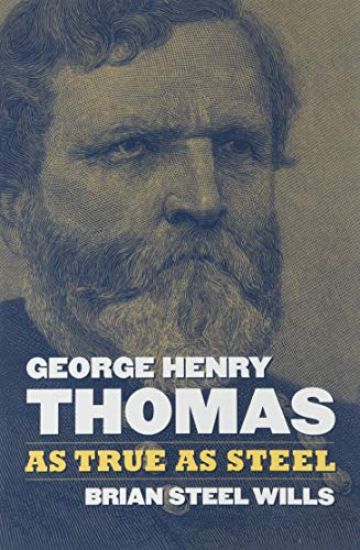
George Henry Thomas

George Henry Thomas

Brian Steel Wills

University Press of Kansas
2019
nidottu
Richard B. Harwell AwardAlthough often counted among the Union's top five generals, George Henry Thomas has still not received his due. A Virginian who sided with the North in the Civil War, he was a more complicated commander than traditional views have allowed. Brian Wills now provides a new and more complete look at the life of a man known to history as "The Rock of Chickamauga," to his troops as "Old Pap," and to General William T. Sherman as a soldier who was "as true as steel."While biographers have long been hampered by Thomas's lack of personal papers, Wills has drawn on previously untapped sources-notably the correspondence of Thomas's contemporaries-to offer new insights into what made him tick. Focusing on Thomas's personality and motivations, Wills contributes revealing discussions of his style and approach to command and successfully captures his troubled interactions with other Union commanders, providing a particularly more evenhanded evaluation of his relationship with Grant. He also gives a more substantial account of battlefield action than can be found in other biographies, capturing the ebb and flow of key encounters—Chickamauga and Missionary Ridge, Chattanooga and Atlanta, Stones River and Mill Springs, Peachtree Creek and Nashville—to help readers better understand Thomas's contributions to their outcomes.Throughout Wills presents a well-rounded individual whose complex views embraced the worlds of professional military service and scientific inquisitiveness, a man known for attention to detail and compassion to subordinates. We also meet a sharp-tempered person whose disdain for politics hurt his prospects for advancement as much as it reflected positively on his character, and Wills offers new insight into why Thomas might not have progressed as quickly up the ladder of command as he might have liked.More deeply researched than other biographies, Wills's work situates Thomas squarely in his own time to provide readers with a more thorough and balanced life story of this enigmatic Union general. It is a definitive military history that gives us a new and needed picture of the Rock of Chickamauga—a man whose devotion to duty and ideals made him as true as steel.
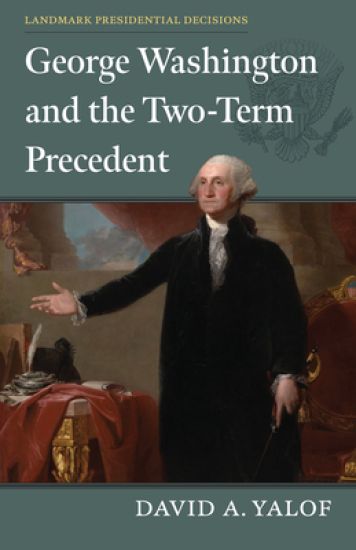
George Washington and the Two-Term Precedent

George Washington and the Two-Term Precedent

David A. Yalof

UNIVERSITY PRESS OF KANSAS
2023
nidottu
One of the earliest and most consequential presidential decisions in American history was George Washington’s choice to step down after two terms in office, despite the fact that he would almost certainly have won a third term had he chosen to run. The example he intended to set—and the circumstances he faced at the time—tell a more complicated story of the true motives behind his decision to retire and the impact his decision had on his successors and the nation. In George Washington and the Two-Term Precedent, David A. Yalof examines how this decision set a pattern that would be followed by presidents for more than a century until FDR began serving a third term in 1941.While often portrayed simply as a noble decision by Washington to restrain the power of the executive office, Washington’s decision was in fact motivated by self-interest and a desire to cement a legacy of honor and integrity. Yalof shows that he was never motivated by the desire to reign in the executive with an unwritten two-term limit. If anything, Washington hoped to strengthen the executive branch by demonstrating that the institution of the presidency could be trusted with the power and independence than it had so far received. His voluntary relinquishment of the presidency after two terms in office achieved these goals.Yalof focuses on the two-term precedent and how it came into being not by legal prescription but by the tacit influence of Washington’s refusal to run for a third term and what it suggests about American conceptions of executive power. George Washington and the Two-Term Precedent offers a sober reminder that the country’s most famous and original hero chose to walk away from power, and it was that decision that cemented his greatness in American history.
George Washington and the Two-Term Precedent

George Washington and the Two-Term Precedent

David A. Yalof

UNIVERSITY PRESS OF KANSAS
2023
sidottu
One of the earliest and most consequential presidential decisions in American history was George Washington’s choice to step down after two terms in office, despite the fact that he would almost certainly have won a third term had he chosen to run. The example he intended to set—and the circumstances he faced at the time—tell a more complicated story of the true motives behind his decision to retire and the impact his decision had on his successors and the nation. In George Washington and the Two-Term Precedent, David A. Yalof examines how this decision set a pattern that would be followed by presidents for more than a century until FDR began serving a third term in 1941.While often portrayed simply as a noble decision by Washington to restrain the power of the executive office, Washington’s decision was in fact motivated by self-interest and a desire to cement a legacy of honor and integrity. Yalof shows that he was never motivated by the desire to reign in the executive with an unwritten two-term limit. If anything, Washington hoped to strengthen the executive branch by demonstrating that the institution of the presidency could be trusted with the power and independence than it had so far received. His voluntary relinquishment of the presidency after two terms in office achieved these goals.Yalof focuses on the two-term precedent and how it came into being not by legal prescription but by the tacit influence of Washington’s refusal to run for a third term and what it suggests about American conceptions of executive power. George Washington and the Two-Term Precedent offers a sober reminder that the country’s most famous and original hero chose to walk away from power, and it was that decision that cemented his greatness in American history.