Kirjojen hintavertailu. Mukana 11 699 587 kirjaa ja 12 kauppaa.

Kirjahaku

Etsi kirjoja tekijän nimen, kirjan nimen tai ISBN:n perusteella.

1000 tulosta hakusanalla Gerald M. Carbone

In the Beginning Was the Word

In the Beginning Was the Word

Gerald West

SPCK Publishing
2009
nidottu
The 14 bible studies from the Gospel of John have been designed so that everyone can participate. Fundamental to the process is that the members of each group feel free to share their interpretations, their experiences and their contexts with others. Within the richness of the Gospel these studies follow the 'I am' sayings of Jesus, and John's theological use of them, and the 'Signs' in the Gospel of John.
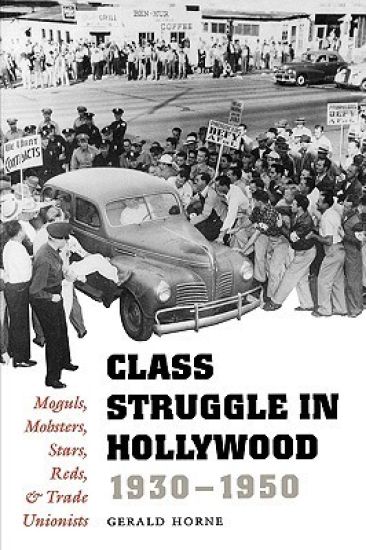
Class Struggle in Hollywood, 1930-1950

Class Struggle in Hollywood, 1930-1950

Gerald Horne

University of Texas Press
2001
pokkari
As World War II wound down in 1945 and the cold war heated up, the skilled trades that made up the Conference of Studio Unions (CSU) began a tumultuous strike at the major Hollywood studios. This turmoil escalated further when the studios retaliated by locking out CSU in 1946. This labor unrest unleashed a fury of Red-baiting that allowed studio moguls to crush the union and seize control of the production process, with far-reaching consequences.This engrossing book probes the motives and actions of all the players to reveal the full story of the CSU strike and the resulting lockout of 1946. Gerald Horne draws extensively on primary materials and oral histories to document how limited a "threat" the Communist party actually posed in Hollywood, even as studio moguls successfully used the Red scare to undermine union clout, prevent film stars from supporting labor, and prove the moguls' own patriotism.Horne also discloses that, unnoticed amid the turmoil, organized crime entrenched itself in management and labor, gaining considerable control over both the "product" and the profits of Hollywood. This research demonstrates that the CSU strike and lockout were a pivotal moment in Hollywood history, with consequences for everything from production values, to the kinds of stories told in films, to permanent shifts in the centers of power.
Faulkner's Revision of Absalom, Absalom!

Faulkner's Revision of Absalom, Absalom!

Gerald Langford

University of Texas Press
1971
nidottu
Faulkner's Revision of Absalom, Absalom! is a study of the creative process as exemplified in one of the major achievements in twentieth-century fiction. Portions of the original handwritten version of the story are collated, line by line, with corresponding sections of the published version. In an introductory discussion the major changes are analyzed and evaluated.It is particularly interesting to observe Faulkner revising not only his choice of words and the construction of his sentences but also the central design of the story. Most notably, he changed his mind about having it known from the beginning that Charles Bon was Sutpen's part-Negro son, and he developed Quentin Compson into the pivotal figure who finally supplies this missing piece of information.In the process of revision Absalom, Absalom! became a kind of detective story, and the reader is forced to join the quest and participate in the undertaking which is the basic subject of the book—the human attempt to comprehend and deal with the past.To trace the process of this revision is to experience a sharp focusing of theme and to witness a demonstration of how the meaning of a fictional work can shape its structure and, in turn, stand revealed by what has become the outward sign, or form, of that meaning.
Faulkner's Revision of Sanctuary

Faulkner's Revision of Sanctuary

Gerald Langford

University of Texas Press
1972
nidottu
Was Sanctuary really a "cheap idea," as Faulkner himself called it, a book "deliberately conceived to make money"? The question has teased the reading public since its publication. Many readers have had their worst suspicions about Faulkner's work confirmed by his statement, but most serious critics have discounted the disparagement, emphasizing instead Faulkner's further statement that when the galley proofs arrived from his publisher, "I saw that it was so terrible that there were two things to do: tear it up or rewrite it. I thought again, 'It might sell; maybe 10,000 of them will buy it.' So I tore the galleys down and rewrote the book."Now that two sets of the original galleys are available for inspection, one can see just how Faulkner reworked the novel. In the collation provided here by Gerald Langford, using Faulkner's own corrected galleys held by the University of Texas at Austin, the reader can reconstruct the first version for himself, noting the cancellations, the additions, and the rewritten passages. As Gerald Langford makes clear in his introductory analysis, neither of Faulkner's statements is to be trusted. Through revision, Sanctuary became theatrically more effective but thematically less interesting than the original version. Particularly noteworthy is the experimental narrative method of the original version, which foreshadows the method of Absalom, Absalom! as opposed to the straightforward, easily accessible method to which Faulkner turned in the revised Sanctuary and Light in August.
Roughnecks, Drillers, and Tool Pushers

Roughnecks, Drillers, and Tool Pushers

Gerald Lynch

University of Texas Press
1987
pokkari
Oil, the black gold of Texas, has given rise to many a myth. Oil could turn a man overnight into a millionaire-and did, for some. But these myths have obscured what life was really like in the oil patch, a place that was neither the El Dorado of legend nor quite the unredeemed den of sin and iniquity that some feared.In Roughnecks, Drillers, and Tool Pushers, Gerald Lynch provides a much-needed insider's view of the oil industry, describing life in various oil fields in and around Texas. He also chronicles changes in drilling methods and oil-field technology and how these changes affected him and his fellow oil-field workers. No one else has written a working-class history of the oil fields as colorful and articulate as this one.
Vigilante Newspapers

Vigilante Newspapers

Gerald J. Baldasty

University of Washington Press
2005
pokkari
This riveting work of social history documents the role the news media played in spurring two murders revolving around Edmund Creffield, a charismatic "Holy Roller" evangelist who arrived in Corvallis, Oregon, in 1903 and quickly enraged the citizenry by defiantly challenging the religious and sexual mores of the time. When ardent female followers began refusing to speak to their nonbelieving husbands, vigilantes tarred and feathered Creffield, eventually forcing him to flee to Seattle.Once there, Creffield was murdered by George Mitchell, the brother of one of his followers. The news media in Seattle and Oregon applauded George's defense of his sister Esther's honor, influencing the jury. Citing temporary insanity, the jury quickly acquitted George, pleasing the cheering crowds and the approving media. As George prepared to return to Oregon, however, Esther shot him point-blank at Union Station and another moralizing media frenzy broke out. Esther was sent to Western State Hospital and committed suicide after her release. Her short life was among the most poignant of the dozens wrecked by the controversy.Gerald Baldasty's examination of Seattle and Oregon media coverage shows the tenacity with which frontier media protected traditional mores, particularly the notion that men are responsible for women's purity and have the right to take action if they feel another man has besmirched a woman's honor. Expertly crafted in a brisk, accessible style, Vigilante Newspapers illustrates through the tragic tale of Edmund Creffield, George Mitchell, and Esther Mitchell how the news media defined social deviance using vague concepts such as hysteria and temporary insanity, vigorously defending the established order of religious, class, and gender norms.
The Commercialization of News in the Nineteenth Century

The Commercialization of News in the Nineteenth Century

Gerald J. Baldasty

University of Wisconsin Press
1992
nidottu
The Commercialization of News in the Nineteenth Century traces the major transformation of newspapers from a politically based press to a commercially based press in the 19th century. Gerald J. Baldasty argues that broad changes in American society, the national economy and the newspaper industry brought about this dramatic shift. Increasingly in the 19th century, news became a commodity valued more for its profitability than for its role in informing or persuading the public on political issues. Newspapers started out as highly partisan adjuncts of political parties. As advertisers replaced political parties as the chief financial support of the press, they influenced newspapers in directing their content toward consumers, especially women. The results were recipes, fiction, contests and features on everything from sports to fashion alongside more standard news about politics. Baldasty makes use of 19th century materials - newspapers from throughout the era, manuscript letters from journalists and politicians, journalism and advertising trade publications, government reports - to document the changing role of the press during the period. He identifies three important phases: the partisan newpapers of the Jacksonian era (1825-1835), the transition of the press in the middle of the century, and the influence of commercialisation of the news in the last two decades of the century.
Hermeneutics Ancient and Modern

Hermeneutics Ancient and Modern

Gerald L. Bruns

Yale University Press
1995
pokkari
In this wide-ranging meditation on the nature and purpose of hermeneutics, Gerald L. Bruns argues that hermeneutics is not merely a contemporary theory but an extended family of questions about understanding and interpretation that have multiple and conflicting histories going back to before the beginning of writing.What does it mean to understand a riddle, an action, a concept, a law, an alien culture, or oneself? Bruns expands our sense of the horizons of hermeneutics by situating its basic questions against a background of different cultural traditions and philosophical topics. He discusses, for example, the interpretation of oracles, the silencing of the muses and the writing of history, the quarrel between philosophy and poetry, the canonization of sacred texts, the nature of allegorical exegesis, rabbinical midrash, the mystical exegesis of the Qur'an, the rise of literalism and the individual interpreter, and the nature of Romantic hermeneutics. Dealing with thinkers ranging from Socrates to Luther to Wordsworth to Ricoeur, Bruns also ponders several basic dilemmas about the nature of hermeneutical experience, the meaning of tradition, the hermeneutical function of narrative, and the conflict between truth and freedom in philosophy and literature. His eloquent book demonstrates the continuing power of hermeneutical thinking to open up questions about the world and our place in it.
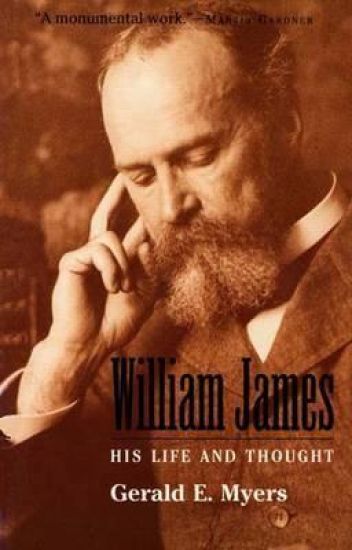
William James

William James

Gerald E. Myers

Yale University Press
2001
pokkari
This magisterial book is the first comprehensive interpretive and critical study of one of America’s foremost philosophers and psychologists. Gerald Myers traces James’s life and career and then uses this fresh biographical information to illuminate his writings and ideas.
Learning to Be Adolescent

Learning to Be Adolescent

Gerald K. LeTendre

Yale University Press
2017
pokkari
The organization of middle schools and the practices of middle school teachers in Japan and the United States differ dramatically, Gerald K. LeTendre demonstrates in this compelling comparative study. Based on his long-term observations in Japanese and American schools and on analyses of curricula and classroom practices, the author describes what teachers, administrators, and counselors in each country believe about adolescent development. He explores how these beliefs are put into practice and how they affect adolescent development.In both nations, LeTendre observes, school personnel are extremely concerned with volition: the developing willpower of young adolescents. But while both Americans and Japanese believe that nurturing a young person’s ability to use his or her will is crucial, they take very different approaches to dealing with expressions of will. LeTendre also finds conflicting expectations and theories about adolescent development within each system, and he investigates how these can lead to confusion and contradictory rules.
The Language of Light

The Language of Light

Gerald Shea

Yale University Press
2017
sidottu
A comprehensive history of deafness, signed languages, and the unresolved struggles of the Deaf to be taught in their unspoken tongue Partially deaf due to a childhood illness, Gerald Shea is no stranger to the search for communicative grace and clarity. In this eloquent and thoroughly researched book, he uncovers the centuries-long struggle of the Deaf to be taught in sign language—the only language that renders them complete, fully communicative human beings. Shea explores the history of the deeply biased attitudes toward the Deaf in Europe and America, which illogically forced them to be taught in a language they could neither hear nor speak. As even A.G. Bell, a fervent oralist, admitted, sign language is "the quickest method of reaching the mind of a deaf child." Shea’s research exposes a persistent but misguided determination among hearing educators to teach the Deaf orally, making the very faculty they lacked the principal instrument of their instruction. To forbid their education in sign language—the “language of light”—is to deny the Deaf their human rights, he concludes.
The Physics and Chemistry of Liquid Crystal Devices

The Physics and Chemistry of Liquid Crystal Devices

Gerald J. Sprokel

Kluwer Academic/Plenum Publishers
1980
sidottu
Over 100 scientists met at the IBM Research Laboratory in San Jose. California for a symposium on the Physics and Chemistry of Liquid Crystal Devices. The two-day meeting was intellectually stimulating with excellent oral presentations and with person-to-person discussions. The applications of liquid crystals have developed dramatically in the past ten years. In these few years, they have moved from being a laboratory curiosity to products in the market place. The first commercial application (1940's) of liquid crystals was the preparation of a light polarizer. The second commercial application was their use as temperature sensors. The third major application of liquid crystals dealt with commercial displays. Other current applications include polymeric and graphitic fibers and light attenuators. The future of liquid crystals looks very promising indeed. One can expect to see new fibers of qualities which will be superior to those presently known. Graphitic fibers or other physical forms of graphitic materials will be used as catalytic surfaces for chemical synthesis. In the display area. one can expect to see television screens using liquid crystals. Larger displays than are now used in wrist watches and pocket calculators will become available. Liquid crystals using color displays will become commercially practical. Watches. calculators and television screens will have color.
Many-Particle Physics

Many-Particle Physics

Gerald D. Mahan

Kluwer Academic/Plenum Publishers
1990
sidottu
This textbook is for a course in advanced solid-state theory. It is aimed at graduate students in their third or fourth year of study who wish to learn the advanced techniques of solid-state theoretical physics. The method of Green's functions is introduced at the beginning and used throughout. Indeed, it could be considered a book on practical applications of Green's functions, although I prefer to call it a book on physics. The method of Green's functions has been used by many theorists to derive equations which, when solved, provide an accurate numerical description of many processes in solids and quantum fluids. In this book I attempt to summarize many of these theories in order to show how Green's functions are used to solve real problems. My goal, in writing each section, is to describe calculations which can be compared with experiments and to provide these comparisons whenever available. The student is expected to have a background in quantum mechanics at the level acquired from a graduate course using the textbook by either L. I. Schiff, A. S. Davydov, or I. Landau and E. M. Lifshiftz. Similarly, a prior course in solid-state physics is expected, since the reader is assumed to know concepts such as Brillouin zones and energy band theory. Each chapter has problems which are an important part of the lesson; the problems often provide physical insights which are not in the text. Sometimes the answers to the problems are provided, but usually not.
Local Density Theory of Polarizability

Local Density Theory of Polarizability

Gerald D. Mahan; K.R. Subbaswamy

Kluwer Academic/Plenum Publishers
1990
sidottu
During the past decade the theoretical physics community has learned how to evaluate accurately polarizabilities and susceptibilities for many-electron systems such as atoms, solids, and liquids. The most accurate numerical technique employs a method often called the Time-Dependent Local Density Approximation, which is abbreviated TDLDA. The present volume is a review of recent research on the theory of po­ larizabilities and susceptibilities. Both authors have been doing these cal­ culations. However, this review surveys the entire field, summarizing the research of many contributors. The application of an external field, either ac or de, will induce a dipole moment which can be calculated and compared with experiment. For mod­ erately strong fields, both linear and nonlinear processes contribute to the moment. We cover topics such as polarizability, hyperpolarizability, pho­ toionization, phonons, and piezoelectricity. Density functional theory in the Local Density Approximation (LDA) has been shown to be a very accurate method for calculating ground state prop­ erties of electronic system. For static external fields, the induced moments are properties of the ground state. Then the calculation of the polarizability · is very accurate. For ac fields, the moment is not part of the ground state. However, the TDLDA methods are still very accurate.
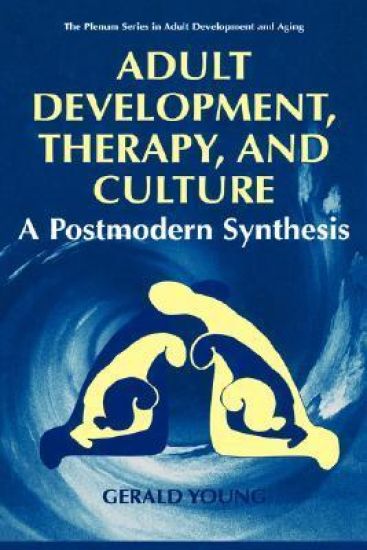
Adult Development, Therapy, and Culture

Adult Development, Therapy, and Culture

Gerald D. Young

Kluwer Academic/Plenum Publishers
1997
sidottu
This volume proposes a theoretical integration of several major streams in contemporary psychological theory about adult development and therapy. It adopts the perspective that there are steps in development throughout the adult period, and that they are characterized by a union of the cognitive and affective, the self and the other, and idea with idea (in second-order collective abstractions). That is, they are at once postformal in terms of Piaget's theory, sociocultural in terms ofVygotsky's theory, and postmodern­ with the latter perspective providing an integrating theme. The affirmative, multivoiced, contextual, relational, other-sensitive side ofpostmodernism is emphasized. Levinas's philosophy of responsibility for the other is seen as congruent with this ethos. The neopiagetian model of development on which the current ap­ proach is based proposes that the last stage in development concerns collective intelligence, or postmodern, postformal thought. Kegan (1994) has attempted independently to describe adult development from the same perspective. His work on the development of the postmodern mind of the adult is groundbreaking and impressive in its depth. However, I ana­ lyze the limitations as well as the contributions of his approach, under­ scoring the advantages of my particular model.
Many-Particle Physics

Many-Particle Physics

Gerald D. Mahan

Kluwer Academic/Plenum Publishers
2000
sidottu
The first, second, and third editions of this book seem to occur at ten year intervals. The intent is to keep the book up-to-date. Many-body theory is a field which continually evolves in time. Journals only publish new results, conferences only invite speakers to report new phenomena, and agencies only fund scientists to do new physics. Today's physics is old hat by tomorrow. Students want to learn new material, and textbooks must be modified to keep up with the times. The early chapters in this book teach the techniques of many-body theory. They are largely unchanged in format. The later chapters apply the techniques to specific problems. The third edition increases the number of applications. New sections have been added, while old sections have been modified to include recent applications. The previous editions were set in type using pre-computer technology. No computer file existed of the prior editions. The publisher scanned the second edition and gave me a disk with the contents. This scan recorded the words accurately and scrambled the equations into unintelligible form. So I retyped the equations using LaTeX. Although tedious, it allowed me to correct the infinite numbers of typographical errors in the previous edition. The earlier typesetting methods did not permit such corrections. The entire book was edited sentence-by­ sentence. Most old sections of the book were shortened by editing sentences and paragraphs.
Toward Consilience

Toward Consilience

Gerald A. Cory Jr.

Kluwer Academic/Plenum Publishers
2000
sidottu
The present work is the second in a series constituting an extension of my doctoral thesis done at Stanford in the early 1970s. Like the earlier work, The Reciprocal Modular Brain in Economics and Politics, Shaping the Rational and Moral Basis ofOrganization, Exchange, and Choice (Plenum Publishing, 1999), it may also be considered to respond to the call for consilience by Edward O. Wilson. I agree with Wilson that there is a pressing need in the sciences today for the unification of the social with the natural sciences. I consider the present work to proceed from the perspective of behavioral ecology, specifically a subfield which I choose to call interpersonal behavioral ecology th Ecology, as a general field, has emerged in the last quarter of the 20 century as a major theme of concern as we have become increasingly aware that we must preserve the planet whose limited resources we share with all other earthly creatures. Interpersonal behavioral ecology, however, focuses not on the physical environment, but upon our social environment. It concerns our interpersonal behavioral interactions at all levels, from simple dyadic one-to-one personal interactions to our larger, even global, social, economic, and political interactions.
Systemic Intervention

Systemic Intervention

Gerald Midgley

Kluwer Academic/Plenum Publishers
2001
sidottu
This book aims to rethink systemic intervention to enhance its relevance for supporting social change in the 21st Century. It offers a new systems philosophy and methodology, focusing upon the fundamental importance of exploring value and boundary judgements as part of the intervention process. A pluralist practice is also promoted, and the reader learns how s/he can draw upon a wide variety of theories and methods to maximise flexibility and responsiveness during interventions. Four detailed examples of the practice of systemic intervention are also provided, each of which is used to illustrate a different aspect of the methodology outlined in the book.
Applied Mathematics

Applied Mathematics

Gerald D. Mahan

Kluwer Academic/Plenum Publishers
2001
sidottu
This volume is a textbook for a year-long graduate level course in All research universities have applied mathematics for scientists and engineers. such a course, which could be taught in different departments, such as mathematics, physics, or engineering. I volunteered to teach this course when I realized that my own research students did not learn much in this course at my university. Then I learned that the available textbooks were too introduc­ tory. While teaching this course without an assigned text, I wrote up my lecture notes and gave them to the students. This textbook is a result of that endeavor. When I took this course many, many, years ago, the primary references were the two volumes of P. M. Morse and H. Feshbach, Methods of Theoretical Physics (McGraw-Hill, 1953). The present text returns the contents to a similar level, although the syllabus is quite different than given in this venerable pair of books.