
Kirjahaku
Etsi kirjoja tekijän nimen, kirjan nimen tai ISBN:n perusteella.
1000 tulosta hakusanalla Giles Mora
Darius Snipes had always been an angry child.That didn't change much when his step-father ran out on him. Now, Darius has dedicated his life to hunting the bastard down and making him pay.This action-packed, super-powered, revenge thriller is only the first installment of the relentlessly daring novella series, "No Holds Barred". Darius's story of his fiery fury clashing with his super-speeded step-father simply sets the stage for all the fantastic tales to come. Lose yourself in the wild worlds of "No Holds Barred".
Our Dad Is Dead: and Other Fun Things to Talk About
Giles Hovseth; Amanda Hovseth
Synecdoche Publishing
2019
nidottu
Take a journey through the psyche of two sibling writers as they explore a variety of themes and genres in a collection of fourteen short stories. Root for a secretary as she fights to prevent a viral outbreak in, Life and Legacy. Sympathize with heartbreak in the fairytale, An Iron Love, and the tragic romance of, Informed Consent. Meet the mysterious Stranger in the Stairwell. See a Biblical proverb come to life in She Won't Let Go. And get into mischief with a couple of young friends in Yorkshire Blues. No matter your preferred type of story, there will be something inside this book that will strike your fancy
The 11th Question: The Spiritual Self-Evaluation Test
Giles Stevens
Independently Published
2008
nidottu
There are many types of tests or exams in life - some are trivial like quizzes, others are important like job interviews or medical health checks. There is often a difference between who we like to think we are and who we really are, and tests help us and others to see where we are really "at" in life. We all know bathroom scales don't always tell us want we want to hear but rather what we need to hear So too with tests we are able to measure ourselves and thereby take the first step to bettering ourselves. In this way tests also determine our future. How we do in school or university exams often determines our career and salary. Tests can reveal things that we previously undetected. For instance it is wise to go periodically the doctor to have a health check. If you have a positive diagnosis you can be at peace; if you have a negative diagnosis, you have more time and knowledge to respond to remedy the situation. We have a test for you today. But is it not to see how intelligent or how physically healthy you are. Rather it is a spiritual test. It is designed to help you understand who you really are - not the person you want to be; not the person who performs in public; but the person you are when nobody is watching. Our test is based on 11 Questions - the 11th being the most important of all. BUT you cannot answer the 11th Question until you have answered the first 10 other questions. The questions themselves are based upon an ancient code of conduct which was designed to help people know themselves. Finally this is a personal test - so don't feel obliged to tell anyone your answers BUT do be honest with yourself. If you are then I am sure you will understand the 11th Question in a way that you have never done before...
The global financial Crisis of 2008 demonstrated the comprehensive failure of Economics and of the theory of economic management which has dominated Economics for more than 50 years. It was, in particular, a disastrous failure for macroeconomists, those economists who deal with the big economic factors like growth, inflation and employment and who act as policy advisors to governments. This book explains the reasons for this failure. The strong growth and soaring financial markets of the 1980s and '90s led to a complacent belief that economists had definitively solved the central task of economic management: delivering durable, non-inflationary growth (We Did It ). The reputation and influence of Economics and economists soared in parallel with the markets. As the 2008 Crisis proved, this confidence was badly mistaken. This book identifies the guilty parties, whose uncritical belief in the dominant theory led to the Crisis, and the few 'wise virgins' who foresaw it. It describes the significant fallacies in the dominant theory and notes the end result of the dominant economic method: elaborate, opaque and abstract mathematics with negligible real usefulness masquerading as expert foresight. The book queries the mistaken belief that Economics is a true science, comparing the negligible progress in Economics with the extraordinary advances in genuine scientific fields such as chemistry, physics and medicine and, in engineering, the development of flight, from Kitty Hawk to the Voyager mission. It notes the unfortunate effect of the Nobel Economics Prize in perpetuating this belief. The inherent indeterminacy of Economics means that, rather than scientists or engineers, economists should more accurately be regarded as novelists. The book reviews the post-Crisis literature, including the accounts of the guilty parties (We Didn't Do It ), conference reports and the commentaries of central bankers, other professional economists and journalists. Finally, the recent work of some social and political thinkers, with the insights of behavioral economics and randomized controlled trials, are welcome signs of a future where moral and social consequences resume their rightful place as the proper yardsticks for measuring how useful Economics and economists really are. With very few exceptions macroeconomists have proven little better than shamans - witch doctors - muttering their opaque ritual incantations and failing in their social function. Yet they continue to enjoy an attention and respect which is wholly undeserved. It is time for this dangerous delusion to stop. The book is written in plain language for the average reader. The book's website - www.shamanomics.info - provides more detailed information.This book was written before the Corona virus struck but its conclusions remain fully valid.
The global financial Crisis of 2008 demonstrated the comprehensive failure of Economics and of the theory of economic management which has dominated Economics for more than 50 years. It was, in particular, a disastrous failure for macroeconomists, those economists who deal with the big economic factors like growth, inflation and employment and who act as policy advisors to governments. This book explains the reasons for this failure. The strong growth and soaring financial markets of the 1980s and '90s led to a complacent belief that economists had definitively solved the central task of economic management: delivering durable, non-inflationary growth (We Did It ). The reputation and influence of Economics and economists soared in parallel with the markets. As the 2008 Crisis proved, this confidence was badly mistaken. This book identifies the guilty parties, whose uncritical belief in the dominant theory led to the Crisis, and the few 'wise virgins' who foresaw it. It describes the significant fallacies in the dominant theory and notes the end result of the dominant economic method: elaborate, opaque and abstract mathematics with negligible real usefulness masquerading as expert foresight. The book queries the mistaken belief that Economics is a true science, comparing the negligible progress in Economics with the extraordinary advances in genuine scientific fields such as chemistry, physics and medicine and, in engineering, the development of flight, from Kitty Hawk to the Voyager mission. It notes the unfortunate effect of the Nobel Economics Prize in perpetuating this belief. The inherent indeterminacy of Economics means that, rather than scientists or engineers, economists should more accurately be regarded as novelists. The book reviews the post-Crisis literature, including the accounts of the guilty parties (We Didn't Do It ), conference reports and the commentaries of central bankers, other professional economists and journalists. Finally, the recent work of some social and political thinkers, with the insights of behavioral economics and randomized controlled trials, are welcome signs of a future where moral and social consequences resume their rightful place as the proper yardsticks for measuring how useful Economics and economists really are. With very few exceptions macroeconomists have proven little better than shamans - witch doctors - muttering their opaque ritual incantations and failing in their social function. Yet they continue to enjoy an attention and respect which is wholly undeserved. It is time for this dangerous delusion to stop. The book is written in plain language for the average reader. The book's website - www.shamanomics.info - provides more detailed information.This book was written before the Corona virus struck but its conclusions remain fully valid.
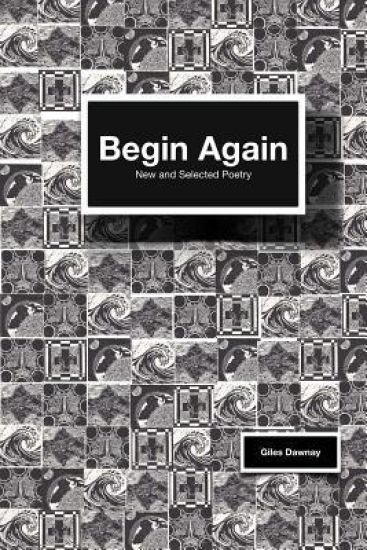
Begin Again: new and selected poems
Giles Dawnay
Createspace Independent Publishing Platform
2017
nidottu
Another years collection of poetry. This time exploring the various ideas of Heaven, the Natural World, The Sea, Light and Dark and experiences from being a Doctor. And for the first time a joint creation with my amazing wife Amy who has made and printed the incredible art work and designs that bring this small book to life.

Feng Shui Interior Design: A guide to creating good energy within your home
Giles Livingston
Createspace Independent Publishing Platform
2017
nidottu
Do you ever feel as though something isn't quite right within your home? You clean it, you tidy it but you still feel a little unsettled. Maybe you return home from a stressful day at work only to feel more wound up rather that relieved. What if employing Feng Shui in your interior design could change the energy flow throughout your home and thus the way that you feel. Included In This Book A Brief History of Feng Shui Applying Feng Shui The Living Room The Kitchen & Bathroom The Home Office The Children's Room The Dining Room This step-by-step guide will give you all the tools you need to achieve a home that feels good to be in; a home where you can feel comfortable and relaxed. Order now

In an effort to obtain research material for this book, I searched for a source that might provide a fresh perspective on the evolving effects of criminal justice services on various population groups within the United States. I considered interviewing individuals experiencing widely publicized negative interactions with policing agencies, such as members of the American underclass descended from conditions of involuntary servitude and those multilingual groups derived from foreign immigration or asylum seeking. Instead, however, I chose to express the reflections of a retired veteran of law enforcement whose ethnic identity is not often considered as that of an oppressed minority. Although they were the earliest of observers of the institution of European law and order in America, Native Americans are rarely popularized as the recipients of police injustices. Similarly, their contributions to American law enforcement are rarely acknowledged. Securing the valuable insights, criticisms, and recommendations of a qualified Amerindian law enforcement observer and practitioner, such as Captain Manitouabewich, has been enlightening and stimulating.

In an effort to obtain research material for this book, I searched for a source that might provide a fresh perspective on the evolving effects of criminal justice services on various population groups within the United States. I considered interviewing individuals experiencing widely publicized negative interactions with policing agencies, such as members of the American underclass descended from conditions of involuntary servitude and those multilingual groups derived from foreign immigration or asylum seeking. Instead, however, I chose to express the reflections of a retired veteran of law enforcement whose ethnic identity is not often considered as that of an oppressed minority. Although they were the earliest of observers of the institution of European law and order in America, Native Americans are rarely popularized as the recipients of police injustices. Similarly, their contributions to American law enforcement are rarely acknowledged. Securing the valuable insights, criticisms, and recommendations of a qualified Amerindian law enforcement observer and practitioner, such as Captain Manitouabewich, has been enlightening and stimulating.

Eminent Victorians by Lytton Strachey shattered conventions when published in 1918, launching a new era of iconoclastic history with its irreverent portraits of four Victorian icons: Cardinal Manning, Florence Nightingale, Dr. Thomas Arnold, and General Gordon. Strachey, a leading light of the Bloomsbury Group, wielded satire and psychological insight to expose the contradictions beneath their saintly reputations, forever changing how biography was written. The work opens with Manning's ecclesiastical power struggles, revealing how ambition masked as piety shaped the Oxford Movement. Nightingale emerges as both heroic reformer and tyrannical perfectionist her wartime achievements juxtaposed with personal ruthlessness. Strachey's take on Arnold dismantles the myth of the benign educator, showing how his Rugby School reforms bred militaristic conformity. The final portrait of Gordon, the doomed imperialist in Khartoum, becomes a searing indictment of British hubris. More than just Victorian biographies, these essays dissect an entire age's moral pretensions. Strachey's razor-sharp prose mocking Arnold's "neat little sermons" or Gordon's messianic delusions pioneered literary modernism in historical writing. His archival rigor (digging through diaries and letters) pairs with wicked humor to humanize legends, making this essential reading for understanding how Edwardians rejected Victorian certainties after World War I's trauma.
Lytton Stracheys Eminent Victorians redefined biographical writing with its incisive, irreverent portraits of four iconic 19th-century figures. Published in 1918, this groundbreaking work dismantles Victorian hagiography through sharp psychological insight and modernist irony. Strachey, a central figure in the Bloomsbury Group, dissects Cardinal Mannings ecclesiastical ambition, Florence Nightingales complex legacy, Dr. Thomas Arnolds educational reforms, and General Gordons imperial contradictions. The book opens with Mannings rise to power within the Catholic Church, contrasting his spiritual zeal with political maneuvering. Strachey juxtaposes Nightingales public image as the Lady with the Lamp against her obsessive, domineering private persona. In his critique of Dr. Arnold, he questions the moral rigidity behind Rugby Schools educational ideals. The final portrait of Gordon captures the tragic absurdity of British imperialism during the Khartoum siege. Stracheys prose blends wit with meticulous research, situating the work within categories like Modernist Literature, Historical Biography, and Cultural Criticism. By focusing on flaws rather than virtues, he exposes the tensions between public myth and private reality, challenging the idolization of Victorian heroes. The narratives fragmented structure and subjective perspective reflect Bloomsburys rejection of traditional storytelling. This edition includes critical annotations contextualizing Stracheys anti-establishment stance in post-World War I Britain. Eminent Victorians remains essential reading for understanding how biography evolved into a tool for cultural critique.
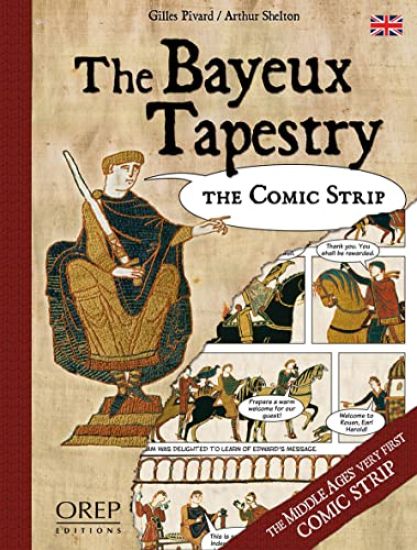
The Bayeux Tapestry is a fine 11th century master-piece which has proved of exceptional documentary value towards our current knowledge of the period. When discovering the tapestry for the first time, visitors simply marvel at the great diversity of characters, clothes, buildings, ships and other features it portrays, literally losing themselves in what could be considered as the world’s very first comic strip, dating from the Middle Ages. Comic strips have, of course, moved on with their balloons, onomatopoeia and a number of specific terms used in this 8th century art, such as foreground, angle shot, framing, dialogues; very much the same words as those used in cinema.Gilles Pivard and Arthur Shelton are delighted to present a compilation of this great fresco in a somewhat more contemporary comic strip style. However, to ensure that the work’s authenticity remains intact, neither its illustrations nor its historical contents have been altered.The authors’ aim is to offer a clear and comprehensive interpretation of this epic adventure for the largest possible readership.They sincerely hope that this book will incite readers to further explore the fascinating story of William the Conqueror, the history of the Bayeux Tapestry, or even history in general.

A wasted world. A dictator. A hounded bankster. A forsaken child. The redemption of two lives. But then came that day...Now the world has been wracked by one crisis too many. And Alias R. Martin, wanted and hiding, fearful and alone, is lost to himself. That is until the day he unbiddenly finds, among the throngs of refugees, a hapless little girl. Impulsively, in spite of himself and the danger incurred, he takes her back to his hotel. A senseless mistake. A further step against the new laws. But Rebecca inchmeal becomes the revelation; the love of his life, his daughter. His only goal then, in the course of their flight against adversity, alone against relentless foes, will be to save her, whatever the cost, including murder when the ghouls of her past resurface. But who are these?Part coming-of-age tale, part father-daughter love story, part speculative thriller, An Orphan's Whooshicree intensely probes into the impassioned parental bonds that resonate within our deep-rooted yearning for a safe haven to harbour ourselves and our emotions.A novel pursuing the vein of Cormac McCarthy's "The Road", Andrew Krivak's "The Bear" or Paulette Jiles's "News of the World", while also akin to Kimi Cunningham-Grant's "These Silent Woods".

Schelling’s Reception in Nineteenth-Century British Literature
Giles Whiteley
Springer Nature Switzerland AG
2019
nidottu
This book examines the various ways in which the German philosopher Friedrich Schelling was read and responded to by British readers and writers during the nineteenth century. Challenging the idea that Schelling’s reception was limited to the Romantics, this book shows the ways in which his thought continued to be engaged with across the whole period. It follows Schelling’s reception both chronologically and conceptually as it developed in a number of different disciplines in British aesthetics, literature, philosophy, science and theology. What emerges is a vibrant new history of the period, showing the important role played by reading and responding to Schelling, either directly or more diffusely, and taking in a vast array of major thinkers during the period. This book, which will be of interest not only to historians of philosophy and the history of ideas, but to all those dealing with Anglo-German reception during the nineteenth century, reveals Schelling to be a kind of uncanny presence underwriting British thought.





Schelling’s Reception in Nineteenth-Century British Literature
Giles Whiteley
Springer International Publishing AG
2018
sidottu
This book examines the various ways in which the German philosopher Friedrich Schelling was read and responded to by British readers and writers during the nineteenth century. Challenging the idea that Schelling’s reception was limited to the Romantics, this book shows the ways in which his thought continued to be engaged with across the whole period. It follows Schelling’s reception both chronologically and conceptually as it developed in a number of different disciplines in British aesthetics, literature, philosophy, science and theology. What emerges is a vibrant new history of the period, showing the important role played by reading and responding to Schelling, either directly or more diffusely, and taking in a vast array of major thinkers during the period. This book, which will be of interest not only to historians of philosophy and the history of ideas, but to all those dealing with Anglo-German reception during the nineteenth century, reveals Schelling to be a kind of uncanny presence underwriting British thought.