Kirjojen hintavertailu. Mukana 12 458 020 kirjaa ja 12 kauppaa.

Kirjahaku

Etsi kirjoja tekijän nimen, kirjan nimen tai ISBN:n perusteella.

1000 tulosta hakusanalla Gloria Case

Hitting Home

Hitting Home

Gloria Albrecht

Continuum International Publishing Group Ltd.
2003
sidottu
At the very time when most women's lives are defined by a lack of income, time, and energy, and when being stressed-out is for them more common than the common cold, politicians and other professed guardians of public virtue are stridently lamenting the loss of what they define as "family values." Even as women enter the workforce to provide essential income for their families while attending to children, spouse, and the endless round of domestic chores, every sort of social ill from drug addiction to unwed mothering is laid at their door. As Gloria H. Albrecht shows, this dismal situation is not merely a cultural irony; it is a potential social tragedy. She explains how this paradox symbolizes the new face of family life in America's post-industrial economy. "Hitting Home" documents the growing abandonment by business and government of their social responsibility to sustain the well-being of families. She exploses "family-friendly" policies as being in fact policies that are friendly primarily to the profit-oriented goals of the corporate world. Business strategies, touted as the new methods of efficiency, reveal the fundamentally anti-family nature of an economy designed from its origins to exclude those authentic values that arise from caring relationships. Albrecht amasses data which are illuminated by portraits and stories of the real people whose daily lives are the grist of economics. She emphasizes how sermonizing family values advocates ignore the connection between their ideal family and its exploitation of underpaid "help," whether actual servants, or cooks, or nursery attendants, or child-care providers - none of whom can themselves afford to support staff necessary to attain the status of being an acknowledged nurturer of those mythic family values. Throughout her book, Albrecht maintains that authentic family values require an equal social commitment to two connected goals: women's equality and the well-being of families.
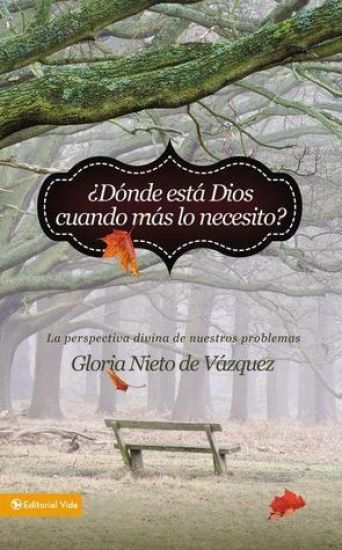
¿Dónde Está Dios Cuando Más Lo Necesito?

¿Dónde Está Dios Cuando Más Lo Necesito?

Gloria Nieto de Vázquez

Vida Publishers
2013
pokkari
A veces nos preguntamos: > En esta edicion revisa y expandida de Donde esta Dios cuando mas lo necesito? La autora nos dice que la restauracion es posible cuando se depende por completo de Dios. Como una madre que perdio a sus dos pequenas debido a una enfermedad congenita, ella conoce bien los dificiles y terribles caminos del sufrimiento y le quiere ayudar. En esta conmovedora historia, Gloria descubre un poco mas de la fuente de fe y esperanza que le ha permitido salir adelante de las pruebas con gratitud hacia Dios y con un mayor entendimiento de lo insondable de su voluntad. A pesar de las perdidas sufridas, Gloria ha sido bendecida. Dios les dio muchos hijos representados por los jovenes a los que ministra en varias partes del mundo. Por eso su mensaje es este: >.
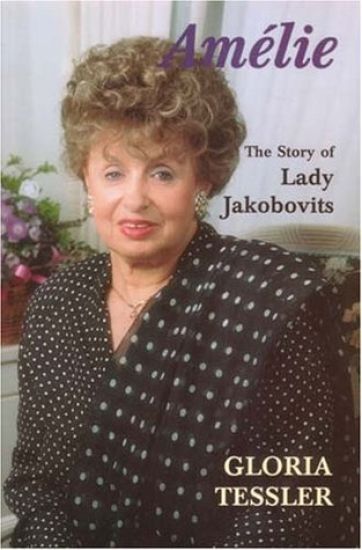
Amelie

Amelie

Gloria Tessler

Vallentine Mitchell Co Ltd
1998
nidottu
A child in war-torn Europe, Amelie Munk fled for her life with her mother, grandmother and younger siblings on a packed train from Paris bound for the south of France. Eking out a tough daily existence, Amelie quickly matured into a young woman whose spirited beauty saved her from several sticky encounters. Life changed for Amelie after the war, when, still a teenager, she married the man destined to become the Chief Rabbi. Amelie transformed into that rare combination - sophisticated woman-of-the-world and Jewish revivalist - rubbing shoulders with royalty and the political elite. Her husband, Chief Rabbi Jakobovits, was an adviser to the Thatcher government: chosen neither for politics nor faith, but for his earthier sense of personal and social responsibility. In her own right Amelie became a luminary of many charities and a speaker and educator on the talmudic and moral issues close to her heart. A deep spiritual connection with her faith and her belief of the sanctity of the family guided her.When Lord Jakobovits was created a Peer of the Realm by then prime minister Thatcher, Amelie Jakobovits became an icon of another kind, and is now regarded with general affection as Lady J.
Read to Me

Read to Me

Gloria Rolton

Australian Council for Educational
2002
pokkari
An excellent guide for those who care about the importance of early literacy development of children. Stages of development, strategies for learning and recommended titles are fully described for parents, educators and carers of children from birth to beginning-school age.
Black Woman in Green

Black Woman in Green

Gloria Brown; Donna L. Sinclair

Oregon State University
2020
nidottu
From an unlikely beginning as an agency transcriptionist in her hometown of Washington, DC, Gloria Brown became the first African American woman to attain the rank of forest supervisor at the US Forest Service. As a young widow with three children, she transferred to Missoula, Montana, and embarked on a remarkable journey, ultimately leading the Siuslaw National Forest in Oregon and later the Los Padres in California. The story of Brown’s career, from clerical worker to forest supervisor, unfolds against the backdrop of a changing government agency and a changing society. As scholars awaken to the racist history of public land management and the ways that people of color have been excluded from contemporary notions of nature and wilderness, Brown’s story provides valuable insight into the roles that African Americans have carved out for themselves in the outdoors generally and in the field of environmental policy and public lands management specifically. Drawing on her powerful communication and listening skills, her sense of humor, and her willingness to believe in the basic goodness of humanity, Brown conducted civil rights trainings and shattered glass ceilings, all while raising her children alone. Written in an engaging and accessible style with historian Donna Sinclair, Brown’s story provides a fascinating case study for public administration and contributes to a deeper understanding of the environmental and civil rights movements of the twentieth century, particularly the role that racial discrimination has played in national forests, parks, and other wilderness spaces. It also highlights issues of representation in the federal government, women’s history, the history of the American West, and literature associated with African American experiences in predominately white societies.
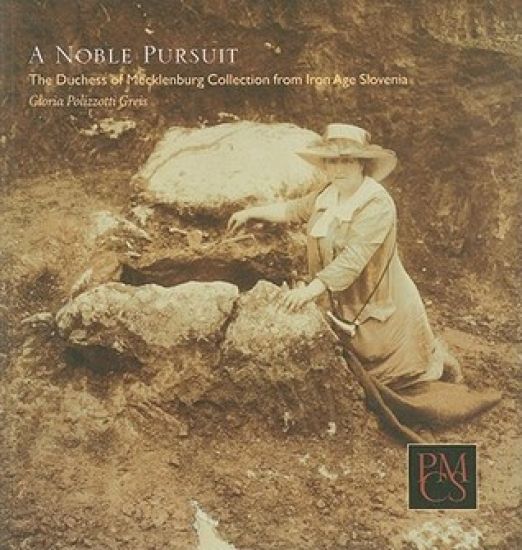
A Noble Pursuit

A Noble Pursuit

Gloria Polizzotti Greis

Peabody Museum of Archaeology Ethnology,U.S.
2006
nidottu
In 1905, to the consternation of her family and in defiance of convention, the 48-year-old Duchess Paul Friedrich of Mecklenburg took up the practice of archaeology. In the nine years leading up to the First World War, she successfully excavated twenty-one sites in her home province of Carniola (modern Slovenia), acquiring the patronage of Austro-Hungarian Emperor Franz Josef I and German Kaiser Wilhelm II. Mentored by the most important archaeologists of her time--Oscar Montelius and Josef Dechellette--the Duchess became an accomplished fieldworker and an important figure in the archaeology of Central Europe. Gloria Greis incorporates previously unpublished correspondence and other archival documents in this colorful account of the Duchess of Mecklenburg and her work.The Mecklenburg Collection, the largest systematically excavated collection of European antiquities outside of Europe, resides in Harvard's Peabody Museum of Archaeology and Ethnology. The sites excavated by the Duchess, which encompass the scope of Iron Age cultures in Slovenia, form an important resource for studying the cultural history of the region. "A Noble Pursuit" presents a selection of beautifully photographed artifacts that provide an overview of the scope and importance of the collection as a whole and attest to the enduring quality of the Duchess's pioneering work.
Identity, Culture and Politics in the Basque Diaspora

Identity, Culture and Politics in the Basque Diaspora

Gloria Pilar Totoricaguena

University of Nevada Press
2003
sidottu
Gloria P. Totoricagüena presents a thorough comparative examination of the remarkable endurance of Basque identity and culture in six countries of the far-flung Basque diaspora. Using the results of interviews and extensive anonymous surveys with more than eight hundred informants in the diaspora, plus extensive research in archives and printed sources in all six of her study countries, Totoricagüena reveals for the first time the complex and interrelated universe of these dispersed Basques. She explores the elements of their migration patterns and the institutions that have encouraged identity maintenance, the impacts on established communities of each new wave of immigrants, and the nature of economic and political ties with the homeland. Totoricagüena offers a superb quantitative study of an aspect of Basque culture that has been largely ignored by scholars—the diaspora. In doing so, she enlarges the understanding of cultural identity in general—how it is defined and preserved, how it evolves over time, and how both the politics of distant places and the most intimate family habits can shape an individual’s sense of self. Identity, Culture, and Politics in the Basque Diaspora is a major contribution to the knowledge of Basques and their persistent political and cultural traditions.
Identity, Culture, and Politics in the Basque Diaspora

Identity, Culture, and Politics in the Basque Diaspora

Gloria P. Totoricagüena

University of Nevada Press
2015
nidottu
Gloria P. Totoricagüena presents a thorough comparative examination of the remarkable endurance of Basque identity and culture in six countries of the far-flung Basque diaspora. Using the results of interviews and extensive anonymous surveys with more than eight hundred informants in the diaspora, plus extensive research in archives and printed sources in all six of her study countries, Totoricagüena reveals for the first time the complex and interrelated universe of these dispersed Basques. She explores the elements of their migration patterns and the institutions that have encouraged identity maintenance, the impacts on established communities of each new wave of immigrants, and the nature of economic and political ties with the homeland.Totoricagüena offers a superb quantitative study of an aspect of Basque culture that has been largely ignored by scholars--the diaspora. In doing so, she enlarges the understanding of cultural identity in general--how it is defined and preserved, how it evolves over time, and how both the politics of distant places and the most intimate family habits can shape an individual’s sense of self. Identity, Culture, and Politics in the Basque Diaspora is a major contribution to the knowledge of Basques and their persistent political and cultural traditions.
The Sanctuary of Demeter and Kore

The Sanctuary of Demeter and Kore

Gloria S. Merker

American School of Classical Studies at Athens
2000
sidottu
About 24,000 figurines and fragments were found during excavations at the Sanctuary of Demeter and Kore, greatly enriching the known body of Corinthian figurines not only in number but also in the addition of many entirely new types and styles. Working far beyond the output of the Potters' Quarter workshops, the Corinthian coroplasts are revealed as inventive, often highly adept in technique, and attuned to stylistic developments in the plastic arts in general. Most importantly, the evidence suggests that there may have been a link in Corinth between the manufacture of terracotta figurines and small bronze ones, especially in the 4th and early 3rd centuries B.C., through the use of shared models. If this is true, the figurines provide a glimpse of the mostly lost bronze production of that period. The figurines are also important because they help to explicate the meaning and conduct of the cult of Demeter and Kore in Corinth. Since the literary sources and inscriptions are unfortunately not as abundant as one would wish, the nature and conduct of the cult must be understood largely through the architecture and other finds. The figural coroplastic art provides additional data on the deities and heroes recognized at the sanctuary, the age and gender of the participants in the rituals, the offerings they brought, and the nature of their cultic activities. Beyond these data, the figurines are examined for what they may reveal through their imagery of the underlying ideas of the cult, how the deities were perceived, why they were approached, and how the cult functioned as a part of Corinthian society.
The Greek Tile Works at Corinth

The Greek Tile Works at Corinth

Gloria S. Merker

American School of Classical Studies at Athens
2005
nidottu
A series of kilns at ancient Corinth known as the Tile Works are given final publication in this long-awaited book, based on excavations conducted in 1939 and 1940 (as war was closing in) by Carl Roebuck and Arthur Parsons, and renewed briefly in 1950 by Gladys Weinberg. The artisans at the Tile Works produced not only roof tiles but a whole range of terracotta articles from the 6th to 4th centuries B.C., with one break in production in the late 5th to early 4th century. These products included, at different periods, architectural sculpture and decorated revetments; heavy household pottery such as mortars and lekanai; loomweights; votive furniture such as altars and plaques; and even some fine and semi-fine pottery. The standard of craftsmanship was very high and the artifacts produced found enthusiastic markets in other parts of Greece; as the revetments of roofs at Delphi, for example, and as mortars in the markets of Athens. The Tile Works, therefore, along with the Potters' Quarter, was one of the major and most prolific industrial establishments in ancient Corinth. In this study, the principal features and deposits are first discussed, in order to establish the chronology of the three successive kilns on the site, and to try to relate them to known events in Corinth. The manufactures are then considered, beginning with a discussion of fabrics and techniques of manufacture, then moving on to typology and dating. The study concludes with a presentation of the Corinthian pottery and other artifacts found at the Tile Works but not made there, and a catalogue of terracottas by Charles K. Williams II.
Walk with God

Walk with God

Gloria Copeland

Struik Christian Books
2001
nidottu
God has a work for you to do on earth. He has a special part for you to play. He has a significant place that only you can fill. But, before you can move into that place, you have to learn how to walk confidently with the Lord every day. In this insightful book, Gloria Copeland shares the first essential step in establishing your daily journey with God: Learning how to have a willing and obedient heart. Take a walk through the Word and learn specifically how to: - Walk in newness of life-and throw aside the ways of the world - Bear real fruit by living in daily communion with the Lord - Be led by the prompting of the Holy Spirit - Pray the perfect will of God - Make the supernatural natural in your life Discover the path to a life of obedience today...and learn what it really means to Walk With God.
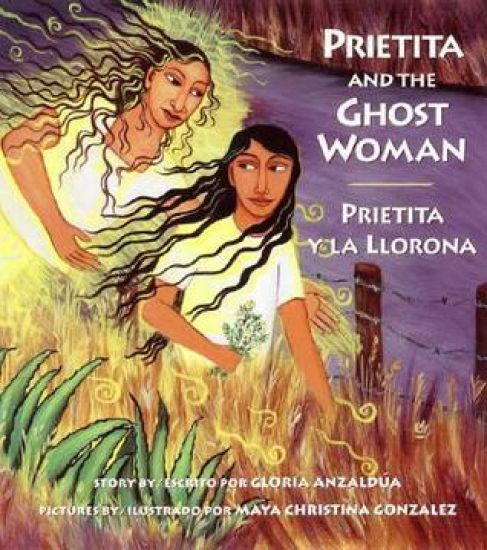
Prietita and the Ghost Woman

Prietita and the Ghost Woman

Gloria Anzaldúa

Children's Book Press,U.S.
2014
pokkari
Ever since she can remember, Prietita has heard frightening stories about la Llorona--the legendary ghost woman who steals children at night. One day, when Prietita goes in search of the missing herb that can help cure her mother's illness, she becomes lost in the woods. Suddenly she hears a distant crying sound and sees flashes of white in the trees. Could it be the ghost woman from her grandmother's stories? In her second book for children, Gloria Anzaldua reinterprets the famous Mexican legend of la Llorona, the ghost woman. Surrounded by the live oak and prickly pear of the Texas woods, Prietita discovers that la Llorona is not what people expect. In this magical story, Prietita's search for the healing rue plant turns into a powerful journey of self-discovery.
Transforming Mind

Transforming Mind

Gloria J. Gannaway

Praeger Publishers Inc
1994
nidottu
Emergent paradigms in the physical sciences are combined with deconstructionist methods and Vygotsky's theory of speech and thought to formulate new mind-sets for society and education, which will promote nonlinear, nonpatriarchal, nonviolent, anti-authoritarian worldviews on which to build stronger individuals and societies. E. D. Hirsch and other establishment education reformers are shown to be dangerously noncritical and bound to old paradigms that advocate simple solutions to complex problems. Gannaway contends that the nature of contemporary American society is unique and must be creatively analyzed before the educational system can be effectively reformed. She shows teachers how to use familiar texts from popular culture to develop habits of critical thinking that will protect students and citizens from insidious mass media myths.
A Maryland Sampling – Girlhood Embroidery 1738–1860

A Maryland Sampling – Girlhood Embroidery 1738–1860

Gloria Seaman Allen

Maryland Historical Society
2008
sidottu
One of the nation's premier textile scholars discusses more than 500 samplers and embroideries, most never before published. Reflecting Maryland's rich mix of ethnic and religious cultures, they provide glimpses into the lives of young women from Colonial times to the eve of the Civil War. Some samplers contain registers of family history; others are memorial or mourning samplers. Poems, moral precepts and biblical verses abound. Especially engaging are the samplers with "busy yards," populated by animals, birds and people. Exquisite silk pictorial embroideries were created under the tutelage of the Sisters of Charity at Saint Joseph's Academy in Emmitsburg. Unique to Maryland are the embroideries worked by the children of free African-Americans taught by the Oblate Sisters, the world's first order of black nuns. Quaker samplers are distinguished by broad compartmentalized borders filled with pairs of gorgeous flowers, butterflies and birds. Embroidered maps, all worked between 1797 and the early 1800s, form their own recognizable group. Students of women's history will be fascinated by the role of needlework in early female education. Modern day embroiderers will find inspiration in the designs. Collectors and antiques dealers have long awaited such a book.