Kirjojen hintavertailu. Mukana 12 390 323 kirjaa ja 12 kauppaa.

Kirjahaku

Etsi kirjoja tekijän nimen, kirjan nimen tai ISBN:n perusteella.

1000 tulosta hakusanalla Gregory L. Matloff

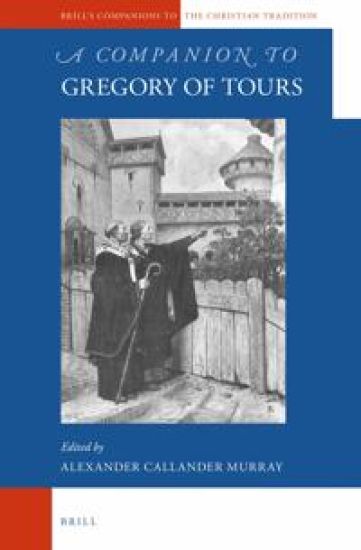
A Companion to Gregory of Tours
Gregory, bishop of Tours (573-594), was among the most prolific writers of his age and uniquely managed to cover the genres of history, hagiography, and ecclesiastical instruction. He not only wrote about events (of the secular, spiritual, and even natural variety) but about himself as an actor and witness. Though his work (especially the Histories) has been recycled and studied for centuries, our grasp of an even basic understanding of it, never mind Gregory’s significance in the history of the late antique West, has hardly yet attained a definitive perspective. A Companion to Gregory of Tours brings together fourteen scholars who provide an expert guide to interpreting his works, his period, and his legacy in religious and historical studies. Contributors are: Pascale Bourgain, Roger Collins, John J. Contreni, Stefan Esders, Martin Heinzelmann, Yitzhak Hen, John K. Kitchen, Simon Loseby, Alexander Callander Murray, Patrick Périn, Joachim Pizarro, Helmut Reimitz, Michael Roberts, Richard Shaw.
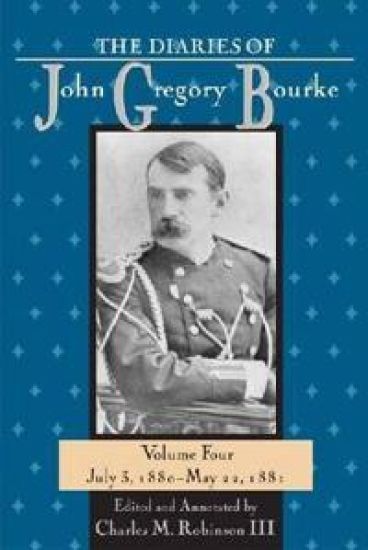
The Diaries of John Gregory Bourke V. 4; July 3, 1880-May 22, 1881
John Gregory Bourke kept a monumental set of diaries as aide-de-camp to Brigadier General George Crook. This fourth volume (of a projected set of eight) chronicles the political and managerial affairs in Crook's Department of the Platte. A large portion centers on the continuing controversy concerning the forced relocation of the Ponca Indians from their ancient homeland along the Dakota-Nebraska line to a new reservation in the Indian Territory. An equally large portion concerns Bourke's ethnological work under official sanction from the army and the Bureau of Ethnology. Each volume in the series is extensively annotated and contains a biographical appendix on Indians, civilians, and military personnel named in the volume.
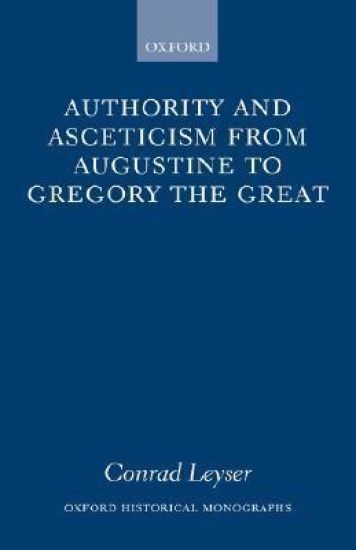
Authority and Asceticism from Augustine to Gregory the Great
Conrad Leyser examines the formation of the Christian ascetic tradition in the western Roman Empire during the period of the barbarian invasions, c.400-600. In an aggressively competitive political context, one of the most articulate claims to power was made, paradoxically, by men who had renounced 'the world', committing themselves to a life of spiritual discipline in the hope of gaining entry to an otherworldly kingdom. Often dismissed as mere fanaticism or open hypocrisy, the language of ascetic authority, Conrad Leyser shows, was both carefully honed and well understood in the late Roman and early medieval Mediterranean. Dr Leyser charts the development of this new moral rhetoric by abbots, teachers, and bishops from the time of Augustine of Hippo to that of St Benedict and Gregory the Great.
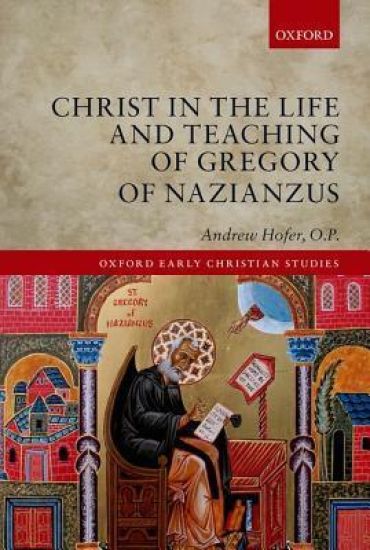
Christ in the Life and Teaching of Gregory of Nazianzus
Christ in the Life and Teaching of Gregory of Nazianzus is the first full-length book devoted to an overview of the Christology of this fourth-century Father of the Church. Andrew Hofer examines the breadth of Gregory's corpus-orations, letters, and poems (often neglected in doctrinal studies)-to argue that Gregory's writing on Christ can be best understood in tandem with his autobiography. This study begins with an articulation of Gregory's theology of the Word in which words come from the Word who became incarnate. Hofer then offers a close reading of how Gregory writes to or about Christ in the poetry known as 'on himself'. Within a three-part study of 'autobiographical Christology', Hofer explores the philosophical background of Gregory's rhetoric for what he calls the 'mixtures' of Christ and himself. He then elucidates this autobiographical concern in Gregory's famous Ep. 101, a landmark text in the Christological controversies. Thirdly, Hofer considers how Gregory celebrates the mysteries of Christ in the festal orations. Before the book's epilogue, a chapter describes how Gregory wrote of Christ for his pastoral ministry. Throughout the work, Hofer demonstrates the importance in Gregory's writings of the language of blending (such as in the Greek word krasis, rejected by the Council of Chalcedon to describe the Incarnation). This book thus offers a unique perspective on the one known as 'the Theologian' in Chalcedon's acts and in subsequent Christian tradition.
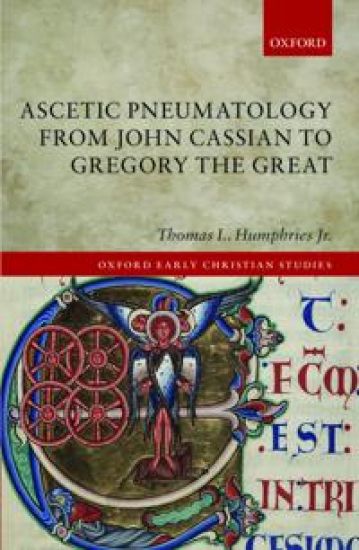
Ascetic Pneumatology from John Cassian to Gregory the Great
Ascetic Pneumatology from John Cassian to Gregory the Great presents three interconnected arguments. The first argument concerns scholarly readings of antiquity: there are developments in 5th and 6th century Latin pneumatology which we have overlooked. Theologians like John Cassian and Gregory the Great were engaged in a significant discussion of how the Holy Spirit works within Christian ascetics to reform their inner lives. Other theologians, like Leo the Great, participate to a lesser extent in a similar project. They applied pneumatology to theological anthropology. Thomas L. Humphries, Jr. labels that development "ascetic pneumatology," and beings to track some of the late antique schools of thought about the Holy Spirit. The second argument concerns the reception of Augustine in the two centuries immediately after his death: different people read Augustine differently. Augustine's theology was known and understood to varying degrees in various regions. Humphries demonstrates significant engagements with Augustine's theology as it was relevant to Pelagianism (evidenced in Prosper of Aquitaine), as it was relevant to Gallic Arians (evidenced with the Lérinian theologians), and as it was relevant to African Arians and certain questions posed of Nestorianism (evidenced with Fulgentius of Ruspe). Instead of attempting to rank various theologians as better and worse "Augustinians," Humphries argues that there were different kinds of "Augustinianisms" even in the years immediately after Augustine. The third argument concerns Gregory the Great and his sources. Once we see that ascetic pneumatology was a strain of thought in this era and see that there are different kinds of Augustinianisms, we can see that Gregory depends on both Augustine and Cassian. In the closing chapters, Humphries argues that Gregory uses Cassian's ascetic pneumatology, and this allows Gregory's synthesis of Cassian and Augustine to stand in greater relief than it has before. The study begins with Cassian, ends with Gregory, and is attentive to Augustine throughout.
The Gobo Bride: A Lewis Gregory Mystery
An inter-species engagement, A journey through the Space Machine...A mystery spanning multiple star systems.In the first case from the future files of Lewis Gregory: Intergalactic Private Investigator, the reality 3V detective is hired to investigate the background of a wealthy alien who has become engaged to a famous human actress. But the case turns deadly against a backdrop of interstellar Civilization, online gaming, virtual reality and the constant fear of hackers threatening the safety of every species. How can our hero hope to unravel the threads that threaten THE GOBO BRIDE
The Early Liturgy: to the Time of Gregory the Great

The Early Liturgy: to the Time of Gregory the Great

Josef a. (Josef Andreas) 1. Jungmann

Hassell Street Press
2021
sidottu
This work has been selected by scholars as being culturally important and is part of the knowledge base of civilization as we know it.This work is in the public domain in the United States of America, and possibly other nations. Within the United States, you may freely copy and distribute this work, as no entity (individual or corporate) has a copyright on the body of the work.Scholars believe, and we concur, that this work is important enough to be preserved, reproduced, and made generally available to the public. To ensure a quality reading experience, this work has been proofread and republished using a format that seamlessly blends the original graphical elements with text in an easy-to-read typeface.We appreciate your support of the preservation process, and thank you for being an important part of keeping this knowledge alive and relevant.
The Early Liturgy: to the Time of Gregory the Great

The Early Liturgy: to the Time of Gregory the Great

Josef a. (Josef Andreas) 1. Jungmann

Hassell Street Press
2021
nidottu
This work has been selected by scholars as being culturally important and is part of the knowledge base of civilization as we know it.This work is in the public domain in the United States of America, and possibly other nations. Within the United States, you may freely copy and distribute this work, as no entity (individual or corporate) has a copyright on the body of the work.Scholars believe, and we concur, that this work is important enough to be preserved, reproduced, and made generally available to the public. To ensure a quality reading experience, this work has been proofread and republished using a format that seamlessly blends the original graphical elements with text in an easy-to-read typeface.We appreciate your support of the preservation process, and thank you for being an important part of keeping this knowledge alive and relevant.
Death and Afterlife in the Pages of Gregory of Tours
Gregory of Tours was a bishop of late antiquity who was famously devoted to promoting the efficacy of saintly powers. In his writings, both historical and hagiographical, Gregory depicted the saints and reprobates of his age. This book analyses Gregory's writings about death and the afterlife, thereby illuminating the bishop's pastoral imperative to save souls and revealing his opinions about the fates of Merovingian royals, among many others he mentions in his voluminous text. The study provides insight into Gallic peoples living at the dawning of the Middle Ages and their hopes and fears about the otherworld. It affords an original, nuanced interpretation of Gregory's motives for penning his works, particularly the Historiae, which remained unfinished upon the author's death.