Kirjojen hintavertailu. Mukana 11 627 425 kirjaa ja 12 kauppaa.

Kirjahaku

Etsi kirjoja tekijän nimen, kirjan nimen tai ISBN:n perusteella.

1000 tulosta hakusanalla Harvey Goodwin

The Strike

The Strike

Harvey Thomlinson

Lucid Play Publishing
2018
nidottu
As a stylist, Thomlinson aims high, with goals that recall modernists such as James Joyce and Virginia Wolfe: writers concerned with the complex juxtaposition of interior thought and external reality. The novel's pyrotechnic language serves primarily as a window into the minds of his characters. -- LA Review of BooksGround breaking and important...should become one of the most analyzed techniques in literary fiction.-- Experimental WritingThis unconventional text while reminiscent of the Dadaists word games, experimental poetry, and William Burroughs's work using cut-ups is, in the end, a unique entity unto itself...-- Ray FracalossyThe Strike vividly explores a season of crisis in the lives of Old Yu and Little Xu, two outsiders in an ice-bound Chinese border town riven by an illegal strike. Caught up in the upheaval, guilt-ridden Old Yu embarks on a reckless journey to find the rebellious woman he betrayed, before it's too late. Meanwhile, lonely young drifter Little Xu enters into a dangerous relationship with a stranger on the run.The Strike stands out as a novel that is both experimental and dealing realistically with real world events in an engaged way. The new use of syntax the novel pioneers is a method the author, a translator, uses to shake up the synapses of readers in a way that can deliver new perspectives on the nature of reality. Linguists and psychologists, literary critics and readers will find this to be a stunning new revelation of possibility.
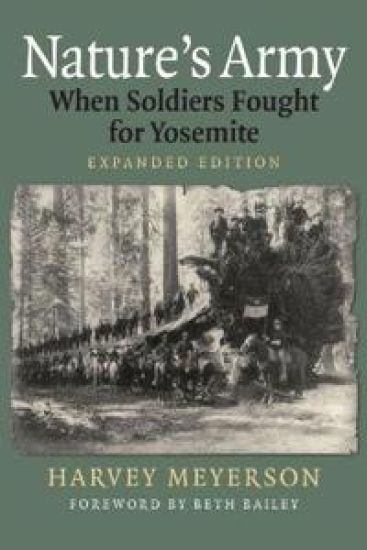
Nature's Army

Nature's Army

Harvey Meyerson; Beth Bailey

University Press of Kansas
2020
nidottu
Blessings on Uncle Sam's soldiers! They have done their job well, and every pine tree is waving its arms for joy." John MuirMuir's words and this book both celebrate a crucial but largely forgotten episode in our nation's history - how a generation prior to the creation of a National Park Service, the US Army ran Yosemite National Park in an unusual alliance with the fabled preservationist John Muir and his Sierra Club. Harvey Meyerson brings that largely forgotten episode in our nation's history to life and uses it as a touchstone for a reconsideration of a century of civilian-military cooperation in environmental protection and infrastructure construction whose impact and relevance still resonate.Despite the worldwide renown and popularity of Yosemite National Park, few people know that its first stewards were drawn from the so-called Old Army. From 1890 until the establishment of the National Park Service in 1916, these soldiers proved to be extremely competent and farsighted wilderness managers. Meyerson recaptures the forgotten history of these early environmentalists and how they set significant standards for the future oversight of our national parks.The army, Meyerson suggests, had actually been well prepared to assume this stewardship. During its first hundred years - and despite the interruptions of warfare - its soldiers had crisscrossed the American landscape, preparing maps and writing detailed reports describing climate, weather, physical terrain, ecosystems, and the diverse flora and fauna populating the lands they explored and often protected during an era of wide-open exploitation of natural resources. Such experience made the army better suited than any other federal agency to oversee the early national parks system.Combining environmental, military, political, and cultural history, Meyerson's study is especially timely in light of Yosemite's enormous popularity (four million visitors annually) and recent controversies pitting conservation forces against dam builders and proponents of expanded public access.
All You Want to Know About the Bible in Pop Culture

All You Want to Know About the Bible in Pop Culture

Harvey Kevin

Thomas Nelson Publishers
2015
nidottu
Somehow, it’s hard to picture pop culture and Christianity going hand-in-hand, but maybe we simply aren't looking at things the right way. All You Want to Know About the Bible in Pop Culture reveals places where readers may be surprised to find redeeming values and gospel messages in today’s movies, music, popular TV shows, and much more!When you look closely, past the outrageous outfits and the antics of teen pop-sensations, it’s easy to see that from the big screen to the small screen and right down to the radio waves, God and His stories are still prevalent in pop culture today. There are movies and television shows that speak eternal truth, reality show families who represent believers well, even fictional Christians portrayed in a positive light. And if you listen closely, musicians are still conversing with God as the original songwriters of the Bible did. For the reader searching for meaning in media today, All You Want to Know About the Bible in Pop Culture is the perfect choice. Features include: Fun Bible-based facts and trivia questionsExamples of biblical messages from current TV shows, films, and pop songsA casual and engaging resource
The Paradox of Philosophical Education

The Paradox of Philosophical Education

Harvey J. Lomax

Lexington Books
2003
sidottu
The Paradox of Philosophical Education: Nietzsche's New Nobility and the Eternal Recurrence in Beyond Good and Evil is the first coherent interpretation of Nietzsche's mature thought. Author Harvey Lomax pays particular attention to the problematic concept of nobility which concerned the philosopher during his later years. This sensitive reading of Nietzsche examines nobility as the philosopher himself must have seen it: as a true and powerful longing of the human soul, interwoven with poetry, philosophy, religion, and aristocratic politics. Both a close textual analysis and a thoughtful reconceptualization of Beyond Good and Evil, The Paradox of Philosophical Education penetrates beyond the philosopher's mask of caustic irony to the face of the real Nietzsche: a lover of wisdom whose work sought to resurrect it in all its Socratic splendor
The Paradox of Philosophical Education

The Paradox of Philosophical Education

Harvey J. Lomax

Lexington Books
2003
nidottu
The Paradox of Philosophical Education: Nietzsche's New Nobility and the Eternal Recurrence in Beyond Good and Evil is the first coherent interpretation of Nietzsche's mature thought. Author Harvey Lomax pays particular attention to the problematic concept of nobility which concerned the philosopher during his later years. This sensitive reading of Nietzsche examines nobility as the philosopher himself must have seen it: as a true and powerful longing of the human soul, interwoven with poetry, philosophy, religion, and aristocratic politics. Both a close textual analysis and a thoughtful reconceptualization of Beyond Good and Evil, The Paradox of Philosophical Education penetrates beyond the philosopher's mask of caustic irony to the face of the real Nietzsche: a lover of wisdom whose work sought to resurrect it in all its Socratic splendor
Educational Theory and Jewish Studies in Conversation
Educational Theory and Jewish Studies in Conversation: From Volozhin to Buczacz, by Harvey Shapiro, PhD, brings together two different fields of study—modern Jewish studies and contemporary educational theory—to provide new theoretical frameworks for their interaction. Although Jewish studies and education programs at secular universities have joined denominational and transdenominational institutions of higher learning in adopting a dual or parallel course structure, there has been little scholarly attention given to the basis for doing so. Shapiro provides alternative theoretical frameworks for the relationship between Jewish studies and educational theory and discusses different ways of developing and articulating these relationships between disciplines. Shapiro shows what is at stake when students and faculty think and communicate together across discourses—in particular, between the fields of education and Jewish studies. Presenting an alternative to conventional notions of interdisciplinarity, this book’s import extends to virtually all relationships between the humanities and professional education when these different discourses illuminate and challenge one another.
E. P. Thompson

E. P. Thompson

Harvey J. Kaye

Polity Press
1990
nidottu
The work of E. P. Thompson as historian, socialist and peace activist has been enormously influential. Yet attempts to assess the impact of his work as a whole - perhaps because of the very diversity of his contributions - have been rare. This book attempts such an evaluation, bringing together a range of authors who, in original essays, assess the main dimensions of Thompson's work. Contributors include, Harvey Kaye, Keith McClelland, Renato Rosaldo, Kate Soper, Robbie Gray, Martin Shaw, Catherine Hall, Geoff Eley, and John Goode. The book is written from a critical but sympathetic standpoint. It makes a very substantial contribution to the scholarly and practical appraisal of Thompson's ideas.
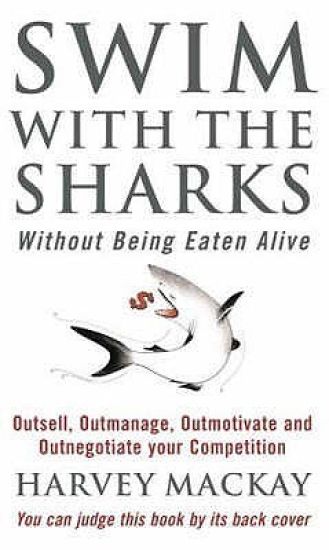
Use Your Head To Get Your Foot In The Door
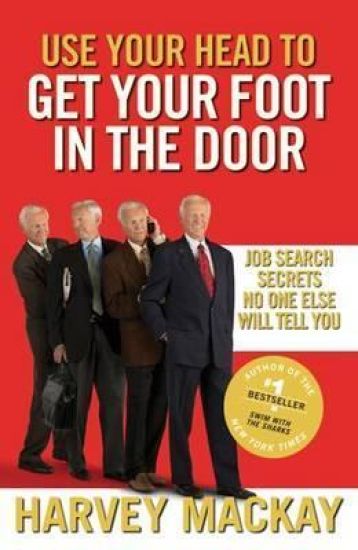
Bestselling business author Harvey Mackay returns with an uplifting, amusing and jam-packed with proven tips book to guide you through the toughest job market in decades.The average person will have at least three career changes and ten different jobs by the age of 38. In this era of downsizing and outsourcing, you can never be sure your job will still exist in five years - or five weeks. So you'd better think of your career as a perpetual job search. That demands a passion for lifetime learning and the skills for relentless and effective networking.Mackay shows you how to be at your best when things are at their worst. His hard-hitting topics include: beating rejection before it beats you; warning signals that you might be losing your job; how to impress at interviews; negotiating the job you want, not the job they offer; taking advantage of the way bosses make hiring decisions; and blending the latest contact tools with old-fashioned face-to-face networking.Use Your Head to Get Your Foot in the Door is the definitive A-Z career resource for the rest of your life.
Use Your Head to Get Your Foot in the Door
Bestselling business author Harvey Mackay returns with USE YOUR HEAD TO GET YOUR FOOT IN THE DOOR - an uplifting, amusing and jam-packed book with proven tips to guide you through the toughest job market in decades. The average person will have at least three career changes and ten different jobs by the age of 38. In this era of downsizing and outsourcing, you can never be sure your job will still exist in five years - or five weeks. So you'd better think of your career as a perpetual job search. That demands a passion for lifetime learning and the skills for relentless and effective networking. Mackay shows you how to be at your best when things are at their worst. His hard-hitting topics include: beating rejection before it beats you; warning signals that you might be losing your job; how to impress at interviews; negotiating the job you want, not the job they offer; taking advantage of the way bosses make hiring decisions; and blending the latest contact tools with old-fashioned face-to-face networking. USE YOUR HEAD TO GET YOUR FOOT IN THE DOOR is the definitive A-Z career resource for the rest of your life.
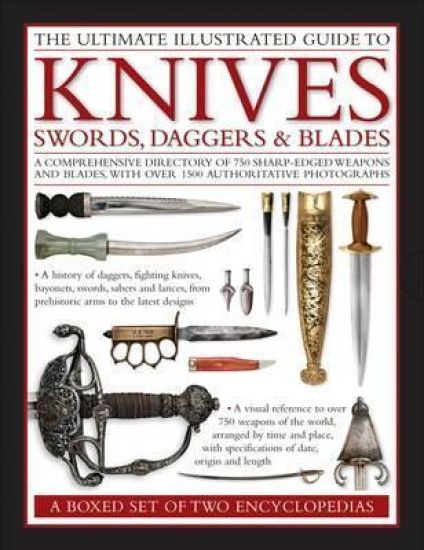
Ultimate Illustrated Guide to Knives, Swords, Daggers and Blades
This is a detailed history in two volumes of the development of daggers, fighting knives, bayonets, swords, sabers and lances, from the Stone Age through to the latest utilitarian designs. It is a visual reference to over 750 weapons of the world, arranged by time period and geographical area, along with specifications of date, origin and length. It is perfect for the serious collector and keen enthusiast alike, and a superb sourcebook and reference work for military historians, curators, academics and experts on edged weaponry of all periods. It is lavishly illustrated throughout with more than 1500 photographs and fine art images. This comprehensive boxed set offers two authoritative encyclopedias on sharp-edged weapons through history and around the world. The first section of each book is a fascinating overview of edged weapons, from the pole arms and ballock daggers of medieval Europe, and the cavalry sabers of the 17th century to the swords of the Russian Empire and classic commando knives of World War II. The second sections offer complete visual directories, featuring each weapon's capabilities and individual specification. With over 1500 illustrations, this is essential reading for everybody interested in the history of military conflicts and sharp weapons.
New Crafts: Creative Plasterwork

New Crafts: Creative Plasterwork

Harvey Stephanie

Lorenz Books
2016
sidottu
Few craft materials are cheaper to buy or easier to work with than plaster, and by mastering and using a few simple techniques you can turn this humble material into gloriously inspiring objects and artefacts. No expensive equipment is required - plaster dries naturally and does not need kiln-firing - so all you need to get started is a bag of plaster, a few simple materials and some basic shaping tools. The book shows how to make articles such as shells, fruit, animals, masks, wall plaques and bows; practical objects such as containers, candleholders, frames and bookends; and how to restore damaged frames. There is also advice on finishing techniques - from painting and gilding to weathering, distressing and varnishing. The book presents the craft of plastering in a beautifully inspirational form.
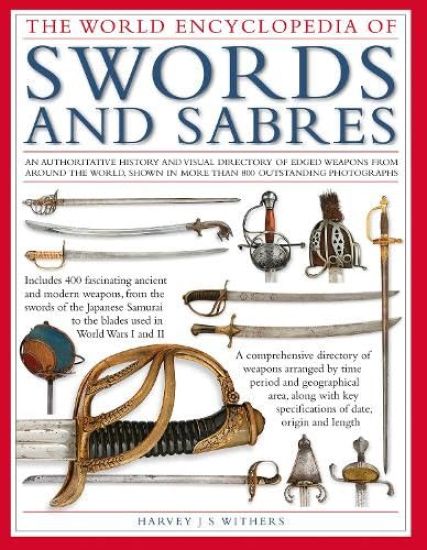
Swords and Sabres, The World Encyclopedia of

Swords and Sabres, The World Encyclopedia of

Harvey Withers

ANNESS PUBLISHING
2024
sidottu
This beautifully presented book traces the history of swords, sabres, spears and lances from Paleolithic origins to the twentieth-century demise of the sword as a military weapon. Focusing on eras of historical and military significance, such as the Napoleonic Wars and the American Civil War, the author describes how the development of edged weapons brutally shaped some of our greatest civilizations. At the heart of the book is a wide-ranging and fully illustrated directory, featuring more than 500 examples from around the world. From the spears of Ancient Egypt to the swords of the Russian empire, and from the swords of the Japanese Samurai to the blades used in World Wars I and II, each entry is accompanied by a photograph of the weapon and key details including date, origin and length. The 800 photographs and illustrations of these extraordinary pieces of craftmanship will fascinate anyone interested in the conflicts and weapons that have shaped our history.
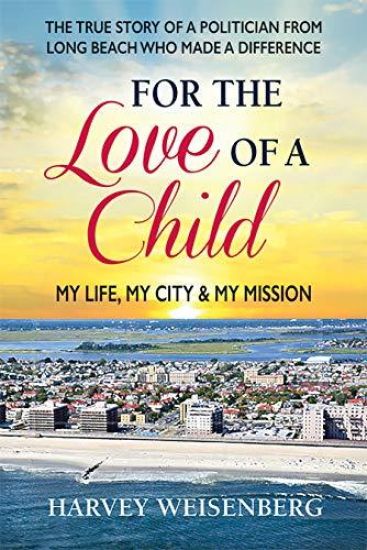
For the Love of a Child

For the Love of a Child

Harvey Weisenberg

Square One Publishers
2018
nidottu
This is the story of Harvey Weisenberg--a lifeguard, teacher, policeman, and eventually a New York politician, who quietly made a difference in the lives of millions of children and adults with special needs. In the summer of 1965, Harvey, a lifelong resident of Long Beach, New York, met two people who would make a profound impact on his life: Ellen Laufer and her seven-year-old son, Ricky, who had been born with cerebral palsy and was severely disabled. That day at the Coral Reef Beach Club in Lido Beach, where Harvey worked as a lifeguard, was the beginning of a love story that continues to this day. Not only did Harvey fall in love with Ellen, he also fell in love with Ricky, who introduced him to the challenges of both children with special needs and their families. Through this relationship, Harvey found his life's mission. For the Love of a Child tells the story of the people who inspired Harvey early on, as well as the City of Long Beach, which greatly influenced his life in public service. He held office for thirty-eight years, thirteen as a council member in Long Beach and twenty-five in Albany as a state assemblyman. During this time, he worked with--and in some cases, bumped heads with--five New York governors. As a legislator, Harvey's priorities were always for the people, not political agendas, as his story shows. Harvey knows first hand that children with special needs are filled with unconditional love. God gave him an angel in Ricky, a saint in Ellen, and, thanks to both, a mission that allowed him to spend his life making sure that children like Ricky and their families are given the best quality of life. Through his story, Harvey shares the important work he did, the challenges he met, and the life-changing experiences he has had along the way.
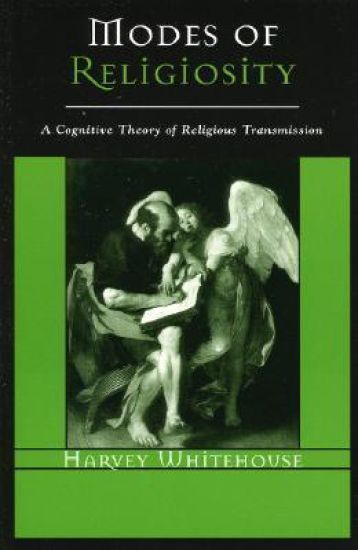
Modes of Religiosity

Modes of Religiosity

Harvey Whitehouse

AltaMira Press,U.S.
2004
sidottu
Religions_whatever else they may be_are configurations of cultural information reproduced across space and time. Beginning with this seemingly obvious fact of religious transmission, Harvey Whitehouse goes on to construct a testable theory of how religions are created, passed on, and changed. At the center of his theory are two divergent 'modes of religiosity:' the imagistic and the doctrinal. Drawing from recent advances in cognitive science, Whitehouse's theory shows how religions tend to coalesce around one of these two poles depending on how religious behaviors are remembered. In the 'imagistic mode,' rituals have a lasting impact on people's minds, haunting not only our memories but influencing the way we ruminate on religious topics. These psychological features are linked to the scale and structure of religious communities, fostering small, exclusive, and ideologically heterogeneous ritual groupings or factions. In the 'doctrinal mode', on the other hand, religious knowledge is primarily spread through intensive and repetitive teaching; religious communities are contrastingly large, inclusive, and centrally regulated. While these tendencies have long been recognized in the history of the study of religion, the modes of religiosity theory is unique in that it explains why these tendencies exist. More importantly, Whitehouse does not give the final word, but invites us to join a series of collaborative networks among anthropologists, historians, archaeologists, and psychologists, currently trying to falsify, confirm, or refine the theory. Are you tired of the flood of descriptions and interpretations of religions which offer no clear strategy for evaluation, comparison, and testing? Modes of Religiosity can provide you with a new way to think when you think about religion.
Modes of Religiosity

Modes of Religiosity

Harvey Whitehouse

AltaMira Press,U.S.
2004
nidottu
Religions—whatever else they may be—are configurations of cultural information reproduced across space and time. Beginning with this seemingly obvious fact of religious transmission, Harvey Whitehouse goes on to construct a testable theory of how religions are created, passed on, and changed. At the center of his theory are two divergent 'modes of religiosity:' the imagistic and the doctrinal. Drawing from recent advances in cognitive science, Whitehouse's theory shows how religions tend to coalesce around one of these two poles depending on how religious behaviors are remembered. In the 'imagistic mode,' rituals have a lasting impact on people's minds, haunting not only our memories but influencing the way we ruminate on religious topics. These psychological features are linked to the scale and structure of religious communities, fostering small, exclusive, and ideologically heterogeneous ritual groupings or factions. In the 'doctrinal mode', on the other hand, religious knowledge is primarily spread through intensive and repetitive teaching; religious communities are contrastingly large, inclusive, and centrally regulated. While these tendencies have long been recognized in the history of the study of religion, the modes of religiosity theory is unique in that it explains why these tendencies exist. More importantly, Whitehouse does not give the final word, but invites us to join a series of collaborative networks among anthropologists, historians, archaeologists, and psychologists, currently trying to falsify, confirm, or refine the theory. Are you tired of the flood of descriptions and interpretations of religions which offer no clear strategy for evaluation, comparison, and testing? Modes of Religiosity can provide you with a new way to think when you think about religion.