Kirjojen hintavertailu. Mukana 12 398 987 kirjaa ja 12 kauppaa.

Kirjahaku

Etsi kirjoja tekijän nimen, kirjan nimen tai ISBN:n perusteella.

1000 tulosta hakusanalla Henry M Field

An Inquiry Into the Authenticity of Certain Miscellaneous Papers and Legal Instruments, Published Dec. 24, M DCC XCV. and Attributed to Shakspeare, Queen Elizabeth, and Henry, Earl of Southampton
The 18th century was a wealth of knowledge, exploration and rapidly growing technology and expanding record-keeping made possible by advances in the printing press. In its determination to preserve the century of revolution, Gale initiated a revolution of its own: digitization of epic proportions to preserve these invaluable works in the largest archive of its kind. Now for the first time these high-quality digital copies of original 18th century manuscripts are available in print, making them highly accessible to libraries, undergraduate students, and independent scholars.Western literary study flows out of eighteenth-century works by Alexander Pope, Daniel Defoe, Henry Fielding, Frances Burney, Denis Diderot, Johann Gottfried Herder, Johann Wolfgang von Goethe, and others. Experience the birth of the modern novel, or compare the development of language using dictionaries and grammar discourses. ++++The below data was compiled from various identification fields in the bibliographic record of this title. This data is provided as an additional tool in helping to insure edition identification: ++++British LibraryT037242With a half-title. The two final leaves contain a prospectus. P. 243, l. 10 has "originals" and p. 278, l. 13 "liking"; a variant has "originals" and "choosing" respectively. Refers to the fabrications of Samuel William Henry Ireland. For additional London: printed by H. Baldwin: for T. Cadell, jun. and W. Davies, (successors to Mr. Cadell, ), 1796. VII, 1],424, 4]p., plates: facsims.; 8
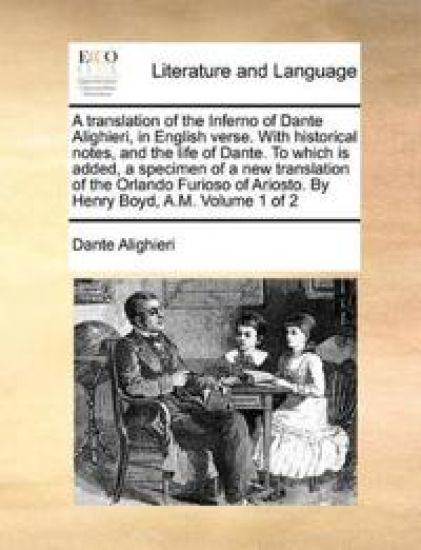
A Translation of the Inferno of Dante Alighieri, in English Verse. With Historical Notes, and the Life of Dante. To Which is Added, a Specimen of a new Translation of the Orlando Furioso of Ariosto. By Henry Boyd, A.M. of 2; Volume 1
The 18th century was a wealth of knowledge, exploration and rapidly growing technology and expanding record-keeping made possible by advances in the printing press. In its determination to preserve the century of revolution, Gale initiated a revolution of its own: digitization of epic proportions to preserve these invaluable works in the largest archive of its kind. Now for the first time these high-quality digital copies of original 18th century manuscripts are available in print, making them highly accessible to libraries, undergraduate students, and independent scholars.Western literary study flows out of eighteenth-century works by Alexander Pope, Daniel Defoe, Henry Fielding, Frances Burney, Denis Diderot, Johann Gottfried Herder, Johann Wolfgang von Goethe, and others. Experience the birth of the modern novel, or compare the development of language using dictionaries and grammar discourses. ++++The below data was compiled from various identification fields in the bibliographic record of this title. This data is provided as an additional tool in helping to insure edition identification: ++++British LibraryT127831With a list of subscribers. A reissue of the Dublin edition of 1785, with new titlepages.London: printed by C. Dilly, 1785. 2v.; 8
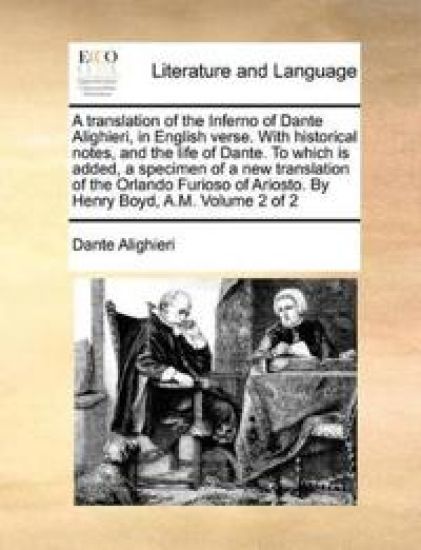
A Translation of the Inferno of Dante Alighieri, in English Verse. With Historical Notes, and the Life of Dante. To Which is Added, a Specimen of a new Translation of the Orlando Furioso of Ariosto. By Henry Boyd, A.M. of 2; Volume 2
The 18th century was a wealth of knowledge, exploration and rapidly growing technology and expanding record-keeping made possible by advances in the printing press. In its determination to preserve the century of revolution, Gale initiated a revolution of its own: digitization of epic proportions to preserve these invaluable works in the largest archive of its kind. Now for the first time these high-quality digital copies of original 18th century manuscripts are available in print, making them highly accessible to libraries, undergraduate students, and independent scholars.Western literary study flows out of eighteenth-century works by Alexander Pope, Daniel Defoe, Henry Fielding, Frances Burney, Denis Diderot, Johann Gottfried Herder, Johann Wolfgang von Goethe, and others. Experience the birth of the modern novel, or compare the development of language using dictionaries and grammar discourses. ++++The below data was compiled from various identification fields in the bibliographic record of this title. This data is provided as an additional tool in helping to insure edition identification: ++++British LibraryT127831With a list of subscribers. A reissue of the Dublin edition of 1785, with new titlepages.London: printed by C. Dilly, 1785. 2v.; 8
Henry Ossawa Tanner

Henry Ossawa Tanner

Marcia M. Mathews

University of Chicago Press
1995
nidottu
Mathews's standard biography of Henry Ossawa Tanner (1859-1937), based on extensive research in archives in this country and family records in France, where Tanner emigrated before the turn of the century to find freedom and acceptance, provides a full account of Tanner's life and art.
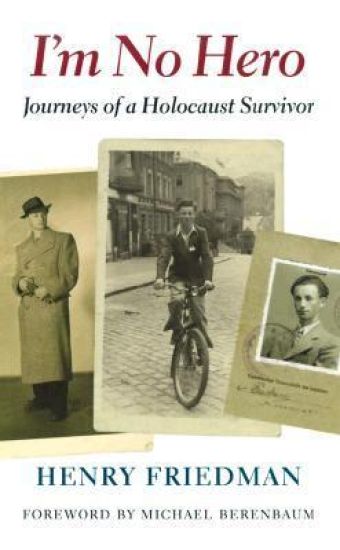
I'm No Hero

I'm No Hero

Henry Friedman

University of Washington Press
2001
pokkari
Henry Friedman was robbed of his adolescence by the monstrous evil that annihilated millions of European Jews and changed forever the lives of those who survived. When the Nazis overran their home town near the Polish-Ukrainian border, the Friedman family was saved by Ukrainian Christians who had worked at their farm. Henry, his mother, his younger brother, and a young schoolteacher—who had been hired by his father when Jews were forbidden to attend school—were hidden in a loft over the animal stalls at a neighbor's farm; his father hid in another hayloft half a mile away.When the family was liberated by the Russians after eighteen months in hiding, Henry, at age fifteen, was emaciated and too weak to walk. The Friedmans eventually made their way to a displaced persons camp in Austria where Henry learned quickly to wheel and deal, seducing women of various ages and nationalities and mastering the intricacies of dealing in the black market. In I'm No Hero, he confronts with unblinking honesty the pain, the shame, and the bizarre comedy of his passage to adulthood.The family came to Seattle in 1949, where Henry Friedman has made his home ever since. In 1988 he returned with his wife to Brody and Suchowola, where he succeeded in finding Julia Symchuk, who, as a young girl, had warned his father that the Gestapo was looking for him, and whose family had hidden the Friedmans in their loft. The following year he was able to bring Julia to Seattle for a triumphal visit, where she was honored in many ways, although, as Friedman writes, "in her own country she had never been honored with anything except hard work."Like many other survivors, Henry Friedman has found it difficult to confront his past. Like others, too, he has felt the obligation to bear witness. Now retired, he devotes much of his time to telling his story, which he believes is a message of hope, to thousands of schoolchildren throughout the Pacific Northwest. He has received national recognition for his role in establishing the United States Holocaust Museum in Washington, DC, and as a founder of the Washington State Holocaust Education Resource Center.
I'm No Hero

I'm No Hero

Henry Friedman

University of Washington Press
2015
sidottu
Henry Friedman was robbed of his adolescence by the monstrous evil that annihilated millions of European Jews and changed forever the lives of those who survived. When the Nazis overran their home town near the Polish-Ukrainian border, the Friedman family was saved by Ukrainian Christians who had worked at their farm. Henry, his mother, his younger brother, and a young schoolteacher—who had been hired by his father when Jews were forbidden to attend school—were hidden in a loft over the animal stalls at a neighbor's farm; his father hid in another hayloft half a mile away.When the family was liberated by the Russians after eighteen months in hiding, Henry, at age fifteen, was emaciated and too weak to walk. The Friedmans eventually made their way to a displaced persons camp in Austria where Henry learned quickly to wheel and deal, seducing women of various ages and nationalities and mastering the intricacies of dealing in the black market. In I'm No Hero, he confronts with unblinking honesty the pain, the shame, and the bizarre comedy of his passage to adulthood.The family came to Seattle in 1949, where Henry Friedman has made his home ever since. In 1988 he returned with his wife to Brody and Suchowola, where he succeeded in finding Julia Symchuk, who, as a young girl, had warned his father that the Gestapo was looking for him, and whose family had hidden the Friedmans in their loft. The following year he was able to bring Julia to Seattle for a triumphal visit, where she was honored in many ways, although, as Friedman writes, "in her own country she had never been honored with anything except hard work."Like many other survivors, Henry Friedman has found it difficult to confront his past. Like others, too, he has felt the obligation to bear witness. Now retired, he devotes much of his time to telling his story, which he believes is a message of hope, to thousands of schoolchildren throughout the Pacific Northwest. He has received national recognition for his role in establishing the United States Holocaust Museum in Washington, DC, and as a founder of the Washington State Holocaust Education Resource Center.
Henry van de Velde

Henry van de Velde

Katherine M. Kuenzli

Yale University Press
2019
sidottu
The painter, designer, and architect Henry van de Velde (1863–1957) played a crucial role in expanding modernist aesthetics beyond Paris and beyond painting. Opposing growing nationalism around 1900, he sought to make painting the basis of an aesthetic that transcended boundaries between the arts and between nations through his work in Belgium, France, Germany, and the Netherlands. Van de Velde’s designs for homes, museums, and theaters received international recognition. The artist, often associated with the Art Nouveau and Jugendstil, developed a style of abstraction that he taught in his School of Applied Arts in Weimar, the immediate precursor of and model for the Bauhaus. As a leading member of the German Werkbund, he helped shaped the fields of modern architecture and design. This long-awaited book, the first major work on van de Velde in English, firmly positions him as one of the twentieth century’s most influential artists and an essential voice within the modern movement.
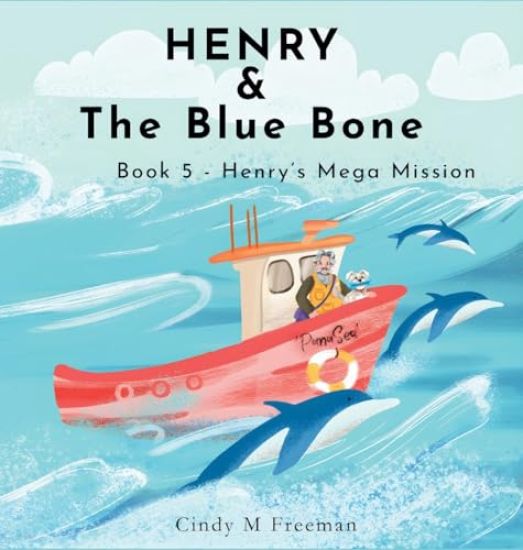
Henry and The Blue Bone

Henry and The Blue Bone

Cindy M Freeman

Myplankton Australia
2024
sidottu
Henry steps into the mysterious Whispering Woods, a land of enchantment full of friendly and fantastic creatures Elderwood, the ancient guardian of the woods, chooses Henry to be the protector of the Magical Blue Bone.Why did Elderwood choose Henry? And what secret mission awaits him?