En los a os de la Revoluci n Francesa, la lucha franco-alemana genera millares de fugitivos. Son los desplazados que han bebido largamente la copa amarga de este siglo. Herman, joven hijo de un matrimonio que manejan el mes n de un pueblo alem n, es enviado con v veres y ropa a socorrer a esas pobres gentes. Al encontrar a Dorotea, le entrega todo lo que lleva. De ah nace un amor que choca con el deseo de su padre, quien le echa en cara su nulo inter s por encontrar una "novia opulenta". Ayudado por su madre, Herman buscar a la joven desconocida.
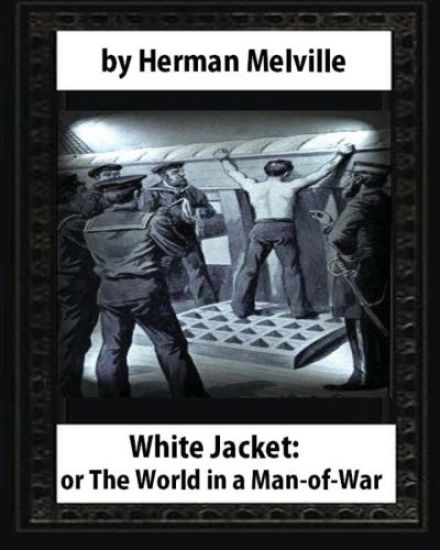
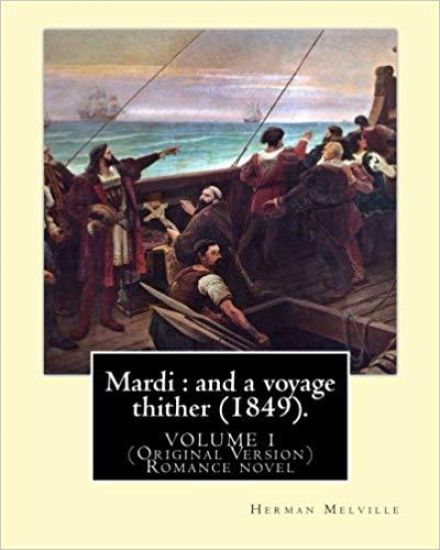
Typee is "in fact, neither literal autobiography nor pure fiction". Melville "drew his material from his experiences, from his imagination, and from a variety of travel books when the memory of his experiences were inadequate." He departed from what actually happened in several ways, sometimes by extending factual incidents, sometimes by fabricating them, and sometimes by what one scholar calls "outright lies".The actual one-month stay on which Typee is based is presented as four months in the narrative; there is no lake on the actual island on which Melville might have canoed with the lovely Fayaway, and the ridge which Melville describes climbing after escaping the ship he may actually have seen in an engraving. He drew extensively on contemporary accounts by Pacific explorers to add to what might otherwise have been a straightforward story of escape, capture, and re-escape. Most American reviewers accepted the story as authentic, though it provoked disbelief among some British readers.Two years after the novel's publication, many of the events described therein were corroborated by Melville's fellow castaway, Richard Tobias "Toby" Greene.Typee may have provided the writers Louis Becke, Jack London, and Robert Louis Stevenson with the themes and images of the Pacific experience: cannibalism, colonialism, cultural absorption, exoticism, natural plenty and beauty, and a perceived simplicity of native lifestyle, desires and motives.The inaugural book of the Library of America series, titled Typee, Omoo, Mardi (May 6, 1982), was a volume containing Typee: A Peep at Polynesian Life, its sequel Omoo: A Narrative of Adventures in the South Seas (1847), and Mardi, and a Voyage Thither (1849). Herman Melville (August 1, 1819 - September 28, 1891) was an American novelist, short story writer, and poet of the American Renaissance period best known for Typee (1846), a romantic account of his experiences in Polynesian life, and his whaling novel Moby-Dick (1851). His work was almost forgotten during his last thirty years. His writing draws on his experience at sea as a common sailor, exploration of literature and philosophy, and engagement in the contradictions of American society in a period of rapid change. He developed a complex, baroque style: the vocabulary is rich and original, a strong sense of rhythm infuses the elaborate sentences, the imagery is often mystical or ironic, and the abundance of allusion extends to Scripture, myth, philosophy, literature, and the visual arts. Born in New York City as the third child of a merchant in French dry goods, Melville's formal education ended abruptly after his father died in 1832, leaving the family in financial straits. Melville briefly became a schoolteacher before he took to sea in 1839 as a common sailor on a merchant ship. In 1840 he signed aboard the whaler Acushnet for his first whaling voyage, but jumped ship in the Marquesas Islands. After further adventures, he returned to Boston in 1844. His first book, Typee (1845), a highly romanticized account of his life among Polynesians, became such a best-seller that he worked up a sequel, Omoo (1847). These successes encouraged him to marry Elizabeth Shaw, of a prominent Boston family, but were hard to sustain. His first novel not based on his own experiences, Mardi (1849), is a sea narrative that develops into a philosophical allegory, but was not well received. Redburn (1849), a story of life on a merchant ship, and his 1850 expose of harsh life aboard a Man-of-War, White-Jacket yielded warmer reviews but not financial security........
Redburn: His First Voyage is the fourth book by the American writer Herman Melville, first published in London in 1849. The book is semi-autobiographical and recounts the adventures of a refined youth among coarse and brutal sailors and the seedier areas of Liverpool. Melville wrote Redburn in less than ten weeks. While one scholar describes it as "arguably his funniest work," scholar F.O. Matthiessen calls it "the most moving of its author's books before Moby-Dick".Unable to find employment at home, young Wellingborough Redburn signs on the Highlander, a merchantman out of New York City bound for Liverpool, England. Representing himself as the "son of a gentleman" and expecting to be treated as such, he discovers that he is just a green hand, a "boy", the lowest rank on the ship, assigned all the duties no other sailor wants, like cleaning out the "pig-pen", a longboat that serves as a shipboard sty. The first mate promptly nicknames him "Buttons" for the shiny ones on his impractical jacket. Redburn quickly grasps the workings of social relations aboard ship. As a common seaman he can have no contact with those "behind the mast" where the officers command the ship. Before the mast, where the common seaman work and live, a bully named Jackson, the best seaman aboard, rules through fear with an iron fist. Uneducated yet cunning, with broken nose and squinting eye, he is described as "a Cain afloat, branded on his yellow brow with some inscrutable curse and going about corrupting and searing every heart that beat near him." Redburn soon experiences all the trials of a greenhorn: seasickness, scrubbing decks, climbing masts in the dead of night to unfurl sails, cramped quarters, and bad food.
Redburn: His First Voyage, is the fourth book by the American writer Herman Melville, first published in London in 1849. The book is semi-autobiographical and recounts the adventures of a refined youth among coarse and brutal sailors and the seedier areas of Liverpool. Melville wrote Redburn in less than ten weeks. While one scholar describes it as "arguably his funniest work," Unable to find employment at home, young Wellingborough Redburn signs on the Highlander, a merchantman out of New York City bound for Liverpool, England. Representing himself as the "son of a gentleman" and expecting to be treated as such, he discovers that he is just a green hand, a "boy", the lowest rank on the ship, assigned all the duties no other sailor wants, like cleaning out the "pig-pen", a longboat that serves as a shipboard sty. The first mate promptly nicknames him "Buttons" for the shiny ones on his impractical jacket. Redburn quickly grasps the workings of social relations aboard ship. As a common seaman he can have no contact with those "behind the mast" where the officers command the ship. Before the mast, where the common seaman work and live, a bully named Jackson, the best seaman aboard, rules through fear with an iron fist. Uneducated yet cunning, with broken nose and squinting eye, he is described as "a Cain afloat, branded on his yellow brow with some inscrutable curse and going about corrupting and searing every heart that beat near him." Redburn soon experiences all the trials of a greenhorn: seasickness, scrubbing decks, climbing masts in the dead of night to unfurl sails, cramped quarters, and bad food.When the ship lands in Liverpool he is given liberty ashore. He rents a room and walks the city every day. One day in a street called Launcelott's Hey he hears "a feeble wail" from a cellar beneath an old warehouse and looking into it sees "the figure of what had been a woman. Her blue arms folded to her livid bosom two shrunken things like children, that leaned toward her, one on each side. At first I knew not whether they were alive or dead. They made no sign; they did not move or stir; but from the vault came that soul-sickening wail." He runs for help but is met with indifference by a ragpicker, a porter, his landlady, even by a policeman who tells him to mind his own business. He returns with some bread and cheese and drops them into the vault to the mother and children, but they are too weak to lift it to their mouths. The mother whispers "water" so he runs and fills his tarpaulin hat at an open hydrant. The girls drink and revive enough to nibble some cheese. He clasps the mother's arms and pulls them aside to see "a meager babe, the lower part of its body thrust into an old bonnet. Its face was dazzlingly white, even in its squalor; but the closed eyes looked like balls of indigo. It must have been dead for some hours." Judging them beyond the point at which medicine could help, he returns to his room. A few days later he revisits the street and finds the vault empty: "In place of the woman and children, a heap of quick-lime was glistening.".... Herman Melville(August 1, 1819 - September 28, 1891) was an American novelist, short story writer, and poet of the American Renaissance period. His best known works include Typee (1846), a romantic account of his experiences in Polynesian life, and his whaling novel Moby-Dick (1851). His work was almost forgotten during his last thirty years. His writing draws on his experience at sea as a common sailor, exploration of literature and philosophy, and engagement in the contradictions of American society in a period of rapid change. He developed a complex, baroque style: the vocabulary is rich and original, a strong sense of rhythm infuses the elaborate sentences, the imagery is often mystical or ironic, and the abundance of allusion extends to Scripture, myth, philosophy, literature, and the visual arts.
Battle-Pieces and Aspects of the War (1866) is the first book of poetry published by American author Herman Melville. The volume is dedicated "To the Memory of the Three Hundred Thousand Who in the War For the Maintenance of the Union Fell Devotedly Under the Flag of Their Country" and its 72 poems deal with the battles and personalities of the American Civil War and their aftermath. Also included are Notes and a Supplement in prose in which Melville sets forth his thoughts on how the Post-war Reconstruction should be carried out. Critics at the time were at best respectful and often sharply critical of Melville's unorthodox style. The book had sold only 486 copies by 1868 and recovered barely half of its publications costs.Not until the latter half of the twentieth century did Battle-Pieces become regarded as one of the most important group of poems on the Civil War.Battle-Pieces is made up of 72 short lyric and narrative poems grouped into two sections. The first and longer sequence is centered on battles, but the emphasis is on taking stock of the results and on the personalities of the officers who led them. The second, shorter series is made up of elegies, epitaphs, and requiems. 5] The opening poem is "The Portent," a meditation on the hanging of the abolitionist John Brown: Hanging from the beam, Slowly swaying (such the law), Gaunt the shadow on your green, Shenandoah The cut is on the crown (Lo, John Brown), And the stabs shall heal no more. Hidden in the cap Is the anguish none can draw; So your future veils its face, Shenandoah But the streaming beard is shown (Weird John Brown), The meteor of the war. Other poems include: "A Requiem For Soldiers Lost In Ocean Transports"; "The Martyr Indicative of the Passion of the People on the 15th of April 1865"; "The Frenzy In The Wake Sherman's Advance Through The Carolinas"; "The March To The Sea"; "Look-Out Mountain The Night Fight"; "Shiloh A Requiem"; "A Utilitarian View Of The Monitor's Fight"; "The Conflict Of Convictions"; "On the Slain at Chickamauga."......... Herman Melville (August 1, 1819 - September 28, 1891) was an American novelist, short story writer, and poet of the American Renaissance period. His best known works include Typee (1846), a romantic account of his experiences in Polynesian life, and his whaling novel Moby-Dick (1851). His work was almost forgotten during his last thirty years. His writing draws on his experience at sea as a common sailor, exploration of literature and philosophy, and engagement in the contradictions of American society in a period of rapid change. He developed a complex, baroque style: the vocabulary is rich and original, a strong sense of rhythm infuses the elaborate sentences, the imagery is often mystical or ironic, and the abundance of allusion extends to Scripture, myth, philosophy, literature, and the visual arts. Born in New York City as the third child of a merchant in French dry goods, Melville's formal education ended abruptly after his father died in 1832, leaving the family in financial straits. Melville briefly became a schoolteacher before he took to sea in 1839 as a common sailor on a merchant ship. In 1840 he signed aboard the whaler Acushnet for his first whaling voyage, but jumped ship in the Marquesas Islands. After further adventures, he returned to Boston in 1844. His first book, Typee (1845), a highly romanticized account of his life among Polynesians, became such a best-seller that he worked up a sequel, Omoo (1847). These successes encouraged him to marry Elizabeth Shaw, of a prominent Boston family, but were hard to sustain. His first novel not based on his own experiences, Mardi (1849), is a sea narrative that develops into a philosophical allegory, but was not well received. Redburn (1849), a story of life on a merchant ship, and his 1850 expose of harsh life aboard a Man-of-War, White-Jacket yielded warmer reviews but not financial security....