

Kirjahaku
Etsi kirjoja tekijän nimen, kirjan nimen tai ISBN:n perusteella.
1000 tulosta hakusanalla Hiley David

There is magic, still, in Scotland. Elflaine, the fabled faerie realm, was supposed to be a myth. Ailia Danu certainly never expected her older sister, Elideh, to find it. After Elideh's disappearance into Elflaine, Ailia must uncover the long-buried history of the faeries, learn to control her newly-awakened magic, and navigate fabled creatures dragged straight out of Scottish lore. And above all else, Ailia must find her sister. Luckily, Reed, a handsome witch from Ailia's past, insists on accompanying her on her quest. Their plans are complicated by the sudden intrusion of a fae warrior, Callum, on his own mission to find three elusive artifacts. Can Ailia, Reed, and Callum overcome the obstacles keeping them from Elideh? Or will it be too late? (FOILING, DIGITALLY PRINTED FORE EDGE)
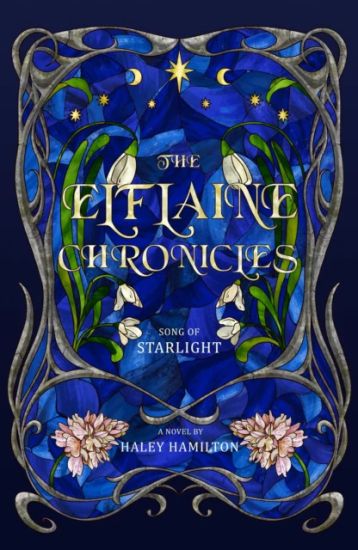
An ancient prophecy threatens to seal everyone's fate, while the Darkness gathers strength. Elideh Danu spent most of her life studying the lost faerie realm of Elflaine, hoping to one day find it. Now, she's trapped. Her only way back to her sister, Ailia, lies with a vexing faerie prince. When shattering news arrives from across the realms, Elideh must act, no matter the consequences. After the Faerie King's actions unwittingly rekindle an alliance long forgotten, Reed, an earth-wielding witch, and Callum, commander of the faerie army, must now face Elflaine's perils and prevent a looming war. As ancient magic stirs and hearts are tested, will they overcome the dangers awaiting them? Or will the Darkness finally prevail? (SPOT UV, SPRAYED EDGE)

Some cities are built underground. They might be hidden just beneath our feet. Discover where these cities are hiding and what other secrets they contain in the Spanish edition of Underground Cities. This 32-page nonfiction book helps Spanish language readers learn about different underground cities around the world, discover who built the cities, why they were built, and more. Spanish Book Features: Eye-catching photos with glossary words defined on the pages where they appear Before and after reading activities to develop reading comprehension skills About Rourke Educational Media: We proudly publish respectful and relevant nonfiction and fiction titles that represent our diverse readers, and are designed to support reading on a level that has no limits
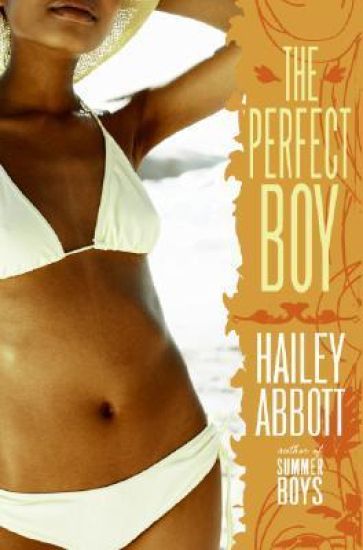
Ciara's summer must-haves: Breezy beachside jobBright white uber-short tennis skirtBackstage passes for the B-Dizzy CrewThe Perfect BoyCiara Simmons is tired of random hook-ups with lame guys from school. She wants a boyfriend. So she waves good-bye to her wild LA ways and heads to Santa Barbara for the summer. When she sees sexy AJ rapping at a local club, she's sure he's the one But AJ is only devoted to his music career. So Ciara and her pal Kevin develop a sneaky little scheme to pull AJ out of the limelight and into her arms. But does AJ have what it takes to be Ciara's perfect boy?

My Summer To-Do List: Practice wakeboard front flip Host late-night island party Build a bonfireSeduce Todd Chelsea's more comfortable strapped onto her wakeboard on Lake Tahoe than laced into platform espadrilles--or flirting with Todd, the adorable watersports instructor she's been crushing on for years. So instead she concentrates on winning this summer's Northwest Extreme Watersports Competition. That is, until Sebastian, a hot Brazilian tennis prodigy, wakes her up to the fact that she can get a boy. But can she get the one she really wants, even if she's competing against him for the gold?
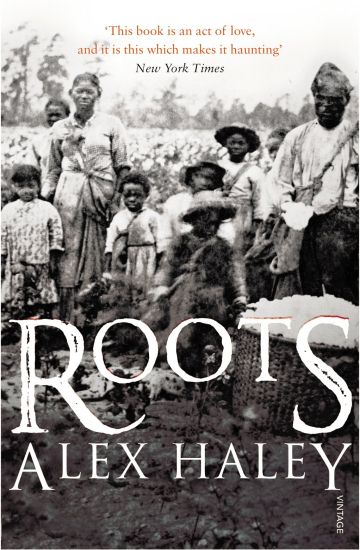
Now a major BBC drama starring Forest Whitaker, Jonathan Rhys Meyers and Laurence FishburneTracing his ancestry through six generations â?? slaves and freedmen, farmers and blacksmiths, lawyers and architects â?? back to Africa, Alex Haley discovered a sixteen-year-old youth, Kunta Kinte.
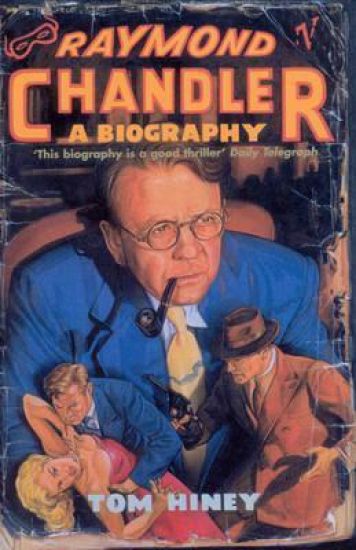
Born in Nabraska of Irish Quaker parents, educated at Dulwich College, and in the `mean streets' of Los Angeles about which he wrote, Raymond Chandler-writer, oil executive, poet, recluse, charmer, gentlman, drunk-was full of contradictions as his origins. His seven Philip Marlowe stories had sold 5 million copies by the time of his death in1059. Since the first authorised biography 20 years ago, much new material can be revealed about the man and his life. For this major new biography, Tom Hiney has had some access to unseen personal papers, as well as previously unrecorded reminiscences by those who knew him well and he vividly evokes the strange early years, brings alive the danerous glamour of the Hollywood era, and puts Chandler`s writing in the context of the crime and corruption in Prohibition LA. He gives illuminating details of friendships with Ian Fleming, Somerset Maugham, the Spenders, Alfred Hitchcock and fully records for the first time his relationship with Cissy, his wife of 30 years, 17 years his senior, and his paradoxical relations with other women.
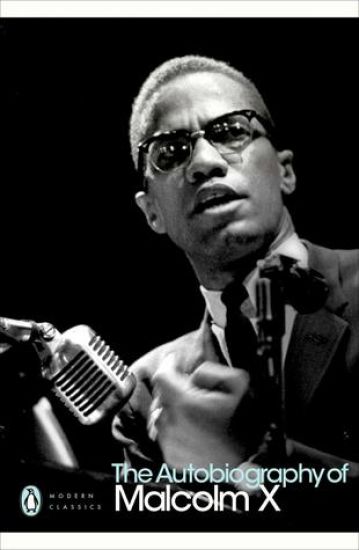
Malcolm X's The Autobiography of Malcolm X was written in collaboration with Alex Haley, author of Roots, and includes an introduction by Paul Gilroy, author of The Black Atlantic, in Penguin Modern Classics.From hustling, drug addiction and armed violence in America's black ghettos Malcolm X turned, in a dramatic prison conversion, to the puritanical fervour of the Black Muslims. As their spokesman he became identified in the white press as a terrifying teacher of race hatred; but to his direct audience, the oppressed American blacks, he brought hope and self-respect. This autobiography (written with Alex Haley) reveals his quick-witted integrity, usually obscured by batteries of frenzied headlines, and the fierce idealism which led him to reject both liberal hypocrisies and black racialism.Vilified by his critics as an anti-white demagogue, Malcolm X gave a voice to unheard African-Americans, bringing them pride, hope and fearlessness, and remains an inspirational and controversial figure.Malcolm X (1925-65), born Malcolm Little in Omaha, and also known as El-Hajj Malik El-Shabazz, lost both his parents at a young age. Leaving school early, he soon became part of Harlem's underworld, and in 1946 he was sentenced to ten years' imprisonment. It was in prison that Malcolm X converted to Islam. Paroled in 1952, he became an outspoken defender of Muslim doctrines, formed the Organization of Afro-American Unity in 1963, and had received considerable publicity by the time of his assassination in 1965.If you enjoyed The Autobiography of Malcolm X, you might like Nelson Mandela's No Easy Walk to Freedom, also available in Penguin Modern Classics.'This extraordinary autobiography is a brilliant, painful, important book'The New York Times
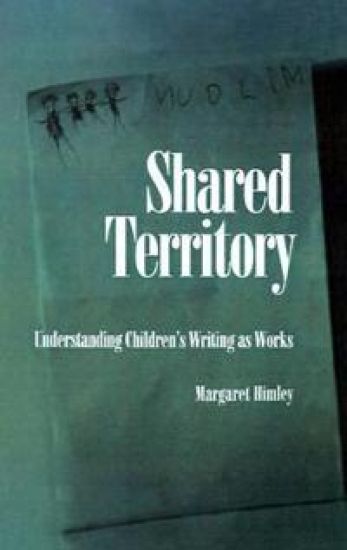
Shared Territory brings together Patricia Carini's concept of the developing child as a `maker of works' and Bakhtin's theory of language as dialogism in order to re-examine our assumptions about how to define written language development and how to understand it. Centring on Carini's claim that projects and artefacts of all kinds, from crayon drawings by children to letters and diaries by adults, are the objectified workings of the human mind enabled by and through cultural practices of signification, Himley argues that children's texts are a `shared territory', in which writer, reader, and language itself all dwell and participate in the making of meaning.
This book provides a uniquely detailed examination of the statutory regime for the regulation of business tenancies. Part II of the Landlord and Tenant Act 1954 is of central importance. The Act gives business tenants the general rights to remain in occupation, following up from the original lease, and to obtain a new lease. Meanwhile the landlord is entitled to a market rental income and, in certain prescribed circumstances, can override the tenant's claim for possession. The tenant who fails to obtain a new tenancy may be able to claim compensation for disturbance. Compensation for improvements, on quitting the premises, is available under Part I of the Landlord and Tenant Act 1927. The book aims to provide a clear and in-depth analysis of the complex and technical workings of the 1927 and 1954 acts. It also offers a detailed and up-to-date consideration of case law, both reported and unreported. The policy factors which initially brought about the legislative controls, and continued to shape its development, are identified and prospective reforms discussed. The new Civil Procedure Rules are incorporated into the text. A comparison is drawn with the legislative code contained in the Northern Ireland (Business Tenancies) Order 1996.
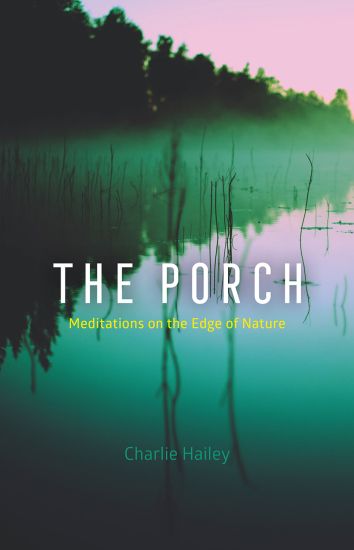
Come with us for a moment out onto the porch. Just like that, we’ve entered another world without leaving home. In this liminal space, an endless array of absorbing philosophical questions arises: What does it mean to be in a place? How does one place teach us about the world and ourselves? What do we—and the things we’ve built—mean in this world? In a time when reflections on the nature of society and individual endurance are so paramount, Charlie Hailey’s latest book is both a mental tonic and a welcome provocation. Solidly grounded in ideas, ecology, and architecture, The Porch takes us on a journey along the edges of nature where the outside comes in, hosts meet guests, and imagination runs wild. Hailey writes from a modest porch on the Homosassa River in Florida. He sleeps there, studies the tides, listens for osprey and manatee, welcomes shipwrecked visitors, watches shadows on its screens, reckons with climate change, and reflects on his own acclimation to his environment. The profound connections he unearths anchor an armchair exploration of past porches and those of the future, moving from ancient Greece to contemporary Sweden, from the White House roof to the Anthropocene home. In his ruminations, he links up with other porch dwellers including environmentalist Rachel Carson, poet Wendell Berry, writers Eudora Welty and Zora Neale Hurston, philosopher John Dewey, architect Louis Kahn, and photographer Paul Strand. As close as architecture can bring us to nature, the porch is where we can learn to contemplate anew our evolving place in a changing world—a space we need now more than ever. Timeless and timely, Hailey’s book is a dreamy yet deeply passionate meditation on the joy and gravity of sitting on the porch.
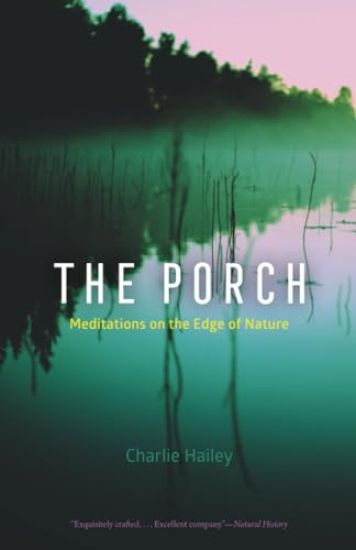
Come with us for a moment out onto the porch. Just like that, we’ve entered another world without leaving home. In this liminal space, an endless array of absorbing philosophical questions arises: What does it mean to be in a place? How does one place teach us about the world and ourselves? What do we—and the things we’ve built—mean in this world? In a time when reflections on the nature of society and individual endurance are so paramount, Charlie Hailey’s latest book is both a mental tonic and a welcome provocation. Solidly grounded in ideas, ecology, and architecture, The Porch takes us on a journey along the edges of nature where the outside comes in, hosts meet guests, and imagination runs wild. Hailey writes from a modest porch on the Homosassa River in Florida. He sleeps there, studies the tides, listens for osprey and manatee, welcomes shipwrecked visitors, watches shadows on its screens, reckons with climate change, and reflects on his own acclimation to his environment. The profound connections he unearths anchor an armchair exploration of past porches and those of the future, moving from ancient Greece to contemporary Sweden, from the White House roof to the Anthropocene home. In his ruminations, he links up with other porch dwellers including environmentalist Rachel Carson, poet Wendell Berry, writers Eudora Welty and Zora Neale Hurston, philosopher John Dewey, architect Louis Kahn, and photographer Paul Strand. As close as architecture can bring us to nature, the porch is where we can learn to contemplate anew our evolving place in a changing world—a space we need now more than ever. Timeless and timely, Hailey’s book is a dreamy yet deeply passionate meditation on the joy and gravity of sitting on the porch.
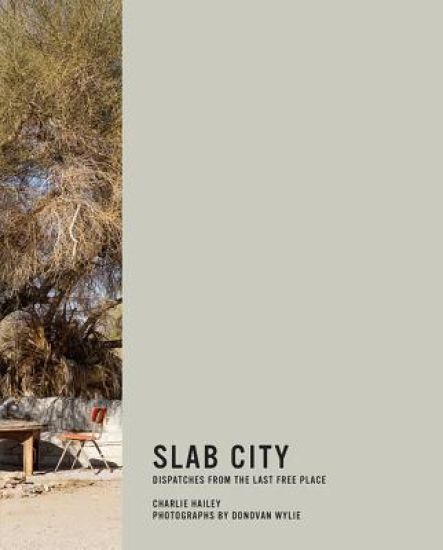
An architect and a photographer explore a community of squatters, artists, snowbirds, migrants, and survivalists inhabiting a former military base in the California desert.Under the unforgiving sun of southern California's Colorado Desert lies Slab City, a community of squatters, artists, snowbirds, migrants, survivalists, and homeless people. Called by some "the last free place" and by others "an enclave of anarchy," Slab City is also the end of the road for many. Without official electricity, running water, sewers, or trash pickup, Slab City dwellers also live without law enforcement, taxation, or administration. Built on the concrete slabs of Camp Dunlap, an abandoned Marine training base, the settlement maintains its off-grid aspirations within the site's residual military perimeters and gridded street layout; off-grid is really in-grid. In this book, architect Charlie Hailey and photographer Donovan Wylie explore the contradictions of Slab City.In a series of insightful texts and striking color photographs, Hailey and Wylie capture the texture of life in Slab City. They show us Slab Mart, a conflation of rubbish heap and recycling center; signs that declare Welcome to Slab City, T'ai Chi on the Slabs Every morning, and Don't fuck around; RVs in conditions ranging from luxuriously roadworthy to immobile; shelters cloaked in pallets and palm fronds; and the alarmingly opaque water of the hot springs.At Camp Dunlap in the 1940s, Marines learned how to fight a war. In Slab City, civilians resort to their own wartime survival tactics. Is the current encampment an outpost of freedom, a new "city on a hill" built by the self-chosen, an inversion of Manifest Destiny, or is it a last vestige of freedom, tended by society's dispossessed? Officially, it is a town that doesn't exist.Research for this project was supported by the Graham Foundation for Advanced Studies in the Fine Arts.
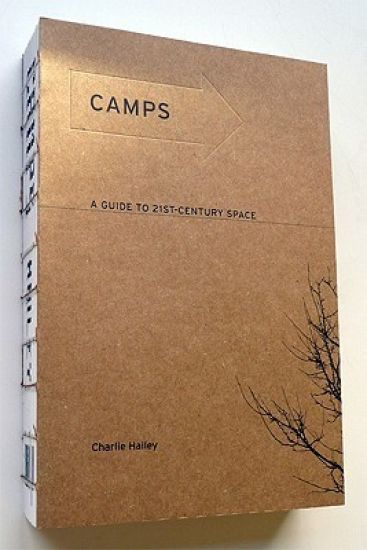
The meaning and function of camps, from Scout Jamborees and RV Clubs to FEMA trailers and GTMO.What is a camp? In August 2005, television news showed viewers an estimated 20,000 Katrina evacuees camped out in the Superdome, Cindy Sheehan protesting the Iraq War on President Bush's doorstep in "Camp Casey," Texas, and Israeli and Palestinian young people at the Seeds of Peace Camp in Maine discussing the evacuation of settlement camps in the Gaza Strip. Meanwhile, off camera, summer campers all over America packed up their gear, preparing to depart Scout camps, computer camps, and sports camps, and millions of recreational vehicles owners were on the road, permanent itinerant campers. In Camps, Charlie Hailey examines the space and idea of camp as a defining dimension of 21st-century life.The ubiquity and diversity of camps calls for a guidebook. This is what Hailey offers, but it is no ordinary one. Not only does he establish a typology of camps, but he also embeds within his narrative a key to camp ideology. Thus we see how camp spaces are informed by politics and transform the ways we think about and make built environments. Hailey describes camps of diverse regions, purposes, and forms, and navigates the inherent paradoxes of zones that are neither temporary nor permanent: camps of choice, including summer camps, protest camps, drift camps (research stations on Arctic ice floes), and LTVA (Long-Term Visitor Area) Camps; strategic camps regulated by power-boot camps, GTMO (the detention camp at Guantanamo Bay), immigrant camps, and others;-and transient spaces of relief and assistance, among them refugee camps, FEMA City, work camps, and Gypsy camps. More than 150 diagrams, sketches, building and site plans, photographs, political cartoons, video game screenshots, aerial and satellite images, and maps illustrate camp space in unprecedented complexity and variety.Today camps are at the center of emerging questions of identity, residency, safety, and mobility. Camp spaces register the struggles, emergencies, and possibilities of global existence as no other space does.
Die Neutralität Der Schweiz in Ihrer Heutigen Auffassung
Karl Hilty
Creative Media Partners, LLC
2018
sidottu
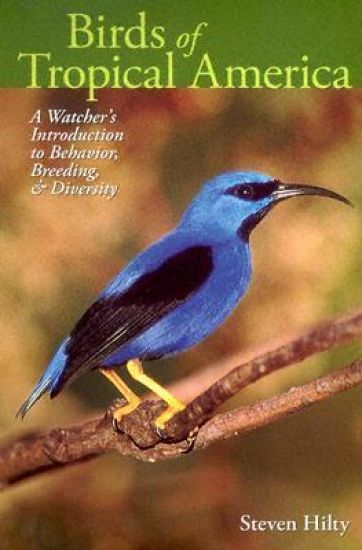
The guide to neotropical bird behavior that picks up where field guides leave off.Why are tropical birds like parrots and quetzals so much more colorful than those in more temperate climates? How can a vulture soaring thousands of feet above the canopy spot a dead rodent no bigger than a mouse on the rainforest floor? What permits sparrow-sized antbirds to not only survive but to thrive among relentless hordes of army ants that devour every other living thing in their path?Steven Hilty has led birding tours to the American Tropics for decades. By providing answers to the hundreds of questions asked by participants of these expeditions, Hilty has produced a natural history of the bird life of the New World Tropics that is at once practical, accurate, and as endlessly fascinating as the species whose lives it reveals.Birds of Tropical America was published by Chapters Publishing in 1994 and went out of print in 1997. UT Press is pleased to reissue it with a new epilogue and updated references.
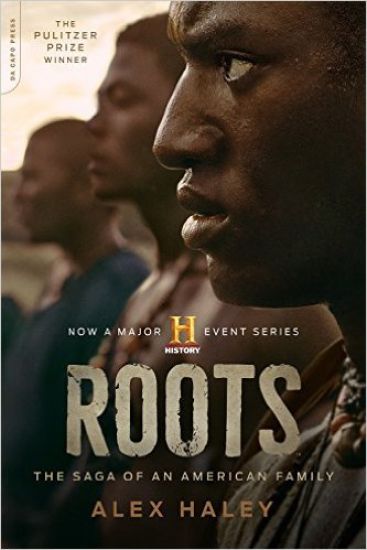
A new eight-hour event series based on Roots will be simulcast on the History Channel, Lifetime, and A&E over four consecutive nights beginning Memorial Day, May 30, 2016"Early in the spring of 1750, in the village of Juffure, four days upriver from the coast of The Gambia, West Africa, a man-child was born to Omoro and Binta Kinte."So begins Roots , one of the most extraordinary and influential books of our time. Through the story of one family, his family,Alex Haley unforgettably brings to life the monumental two-century drama of Kunta Kinte and the six generations who came after him: slaves and freedmen, farmers and blacksmiths, lumber mill workmen and Pullman porters, lawyers and architects...and one author.A national and international phenomenon at the time of its original publication, Roots continues to enthrall readers with its masterful narrative drive and exceptional emotional power, speaking to us all with an undiminished resonance and relevance."In all of us there is a hunger, marrow deep, to know our heritage.... Without this enriching knowledge, there is a hollow yearning no matter what our attainments in life.",Alex HaleyWith an introduction by Michael Eric Dyson RootsTheBook.com

Sacred Rhythms Bible Study Participant's Guide
Ruth Haley Barton
HarperChristian Resources
2011
nidottu
Drawing on the imagery of the natural rhythms of the created order, Sacred Rhythms explores the practices that spiritual seekers and growing disciples have used throughout history to grow closer to God. In a similar way, the disciplines of the spiritual life are the basic components of the rhythm of intimacy that feeds the soul, keeping Christians open and available to God’s surprising initiative in their lives.In this six session video-based study (DVD/digital video sold separately), Ruth Haley Barton provides guidance for you and your group in a way that links the disciplines of the Christian faith to the most compelling desires of the human soul. Each of the following sessions offers specific practices that allow you to experience each discipline and incorporate it into your life.Sessions include:Longing for MoreCreating Space for GodEngaging the ScripturesFlesh and Blood SpiritualityBringing My Whole Self to GodA Rule of LifeDesigned for use with the Sacred Rhythms Video Study (sold separately).

A boy notices his classmate is always alone.He starts hanging out with her only to find that at the start of the next week,she loses her memory. He resolves to befriend her each week.