
Kirjahaku
Etsi kirjoja tekijän nimen, kirjan nimen tai ISBN:n perusteella.
1000 tulosta hakusanalla Humphry W Woolrych
Milly and Olly, Or, a Holiday Among the Mountains, by Mrs. Humphrey Ward: a Story for Children
Mrs Humphrey Ward
Createspace Independent Publishing Platform
2016
nidottu
Master Humphrey's Clock, by Charles Dickens illustrated George Cattermole: (10 August 1800, 24 July 1868) was an English painter and illustrator Hablo
George Cattermole; (Phiz) Hablot Knight Browne; Charles Dickens
Createspace Independent Publishing Platform
2016
nidottu
Master Humphrey's Clock was a weekly periodical edited and written entirely by Charles Dickens and published from April 4, 1840 to December 4, 1841. It began with a frame story in which Master Humphrey tells about himself and his small circle of friends (which includes Mr. Pickwick), and their penchant for telling stories. Several short stories were included, followed by the novels The Old Curiosity Shop and Barnaby Rudge. Master Humphrey's Clock was a weekly serial that contained both short stories and two novels (The Old Curiosity Shop and Barnaby Rudge). Some of the short stories act as frame stories to the novels so the ordering of publication is important. Although Dickens' original artistic intent was to keep the short stories and the novels together, he himself cancelled Master Humphrey's Clock before 1848, and described in a preface to The Old Curiosity Shop that he wished the story to not be tied down to the miscellany it began within. 1] Most later anthologies published the short stories and the novels separately. However, the short stories and the novels were published in 1840 in three bound volumes under the title Master Humphrey's Clock, which retains the full and correct ordering of texts as they originally appeared. The illustrations in these volumes were by George Cattermole and Hablot Browne, better known as "Phiz".

The light princess, and other fairy tales. By: George Macdonald: (Children's Classics) Illustrated By: Maud Humphrey (March 30, 1868 - 1940) was a com
Maud Humphrey; George MacDonald
Createspace Independent Publishing Platform
2016
nidottu
I have never concealed the fact that I regarded him as my master . . . The quality that had enchanted me in his imaginative works turned out to be the quality of the real universe, the divine, magical, terrifying and ecstatic reality in which we all live." --C. S. Lewis "One of the most remarkable writers of the nineteenth century" --W. H. Auden THE LIGHT PRINCESS When the Light Princess was born, somebody screwed up an invitation to her christening and left out her evil aunt. Who was a witch That evil aunt vented her spleen by casting a spell on the Princess that left her immune to gravity. Which was a strange (and often inconvenient ) way for things to be -- more than once the wind caught hold of her while she slept, and you can go the most amazing places on the wind if you have no weight. Then, when the princess got to be a young woman, she met a young prince and fell in love -- and the results of that love are the very essence of this tale . . . Also included in this volume are "The Giant's Heart," "The Golden Key," "Cross Purposes," and "The Shadows... Maud Humphrey (March 30, 1868 - 1940) was a commercial illustrator, water colorist, and suffragette from the United States. She was also the mother of actor Humphrey Bogart and would frequently use her young son as a model.... George MacDonald (10 December 1824 - 18 September 1905) was a Scottish author, poet, and Christian minister. He was a pioneering figure in the field of fantasy literature and the mentor of fellow writer Lewis Carroll. His writings have been cited as a major literary influence by many notable authors including W. H. Auden, C. S. Lewis, J. R. R. Tolkien, Walter de la Mare, E. Nesbit and Madeleine L'Engle.C. S. Lewis wrote that he regarded MacDonald as his "master": "Picking up a copy of Phantastes one day at a train-station bookstall, I began to read. A few hours later," said Lewis, "I knew that I had crossed a great frontier." G. K. Chesterton cited The Princess and the Goblin as a book that had "made a difference to my whole existence". Elizabeth Yates wrote of Sir Gibbie, "It moved me the way books did when, as a child, the great gates of literature began to open and first encounters with noble thoughts and utterances were unspeakably thrilling." Even Mark Twain, who initially disliked MacDonald, became friends with him, and there is some evidence that Twain was influenced by MacDonald.Christian author Oswald Chambers (1874-1917) wrote in Christian Disciplines, vol. 1, (pub. 1934) that "it is a striking indication of the trend and shallowness of the modern reading public that George MacDonald's books have been so neglected". In addition to his fairy tales, MacDonald wrote several works on Christian apologetics including several that defended his view of Christian Universalis

Humphrey's Clock (Master Humphrey's Clock) is a weekly paper entirely written by Charles Dickens and published from April 4, 1840 to April 4, 1841. First presented with a story-frame in which Master Humphrey recounts and evokes the circle of His friends, all zealous storytellers including The Pickwick Papers, soon added several news, then the novels The Store of Antiquities and Barnaby Rudge. Master Humphrey is a lonely Londoner of a certain age who likes to collect old manuscripts carefully kept in an old clock at the corner of the fireplace. One fine morning he decided to found a small circle named "The Clock of Master Humphrey," whose members would read all their manuscripts. In addition to Mr. Humphrey himself, there was Jack Redburn, a gentleman afflicted with deafness, Owen Miles, a retired merchant, and Mr. Pickwick, well known to the readers. In the kitchen is the club of servants, led by Sam Weller, the faithful servant of Mr. Pickwick, and who understands the good of Master Humphrey, the barber and, of course, Sam Weller in person. After The Old Curiosity Shop, Master Humphrey introduces Barnaby Rudge, then he is left to his thoughts by the corner of the fireplace. The deaf gentleman takes over; Later, he and his friends return to Humphrey's house where he finds him dead. He bequeathed money to the barber and maid, probably destined to unite by marriage. The deaf man and another friend take care of the house of the deceased and close the club.
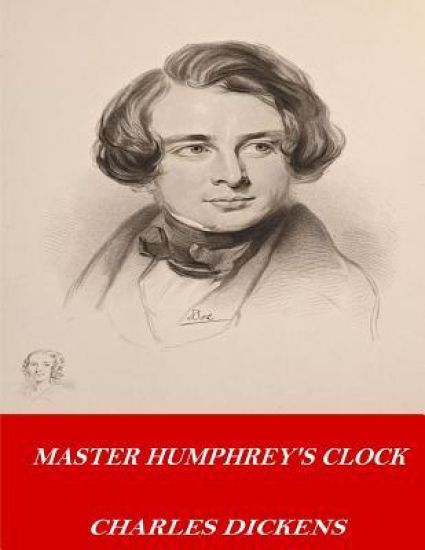

The light princess, and other fairy tales. By: George Macdonald, illustrated By: Maud Humphrey: Children's Classics
Maud Humphrey; George MacDonald
Createspace Independent Publishing Platform
2017
nidottu
Charles Dickens needs no formal introduction, having been the most popular English writer of the 19th century and still one of the most popular writers in history today. Dickens' upbringing was a mixture of happy times and sad: when he recalled his father being sent to debtor's prison in his memoirs, his tears actually left marks on the page. Nevertheless, Dickens was obsessed with reading, making him a natural journalist by the age of 20, when he began a career in journalism. Along the way, he also began writing his own short stories and materials, often serializing them in monthly installments in publications, a popular method of publishing in the 19th century. Unlike most writers, Dickens would not write an entire story before it began its serialization, allowing him to work on the fly and leave plot lines up in the air with each opportunity. By the time he died at the relatively young age of 58 from a stroke, he was already Europe's most famous writer. His obituary noted that Dickens was a "sympathizer with the poor, the suffering, and the oppressed." Dickens was interred in Westminster Abbey, a rare honor bestowed only among the greatest and most accomplished Britons.This classic title has been published by RADLEY BOOKS. Each RADLEY CLASSIC is a meticulously restored, luxurious and faithful reproduction of a classic book; produced with elegant text layout, clarity of presentation, and stylistic features that make reading a true pleasure. Special attention is given to legible fonts and adequate letter sizing, correct line length for readability, generous margins and triple lead (lavish line separation); plus we do not allow any mistakes/changes/additions to creep into the author's words.Visit RADLEY BOOKS at www.radleybooks.com (or search RADLEY CLASSIC on Amazon) to see more classic book titles in this series.

This is the first full-length study of the life and writings of the Texas novelist, William Humphrey, who died August 21, 1997. Based on research in Humphrey's vast archives at the University of Texas, it provides the first full picture of his life and identifies many untraced sources of his work. The guiding principle is an exploration of Humphrey's satire on life-destroying myths: the myths of the hunter, the South, the cowboy hero, the Depression-era outlaw, and, supremely, the myth of Texas. To his dismay, Humphrey was often seen as a celebrator of these myths.

Master Humphrey's Clock was a weekly periodical edited and written entirely by Charles. It began with a frame story in which Master Humphrey tells about himself and his small circle of friends, and their penchant for telling stories. Several short stories were included, followed by the novels The Old Curiosity Shop and Barnaby Rudge. Master Humphrey appears as the first-person narrator in the first three chapters of The Old Curiosity Shop but then disappears.
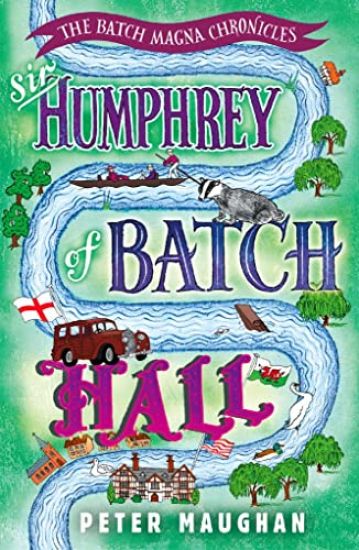
Welcome to Batch Magna, a place where anything might happen. And often does... When the old squire of Batch Magna died, the life of distant relative Humphrey, an amiable, overweight short-order cook from the Bronx, turned into a movie. Now, as Sir Humphrey, he has acquired not only a new title but also a new love: the Honourable Clementine Wroxley. He and Clem plan to marry, settle into Batch Hall and begin a new life together. Their finances at this early stage rest on the estate’s shooting and fishing, stepping stones to a more secure future. But one day a cold wind from beyond their valley visits Batch Magna in the shape of badger baiters discovered in Cutterbach Wood. They are routed, but their defeat entails such disaster that Humphrey and Clem are driven to the wall, left with no way out but to sell the estate, and their future along with it. And then Miss Wyndham, village spinster and amateur sleuth, rides to the rescue on the 49 bus…
Magical things can happen to us as children. Are we in tune at an early age, to a spirit world? Can the two worlds unite for a brief moment in time? What if a member of your family, you never knew about, returns with a message?This story has such a message and woe betide us if we ever forget. We can't forget. Lest we forget.

David Humphrey
Distributed Art Publishers
2021
sidottu
The first monograph on the heterogeneous postmodernist painting of David Humphrey, blending figuration and abstraction, pop and expressionism The acclaimed American painter David Humphrey (born 1955) has been exhibiting his work internationally since the 1980s when he first burst upon the New York art scene. His compositions often feature human figures, animals and objects interwoven into abstract passages to create complex narratives that reckon with the dynamics of human relationships, gender, the environment and race, all while resisting any one interpretation. This is the first comprehensive monograph surveying the totality of the artist’s 40-year career. Edited by Davy Lauterbach in close collaboration with the artist, it includes over 200 full-color reproductions of Humphrey’s painting and sculptural work from the early 1980s to today. The plates are complemented by a selection of archival and detail photographs, and essays by Lauterbach, Wayne Koestenbaum and Lytle Shaw, plus a lively and far-reaching conversation between Humphrey and the painter Jennifer Coates, his frequent artistic collaborator.
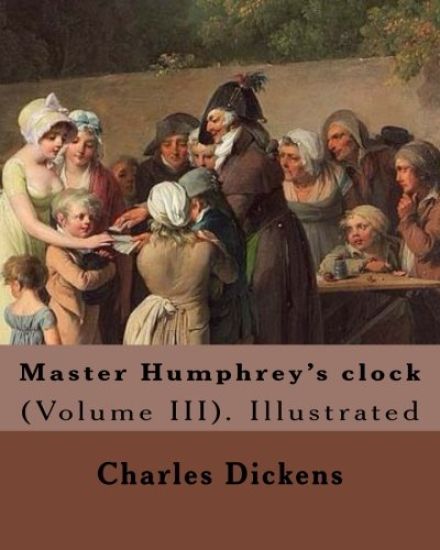
Master Humphrey's clock . By: Charles Dickens, Illustrated By: George Cattermole and By: Hablot ( Knight) Browne. (Volume III).: In three volumes, I
George Cattermole; Hablot (. Knight) Browne; Charles Dickens
Createspace Independent Publishing Platform
2017
nidottu
Master Humphrey's Clock was a weekly periodical edited and written entirely by Charles Dickens and published from 4 April 1840 to 4 December 1841. It began with a frame story in which Master Humphrey tells about himself and his small circle of friends (which includes Mr. Pickwick), and their penchant for telling stories. Several short stories were included, followed by the novels The Old Curiosity Shop and Barnaby Rudge. It is generally thought that Dickens originally intended The Old Curiosity Shop as a short story like the others that had appeared in Master Humphrey's Clock, but after a few chapters decided to extend it into a novel. Master Humphrey appears as the first-person narrator in the first three chapters of The Old Curiosity Shop but then disappears, stating, "And now that I have carried this history so far in my own character and introduced these personages to the reader, I shall for the convenience of the narrative detach myself from its further course, and leave those who have prominent and necessary parts in it to speak and act for themselves." Master Humphrey is a lonely man who lives in London. He keeps old manuscripts in an antique longcase clock by the chimney-corner. One day, he decides that he would start a little club, called Master Humphrey's Clock, where the members would read out their manuscripts to the others. The members include Master Humphrey; a deaf gentleman, Jack Redburn; retired merchant Owen Miles; and Mr. Pickwick from The Pickwick Papers. A mirror club in the kitchen, Mr. Weller's Watch, run by Mr. Weller, has members including Humphrey's maid, the barber and Sam Weller. Master Humphrey's Clock appeared after The Old Curiosity Shop, to introduce Barnaby Rudge. After Barnaby Rudge, Master Humphrey is left by himself by the chimney corner in a train of thoughts. Here, the deaf gentleman continues the narration. Later, the deaf gentleman and his friends return to Humphrey's house to find him dead. Humphrey has left money for the barber and the maid (no doubt by traces of love that they would be married). Redburn and the deaf gentleman look after the house and the club closes for good. In the portion of Master Humphrey's Clock which succeeds The Old Curiosity Shop, Master Humphrey reveals to his friends that he is the character referred to as the 'single gentleman' in that story....... Charles John Huffam Dickens ( 7 February 1812 - 9 June 1870) was an English writer and social critic. He created some of the world's best-known fictional characters and is regarded by many as the greatest novelist of the Victorian era. His works enjoyed unprecedented popularity during his lifetime, and by the 20th century critics and scholars had recognised him as a literary genius. His novels and short stories enjoy lasting popularity. Born in Portsmouth, Dickens left school to work in a factory when his father was incarcerated in a debtors' prison. Despite his lack of formal education, he edited a weekly journal for 20 years, wrote 15 novels, five novellas, hundreds of short stories and non-fiction articles, lectured and performed extensively, was an indefatigable letter writer, and campaigned vigorously for children's rights, education, and other social reforms......... George Cattermole (10 August 1800 - 24 July 1868) was an English painter and illustrator, chiefly in watercolours. He was a friend of Charles Dickens and many other literary and artistic figures.... Hablot Knight Browne (10 July 1815 - 8 July 1882) was an English artist and illustrator. Well-known by his pen name, Phiz, he illustrated books by Charles Dickens, Charles Lever, and Harrison Ainsworth................
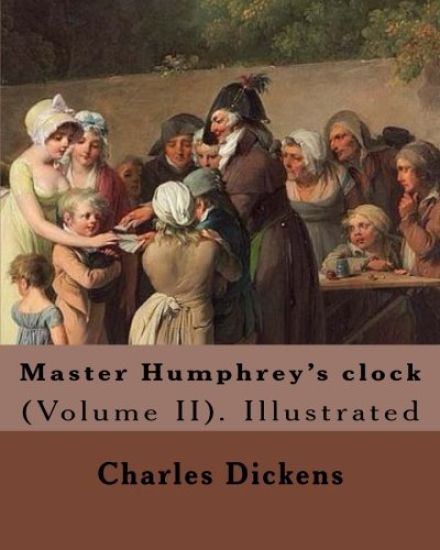
Master Humphrey's clock . By: Charles Dickens, Illustrated By: George Cattermole and By: Hablot ( Knight) Browne. (Volume II).: In three volumes, Il
George Cattermole; Hablot (. Knight) Browne; Charles Dickens
Createspace Independent Publishing Platform
2017
nidottu
Master Humphrey's Clock was a weekly periodical edited and written entirely by Charles Dickens and published from 4 April 1840 to 4 December 1841. It began with a frame story in which Master Humphrey tells about himself and his small circle of friends (which includes Mr. Pickwick), and their penchant for telling stories. Several short stories were included, followed by the novels The Old Curiosity Shop and Barnaby Rudge. It is generally thought that Dickens originally intended The Old Curiosity Shop as a short story like the others that had appeared in Master Humphrey's Clock, but after a few chapters decided to extend it into a novel. Master Humphrey appears as the first-person narrator in the first three chapters of The Old Curiosity Shop but then disappears, stating, "And now that I have carried this history so far in my own character and introduced these personages to the reader, I shall for the convenience of the narrative detach myself from its further course, and leave those who have prominent and necessary parts in it to speak and act for themselves." Master Humphrey is a lonely man who lives in London. He keeps old manuscripts in an antique longcase clock by the chimney-corner. One day, he decides that he would start a little club, called Master Humphrey's Clock, where the members would read out their manuscripts to the others. The members include Master Humphrey; a deaf gentleman, Jack Redburn; retired merchant Owen Miles; and Mr. Pickwick from The Pickwick Papers. A mirror club in the kitchen, Mr. Weller's Watch, run by Mr. Weller, has members including Humphrey's maid, the barber and Sam Weller. Master Humphrey's Clock appeared after The Old Curiosity Shop, to introduce Barnaby Rudge. After Barnaby Rudge, Master Humphrey is left by himself by the chimney corner in a train of thoughts. Here, the deaf gentleman continues the narration. Later, the deaf gentleman and his friends return to Humphrey's house to find him dead. Humphrey has left money for the barber and the maid (no doubt by traces of love that they would be married). Redburn and the deaf gentleman look after the house and the club closes for good. In the portion of Master Humphrey's Clock which succeeds The Old Curiosity Shop, Master Humphrey reveals to his friends that he is the character referred to as the 'single gentleman' in that story....... Charles John Huffam Dickens ( 7 February 1812 - 9 June 1870) was an English writer and social critic. He created some of the world's best-known fictional characters and is regarded by many as the greatest novelist of the Victorian era. His works enjoyed unprecedented popularity during his lifetime, and by the 20th century critics and scholars had recognised him as a literary genius. His novels and short stories enjoy lasting popularity. Born in Portsmouth, Dickens left school to work in a factory when his father was incarcerated in a debtors' prison. Despite his lack of formal education, he edited a weekly journal for 20 years, wrote 15 novels, five novellas, hundreds of short stories and non-fiction articles, lectured and performed extensively, was an indefatigable letter writer, and campaigned vigorously for children's rights, education, and other social reforms......... George Cattermole (10 August 1800 - 24 July 1868) was an English painter and illustrator, chiefly in watercolours. He was a friend of Charles Dickens and many other literary and artistic figures.... Hablot Knight Browne (10 July 1815 - 8 July 1882) was an English artist and illustrator. Well-known by his pen name, Phiz, he illustrated books by Charles Dickens, Charles Lever, and Harrison Ainsworth................