Kirjojen hintavertailu. Mukana 11 244 527 kirjaa ja 12 kauppaa.

Kirjahaku

Etsi kirjoja tekijän nimen, kirjan nimen tai ISBN:n perusteella.

1000 tulosta hakusanalla Hussein Alshaima Taleb

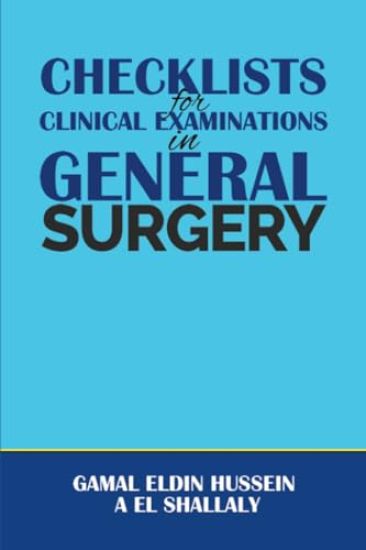
Checklists for Clinical Examinations in General Surgery

Checklists for Clinical Examinations in General Surgery

Gamal Eldin Hussein A El Shallaly

Austin Macauley Publishers
2024
nidottu
This book can be studied by undergraduate students preparing for their MBBS exams in surgery, and by postgraduate surgeons in training preparing for the MD exam in general surgery and the MRCS exams. The aim of this book is to make the assessment of medical students fair, structured, and objective. It can also be used as a training and review book by the students to improve their skills in history taking, clinical examination, and communication. It also teaches them to acquire a methodological and systematic approach to solve and manage clinical problems. It aims to complement, not replace, main textbooks in surgery.
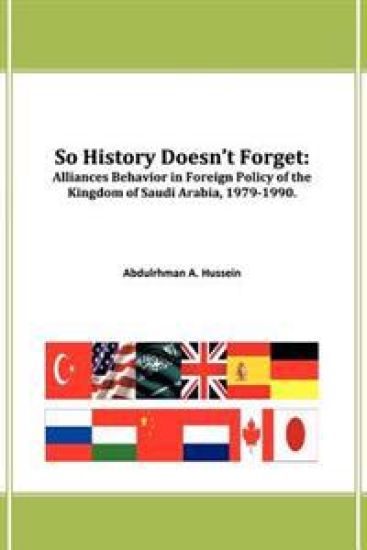
So History Doesn't Forget

So History Doesn't Forget

Abdulrhman A Hussein

Authorhouse
2012
pokkari
This book illustrates that the perception of an external threat to the security of Saudi Arabia's national interests is the major factor behind Saudi external alliances. Given its limited national capabilities, the existence of expansionist and revolutionary regimes in the Arabian (Persian) Gulf, and the nature of Middle East politics, the Kingdom of Saudi Arabia has little choice but to adopt a balance of power policy by building alliances with regional and great powers. Although there exists some studies concerned with the foreign policy of the Kingdom of Saudi Arabia, this is the first comprehensive study that analyzes Saudi foreign policy from an alliance behavior perspective.
Murder on Mount Moses

Murder on Mount Moses

Ayman Fawzy Hussein

Independently Published
2017
nidottu
In 1986 in the Sinai Peninsula in Egypt, a young Egyptian, army recruit opens the fire of his AK-47 on a group of Israeli tourists, as they basked in the warmth of in a sun-drenched beach, killing and wounding a number of men, women, and children. Overnight, Egyptian mass media turned the killer soldier into a folk hero, as he sat in an Egyptian military prison awaiting trial. The Mubarak administration condemned the grizzly attack and proceeded to prepare for the soldier's court-martial. The opposition parties, on the other hand, went in the opposite direction canonizing the killer-soldier, and calling for his immediate release. All of Egypt ignited in turmoil. But less than a month after the incident, the soldier turned up dead in his cell, having hanged himself from the iron bars of his cell. The Egyptian government called the dead soldier a paranoid psychopath, who got what he deserved, while the opposition parties proclaimed him a martyr, sacrificed by the authorities to placate the Israelis. Bill Thomas, an American reporter, stationed in Egypt at the time, becomes obsessed with the story. He goes on a crusade to find out the truth about the dead killer-soldier. What he finds out at the end of his quest leaves him flabbergasted.
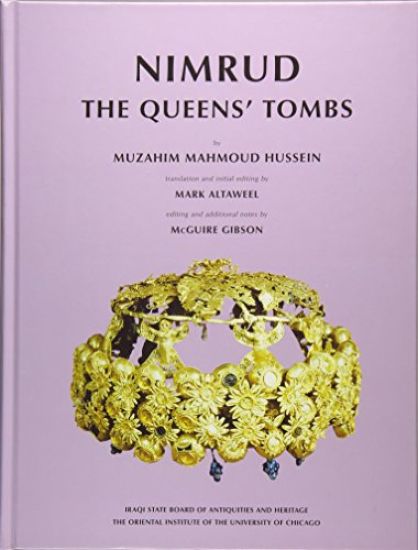
Nimrud

Nimrud

Muzahim Mahmoud Hussein

Oriental Institute of the University of Chicago
2016
sidottu
Muzahim Hussein's 1989 discovery of tombs of Neo-Assyrian queens in the palace of Ashurnasirpal in Nimrud (Kalhu/Calah) was electrifying news for archaeology. Although much is known of the Assyrian kings (8th/9th century B.C.), very little was known about the queens, with the exception of semi-mythical Semiramis. Now, for the first time, not only were actual remains and burial objects of Assyrian queens discovered, but also names and attempts through curses to protect the burials. Elaborate gold jewelry and other items in the tombs rivaled in quality and quantity that found in Egyptian royal tombs. A short scholarly publication of a few items, as well as limited coverage in the world's press, gave only hints of the importance of the objects in the tombs. Planned international exhibitions of the treasures from the tombs had to be cancelled due to war and sanctions. Hussein and Amer Suleiman published Nimrud: A City of Golden Treasures, in 1999, under extraordinarily difficult conditions, that could not do justice to the objects. The present volume, a joint publication of the Iraqi State Board of Antiquities and Heritage and the Oriental Institute, is a new version of the finding of the tombs and their contents, giving much additional information derived from Hussein's continued analyses of classes of artifacts, accompanied by numerous full color plates.
Tourism Studies in Middle East 2012-2022

Tourism Studies in Middle East 2012-2022

Mostafa Mahmoud Hussein; Ranea Mohamed Qaddahat; Mohamed Ramadan Ragab

Eliva Press
2022
pokkari
This book handles various tourism topics and studies from two countries in the Middle East, Egypt and Jordan, during the period 2012-2022. These studies include aviation, education tourism, youth tourism and others. About the author: Prof. Farouk Attaalla occupies professor academic rank in Tourism Studies Department.He is a teacher for Bachelor of Science Degree, Post Graduate Degree, Ecotourism Guidance Academic Program, and Open Education, Faculty of Tourism & Hotels at the Fayoum University, Egypt (2000 until now). Lecturer for the Transport Diploma in Nile Basin States Program. Institute for Nile States Strategic Studies and Researches, Fayoum University, Egypt. Lecturer for Bachelor of Science Degree, Faculty of Tourism and Hotels, 6th October University, Egypt. He had also served as a teacher for Bachelor of Science Degree and the Head of Travel and Tourism Management, Faculty of Tourism & Hospitality at Jordan University, Jordan (2011-2016). He is the general Manager of Tourism Company and the Head of Bureau for Foreign Post Graduate Students at the Faculty of Tourism & Hotels at the Fayoum University. He is outstanding member of quality team in Faculty of Tourism and Hotels as the first accredited faculty in tourism education in Egypt, Fayoum University, Egypt (2008 until now). He is the Dean of the Pharaohs High Institute for Tourism and Hotels, Cairo, Egypt (2021).
Allah Wills

Allah Wills

Mohamed Fahim Hussein

Independently Published
2019
nidottu
Part I: Disproving Religious Authority: Disproving the religious system which manifests in those who claimed guardianship and superiority in the name of Allah- those who held power after the prophets and messengers in what has come to be known as the Islamic Caliphate or Imamate- in the legitimacy of these regimes, in the principles of obedience and subjugation, in the legitimacy of judging and punishing the other in the name of Allah, and in establishing theocracies and religious guardianship. Part II: Refuting Jihad (holy wars): Taking apart the legitimacy of jihad (holy wars against nonbelievers), invasions and conquests; of usurping the assets of the other; of entitling oneself to his blood, money and honor; and of the captivity, defeat, humiliation and domination that come together with these crimes in the name of Allah and for the sake of Allah as being claimed. Part III: Refuting Inherited Religious Beliefs: Bringing down all the so-called heavenly religions with all the details they comprise, and proving they are man-made religions, even if they were constructed from a sublime source over hundreds of years. I describe these religions as trees of evil cultivated between people with lies together with falsehood and irrigated with grudges and blood, trees which bore fruit to hatred, elimination and enmity, and which proliferated into many sects, schools and groups, and it is about time they are plucked out once and for all; as there is no legitimacy for jihad except in the days of the Apostles, revelation and Divine supervision over the matter. (There is no a binding divine religion except in the life of the Apostles and revelation, and God then assigned it only to a certain group of people). By bringing down this authority, system and legitimacy, we are also bringing down the illusions that overwhelm the minds of believers in Abrahamic religions in particular (Jews, Christians and Muslims) together with the inherited obligations, traditions, judgments, liberties and beliefs that they circulate among themselves and propagate to others. Such beliefs resulted in enmity, hatred and fighting for thousands of years, fighting that still continues to this very day in the name of God and for the sake of God. We will prove the falsehood of all this using only one source, the holy Quran. Part IV: God Wills: We will tackle here the subject of the creation of human beings since Adam and until the end of creation, and we will do this for the purpose of familiarizing ourselves with what God expects from humanity.
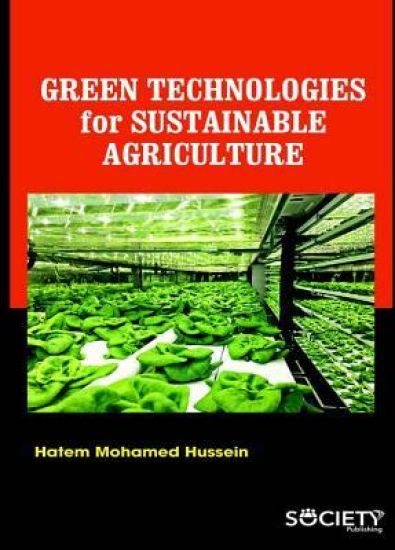
Green Technologies for Sustainable Agriculture

Green Technologies for Sustainable Agriculture

Hatem Mohamed Hussein

Arcler Education Inc
2017
sidottu
This book covers the basics of green technologies that are being used in the agriculture. In addition to that the various types of technologies, their implementation, role, and effects in the agricultural sector have been analyzed in various ways.The use of green chemistry and its role in the development of the sustainable agricultural system is also analyzed and tested. Current trends and technologies to help you understand the interrelationship of the green technologies and sustainable agriculture is also given.
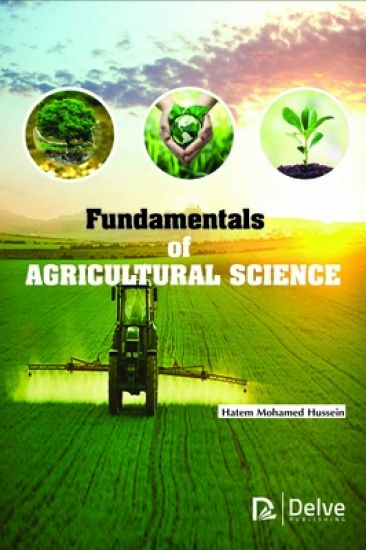
Fundamentals of Agricultural Science

Fundamentals of Agricultural Science

Hatem Mohamed Hussein

Arcler Education Inc
2017
sidottu
The practice of agriculture began independently in different parts of the world. In fact, scholars have tried to explain the historical origins of agriculture but it’s proved difficult as each region recorded different aspects of its agriculture and farming culture. Historically, wild grains were collected and eaten beginning from at least 20,000 BC. As an example, rice was domesticated in China between 11,500 and 6,200 BC, followed by mung, soy and azuki beans. Animals were domesticated beginning 13,000 to 8,500 BC in various parts of the old world (Hillman,1996).At present, some 11 percent (1.5 billion ha) of the globe's land surface (13.4 billion ha) is used in crop production (arable land and land under permanent crops) representing slightly over a third (36 percent) of the land estimated to be, to some degree, suitable for crop production. To ensure sustainability, agricultural scientists are working on finding answers to food safety, environmental problems, and genetically modified organisms affecting the practice of agriculture. The fact that there remain some 2.7 billion ha with crop production potential suggests that there is still scope for further expansion of agricultural land.The term agricultural science gained popularity in the United States with the Hatch Act of 1887 when farmers started showing interest in knowing the benefits of artificial fertilizers in crops (Hillison, 1996). To date, there has been an emergence of various agricultural technologies to aid a science-based and industrialized form of agricultural production since the late nineteenth century.The benefits of agricultural science in the 19th century in developing countries, known as `green revolution’ was shown in high productivity in crops and animals as well as the development of high yield seeds, artificial fertilizers and pesticides. Improvements such as new technologies, biotechnology and computer science and other technological advances have made it possible to develop new research fields including genetic engineering and agrophysics.This book aims to help readers understand how this form of technology came to predominate the agricultural systems, study the alternatives and analyze the many benefits and challenges of combining technology. It will also discuss finding a way to balance the natural and human sciences of agricultural science while understanding the human-nature interactions of traditional agriculture as compared to modern agriculture.
Organic and Biodynamic Agriculture

Organic and Biodynamic Agriculture

Hatem Mohamed Hussein

Arcler Education Inc
2017
sidottu
With the sensational development of organic food all through the world, many individuals have been pondering about the contrasts amongst organic and biodynamic farming. Actually, the likenesses exceed the distinctions, however there are a couple to observe.Many people are currently to some degree acquainted with organic farming, yet they might not have known about biodynamics. Biodynamic farming is a method that was first created by Rudolf Steiner – most popular for his commitments to education that prompted Steiner Schools. The primary rule of biodynamic farming is that the whole ranch exists as a solitary substance without the requirement for outside sources of info. As such, where a organic farm may buy natural seeds or natural encourage for animals, a biodynamic cultivate must create everything on the premises.By definition, “Organic agriculture joins custom, advancement and science to profit the mutual condition and advance reasonable connections and a decent personal satisfaction for all included.” Organic farming can be characterized by a guarantee to the standards of wellbeing, biology, reasonableness and care. The rule of well-being alludes to the possibility that all organic farming should improve and support everything engaged with the procedure, from the dirt the distance to the general population who devour the nourishment. The rule of biology says that the acts of natural farms should work with existent environmental cycles and frameworks. The standard of decency says that organic agriculture ought to be honed in ways that are sensible for the earth and to the chances of those in the ranch’s group. The rule of care says that organic agriculture ought to dependably be overseen in a capable way that secures the well-being of the individual and the earth.While having features alike to each-other, biodynamic farming standards have a more prominent concentration on prophetic cycles and the possibility of the homestead as a solitary `life form’.A biodynamic cultivation is imagined as a solitary substance that can be seen as a living being all by itself.Biodynamic farms ought to stay as encased from their encompassing biological communities as is duable.Biodynamic ranches are organized around lunar and prophetic cycles that are said to influence the natural frameworks.Biodynamic ranches are worked to coordinate all the living beings inside the framework, including plants, domesticated animals and agriculturists.The soil is viewed as the focal part of all biodynamic ranches.Both natural and biodynamic ranches develop their food without the utilization of pesticides, herbicides or hereditarily altered life forms. Accordingly, the two practices create essentially more advantageous food and delivery. At the establishment of the two practices is additionally a regard for biological procedures and the earth; they depend, for instance, on normal solutions for battling crawlies and infections. At last, the two practices are aware of the earth, the food and the general population who expend it.There are sections in this book, concentrating fundamentally on Organic and Biodynamic Agriculture, their Environmental Impact, Soil Fertility and Organic Farming Systems, Crop Agronomy, Breeding and Seed Production, Animal Health and Nutrition, Ethics in Organic Agriculture and Animal Welfare, Organic Food Market, and the slightest however not the last, the Future of Agriculture Sustainability.This book plans to offer a differing scope of profitable data, information and viewpoints on natural and biodynamic farming, and in addition the fate of manageability when the world group is progressively mindful of the issues of our current rural practices and the significance of making feasible horticultural and frameworks for the long haul soundness of mankind and the biosphere in general.