Kirjojen hintavertailu. Mukana 12 390 323 kirjaa ja 12 kauppaa.

Kirjahaku

Etsi kirjoja tekijän nimen, kirjan nimen tai ISBN:n perusteella.

1000 tulosta hakusanalla Ian Mortimer

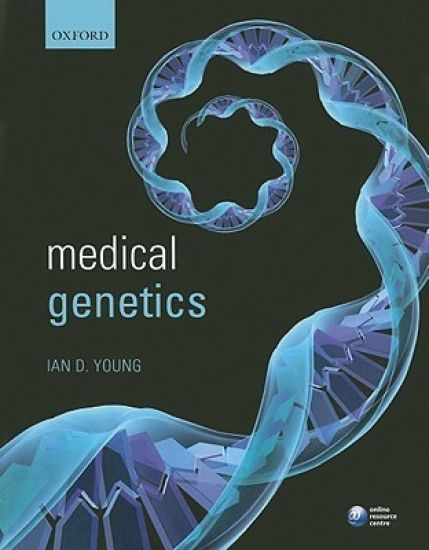
Medical Genetics

Medical Genetics

Ian D. Young

Oxford University Press
2010
nidottu
Highly Commended in the 2006 BMA Medical Book Competition (Basic and clinical sciences) Medical Genetics provides medical and biomedical science students with an understanding of the basic principles of human genetics as they relate to clinical practice. Each of the initial chapters focuses on a traditional cornerstone of human genetics (molecular genetics, cytogenetics, Mendelian inheritance, polygenic inheritance, population genetics) with a major emphasis on clinical relevance. These are followed by consideration of subjects of specific medical importance such as the haemoglobinopathies, developmental genetics, cancer genetics and pharmacogenetics, with due attention to topical and evolving issues such as pharmacogenomics, gene therapy and therapeutic cloning. The final chapters provide an explanation of the genetically related clinical skills and competencies expected of a medical student, together with an overview of the principles of clinical genetics, a rapidly developing clinical specialty which now impinges on almost every aspect of medical practice. Online Resource Centre Medical Genetics is accompanied by an extensive Online Resource Centre, which offers a wealth of additional materials, including: · Multiple Choice Questions and Extended Matching Questions, to help you test your knowledge of each chapter of the book · Hyperlinked bibliography offering direct links to online articles cited in the book · Case Celebres: additional case celebres to those in the book · OMIM Database Links, providing hyperlinks to the NIH's database of genetic diseases · Pedigree Examples, giving guidance on constructing family trees · Bonus material from other seminal genetics titles published by Oxford University Press
G. K. Chesterton

G. K. Chesterton

Ian Ker

Oxford University Press
2011
sidottu
G. K. Chesterton is remembered as a brilliant creator of nonsense and satirical verse, author of the Father Brown stories and the innovative novel, The Man who was Thursday, and yet today he is not counted among the major English novelists and poets. However, this major new biography argues that Chesterton should be seen as the successor of the great Victorian prose writers, Carlyle, Arnold, Ruskin, and above all Newman. Chesterton's achievement as one of the great English literary critics has not hitherto been fully recognized, perhaps because his best literary criticism is of prose rather than poetry. Ian Ker remedies this neglect, paying particular attention to Chesterton's writings on the Victorians, especially Dickens. As a social and political thinker, Chesterton is contrasted here with contemporary intellectuals like Bernard Shaw and H. G. Wells in his championing of democracy and the masses. Pre-eminently a controversialist, as revealed in his prolific journalistic output, he became a formidable apologist for Christianity and Catholicism, as well as a powerful satirist of anti-Catholicism. This full-length life of G. K. Chesterton is the first comprehensive biography of both the man and the writer. It draws on many unpublished letters and papers to evoke Chesterton's joyful humour, his humility and affinity to the common man, and his love of the ordinary things of life.
A Dictionary of Astronomy

A Dictionary of Astronomy

Ian Ridpath

Oxford University Press
2012
nidottu
The revised second edition of this established dictionary contains over 4,300 up-to-date entries covering all aspects of astronomy. Compiled with the help of over 20 expert contributors under the editorship of renowned author and broadcaster Ian Ridpath, A Dictionary of Astronomy covers everything from space exploration and the equipment involved, to astrophysics, cosmology, and the concept of time. The dictionary also includes biographical entries on eminent astronomers, as well as worldwide coverage of observatories and telescopes. Supplementary material is included in the appendices, such as tables of Apollo lunar landing missions and the constellations, a table of planetary data, and numerous other tables and diagrams complement the entries. The entries have been fully revised and updated for this edition, and new entries have been added to reflect the recent developments within the field of astronomy, including magnetic reconnection, Fornax cluster, luminosity density, and Akatsuki. The content is enhanced by entry-level web links, which are listed and regularly updated on a companion website. A Dictionary of Astronomy is an invaluable reference source for students, professionals, amateur astronomers, and space enthusiasts.
Globalization for Development

Globalization for Development

Ian Goldin; Kenneth Reinert

Oxford University Press
2012
sidottu
Globalization and its relation to poverty reduction and development are not well understood. This book explores the ways in which globalization can overcome poverty or make it worse. The book defines the big historical trends, identifies the main globalization processes - trade, finance, aid, migration, and ideas - and examines how each can contribute to economic development. By considering what helps and what does not, the book presents policy recommendations to make globalization more effective as a vehicle for shared growth and poverty reduction. It will be of interest to students, researchers, and anyone concerned with the effects of globalization on international development.
Globalization for Development

Globalization for Development

Ian Goldin; Kenneth Reinert

Oxford University Press
2012
nidottu
Globalization and its relation to poverty reduction and development are not well understood. This book explores the ways in which globalization can overcome poverty or make it worse. The book defines the big historical trends, identifies the main globalization processes - trade, finance, aid, migration, and ideas - and examines how each can contribute to economic development. By considering what helps and what does not, the book presents policy recommendations to make globalization more effective as a vehicle for shared growth and poverty reduction. It will be of interest to students, researchers, and anyone concerned with the effects of globalization on international development.
The Vulnerable in International Society

The Vulnerable in International Society

Ian Clark

Oxford University Press
2013
sidottu
Who are the vulnerable, and what makes them so? Through an innovative application of English School theory, this book suggests that people are vulnerable not only to natural risks, but also to the workings of international society. This replicates the approach of those studies of natural disasters that now commonly present a social vulnerability analysis, showing how people are differentially exposed by their social location. Could international society have similar effects? This question is explored through the cases of political violence, climate change, human movement, and global health. These cases provide rich detail on how, through its social practices of the vulnerable, international society constructs the vulnerable in its own terms, and sets up regimes of protection that prioritize some forms at the expense of others. What this demonstrates above all is that, even if only a 'practical' association, international society inevitably has moral consequences in the way it influences the relative distribution of harm. As a result, these four pressing policy issues now present themselves as fundamentally moral problems. Revising the arguments of E. H. Carr, the author points out the essentially contested normative nature of international order. However, instead of as a moral clash between revisionist and status quo powers, as Carr had suggested, the problem is instead one about the contested nature of vulnerability, insofar as vulnerability is an expression of power relations, but also gives rise to a moral claim. By providing a holistic treatment in this way, the book makes practical sense of the vulnerable, while also seeking to make moral sense of international society.
The Vulnerable in International Society

The Vulnerable in International Society

Ian Clark

Oxford University Press
2013
nidottu
Who are the vulnerable, and what makes them so? Through an innovative application of English School theory, this book suggests that people are vulnerable not only to natural risks, but also to the workings of international society. This replicates the approach of those studies of natural disasters that now commonly present a social vulnerability analysis, showing how people are differentially exposed by their social location. Could international society have similar effects? This question is explored through the cases of political violence, climate change, human movement, and global health. These cases provide rich detail on how, through its social practices of the vulnerable, international society constructs the vulnerable in its own terms, and sets up regimes of protection that prioritize some forms at the expense of others. What this demonstrates above all is that, even if only a 'practical' association, international society inevitably has moral consequences in the way it influences the relative distribution of harm. As a result, these four pressing policy issues now present themselves as fundamentally moral problems. Revising the arguments of E. H. Carr, the author points out the essentially contested normative nature of international order. However, instead of as a moral clash between revisionist and status quo powers, as Carr had suggested, the problem is instead one about the contested nature of vulnerability, insofar as vulnerability is an expression of power relations, but also gives rise to a moral claim. By providing a holistic treatment in this way, the book makes practical sense of the vulnerable, while also seeking to make moral sense of international society.
The Modern Origins of the Early Middle Ages

The Modern Origins of the Early Middle Ages

Ian Wood

Oxford University Press
2013
sidottu
The Early Middle Ages, which marked the end of the Roman Empire and the creation of the kingdoms of Western Europe, was a period that was central to the formation of modern Europe. This period has often been drawn into a series of discourses that are more concerned with the eighteenth, nineteenth, and twentieth centuries than with the distant past. In The Modern Origins of the Early Middle Ages, Ian Wood explores how Western Europeans have looked back to the Middle Ages to discover their origins and the origins of their society. Using historical records and writings about the Fall of Rome and the Early Middle Ages, Wood discovers how these influenced modern Europe and how the continent thought about itself. Wood asks, and answers, the important question: why is early medieval history, or indeed any pre-modern history, important? This volume promises to add to the debate on the importance of medieval history in the modern world.
Symmetry

Symmetry

Ian Stewart

Oxford University Press
2013
nidottu
In the 1800s mathematicians introduced a formal theory of symmetry: group theory. Now a branch of abstract algebra, this subject first arose in the theory of equations. Symmetry is an immensely important concept in mathematics and throughout the sciences, and its applications range across the entire subject. Symmetry governs the structure of crystals, innumerable types of pattern formation, how systems change their state as parameters vary; and fundamental physics is governed by symmetries in the laws of nature. It is highly visual, with applications that include animal markings, locomotion, evolutionary biology, elastic buckling, waves, the shape of the Earth, and the form of galaxies. In this Very Short Introduction, Ian Stewart demonstrates its deep implications, and shows how it plays a major role in the current search to unify relativity and quantum theory. ABOUT THE SERIES: The Very Short Introductions series from Oxford University Press contains hundreds of titles in almost every subject area. These pocket-sized books are the perfect way to get ahead in a new subject quickly. Our expert authors combine facts, analysis, perspective, new ideas, and enthusiasm to make interesting and challenging topics highly readable.
Organizing Democratic Choice

Organizing Democratic Choice

Ian Budge; Michael McDonald; Paul Pennings; Hans Keman

Oxford University Press
2012
sidottu
This bold venture into democratic theory offers a new and reinvigorating thesis for how democracy delivers on its promise of public control over public policy. In theory, popular control could be achieved through a process entirely driven by supply-side politics, with omniscient and strategic political parties converging on the median voter's policy preference at every turn. However, this would imply that there would be no distinguishable political parties (or even any reason for parties to exist) and no choice for a public to make. The more realistic view taken here portrays democracy as an ongoing series of give and take between political parties' policy supply and a mass public's policy demand. Political parties organize democratic choices as divergent policy alternatives, none of which is likely to satisfy the public's policy preferences at any one turn. While the one-off, short-run consequence of a single election often results in differences between the policies that parliaments and governments pursue and the preferences their publics hold, the authors construct theoretical arguments, employ computer simulations, and follow up with empirical analysis to show how, why, and under what conditions democratic representation reveals itself over time. Democracy, viewed as a process rather than a single electoral event, can and usually does forge strong and congruent linkages between a public and its government. This original thesis offers a challenge to democratic pessimists who would have everyone believe that neither political parties nor mass publics are up to the tasks that democracy assigns them. Comparative Politics is a series for students, teachers, and researchers of political science that deals with contemporary government and politics. Global in scope, books in the series are characterised by a stress on comparative analysis and strong methodological rigour. The series is published in association with the European Consortium for Political Research. For more information visit: www.ecprnet.eu The Comparative Politics series is edited by Professor David M. Farrell, School of Politics and International Relations, University College Dublin, Kenneth Carty, Professor of Political Science, University of British Columbia, and Professor Dirk Berg-Schlosser, Institute of Political Science, Philipps University, Marburg.
Blood of the Provinces

Blood of the Provinces

Ian Haynes

Oxford University Press
2013
sidottu
Blood of the Provinces is the first fully comprehensive study of the largest part of the Roman army, the auxilia. This non-citizen force constituted more than half of Rome's celebrated armies and was often the military presence in some of its territories. Diverse in origins, character, and culture, they played an essential role in building the empire, sustaining the unequal peace celebrated as the pax Romana, and enacting the emperor's writ. Drawing upon the latest historical and archaeological research to examine recruitment, belief, daily routine, language, tactics, and dress, this volume offers an examination of the Empire and its soldiers in a radical new way. Blood of the Provinces demonstrates how the Roman state addressed a crucial and enduring challenge both on and off the battlefield - retaining control of the miscellaneous auxiliaries upon whom its very existence depended. Crucially, this was not simply achieved by pay and punishment, but also by a very particular set of cultural attributes that characterized provincial society under the Roman Empire. Focusing on the soldiers themselves, and encompassing the disparate military communities of which they were a part, it offers a vital source of information on how individuals and communities were incorporated into provincial society under the Empire, and how the character of that society evolved as a result.
G. K. Chesterton

G. K. Chesterton

Ian Ker

Oxford University Press
2012
nidottu
G. K. Chesterton is remembered as a brilliant creator of nonsense and satirical verse, author of the Father Brown stories and the innovative novel, The Man who was Thursday, and yet today he is not counted among the major English novelists and poets. However, this major new biography argues that Chesterton should be seen as the successor of the great Victorian prose writers, Carlyle, Arnold, Ruskin, and above all Newman. Chesterton's achievement as one of the great English literary critics has not hitherto been fully recognized, perhaps because his best literary criticism is of prose rather than poetry. Ian Ker remedies this neglect, paying particular attention to Chesterton's writings on the Victorians, especially Dickens. As a social and political thinker, Chesterton is contrasted here with contemporary intellectuals like Bernard Shaw and H. G. Wells in his championing of democracy and the masses. Pre-eminently a controversialist, as revealed in his prolific journalistic output, he became a formidable apologist for Christianity and Catholicism, as well as a powerful satirist of anti-Catholicism. This full-length life of G. K. Chesterton is the first comprehensive biography of both the man and the writer. It draws on many unpublished letters and papers to evoke Chesterton's joyful humour, his humility and affinity to the common man, and his love of the ordinary things of life.
The Fiery Test of Critique

The Fiery Test of Critique

Ian Proops

Oxford University Press
2021
sidottu
Kant conceived of 'critique' as a kind of winnowing exercise, with the aim of separating the wheat of good metaphysics from the chaff of bad. He used a less familiar metaphor to make this point, namely, that of 'the fiery test of critique'-not a medieval ordeal of trial by fire, but rather a metallurgical assay, or cupellation, a procedure in which ore samples are tested for their precious-metal content. When seen in this light, critique has a positive, investigatory side: it seeks not merely to eliminate bad, 'dogmatic' metaphysics but also to uncover what of philosophical value might be contained in traditional speculative metaphysics. In this comprehensive study of the Transcendental Dialectic in Kant's Critique of Pure Reason, Proops argues that Kant uncovered two nuggets of value: the indirect proof of Transcendental Idealism afforded by the resolution of the Antinomies, and a defence of theoretically grounded 'doctrinal beliefs' in a wise and great originator, on the one hand, and in an afterlife, on the other. This examination of critique engages with Kant's views on a number of central problems in philosophy and meta-philosophy: the explanation of the enduring human impulse towards metaphysics, the correct philosophical method, the limits of self-knowledge, the possibility of human freedom, the resolution of metaphysical paradox ('Antinomy'), the justification of faith, the nature of scepticism, and the role of 'as if' reasoning in natural science.
Thrive in Human Physiology

Thrive in Human Physiology

Ian Kay; Gethin Evans

Oxford University Press
2014
nidottu
The Thrive in Bioscience revision guides are written to help students achieve exam success in all core areas of bioscience. Each title encourages the reader to follow four steps to maximise their learning, with features to support this process. Step one: Review the facts The revision guides are designed to help learning be quick and effective: · Information is set out in bullet points, making it easy to digest · Clear, uncluttered illustrations illuminate what is said in the text · Key concept panels summarise the essential learning points Step two: Check your understanding Readers are encouraged to: · Complete the questions at the end of chapters and online multiple-choice questions to reinforce their learning · Use the flashcard app to master the essential terms and phrases Step three: Take note of extra advice Revision tips, and hints for getting those precious extra marks in exams, are presented throughout. Step four: Go the extra mile Readers can explore the suggestions for further reading to take their understanding one step further. Each title in the series is tailored to maximise understanding and achievement, to ensure that the reader really can thrive in their studies. They are the perfect course companions for any bioscience degree. Each title in the series is accompanied by the following digital resources: A flashcard glossary app, enabling the user to test their understanding of key terminology; A bank of interactive MCQs, giving users a hands-on way to check they have fully understood the concepts presented.
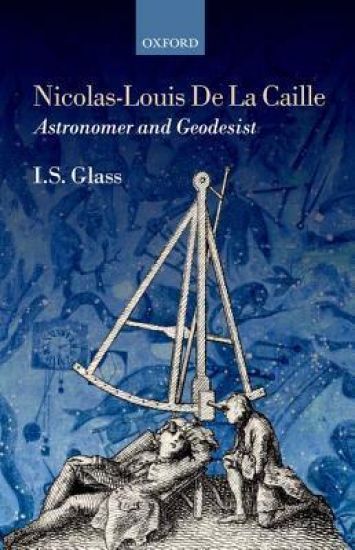
Nicolas-Louis De La Caille, Astronomer and Geodesist

Nicolas-Louis De La Caille, Astronomer and Geodesist

Ian Stewart Glass

Oxford University Press
2012
sidottu
La Caille was one of the observational astronomers and geodesists who followed Newton in developing ideas about celestial mechanics and the shape of the earth. He provided data to the great 18th-century mathematicians involved in understanding the complex gravitational effects that the heavenly bodies have on one another. Observing from the Cape of Good Hope, he made the first ever telescopic sky survey and gave many of the southern constellations their present-day names. He measured the paths of the planets and determined their distances by trigonometry. In addition, he made a controversial measurement of the radius of the earth that seemed to prove it was pear-shaped. On a practical level, La Caille developed the method of `Lunars' for determining longitudes at sea. He mapped the Cape. As an influential teacher he propagated Newton's theory of universal gravitation at a time when it was only beginning to be accepted on the European continent. This book gives the most comprehensive overview so far available of La Caille's life and work, showing how he interacted with his often difficult colleagues. It places special emphasis on his life at, and his observations and comments on, the Cape of Good Hope, where he spent the years 1751-53.
Elegance in Science

Elegance in Science

Ian Glynn

Oxford University Press
2013
nidottu
The idea of elegance in science is not necessarily a familiar one, but it is an important one. The use of the term is perhaps most clear-cut in mathematics - the elegant proof - and this is where Ian Glynn begins his exploration. Scientists often share a sense of admiration and excitement on hearing of an elegant solution to a problem, an elegant theory, or an elegant experiment. The idea of elegance may seem strange in a field of endeavour that prides itself in its objectivity, but only if science is regarded as a dull, dry activity of counting and measuring. It is, of course, far more than that, and elegance is a fundamental aspect of the beauty and imagination involved in scientific activity. Ian Glynn, a distinguished scientist, selects historical examples from a range of sciences to draw out the principles of science, including Kepler's Laws, the experiments that demonstrated the nature of heat, and the action of nerves, and of course the several extraordinary episodes that led to Watson and Crick's discovery of the structure of DNA. With a highly readable selection of inspiring episodes highlighting the role of beauty and simplicity in the sciences, the book also relates to important philosophical issues of inference, and Glynn ends by warning us not to rely on beauty and simplicity alone - even the most elegant explanation can be wrong.
Patmos in the Reception History of the Apocalypse

Patmos in the Reception History of the Apocalypse

Ian Boxall

Oxford University Press
2013
sidottu
This monograph explores the significance accorded to John's island of Patmos (Rev. 1:9) within the wider reception history of the Apocalypse. In contrast to the relatively scant attention paid to John's island in modern commentaries, this reception-historical survey reveals both the greater prominence accorded to Patmos by earlier interpreters, and the richer diversity of readings the text has provoked. These include interest in the physical character of Patmos and its significance as an island; the date and reason for John's sojourn there; attempts to locate Patmos in a geography which is sometimes more mythical than literal; the meaning of the name 'Patmos' in the context of a biblical book which treats other place-names symbolically. This diversity is supported by a close reading of Rev. 1:9, which highlights the extent to which even its literal sense is highly ambiguous. Ian Boxall brings together for the first time in a coherent narrative a wide range of interpretations of Patmos, reflecting different chronological periods, cultural contexts, and Christian traditions. Boxall understands biblical interpretation broadly, to include interpretations in biographical traditions about John, sermons, liturgy, and visual art as well as biblical commentaries.He also considers popular and marginal readings alongside magisterial and centrist ones, and draws analogies between similar hermeneutical strategies across the centuries. In the final chapter Boxall explores the wider implications of his study for biblical scholarship, advocating an approach which encourages use of the imagination and reader participation, and which works with a broader concept of 'meaning' than traditional historical criticism.
Pericyclic Reactions

Pericyclic Reactions

Ian Fleming

Oxford University Press
2015
nidottu
The renowned Oxford Chemistry Primer series, which provides focused introductions to a range of important topics in chemistry, has been refreshed and updated to suit the needs of today's students, lecturers, and postgraduate researchers. The rigorous, yet accessible, treatment of each subject area is ideal for those wanting a primer in a given topic to prepare them for more advanced study or research. Moreover, cutting-edge examples and applications throughout the texts show the relevance of the chemistry being described to current research and industry. Learning features provided in the primers, including questions at the end of every chapter and interactive online MCQs, encourage active learning and promote understanding. Furthermore, frequent diagrams, margin notes, further reading, and glossary definitions all help to enhance a student's understanding of these essential areas of chemistry. Pericyclic reactions constitute a major strand of organic chemistry, including such commercially important synthetic reactions as the Diels-Alder reaction. Reactions such as these are characterised by their predictable stereochemistry and cyclic transition structures. This primer reviews these reactions, explaining their theoretical basis via correlation diagrams, and showing students how to recognise the different types of pericyclic reaction, their mechanisms, and applications to organic synthesis.
Landscape Architecture

Landscape Architecture

Ian Thompson

Oxford University Press
2014
nidottu
Landscape architecture plays an important role in shaping the places in which we live and work. But what is it? Landscape architects are involved, amongst other things, in the layout of business parks, the reclamation of derelict industrial sites, the restoration of historic city parks, and the siting and design of major pieces of infrastructure such as motorways, dams, power stations, and flood defences, as well as the planning of parks and gardens. Taking a historical perspective, Ian Thompson looks at both the roots of landscape architecture and the people that established it. This Very Short Introduction explores some of the misconceptions about landscape architecture and considers the discipline's origins in landscape gardening. Thompson takes a look at a number of areas, including the influence of Modernism, the difference between landscape design and landscape planning, and the way that planning legislation has driven the growth of the discipline. He also explores contemporary environmentalism, the debate as to whether landscape architecture is an art or a science, landscape architecture in the community, post-industrial projects, and its relationship with ecological urbanism. ABOUT THE SERIES: The Very Short Introductions series from Oxford University Press contains hundreds of titles in almost every subject area. These pocket-sized books are the perfect way to get ahead in a new subject quickly. Our expert authors combine facts, analysis, perspective, new ideas, and enthusiasm to make interesting and challenging topics highly readable.
Light

Light

Ian A. Walmsley

Oxford University Press
2015
nidottu
Light enables us to see the world around us. Our sense of sight provides us with direct information about space and time, the physical arrangement of the world, and how it changes. This almost universal shared sensation of vision has led to a fascination with the nature and properties of light across the ages. But the light we see is just a small part of the whole spectrum of electromagnetic radiation, ranging from radio waves to gamma rays. In this Very Short Introduction Ian Walmsley discusses early attempts to explain light, and the development of apparently opposing particulate and wave theories by scientists such as Isaac Newton and Christiaan Huygens. He shows how light was recognized as an electromagnetic wave in the 19th century, and the development of the quantum mechanics view of wave-particle duality in the 20th century. He also describes the many applications of light, domestic and scientific, such as microwaves, DVDs, and lasers. We now use the whole range of electromagnetic radiation to peer both into the human body and deep into space. Turning to the future of optics, Walmsley concludes by looking at some of the most exciting new developments using quantum light sources in communications and computing. ABOUT THE SERIES: The Very Short Introductions series from Oxford University Press contains hundreds of titles in almost every subject area. These pocket-sized books are the perfect way to get ahead in a new subject quickly. Our expert authors combine facts, analysis, perspective, new ideas, and enthusiasm to make interesting and challenging topics highly readable.