Kirjahaku
Etsi kirjoja tekijän nimen, kirjan nimen tai ISBN:n perusteella.
1000 tulosta hakusanalla Ilene W Devlin
It's Mardi Gras, cher, but this year le bon temps kick off with murder... For generations, the White Monks have treated the vampire Thaddeus Dupont as a weapon in their battle against demons. However, when a prominent matron drops dead at a party, Thaddeus and his lover Sarasija are asked to find her killer. Their investigation leads them to an old southern family with connections everywhere: Louisiana politics, big business, the Church, and an organization just as secret as the White Monks. Meanwhile, an esoteric text containing spells for demon-summoning has disappeared, Thaddeus is losing control of le monstre, and Sara is troubled by disturbing dreams. These nightmares could be a side-effect of dating a vampire, or they could be a remnant of his brush with evil. As the nights wear on, Sara fears they are a manifestation of something darker - a secret that could destroy his relationship with Thaddeus.
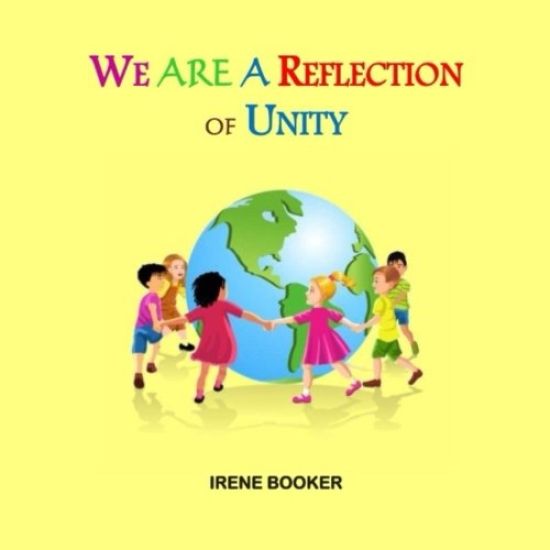
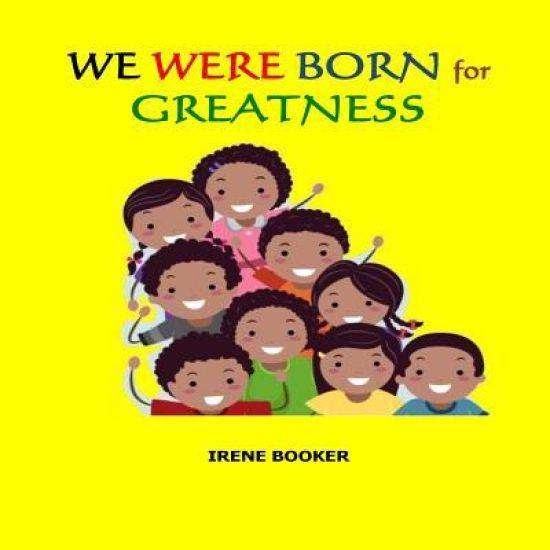
A young girl realizes that she could not afford to live in a world with low self-esteem, not any self-confidence, not any values and lack of pride and character in who she was. To compete in the world, she had to remain confident within herself by reading books that displayed images of herself and allowed her to evolve out of her shadows.
TJ shares his knowledge of Coin Collecting with his friends. The lessons taught to him by his grandfather are shared with his friends. What are you willing to sacrifice to become a Coin Collector? Sacrifice a candy bar; sacrifice a new pair of sneakers; sacrifice eating out one weekend. "Can you do that?" said TJ.
A Brief Genealogy of Jewish Republicanism: Parting Ways with Judith Butler uses the chance synchronicity of the 2013 Israeli parliamentary elections and literary theorist Judith Butler's controversial Brooklyn College address calling for the boycotting of Israeli academic, cultural, and economic institutions as an occasion for examining possible relations between Jewishness and state-centered forms of self-governance. In an extended analysis of Butler's Parting Ways: Jewishness and the Critique of Zionism, Tucker shows how the alignment of certain authors' identities and ideas undergirding Butler's analytical framework draws upon a pointedly Christian conception of belief. This Christian conception of belief structures the most familiar understandings of modern secularism, articulated most famously by John Locke in his "Letter Concerning Toleration." Tucker reads Locke's "Letter"' alongside Jewish philosopher/rabbi Moses Mendelssohn's 1783 critique of Locke, Jerusalem: Or On Religious Power and Judaism, and the Jewish tradition of the minyan, making a case for the existence of an alternative history of publicness borrowing from Jewish conceptions of communal life and the proper relations of actions and ideas.In throwing light on a genealogy of Jewish practices aimed at the deliberate creation of collectives constituted by their grappling with contingent, historical time, Tucker argues for the existence of a Jewish tradition of republicanism, of democracy. Within such a context, the Jewishness of Israel can be seen to lie first and foremost in its methods of generating a civil collective out of a diverse citizenry rather than in the identities of its individual citizens. The tradition Tucker has in mind explicitly uses an idea of ritual or "ceremonial law" to sustain within itself a tension between a heterogeneity of perspectives and interests constitutive of democratic process and the forms of unity and agreement often understood to be the desired outcome of that process. By setting forth a framework in which heterogeneity and agreement are conceived as coincident modes of political being rather than steps in a linear process, this "Jewish republicanism" frames law-making, implementation and following as forms of a single structure of ritual practice. Such a framework might provide the inspiration and authority for reconceiving some of the fundamental relations of the Zionist project.Irene Tucker, a professor of English at University of California, Irvine, is currently at work on a collection of essays exploring conceptions of the relations of culture and state sovereignty in Israel and contemporary Jewish life. She is the author of two previous books, The Moment of Racial Sight: A History (2012), which investigated the connections of race, history of medicine, and 18th and 19th century European philosophy and literature, and A Probable State: The Novel, the Contract and the Jews (2000), which made a case for the links of liberalism, nationalism and the form of the realist novel in 19th-century British novel, as well as in the early Hebrew novel. Before coming to UC Irvine, Irene Tucker was a faculty member in the English departments at Johns Hopkins University and Duke University.
Inspired partly by her own spirit of adventure, and partly by the stories of her native coastal ancestors, Irene Skyriver celebrated her fortieth year of life with a solo kayak voyage, paddling from Alaska to her home in Washington's San Juan Islands. Paddling with Spirits: A Solo Kayak Journey interweaves the true account of her journey with generational stories handed down and vividly re-imagined. Beginning with her great-grandmother's seduction of an Indian fighter turned trader, and following her ancestors on both sides through oil booms, orphanages, wartime romances, dance halls and cattle ranches, Paddling with Spirits dips like a paddle itself between the stories of those who inspired her, and Irene's own journey down a lonely coast. As she encounters harsh weather, wolves, bears, whales, and the wild beauty of the coastal waters, she reflects upon her own life and on the lives of the many people she meets along the way before her final, triumphant return home. Paddling with Spirits is a wild, brave, and thrillingly original adventure.
The Velvet Bridge began as a means for a daughter to cope with her mother's aging and encroaching Alzheimer's. As the chapters unfold, they reveal a hurricane of tears, guilt, fear, loss, wonder, and laughter. Readers will follow the journey in real time. They will also visit the past and witness the formation of a special bond through stories told to jog a failing memory. In the end, it is a love story-a tribute to the complex and unique relationship of a mother and a daughter.
Visit Greece in the pages of this book. See the sites, ancient and modern, listen to the pronouncements of Greek gods and goddesses, drink local wine, dance through the night to the strains of a bouzouki, all through the eyes of a na ve young woman. Watch her transform into a woman who travels the world, meeting new people, eating delicious food, adopting local customs, and always returning to her Grecian "home."
We had been advised that it could get cold at night in the outdoor theatre, so we had a backpack full of clothing layers to add as the show continued. It didn't take long before a cool breeze reached our seats, then a more insistent cold breeze, and we began adding shirts, sweaters, jackets, socks, and scarves.Soon we were wearing so many layers, we couldn't bend our arms or legs. Our noses were running, and we were hunched over in an effort to stay warm. We soon learned that "authentic" Shakespeare meant that the play, Antony and Cleopatra, ran nearly four hours-with no intermission. Add the outside temperature, the Elizabethan language that required concentration, the late hour, and we were spent. The play ends when Cleopatra, bereft over Antony's death, calls for a poisonous snake, an Egyptian Asp, to be brought to her. She places it on her breast, is bitten, and in that way commits suicide. We three friends could do nothing but sit together, miserable in the cold, and silently plead, "Bring on the Asp."
There are unparalleled adventures to be had traveling the world as Lois Lane with one's very own Super Man. I showed him many things and he saved me time-and-again. We crested a small rise and there he was, sitting upright, presenting his beautiful silver back. He was magnificent-and he knew it. His name was Guhonda. At six and a half feet tall and more than 660 pounds, he was the largest Mountain Gorilla in the world. I was conveyed from the arms of one crew member to another while Gary, his fingertips finding purchase on the roof, leaned in, and pushing off, allowed his body weight to swing him across three feet of oily water to land safely on the undulating deck of Mihovil. I recognized the error in translation when a taxi driver gave me the international middle-finger salute as I barreled down the street-the wrong way-his angry einbahhhhhnstrassssse echoing out behind him.
The 6th grade is flying to South America to visit the Amazon, and Amber can hardly contain her excitement. Coming along on the trip is her collection of stuffed animals, a notebook filled with facts about the Amazon, her best friend, Raya, her teacher, some chaperones and the entire 6th grade class. She can hardly wait until the plane touches down and she can begin her adventure.
Social Group Representation in a Diachronic News Corpus
Irene Elmerot
Cambridge University Press
2025
pokkari
Equality is a global factor of prosperity in democratic societies. In this Element, thirty years of newspapers and magazines form the basis of an intersectional study on how different social actors are described in Czechia. A bird's eye perspective points to the news being very white male-oriented, but when scrutinising further, some results differ from previous studies, giving insights on linguistic othering and stratification that may be a threat to equality. The methodology can be used for most languages with a sufficient amount of digitised, annotated and available texts. Since more and more text is being gathered to form datasets large enough to answer any question we might have, this Element helps uncover why we should be careful about which conclusions to draw if the words put into the data are not adapted to the relevant register and context. This title is also available as Open Access on Cambridge Core.
Social Group Representation in a Diachronic News Corpus
Irene Elmerot
Cambridge University Press
2025
sidottu
Equality is a global factor of prosperity in democratic societies. In this Element, thirty years of newspapers and magazines form the basis of an intersectional study on how different social actors are described in Czechia. A bird's eye perspective points to the news being very white male-oriented, but when scrutinising further, some results differ from previous studies, giving insights on linguistic othering and stratification that may be a threat to equality. The methodology can be used for most languages with a sufficient amount of digitised, annotated and available texts. Since more and more text is being gathered to form datasets large enough to answer any question we might have, this Element helps uncover why we should be careful about which conclusions to draw if the words put into the data are not adapted to the relevant register and context. This title is also available as Open Access on Cambridge Core.
This work has been selected by scholars as being culturally important and is part of the knowledge base of civilization as we know it.This work is in the public domain in the United States of America, and possibly other nations. Within the United States, you may freely copy and distribute this work, as no entity (individual or corporate) has a copyright on the body of the work.Scholars believe, and we concur, that this work is important enough to be preserved, reproduced, and made generally available to the public. To ensure a quality reading experience, this work has been proofread and republished using a format that seamlessly blends the original graphical elements with text in an easy-to-read typeface.We appreciate your support of the preservation process, and thank you for being an important part of keeping this knowledge alive and relevant.