Kirjahaku
Etsi kirjoja tekijän nimen, kirjan nimen tai ISBN:n perusteella.
1000 tulosta hakusanalla Ingmar Simonsson
Volume Four chronicles aerial warfare in the South Pacific in the critical period between 19 June and 8 September 1942. It can be read alone or as a continuation of the first three volumes that spanned the first six months of the Pacific War, culminating in the Battle of the Coral Sea. Unlike the previous three volumes, no aircraft carriers appeared in New Guinea waters. Instead, the air war was fought solely by land-based air units. This was in the face of an increasingly complex strategic situation that saw the Japanese land at both Buna and Milne Bay. For the first time, airpower in the theatre was tasked to support the land forces of both sides which became engaged in a bloody struggle in the mountains of Papua and then the narrow muddy quagmire of Milne Bay. Two veteran Japanese air groups, the Tainan and No. 4 Kokutai, continued their Herculean struggle against mounting Allied opposition. In the face of continued attrition, Japanese pilots had many notable successes including several coveted aerial victories against B-17s. Then, from August a plethora of fresh Japanese units arrived in theatre including the No. 2, No. 6, Chitose, Misawa and Kisarazu Kokutai. USAAF P-39s and RAAF P-40Es responded with low level close support missions and B-25s, B-26s and B-17s ramped up an unrelenting bombing campaign. Towards the end of the period A-20A strafers made their combat debut, portending a radical blueprint for future attack tactics in the theatre. Never before has this campaign been chronicled in such detail, with Allied accounts matched against Japanese records for a truly factual account of the conflict.
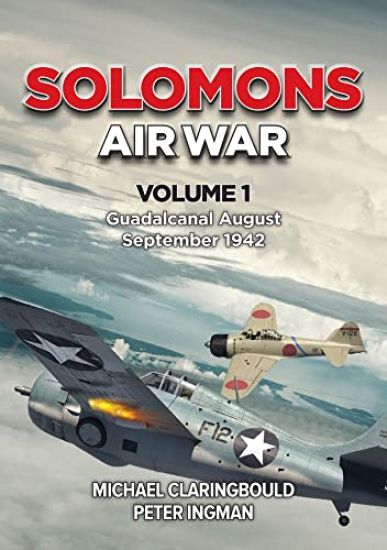
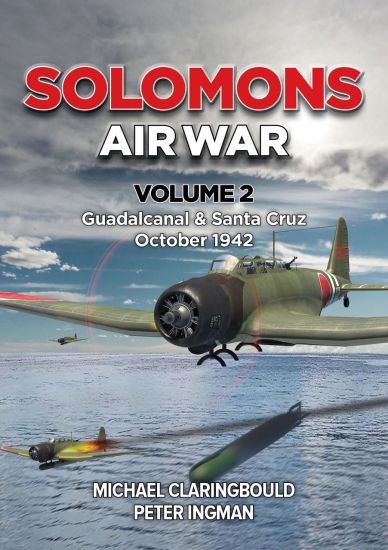
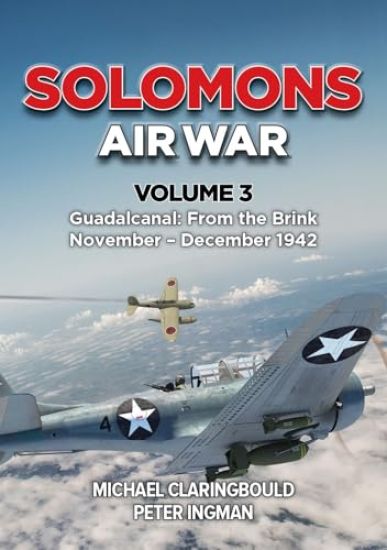
This third volume of Solomons Air War chronicles aerial warfare in the Solomon Islands theatre during the months of November and December 1942. It can be read alone or as part of the ongoing Solomons Air War series. At the start of November 1942, the American position on Guadalcanal was precarious. Cactus Air Force had suffered extremely high attrition in October and virtually all of the available reserves had been drawn on, while the damaged USS Enterprise was the only carrier that could lend assistance. Against this environment the Japanese continued to wage a savage air war and determined to try to wipe out Cactus Air Force through battleship bombardments, while they rolled the dice with the largest yet Tokyo Express convoy. Hence the Americans were pushed to the brink as the frenzied activity known as the Naval Battle of Guadalcanal played out over 12-15 November. Following this the Japanese were forced to admit that they couldn’t supply their troops on Guadalcanal and began to focus on building a new airfield at Munda. In response American bombers returned to Henderson Field and took the fight north to Munda and beyond for the remainder of 1942. This period saw new tactics being trialled, including the use of P-38s as long-range escort fighters and the first PBY-5A Black Cat missions. Meanwhile Cactus Air Force expanded, gaining P-40s, B-26s, OS2U Kingfishers and RNZAF Hudsons. This chronicle has been written using primary Allied and Japanese sources, to give a fresh, factual and highly detailed account of all aspects of the complex Solomons air campaign.
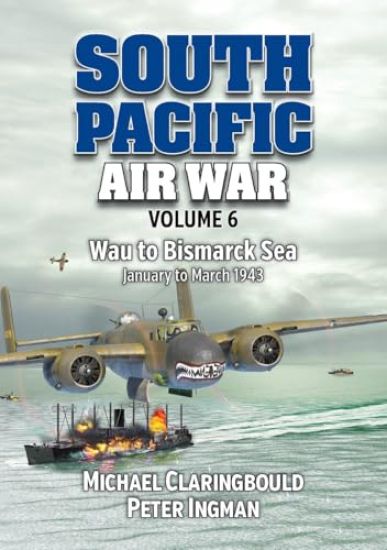
Volume Six of this series chronicles aerial warfare in the New Guinea theatre in the critical period of January to March 1943. It can be read alone or as a continuation of the previous five volumes which span the first thirteen months of the Pacific War. January 1943 saw a successful Japanese supply and reinforcement convoy arrive at Lae from Rabaul, in the face of fierce opposition from Allied air power. The fresh troops soon threatened to overrun the Australian mountain stronghold of Wau, before a massive airlift by Fifth Air Force C47s delivered reinforcements just in time. Meanwhile the air war over New Guinea was increasingly fought by newly arrived JAAF units who shared the air war burden alongside their veteran IJN counterparts. Against this background many of the Fifth Air Force bomber squadrons moved up from Australia to Port Moresby. This greatly increased the combat efficiency of these units, enabling, among other things, sustained daily pressure on the Japanese bastion of Rabaul. Then in March 1943 the Japanese sent a second convoy from Rabaul to Lae which resulted in the Battle of the Bismarck Sea, one of the landmark combats of the entire Pacific War. Using refined attack and bombing tactics, Fifth Air Force and RAAF squadrons conducted an allout shipdestroying effort which made world headlines. Never before has this campaign been chronicled in such detail, with Allied and Japanese accounts matched for a factual and thoroughly detailed account of the conflict.

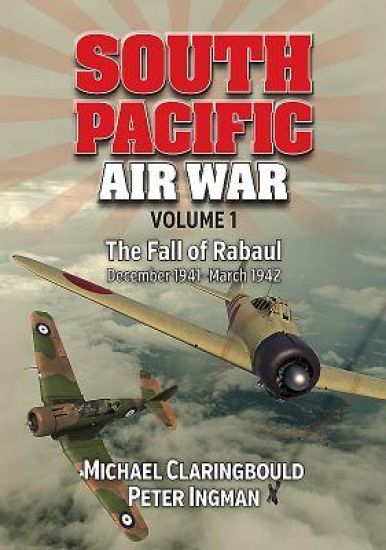
This volume chronicles aerial warfare in the South Pacific from December 1941 until March 1942, durign which air operations by both sides became a daily occurrence. As Imperial Japanese Navy flying boats and land-based bombers penetrated over vast distances, a few under-strength squadrons of the Royal Australian Air Force put up a spirited fight. However it was the supreme power of aircraft carriers that had the biggest impact. Four Japanese fleet carriers facilitated the capture of Rabaul over a devastating four-day period in January 1942. The following month, the USS Lexington's fighter squadron VF-3 scored one of the most one-sided victories of the entire Pacific War. By March 1942 the Japanese had landed on mainland New Guinea, and the scene was set for a race to control Port Moresby. This is the full story of both sides of an air war that could have been won by either incumbent, but for timing, crucial decisions and luck.
This second volume chronicles aerial warfare in the South Pacific for the two crucial months of March and April 1942 when a deadly struggle for Port Moresby played out. It can be read alone or as part of a trilogy that culminates in the Battle of the Coral Sea in May 1942. The period begins with the stunning 10 March US Navy carrier strike against Lae and Salamaua, which caused the Japanese to pause their advance until their own carriers were available. Instead, they tried to grind the Allied forces at Port Moresby into submission through an unrelenting air assault by their Betty bombers and superlative Zero fighters. After a long wait, Allied land-based fighters finally arrived in the form of Royal Australian Air Force No. 75 Squadron Kittyhawks. These were backed up by a growing collection of United States Army Air Force bombers, including A-24 Banshees, B-17 Flying Fortresses, B-25 Mitchells and B-26 Marauders (the latter two types making their worldwide combat debut over the skies of New Guinea). Together, this motley force took the fight to the Japanese, resulting in a complex aerial campaign that saw units from both sides reach exhaustion. Never before has such a detailed chronicle of this air war been published, and for the first time the authors match Allied accounts with Japanese records. The result is both thrilling and surprising, with the resulting dispositions of the air forces of both sides setting the scene for the Battle of the Coral Sea in May.
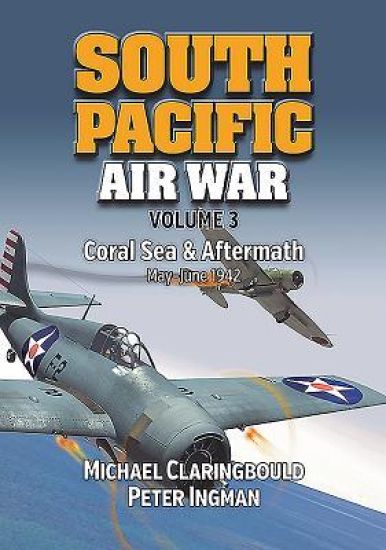
South Pacific Air War Volume 3 chronicles aerial warfare in the South Pacific during the critical months of May and June 1942. For the first time in history, opposing carriers faced each other in the Battle of the Coral Sea. The battle is portrayed in a complete regional context which includes the land-based air forces of both sides. The events were both complex and surprising: when the respective carrier forces departed an intense regional air war continued. This volume can be read alone or as part of a trilogy which spans the first six months of the Pacific War from December 1941 until June 1942.
Sweden, Japan, and the Long Second World War
Pascal Lottaz; Ingemar Ottosson
TAYLOR FRANCIS LTD
2023
nidottu
We thank Ekman & Co AB and Gadelius Holding Ltd for their kind and generous support, making this research available online for free.Lottaz and Ottosson explore the intricate relationship between neutral Sweden and Imperial Japan during the latter’s 15 years of warfare in Asia and in the Pacific. While Sweden’s relationship with European Axis powers took place under the premise of existential security concerns, the case of Japan was altogether different. Japan never was a threat to Sweden, militarily or economically. Nevertheless, Stockholm maintained a close relationship with Tokyo until Japan’s surrender in 1945. This book explores the reasons for that and therefore provides a study on the rationale and the value of neutrality in the Long Second World War. Sweden, Japan, and the Long Second World War is a valuable resource for scholars of the Second World War and of the history of neutrality.
Sweden, Japan, and the Long Second World War
Pascal Lottaz; Ingemar Ottosson
Taylor Francis Ltd
2021
sidottu
We thank Ekman & Co AB and Gadelius Holding Ltd for their kind and generous support, making this research available online for free.Lottaz and Ottosson explore the intricate relationship between neutral Sweden and Imperial Japan during the latter’s 15 years of warfare in Asia and in the Pacific. While Sweden’s relationship with European Axis powers took place under the premise of existential security concerns, the case of Japan was altogether different. Japan never was a threat to Sweden, militarily or economically. Nevertheless, Stockholm maintained a close relationship with Tokyo until Japan’s surrender in 1945. This book explores the reasons for that and therefore provides a study on the rationale and the value of neutrality in the Long Second World War. Sweden, Japan, and the Long Second World War is a valuable resource for scholars of the Second World War and of the history of neutrality.
An all-new story, spinning out of the smash hit RED SONJA title written by MARK RUSSELL! In order to become queen, Sonja The Red had to defeat an evil emperor. But that emperor had a son. And that son will do ANYTHING to exact his revenge...even if it means embracing horrible magics he does not understand. Don't miss out on this series that will affect the Sonja series for years to come! By MARK RUSSELL (Red Sonja, Year Of The Villain), BRYCE INGMAN (Edgar Allen Poe's Snifter Of Terror) and CRAIG ROUSSEAU (The Flash).
Tanks Break Through!: A German Soldier's Account of War in the Low Countries and France, 1940
Steven Lehrer; Alfred-Ingemar Berndt
Createspace Independent Publishing Platform
2016
nidottu
This study, based on Chinese publications and archival materials as well as on recent fieldwork, provides an up-to-date treatment of Kazak history and culture, emphasizing the Kazaks in 20th-century China and, in particular, their status today as one of China's minority nationalities.
Mother Was a Militant Conservationist: A Treatise on Vagabonding, Rock Climbing, Kayaking and Advocacy
J. Ingvar Anderson
Dorrance Publishing Co.
2021
nidottu
Mother was a Militant Conservationist: A Treatise on Vagabonding, Rock Climbing, Kayaking and AdvocacyBy: J. Ingvar AndersonMother was a Militant Conservationist concerns Anderson's authentic stories of being raised inside a nature center inside of NJ state park during the heart of the 1960s environmental movements. The story follows Anderson through his adventures in rock climbing, his life as a vagabond using magic mushrooms and LSD, thirty years of being an ER nurse, and learning lessons in advocacy, NJ politics, and much more. His stories seek to show that those who forget the past are doomed to repeat it. It is vital to remember to fight the good fight, overcome adversity, and always seek adventure.About the AuthorJ. Ingvar Anderson grew up inside a nature center. He started rock climbing and kayaking in 1972. As an adult, he traveled on business to Far East Russia and was in the middle of the Russian Constitutional Crisis of 1993. He was a practicing RN in emergency medicine for over twenty-five years which showed him the many facets of humanity. Before being diagnosed with multiple sclerosis, he lived a very active life of rock climbing, ice climbing, and kayaking. After MS, he took up international trade and advocacy. He has published numerous articles on various topics including maritime affairs, injury control, healthy communities, and ecological issues.
Russian spacesuits is a unique contribution to space science. The authors, part of the original Zveda team that manufactured spacesuits for the first Russian space flights, still play an integral role in spacesuit research and development. Thus there is no-one better to describe the technical innovations of the past 40 years, which enabled Gagarin's first flight in 1961, the first space walk in 1965 and the Mir missions of the 1980s and 1990s, and which have culminated in today's International space Station. The authors also describe how the political climate within the Soviet Union and internationally has affected the development of the space programme and their work. Many documents are published for the first time that, together with photographs, detailed descriptions of the events of the time and the authors' personal memories, provide a fascinating review of a previously unknown aspect of space science
In this second anthology introducing contemporary Baltic poetry, we meet the younger generation of Latvian poets who started writing and publishing after the country gained independence following the disintegration of the Soviet Union of which it had been part for half a century, a generation whose poetics is placed in a wider context by the editor and translator Ieva Lesinska and by the leading poet and translator of the older generation Juris Kronbergs, in their superbly informative introductions which offer many insights, both serious and witty, into the present and past of Latvian poetry.
Book 3 in the "Traveling Circus" seriesCordelia and Flynn face the ultimate challenge: controlling the power within themselves.Cordelia has the opportunity to join the Olympic Swim Team, but her coach wants her to practice day and night for the competition. Can she learn to control her mermaid powers in time?Flynn's dreams of Art College go up in smoke. Riddled with self-doubt, he gives up hope...until Albert the Fortuneteller shows up on his doorstep needing help.Can the Skeleton Key unlock their futures?
A sharp super-hero spoof from a stellar team that includes co-creators of Irredeemable and Second Coming In Gravel City, the super-villain Emperor King has devised not only a sadistic death trap for his arch-enemy, The Accelerator, but also the means to penetrate the top secrets of his other arch-enemy, The Chandelier
"One of the most hilariously offbeat superhero comics on the stands" (IGN) - My Bad returns, from the original creative team of Mark Russell (Second Coming), Bryce Ingman, and Peter Krause (Irredeemable) Someone in Gravel City is killing caped heroes Or would be, if they were better at it. Is it the friendly pizza delivery guy? Can't be--he's just here to drop off a hot, delicious pizza pie Whoever it is, can they draw the arrogant, self-deluding crime-fighter The Chandelier out of retirement? My Bad Volume 2: Thirty Minutes or Dead features an outrageous array of heroes and villains tripping over themselves, accidentally scarring their enemies for life, and going on hideously embarrassing dates. Featuring Dr. Do-Over, Steel Integrity, Good Karen, Monkeyman, and everyone's favorite homicidal rascal: Acid Chimp
Meredith wanted her American Dream, but a divorce left her feeling unwanted and unsure if she would obtain it. Fate, it seems, has different plans for Meredith as it brings her together with someone she never expected to meet, and another who wants to use her to quell the demons within. Will she get her absolute desire, or will she become the desired sacrifice?Sebastian never expected to meet a woman like her, and wanted to do everything he could to bring her what she deserved. But duty calls and problems arise as he realizes not everything is as it seems. But will he be able to do his duty and protect Meredith at the same time? Or will he lose her forever?
Bioökonomie im Selbststudium: Biomasse – nachhaltige Produktion, Rohstoff und Integration
Ulrich Schurr; Ingar Janzik; Holger Klose; Heike Slusarczyk
Springer Spektrum
2021
nidottu
Dieses Studienheft ist ein Teil des Springer Zertikfikatskurses Bioökonomie und wird als Material zum Selbstlernen eingesetzt.