Kirjojen hintavertailu. Mukana 11 627 373 kirjaa ja 12 kauppaa.

Kirjahaku

Etsi kirjoja tekijän nimen, kirjan nimen tai ISBN:n perusteella.

1000 tulosta hakusanalla Israel Joseph Benjamin

Israel's History and the History of Israel

Israel's History and the History of Israel

Mario Liverani

Equinox Publishing Ltd
2007
nidottu
In 'Israel's History and the History of Israel' one of the world's foremost experts on antiquity addresses the birth of Israel and its historic reality. Many stories have been told of the founding of ancient Israel, all rely on the biblical story in its narrative scheme, despite its historic unreliability. Drawing on the literary and archaeological record, this book completely rewrites the history of Israel. The study traces the textual material to the times of its creation, reconstructs the evolution of political and religious ideologies, and firmly inserts the history of Israel into its ancient-oriental context.
Israel's Ethnogenesis

Israel's Ethnogenesis

Avraham Faust

Equinox Publishing Ltd
2008
nidottu
Winner (for best semi-popular book) of the 2008 Irene Levi-Sala Prize for publications on the archaeology of Israel. The emergence of Israel in Canaan is a central topic in biblical/Syro-Palestinian archaeology. However, the archaeology of ancient Israel has rarely been subject to in-depth anthropological analysis until now. 'Israel's Ethnogenesis' offers an anthropological framework to the archaeological data and textual sources. Examining archaeological finds from thousands of excavations, the book presents a theoretical approach to Israel's ethnogenesis that draws on the work of recent critics. The book examines Israelite ethnicity - ranging from meat consumption, decorated and imported pottery, Israelite houses, circumcision, and hierarchy - and traces the complex ethnic negotiations that accompanied Israel's ethnogenesis. Israel's Ethnogenesis is unique in its contribution to the archaeology of ethnicity, offering an anthropological study that will be of interest to students of history, Israelite culture and religion, and the evolution of ethnic groups.
Israel’s Lightning Strike

Israel’s Lightning Strike

Simon Dunstan

Osprey Publishing
2009
nidottu
The Israeli Special Forces' operation at Entebbe goes down in history as one of the most audacious counter-terrorist assaults ever conducted. On 27 June 1976, four terrorists - two of the Popular Front for the Liberation of Palestine and two of the German Baader-Meinhof terrorist group - highjacked a passenger jet and forced a landing in Entebbe, Uganda. Here they were met by reinforcements, and - although releasing a few hostages - transferred all the Jewish and Israeli prisoners to the terminal building. As Idi Amin's assistance to the terrorists became increasingly clear, the Israeli government began preparations for a military assault. The element of surprise was crucial; never before had such a large-scale raid at such a long distance been successfully undertaken. This is the incredible story of how the Israeli Special Forces defied radar for over 2,000 miles, masqueraded as a tyrant in a Mercedes and captured uniforms, and defeated an army in brutal combat, in a triumph of sheer audacity and nerve. This is a compelling book chronicling an incredible moment in history.
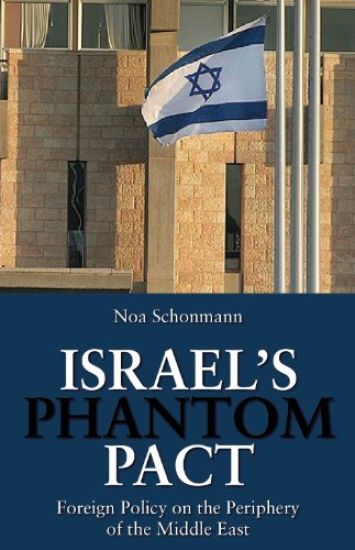
Israel's Phantom Pact

Israel's Phantom Pact

Noa Schonmann

I.B. Tauris
2018
sidottu
For Israel, a small state surrounded by what it perceives as hostile neighbours, foreign policy has been stamped as the key to its survival. By embarking on what is now called Israel's 'Periphery Pact' in 1958, Prime Minister David Ben-Gurion aspired to transform his small nascent state from an object of international politics into a dynamic agent, capable of defining its own individual foreign policy. This pact was to see Israel reaching out to states on the fringes of the region: Turkey and Iran to the north and Ethiopia and Sudan to the south. But although this policy was abandoned shortly after, it has left a lasting imprint upon how this small but ambitious state has dealt with the wider world, influencing politicians from Shimon Peres to Benjamin Netanyahu. Examining Israel's foreign policy from its foundation, Noa Schonmann traces the origins and evolution of the periphery policy and explores how this policy can operate in the context of Israel's relationships with other states in the present day.
Israel's Phantom Pact

Israel's Phantom Pact

Noa Schonmann

I.B. Tauris
2018
nidottu
For Israel, a small state surrounded by what it perceives as hostile neighbours, foreign policy has been stamped as the key to its survival. By embarking on what is now called Israel's 'Periphery Pact' in 1958, Prime Minister David Ben-Gurion aspired to transform his small nascent state from an object of international politics into a dynamic agent, capable of defining its own individual foreign policy. This pact was to see Israel reaching out to states on the fringes of the region: Turkey and Iran to the north and Ethiopia and Sudan to the south. But although this policy was abandoned shortly after, it has left a lasting imprint upon how this small but ambitious state has dealt with the wider world, influencing politicians from Shimon Peres to Benjamin Netanyahu. Examining Israel's foreign policy from its foundation, Noa Schonmann traces the origins and evolution of the periphery policy and explores how this policy can operate in the context of Israel's relationships with other states in the present day.
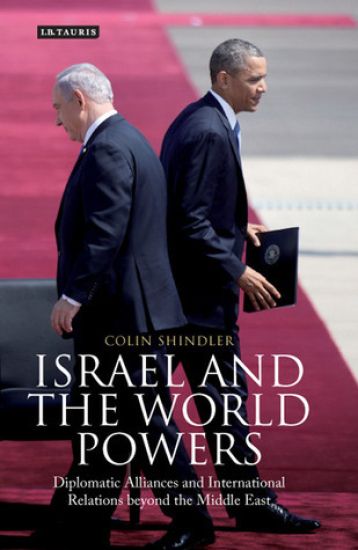
Israel and the World Powers
Israel's relations - or lack of them - with Muslim countries throughout the Middle East and the Islamic world are subject to repeated analysis and scrutiny in both the media and academia. But what have previously been less examined are Israel's relationships with the rest of world: from the former colonial states of Britain and France to the superpowers of the US and Russia and to emerging and regional powers such as China, India and Brazil. The diplomatic ties between Israel and these various world powers have been determined by numerous factors. A central and dominating one has, of course, been the Israeli-Palestinian and the Israeli-Arab conflicts. Yet since the signing of the Oslo Accords in the mid-1990s, there has been a remarkable development of ties between Israel and the world on many levels - trade, technology, science, security and military hardware. However, the development and strength of these relationships differ from country to country, from historical epoch to historical epoch. Conventionally seen as a state isolated from its Arab neighbours and irrevocably allied with the US, Israel is examined here in the light of efforts to strengthen diplomatic ties with other powers, such as its relationship with post-World War II Germany and the EU. Furthermore, Israel and the World Powers looks at the ways in which, despite the profound intertwining of Israeli and American foreign policy, the US-Israeli relationship hasn't always been an easy one. With most American Jews being broadly of a more liberal bent than the rest of the US, they often support the peace camp in Israel, whereas it is the Christian evangelicals in the US that tend to support the Israeli right. Taking into consideration the fact that relations with Turkey have cooled significantly following the raid on the Gaza flotilla in 2008, Israel has been forced to look even further for support and alliances. It is by looking at Israel's relations with established and rising world powers that this book offers vital analysis for researchers of both Middle East studies and International Relations.
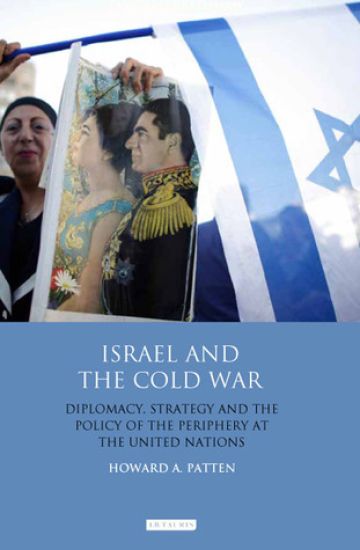
Israel and the Cold War

Israel and the Cold War

Howard A. Patten

I.B. Tauris
2013
sidottu
In the wake of its creation in 1948, the state of Israel was confronted with the challenge of establishing foreign relations with key players in the region, in the face of opposition from most of the Arab states. Howard Patten explores the genesis and development of Israel's foreign relations with Iran, Turkey and Ethiopia, known as the 'Policy of the Periphery'. Highlighting the pragmatism and Realpolitik at the heart of this policy, Israel and the Cold War analyses the national interests and mutual concerns which shaped relations and strategy at the United Nations during the critical moments of the establishment of the State of Israel and the following forty years, before the ramifications of the Iranian Revolution became apparent. During this period, Israel made efforts to create pragmatic alliances behind closed doors at the UN, even as ambivalence and hostility reigned in the public sphere. Patten thus examines the implications that the Cold War system of ideological combat had on these attempts to maintain implicit, yet cordial understandings, as world events - such as the Suez Crisis of 1956, successive crises over Cyprus and the Ethiopian and Iranian Revolutions - tested the 'Policy of the Periphery'. 'Israel and the Cold War' traces the development of Israel's relations with these three states, from their initial beginnings to consolidation, then rejection and subsequent efforts to realign. Patten highlights the extensive diplomatic and military reverberations that occurred throughout the region, and the way in which these were played out at the UN. Based primarily on UN documents, this book is a vital primary resource for those researching the period in question and the formulation of foreign policy in the Middle East.
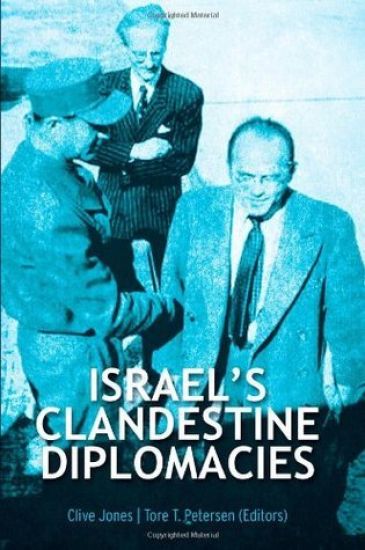
Israel's Clandestine Diplomacies

Israel's Clandestine Diplomacies

C Hurst Co Publishers Ltd
2013
sidottu
For over sixty years the state of Israel has proved adept at practising clandestine diplomacy - - about which little is known, as one might expect. These hitherto undisclosed episodes in Israel's diplomatic history are revealed for the first time by the contributors to this volume, who explore how relations based upon patronage and personal friendships, as well as ties born from kinship and realpolitik both informed the creation of the state and later defined Israel's relations with a host of actors, both state and non-state. The authors focus on the extent to which Israel's clandestine diplomacies have indeed been regarded as purely functional and sub- ordinate to a realist quest for security amid the perceived hostility of a predominantly Muslim-Arab world, or have in fact proved to be manifestations of a wider acceptance - political, social and cultural - of a Jewish sovereign state as an intrinsic part of the Middle East. They also discuss whether clandestine diplomacy has been more effective in securing Israeli objectives than reliance upon more formal diplomatic ties constrained by inter- national legal obligations and how this often complex and at times contradictory matrix of clandestine relationships continues to influence perceptions of Israel's foreign policy.
Israel in the Book of Kings

Israel in the Book of Kings

James Richard Linville

Sheffield Academic Press
1998
sidottu
Linville argues that a new approach to the book of Kings is needed because of the failings of the usual historical-critical methods. He adopts a holistic approach which sees the book as a Persian-era text intended to articulate politically and religiously significant symbols within the book's monarchic history. These express the producer's reactions to important issues of Jewish identity in the continuing Diaspora and in Jerusalem. In the story of the schisms and apostacies of Israel's defunct monarchies both the Diaspora and cultural pluralism are legitimized. Rival versions of Israelite heritage are reconciled under an overarching sense of a greater Israelite history and identity.
Israel Boundary Disputes with Arab Neighbours 1946–1964 10 Volume Hardback Set
The years between 1946 and 1964 are some of the most important for the study of the State of Israel. This collection of primary source documents focuses on the great diplomatic and territorial problems of the period including: the 1947 United Nations Partition Plan; the positions of Israel and Jordan regarding the West Bank and Gaza; the relationship of the refugee problem to the border problem; territorial adjustments for the benefit of Arab frontier villages; implications of the armistice lines for border settlements; and Soviet interest and alliances and Great Power conflict.
Israel's New Disciples

Israel's New Disciples

Julia Fisher

Monarch Books
2008
pokkari
Ten years ago there were only a few hundred Jewish Christians in Israel. Today that figure is over 10,000 and the number is growing rapidly. Some of the leading Messianic believers are starting to look to the future and turn their attention to passages in the Bible that talk about the role of Israel in the future being a light to the world. A number of Jewish believers are emerging who are passionate, fearless evangelists. The stories told in this book feature some of those who are turning their attention to the Arab world in particular. Who are these people? How are they going about their 'mission' and why are they so passionate to share their faith in the God of Israel with Arabs?
Israel - Culture Smart!

Israel - Culture Smart!

Jeffrey Geri; Marian Lebor

Kuperard
2018
nidottu
Providing information not found in standard guides about daily interactions, cultural dos and don'ts, etiquette, and the ways business is conducted Culture Smart! Israel marks the nation's 70th year of independence in a concise cultural guide that enables readers to get to the heart of this diverse, dynamic and paradoxical country and enable you to make the most of your visit. Independent since 1948, this edition provides important insights into the complexities of Israeli society so that you will know what to expect and how to behave in different circumstances, avoid misunderstandings and form good relations both socially and in business. While Israel is a modern and largely secular country, it is one steeped in biblical history and in which religion still plays an active role in public life. In seventy years it has grown from a sparsely populated strip of land into a vigorous democracy and regional superpower. Often called the Startup Nation, Israel is a world leader in a number of Hi-tech industries. Its democratic institutions, despite a political and social polarization in recent years, are among the most enlightened in the world. This pocket guide will help readers understand the country and its people beyond the headlines, ensuring for greater understanding and a far more valuable travelling experience, whatever the reason for visiting.
Israel and Palestine

Israel and Palestine

Jack Berriault

Israel Academic Press
2020
pokkari
From Two Stories to One . . . Many historians have chronicled the tragic and persistent struggle between the peoples of Palestine and Israel, revealing the separate national stories generated and held close by both sides. But this book tells the story of Israel and Palestine from a unique perspective. Over two decades ago, Jack Berriault, founder of The Israel Palestine Project, asked the question, "What would be possible if Palestinians and Israelis embraced a single, common narrative in which both peoples were equally represented, understood and honored?" The journey of exploration and discovery that followed produced the book you now hold in your hands.Jack Berriault (1930-2016), Principal author and editor of Israel and Palestine: A Common Historical Narrative, was a visionary in the field of transformational theory and practice, and a life-long champion of a world at peace that works for all, with no one left behind.More information on Jack, and on his collaborators, Rick Phillips and Nancy Black, is available at https: //www.israelpalestineproject.org. "Essential reading for Palestinians and Israelis alike, and for anyone encountering this conflict for the first time.... A well-crafted story, carefully balanced and simply told " - Moshe Ma'oz, Professor Emeritus in Middle East History and Islam, Hebrew University."By taking no side in the struggle between Israelis and Palestinians, . . . this book] takes both sides, which is the side of Humanity " - Richard Forer, author of Wake Up and Reclaim Your Humanity - Essays on the Tragedy of Israel-Palestine.