Israel and the Nations: Paul's Gospel in the Context of Jewish Expectation provides various perspectives of leading contemporary scholars concerning Paul’s message, particularly his expressed expectation of the end-time redemption of Israel and its relation to the Gentiles, the non-Jewish nations, in the context of Jewish eschatological expectation. The contributors engage the increasingly contentious enigmas relating to Paul’s Jewishness: had his perception of living in a new era in Christ and anticipating an imminent final consummation moved him beyond the bounds of what his contemporaries would have considered Judaism, or did Paul continue to think and act “within Judaism”?
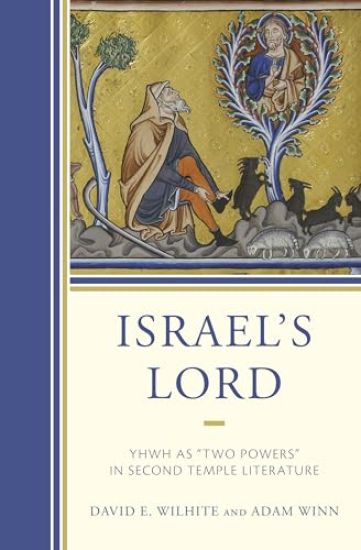
Israel’s Lord addresses the nature of Jewish monotheism in the Second Temple period, especially in relation to a concept known as "two powers" in heaven. Wilhite and Winn review the various figures that were depicted as the second power in heaven, such as God's Word, God’s Wisdom, the Angel of the Lord, the Son of Man, and others. By establishing a set of criteria by which to evaluate whether ancient Jews from this period would consider a certain figure divine, the authors re-assess the various candidates, finding some, but not all, to be rightly described as the second power in heaven – that is, the figure who appeared in Israel’s scriptures and was also called YHWH. This two powers paradigm provides a way forward for studying this period in general and the rise of Christianity in particular. The debate about Jesus' divinity depends in large part on what options were available for the earliest Christians when considering his titles and status. Since a second power figure is found in a wide array of sources, the authors contend that this should inform any reading of New Testament texts and their varying depictions of Jesus as the "Lord" of Israel.
Israel - What is it really all about?What is the mechanism behind the incredible success of Israel? How can one small country in the turbulent of the Middle East, be such a success story?An intriguing - best-selling book, combining first hand experiences and stories of many Israeli leading figures, OECD and UN findings as well as statistical figures and data.A book that will reveal the truth about Israel's success story #1 in Cyber Security#1 in waste-water recycling#1 in Nobel Prize winners per capita#2 in the world level of innovation scale#3 in the world level of education scaleA book that will shatter your axioms and answer your questions Is the Israeli economy really prosperous?Does Israel have a shortage of water?Is the cultural and economic boycott working?Is the US security aid for Israel's military expenses, bad for the American economy?Scroll up and grab a copy of this fascinating book today
Israel Zangwill (21 January 1864 - 1 August 1926) was a British author at the forefront of cultural Zionism during the 19th century, and was a close associate of Theodor Herzl. He later rejected the search for a Jewish homeland and became the prime thinker behind the territorial movement. Early life and education: Zangwill was born in London on 21 January 1864, in a family of Jewish immigrants from the Russian Empire. His father, Moses Zangwill, was from what is now Latvia, and his mother, Ellen Hannah Marks Zangwill, was from what is now Poland. He dedicated his life to championing the cause of people he considered oppressed, becoming involved with topics such as Jewish emancipation, Jewish assimilation, territorialism, Zionism, and women's suffrage. His brother was novelist Louis Zangwill. Zangwill received his early schooling in Plymouth and Bristol. When he was nine years old, Zangwill was enrolled in the Jews' Free School in Spitalfields in east London, a school for Jewish immigrant children. The school offered a strict course of both secular and religious studies while supplying clothing, food, and health care for the scholars; presently one of its four houses is named Zangwill in his honour. At this school he excelled and even taught part-time, eventually becoming a full-fledged teacher. While teaching, he studied for his degree from the University of London, earning a BA with triple honours in 1884. Writings: He had already written a tale entitled The Premier and the Painter in collaboration with Louis Cowen, when he resigned his position as a teacher owing to differences with the school managers and ventured into journalism. He initiated and edited Ariel, The London Puck, and did miscellaneous work for the London press. Zangwill's work earned him the nickname "the Dickens of the Ghetto". He wrote a very influential novel Children of the Ghetto: A Study of a Peculiar People (1892). The use of the metaphorical phrase "melting pot" to describe American absorption of immigrants was popularised by Zangwill's play The Melting Pot, 4] a success in the United States in 1909-10. When The Melting Pot opened in Washington D.C. on 5 October 1909, former President Theodore Roosevelt leaned over the edge of his box and shouted, "That's a great play, Mr. Zangwill, that's a great play." In 1912 Zangwill received a letter from Roosevelt in which Roosevelt wrote of the Melting Pot "That particular play I shall always count among the very strong and real influences upon my thought and my life." The protagonist of the play, David, emigrates to America after the Kishinev pogrom in which his entire family is killed. He writes a great symphony named "The Crucible" expressing his hope for a world in which all ethnicity has melted away, and becomes enamored of a beautiful Russian Christian immigrant named Vera. The dramatic climax of the play is the moment when David meets Vera's father, who turns out to be the Russian officer responsible for the annihilation of David's family. Vera's father admits guilt, the symphony is performed to accolades, David and Vera live happily ever after, or, at least, agree to wed and kiss as the curtain falls. "Melting Pot celebrated America's capacity to absorb and grow from the contributions of its immigrants." Zangwill was writing as "a Jew who no longer wanted to be a Jew. His real hope was for a world in which the entire lexicon of racial and religious difference is thrown away.".................
ISRAEL Name Tracing Workbook - Preschoolers Kindergarten Practice Workbook - Toddlers Writing Notebook - Learn How to Write ISRAEL - Preschoolers Activities Teaching your child the basics of writing is a difficult task especially if he or she is full of energy and finds it more difficult to focus. In order to give him a push in the first years of school or kindergartner, we are presenting a revolutionary way of teaching your baby the basics of the alphabet: the name tracing workbook for children. Why our workbook? The name tracing workbook has been designed specifically to teach children the basic of spelling and writing. By learning to write his own name, your child will develop the abilities and skills needed in the first years of schools while having fun. The 100 pages activity book is the perfect choice if you are searching to invest in your child's education from the beginning so don't hesitate and get him the only workbook he needs LEARNING THE FIRST LETTERS teaching your toddler the first letters and how to spell his or her name is difficult, which is why we have designed a special workbook that will make the learning process easier and a lot more fun, adding to the baby's educational fund. PERSONALIZED WORKING: the name is the first word any child should learn how to spell, but it is almost impossible to find special help for that task. ISRAEL Name Tracing Workbook is divided in 12 themed chapters that will teach your toddler how to spell his or her name in a fun and interactive way. WHAT IT CONTAINS: ISRAEL Name Tracing Workbook counts no less than 100 pages divided in 12 themed sheets that propose recognition activities, letter tracing practice and letter games, that are sure to teach your child the basics of writing and spelling. FOR TODDLERS: ISRAEL Name Tracing Workbook is made especially for children aged 3 to 6 so your son or daughter will be well prepared for both kindergarten and first grade Learning the alphabet will be a piece of cake if your kid will already have the foundation letter tracing so why not give him a head start in school. THE PERFECT GIFT: offering a present to a toddler that is both fun and parents-approved is an almost impossible task, but the name tracing workbook has it all: it is educational, personalized and made especially for youngsters ages 3 to 6 so, if you're trying to bring a smile on a kid's face, this is it
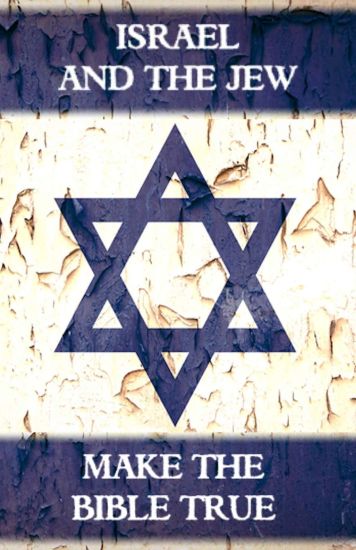
Yes, Israel and the Jew make the Bible true but not because of the state or the people but because the LORD Almighty, the Supreme Designer, the God and Father of the Lord Jesus Christ has chosen to use Israel and the Jewish people to show off in front of the pagan nations of the world.For you are a people holy to the Lord your God; the Lord your God has chosen you out of all the peoples on earth to be his people, his treasured possession. It was not because you were more numerous than any other people that the Lord set his heart on you and chose you - for you were the fewest of all peoples. Deuteronomy 7:6-7
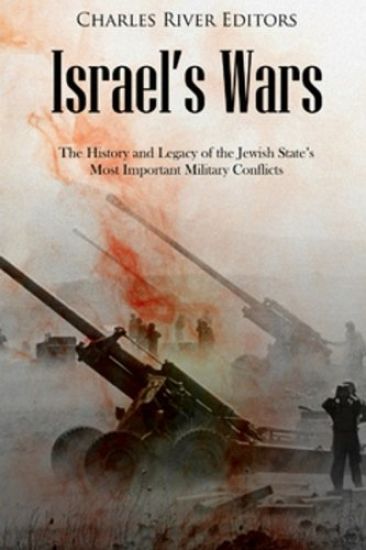
*Includes pictures *Includes online resources and a bibliography for further reading The Ottoman Empire quickly collapsed after World War I, and its extensive lands were divvied up between the French and British. While the French gained control of the Levant, which would later become modern day nations like Syria, the British were given the Mandate for Palestine from the newly created League of Nations. The British Mandate for Palestine gave the British control over the lands that have since become Jordan, Israel, the West Bank, and the Gaza Strip. The terms of the British Mandate incorporated the language of the Balfour Declaration, recognizing the "historical connection of the Jewish people with Palestine." The British were also tasked with creating a Jewish state, which the United States Congress endorsed in 1922. In 1947, the British delegated the issue of partitioning the British Mandate to the United Nations, and the U.N. General Assembly set up the Special Committee on Palestine (UNSCOP). UNSCOP eventually came up with what is now known as the U.N. Partition Plan of 1947. The Partition Plan carved up two strange looking states, but their motive was to create an Israel in which the Jewish population was a 55% majority, while Palestine had an over 90% Palestinian Arab majority. Meanwhile, the city of Jerusalem would be administered internationally, due to the sensitive religious concerns of Muslims, Christians, and Jews. In addition to several Christian holy spots, Jerusalem's Al-Aqsa Mosque is the third holiest site in Islam, and it is situated right next to the Western Wall, the Jews' holiest remaining site. On May 14, 1948, the British Mandate officially expired. That same day, the Jewish National Council issued the Declaration of the Establishment of the State of Israel. About 10 minutes later, President Truman officially recognized the State of Israel, and the Soviet Union also quickly recognized Israel. However, the Palestinians and the Arab League did not recognize the new state, and the very next day, armies from Egypt, Syria, Lebanon and Iraq invaded the former British Mandate to squelch Israel, while Saudi Arabia assisted the Arab armies. Jordan would also get involved in the war, fighting the Israelis around Jerusalem. In early 1949, Israel began signing armistices with Egypt, Jordan, and Syria, which left Israel in control of nearly 75% of the lands that were to be partitioned into the two states under the 1947 plan. Jordan now occupied Judea and Samaria, which later became known as the West Bank due to its position on the western bank of the Jordan River. Jordan also occupied three quarters of Jerusalem, with the Israelis controlling only about a quarter in the western part of the city. To the west, Egypt occupied the Gaza Strip. The new armistice lines became known as the "Green Line," and the conflict has continued to involve those lines and the issues that were contested in a war now nearly 70 years old. In early June 1967, the Israelis captured Jordanian intelligence that indicated an invasion was imminent and thus launched preemptive strikes. Over the next six days, the Israelis overwhelmed the Egyptians in the west, destroying thousands of tanks and capturing the Gaza Strip and the entire Sinai Peninsula. At the same time, Israel drove the Jordanians out of Jerusalem and the West Bank, and it captured the Golan Heights from Syria near the border of Lebanon. In the span of a week, Israel had tripled the size of the lands it controlled. Israel had gone from less than 10 miles wide in some spots to over 200 miles wide from the Sinai Peninsula to the West Bank. Israel also unified Jerusalem. On October 6, 1973, Syria and Egypt caught Israel off guard during the Jewish holy holiday of Yom Kippur, surprise attacking the Sinai Peninsula and Golan Heights. The Israelis turned the tide within a week, going on the counteroffensive and winning the war within 3 weeks.
*Includes pictures *Includes online resources and a bibliography for further reading The Ottoman Empire quickly collapsed after World War I, and its extensive lands were divvied up between the French and British. While the French gained control of the Levant, which would later become modern day nations like Syria, the British were given the Mandate for Palestine from the newly created League of Nations. The British Mandate for Palestine gave the British control over the lands that have since become Jordan, Israel, the West Bank, and the Gaza Strip. The terms of the British Mandate incorporated the language of the Balfour Declaration, recognizing the "historical connection of the Jewish people with Palestine." The British were also tasked with creating a Jewish state, which the United States Congress endorsed in 1922. In 1947, the British delegated the issue of partitioning the British Mandate to the United Nations, and the U.N. General Assembly set up the Special Committee on Palestine (UNSCOP). UNSCOP eventually came up with what is now known as the U.N. Partition Plan of 1947. The Partition Plan carved up two strange looking states, but their motive was to create an Israel in which the Jewish population was a 55% majority, while Palestine had an over 90% Palestinian Arab majority. Meanwhile, the city of Jerusalem would be administered internationally, due to the sensitive religious concerns of Muslims, Christians, and Jews. In addition to several Christian holy spots, Jerusalem's Al-Aqsa Mosque is the third holiest site in Islam, and it is situated right next to the Western Wall, the Jews' holiest remaining site. On May 14, 1948, the British Mandate officially expired. That same day, the Jewish National Council issued the Declaration of the Establishment of the State of Israel. About 10 minutes later, President Truman officially recognized the State of Israel, and the Soviet Union also quickly recognized Israel. However, the Palestinians and the Arab League did not recognize the new state, and the very next day, armies from Egypt, Syria, Lebanon and Iraq invaded the former British Mandate to squelch Israel, while Saudi Arabia assisted the Arab armies. Jordan would also get involved in the war, fighting the Israelis around Jerusalem. In early 1949, Israel began signing armistices with Egypt, Jordan, and Syria, which left Israel in control of nearly 75% of the lands that were to be partitioned into the two states under the 1947 plan. Jordan now occupied Judea and Samaria, which later became known as the West Bank due to its position on the western bank of the Jordan River. Jordan also occupied three quarters of Jerusalem, with the Israelis controlling only about a quarter in the western part of the city. To the west, Egypt occupied the Gaza Strip. The new armistice lines became known as the "Green Line," and the conflict has continued to involve those lines and the issues that were contested in a war now nearly 70 years old. In early June 1967, the Israelis captured Jordanian intelligence that indicated an invasion was imminent and thus launched preemptive strikes. Over the next six days, the Israelis overwhelmed the Egyptians in the west, destroying thousands of tanks and capturing the Gaza Strip and the entire Sinai Peninsula. At the same time, Israel drove the Jordanians out of Jerusalem and the West Bank, and it captured the Golan Heights from Syria near the border of Lebanon. In the span of a week, Israel had tripled the size of the lands it controlled. Israel had gone from less than 10 miles wide in some spots to over 200 miles wide from the Sinai Peninsula to the West Bank. Israel also unified Jerusalem. On October 6, 1973, Syria and Egypt caught Israel off guard during the Jewish holy holiday of Yom Kippur, surprise attacking the Sinai Peninsula and Golan Heights. The Israelis turned the tide within a week, going on the counteroffensive and winning the war within 3 weeks.
Herman Melville (August 1, 1819 - September 28, 1891) was an American novelist, short story writer, and poet of the American Renaissance period. His best known works include Typee (1846), a romantic account of his experiences in Polynesian life, and his whaling novel Moby-Dick (1851). His work was almost forgotten during his last 30 years. His writing draws on his experience at sea as a common sailor, exploration of literature and philosophy, and engagement in the contradictions of American society in a period of rapid change. He developed a complex, baroque style; the vocabulary is rich and original, a strong sense of rhythm infuses the elaborate sentences, the imagery is often mystical or ironic, and the abundance of allusion extends to biblical scripture, myth, philosophy, literature, and the visual arts.
This book is of value to all Christians as it discusses the importance of Israel in our heritage. God's covenants with Abraham, Isaac, Jacob (Israel) and Moses are discussed. The Scriptural brief history of Israel the people, the nation and their covenants with God are examined. Jesus Christ is the Messiah of Israel. There is some discussion of Messianic prophecy as Jesus fulfilled them all. A brief discussion of the New Covenant in Christ is presented. There is an emphasis on the 2nd coming of Christ to reign in Jerusalem and the war that will end all wars that will be in Israel. It is essential that all Christians realize that not only is Israel our heritage but also our future. In Jesus Christ the Messiah both Jew and Gentile shall be one people worshipping God throughout eternity. Christians should pray for Israel, as we share the same destiny.