Kirjojen hintavertailu. Mukana 12 399 164 kirjaa ja 12 kauppaa.

Kirjahaku

Etsi kirjoja tekijän nimen, kirjan nimen tai ISBN:n perusteella.

1000 tulosta hakusanalla Ivan Bridgewater

Fathers and Sons

Fathers and Sons

Ivan Turgenev

Dover Publications Inc.
2003
nidottu
Considered one of Ivan Turgenev's finest works, Fathers and Sons was the first of the great nineteenth-century Russian novels to achieve international renown. A stirring tale of generational conflict during a period of social revolution, it vividly depicts the friction between liberal and conservative thought and the rise of the radical new philosophy of nihilism. Set in Russia during the 1860s against the backdrop of the liberation of the serfs, the story concerns the clash of older aristocrats with the new democratic intelligentsia.The impressionable young student Arkady Kirsanoff arrives home in the company of his friend Bazarov, a cynical biologist. Arkady's father and uncle, already distressed by the upheaval of the peasants, grow increasingly irritated at Bazarov's outspoken nihilism and his ridicule of the conventions of state, church, and home. The young friends, bored by the rustic life of the Kirsanoff estate, venture off to the provincial capital in search of amusement. There they encounter both romance and alienation.This inexpensive edition of a literary landmark affords students and general readers the opportunity to savor a timeless masterpiece of world literature.

Principles Of Violin Playing And Teaching

Principles Of Violin Playing And Teaching

Ivan Galamian

Dover Publications Inc.
2013
nidottu
A celebrated instructor explains his philosophy of teaching and practice methods, including the appropriate combination of technique and interpretation. Ivan Galamian, a longtime Juilliard professor, incorporates aspects of both the Russian and French schools in a system both ingenious and logical. His tutelage has produced astonishing results with students, many of whom rank among the world's most acclaimed concert artists and orchestral concertmasters.Suitable for violin teachers and students of all ages and levels, this guide presents general principles and offers practical suggestions related to posture, holding the instrument and bow, vibrato movements, intonation, tone production, bowing patterns, double stops, trills, and many other facets of playing and practice. This edition features a new Introduction by Sally Thomas, violin virtuoso and Galamian's former student.
Great Fashion Designers at Home

Great Fashion Designers at Home

Ivan Terestchenko

Thames Hudson Ltd
2013
sidottu
Some of the most important people in fashion Chanel, Alaia, Blahnik, Yves Saint Laurent, Pucci, Kenzo and Missoni are known for their public image and their iconic designs. But what kind of world have they cultivated behind closed doors?
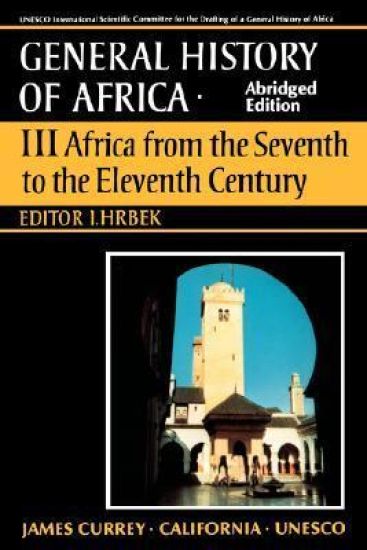
Africa from the Seventh to the Eleventh Century

Africa from the Seventh to the Eleventh Century

Ivan (EDT) Hrbek

University of California Press
1992
pokkari
This history sheds light both on the historical unity of Africa and also on its relations with the other continents. Volume III documents the increasing influence of Islam and its dissemination and interaction with traditional African culture in northern and western regions. The essays place Africa in the context of world history at the opening of the seventh century and examine the impact of Islamic penetration, expansion of the Bantu-speaking peoples, and the growth of civilizations in West Africa.
Immigrant Entrepreneurs

Immigrant Entrepreneurs

Ivan Light; Edna Bonacich

University of California Press
1991
pokkari
A decade in preparation, Immigrant Entrepreneurs offers the most comprehensive case study ever completed of the causes and consequences of immigrant business ownership. Koreans are the most entrepreneurial of America's new immigrants. By the mid-1970s Americans had already become aware that Korean immigrants were opening, buying, and operating numerous business enterprises in major cities. When Koreans flourished in small business, Americans wanted to know how immigrants could find lucrative business opportunities where native-born Americans could not. Somewhat later, when Korean-black conflicts surfaced in a number of cities, Americans also began to fear the implications for intergroup relations of immigrant entrepreneurs who start in the middle rather than at the bottom of the social and economic hierarchy. Nowhere was immigrant enterprise more obvious or impressive than in Los Angeles, the world's largest Korean settlement outside of Korea and America's premier city of small business. Analyzing both the short-run and the long-run causes of Korean entrepreneurship, the authors explain why the Koreans could find, acquire, and operate small business firms more easily than could native-born residents. They also provide a context for distinguishing clashes of culture and clashes of interest which cause black-Korean tensions in cities, and for framing effective policies to minimize the tensions.
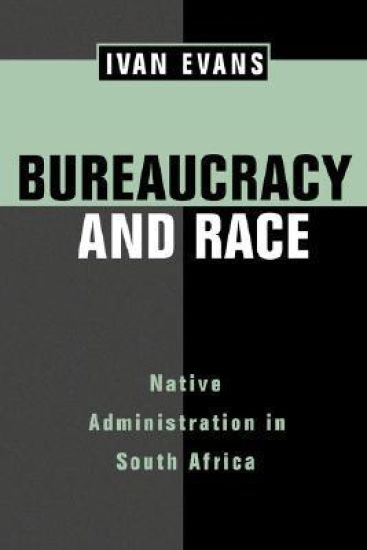
Bureaucracy and Race

Bureaucracy and Race

Ivan Evans

University of California Press
1997
sidottu
"Bureaucracy and Race" overturns the common assumption that apartheid in South Africa was enforced only through terror and coercion. Without understating the role of violent intervention, Ivan Evans shows that apartheid was sustained by a great and ever-swelling bureaucracy. The Department of Native Affairs (DNA), which had dwindled during the last years of the segregation regime, unexpectedly revived and became the arrogant, authoritarian fortress of apartheid after 1948. The DNA was a major player in the prolonged exclusion of Africans from citizenship and the establishment of a racially repressive labor market. Exploring the connections between racial domination and bureaucratic growth in South Africa, Evans points out that the DNA's transformation of oppression into 'civil administration' institutionalized and, for whites, legitimized a vast, coercive bureaucratic culture, which ensnared millions of Africans in its workings and corrupted the entire state. Evans focuses on certain features of apartheid - the pass system, the 'racialization of space' in urban areas, and the cooptation of African chiefs in the Bantustans - in order to make it clear that the state's relentless administration, not its overtly repressive institutions, was the most distinctive feature of South Africa in the 1950s. All observers of South Africa past and present and of totalitarian states in general will follow with interest the story of how the Department of Native Affairs was crucial in transforming 'the idea of apartheid' into a persuasive - and all too durable - practice.
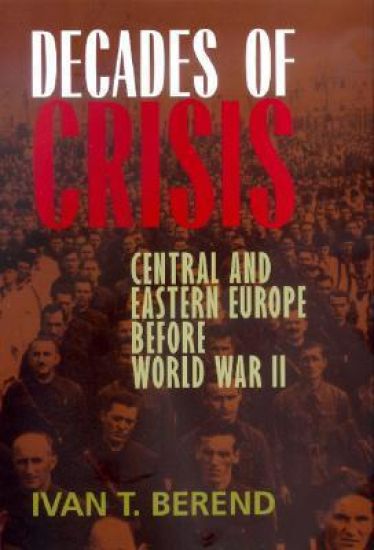
Decades of Crisis

Decades of Crisis

Ivan T. Berend

University of California Press
2001
pokkari
Only by understanding Central and Eastern Europe's turbulent history during the first half of the twentieth century can we hope to make sense of the conflicts and crises that have followed World War II and, after that, the collapse of Soviet-controlled state socialism. Ivan Berend looks closely at the fateful decades preceding World War II and at twelve countries whose absence from the roster of major players was enough in itself, he says, to precipitate much of the turmoil. As waves of modernization swept over Europe, the less developed countries on the periphery tried with little or no success to imitate Western capitalism and liberalism. Instead they remained, as Berend shows, rural, agrarian societies notable for the tenacious survival of feudal and aristocratic institutions. In that context of frustration and disappointment, rebellion was inevitable. Berend leads the reader skillfully through the maze of social, cultural, economic, and political changes in Hungary, Czechoslovakia, Yugoslavia, Poland, Romania, Bulgaria, Albania, Austria, Latvia, Lithuania, Estonia, and the Soviet Union, showing how every path ended in dictatorship and despotism by the start of World War II.
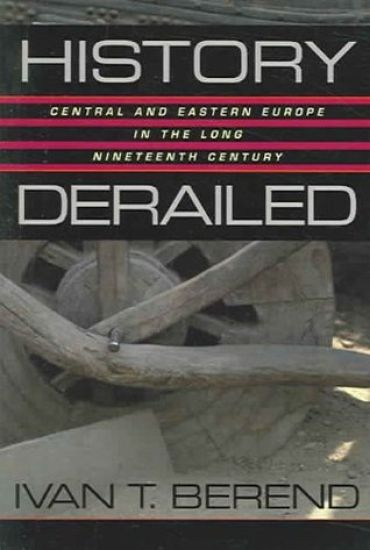
History Derailed

History Derailed

Ivan T. Berend

University of California Press
2005
pokkari
There is probably no greater authority on the modern history of central and eastern Europe than Ivan Berend, whose previous work, Decades of Crisis, was hailed by critics as "masterful" and "the broadest synthesis of the modern social, economic, and cultural history of the region that we possess." Now, having brought together and illuminated this region's storm-tossed history in the twentieth century, Berend turns his attention to the equally turbulent period that preceded it. The "long" nineteenth century, extending up to World War I, contained the seeds of developments and crises that continue to haunt the region today. The book begins with an overview of the main historical trends in the sixteenth to the eighteenth centuries, during which time the region lost momentum and became the periphery, no longer in step with the rising West. It concludes with an account of the persisting authoritarian political structures and the failed modernization that paved the way for social and political revolts. The origins of twentieth-century extremism and its tragedies are plainly visible in this penetrating account.
Ethnic Enterprise in America

Ethnic Enterprise in America

Ivan Light

University of California Press
2022
pokkari
This title is part of UC Press's Voices Revived program, which commemorates University of California Press’s mission to seek out and cultivate the brightest minds and give them voice, reach, and impact. Drawing on a backlist dating to 1893, Voices Revived makes high-quality, peer-reviewed scholarship accessible once again using print-on-demand technology. This title was originally published in 1972.
Ethnic Enterprise in America

Ethnic Enterprise in America

Ivan Light

University of California Press
2022
sidottu
This title is part of UC Press's Voices Revived program, which commemorates University of California Press’s mission to seek out and cultivate the brightest minds and give them voice, reach, and impact. Drawing on a backlist dating to 1893, Voices Revived makes high-quality, peer-reviewed scholarship accessible once again using print-on-demand technology. This title was originally published in 1972.
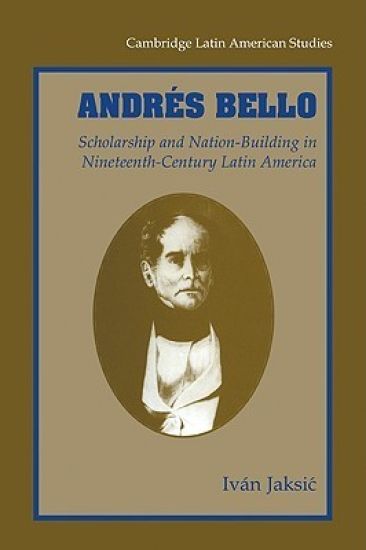
Andrés Bello

Andrés Bello

Ivan Jaksic

Cambridge University Press
2006
pokkari
This book-length intellectual biography of Andrés Bello, first published in 2001, is the first to appear in English. Bello, the most important intellectual of nineteenth-century Latin America, made enduring contributions to the fields of international law, civil legislation, grammar and philology. He was also a poet of note, a literary critic and an influential statesman whose contributions to nation-building and Spanish American identity are widely recognized across the region. In this book, Jaksic provides an archival-based critical account that challenges the celebratory literature that has dominated Bello studies. He demonstrates how knowledge of Bello's contributions illuminate not only Latin American history, but also current issues of imperial fragmentation, nationalism and language.
The Hungarian Economic Reforms 1953–1988

The Hungarian Economic Reforms 1953–1988

Ivan T. Berend

Cambridge University Press
2009
pokkari
Professor Berend presents a comprehensive inside account of Hungary's economic reforms since the 1950s. Working from Communist Party archives, which have hitherto partially remained closed to scholars, Berend situates the history of these economic reforms within their political context, looking in particular at the role of the Soviet Union. He examines the theoretical background to reform, the obstacles that arose during implementation and the gradual realisation that minor reforms of the old system could no longer work. The Hungarian Economic Reforms 1953–1988 comes at a time when many centrally planned economies are examining their performance and structure and seeking suitable forms of change. The Hungarian reforms have attracted those countries wishing to rid themselves of their Stalinist command economies. Thus the book indirectly sheds light upon Chinese economic reforms and on Gorbachev's Soviet perestroika. It will be of interest to specialists and students of East European studies, with special reference to the EMEA, planned economies and economic reform.
Voice and the Victorian Storyteller

Voice and the Victorian Storyteller

Ivan Kreilkamp

Cambridge University Press
2009
pokkari
The nineteenth-century novel has always been regarded as a literary form pre-eminently occupied with the written word, but Ivan Kreilkamp shows it was deeply marked by and engaged with vocal performances and the preservation and representation of speech. He offers a detailed account of the many ways Victorian literature and culture represented the human voice, from political speeches, governesses' tales, shorthand manuals, and staged authorial performances in the early- and mid-century, to mechanically reproducible voice at the end of the century. Through readings of Charlotte Brontë, Browning, Carlyle, Conrad, Dickens, Disraeli and Gaskell, Kreilkamp re-evaluates critical assumptions about the cultural meanings of storytelling, and shows that the figure of the oral storyteller, rather than disappearing among readers' preference for printed texts, persisted as a character and a function within the novel. This 2005 study will change the way readers consider the Victorian novel and its many ways of telling stories.
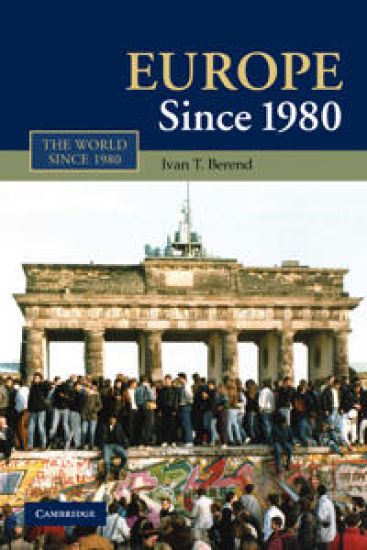
Europe Since 1980

Europe Since 1980

Ivan T. Berend

Cambridge University Press
2010
pokkari
This book tells the dramatic story of the economic, social, political, and cultural transformation of Europe during the transition from the Cold War to the European Union. Ivan Berend charts, in particular, the overwhelming impact of the collapse of communism on every aspect of European life. Europe became safer and more united, and Central and Eastern Europe started on the difficult road to economic modernization. However, the western half of Europe also changed. European integration gained momentum. The single market and the common currency were introduced, and the Union enlarged from nine to twenty-seven countries. This period also saw a revolution in information and communication technology, the increasing impact of globalization and the radical restructuring of the political system. The book explores the impact of all of these changes as well as the new challenges posed by the economic crisis of 2008–9 and asks which way now for Europe?
Adaptation in Dynamical Systems

Adaptation in Dynamical Systems

Ivan Tyukin

Cambridge University Press
2011
sidottu
In the context of this book, adaptation is taken to mean a feature of a system aimed at achieving the best possible performance, when mathematical models of the environment and the system itself are not fully available. This has applications ranging from theories of visual perception and the processing of information, to the more technical problems of friction compensation and adaptive classification of signals in fixed-weight recurrent neural networks. Largely devoted to the problems of adaptive regulation, tracking and identification, this book presents a unifying system-theoretic view on the problem of adaptation in dynamical systems. Special attention is given to systems with nonlinearly parameterized models of uncertainty. Concepts, methods and algorithms given in the text can be successfully employed in wider areas of science and technology. The detailed examples and background information make this book suitable for a wide range of researchers and graduates in cybernetics, mathematical modelling and neuroscience.
A Local Spectral Theory for Closed Operators

A Local Spectral Theory for Closed Operators

Ivan N. Erdelyi; Wang Shengwang

Cambridge University Press
1985
pokkari
This book, which is almost entirely devoted to unbounded operators, gives a unified treatment of the contemporary local spectral theory for unbounded closed operators on a complex Banach space. While the main part of the book is original, necessary background materials provided. There are some completely new topics treated, such as the complete spectral duality theory with the first comprehensive proof of the predual theorem, in two different versions. Also covered are spectral resolvents of various kinds (monotomic, strongly monotonic, almost localized, analytically invariant), and spectral decompositions with respect to the identity. The book concludes with an extensive reference list, including many papers published in the People’s Republic of China, here brought to the attention of Western mathematicians for the first time. Pure mathematicians, especially those working in operator theory and functional analysis, will find this book of interest.
How the Weak Win Wars

How the Weak Win Wars

Ivan Arreguín-Toft

Cambridge University Press
2005
pokkari
How do the weak win wars? The likelihood of victory and defeat in asymmetric conflicts depends on the interaction of the strategies weak and strong actors use. Using statistical and in-depth historical analyses of conflicts spanning two hundred years, in this 2005 book Ivan Arregúin-Toft shows that, independent of regime type and weapons technology, the interaction of similar strategic approaches favors strong actors, while opposite strategic approaches favors the weak. This approach to understanding asymmetric conflicts allows us to makes sense of how the United States was able to win its war in Afghanistan (2002) in a few months, while the Soviet Union lost after a decade of brutal war (1979–89). Arreguín-Toft's strategic interaction theory has implications not only for international relations theory, but for policy makers grappling with interstate and civil wars, as well as terrorism.
Central and Eastern Europe, 1944–1993

Central and Eastern Europe, 1944–1993

Ivan Berend

Cambridge University Press
1996
sidottu
In this wide-ranging account, Ivan Berend traces the post-war fortunes of the countries lying between Germany and the former Soviet Union. Professor Berend draws both on his academic expertise and personal involvement in many of the events which he describes to produce a synthesis of a huge array of materials. His study stretches beyond the confines of economic history to provide insights into the complex interplay of ideological, social and political forces in the ‘Eastern Bloc’ countries over the last fifty years of revolutionary change. In particular Berend’s analysis of totalitarianism, the development of nationalism, and the personalities at the centre of political life in eastern Europe offers a new perspective on the economies of the state-socialist regimes at the periphery of the western industrialised world.
Central and Eastern Europe, 1944–1993

Central and Eastern Europe, 1944–1993

Ivan Berend

Cambridge University Press
1999
pokkari
In this wide-ranging account, Ivan Berend traces the post-war fortunes of the countries lying between Germany and the former Soviet Union. Professor Berend draws both on his academic expertise and personal involvement in many of the events which he describes to produce a synthesis of a huge array of materials. His study stretches beyond the confines of economic history to provide insights into the complex interplay of ideological, social and political forces in the 'Eastern Bloc' countries over the last fifty years of revolutionary change. In particular Berend's analysis of totalitarianism, the development of nationalism, and the personalities at the centre of political life in eastern Europe offers an alternative perspective on the economies of the state-socialist regimes at the periphery of the western industrialised world.