

Kirjahaku
Etsi kirjoja tekijän nimen, kirjan nimen tai ISBN:n perusteella.
1000 tulosta hakusanalla J. M.
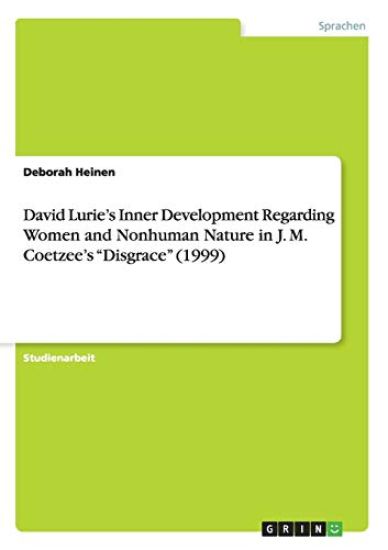
David Lurie's Inner Development Regarding Women and Nonhuman Nature in J. M. Coetzee's "Disgrace" (1999)
Deborah Heinen
Grin Publishing
2015
pokkari
Studienarbeit aus dem Jahr 2015 im Fachbereich Englisch - Literatur, Werke, Note: 2,3, Rheinische Friedrich-Wilhelms-Universit t Bonn (Anglistik), Sprache: Deutsch, Abstract: The work at hand takes a closer look at J.M. Coetzee's novel "Disgrace" from 1999 from an ecocritical and ecofeminist perspective. It is paid special attention to the protagonist's attitude and relationship towards women, the countryside and what he considers as wilderness, and animals. The main question here is how the protagonist's attitudes change. So in other words, it is taken a look at how the protagonist's "new" unfamiliar environment influences his character. First of all, the reader gets a brief summary of the story itself and its narrative style. In the following chapter the protagonist's attitude towards women is elucidated. In relation to this, David Lurie's current crisis of identity is taken into consideration because it might influence his view on women. The next chapter deals with the difference between rural and urban areas and, in relation to this, the protagonist's perception of "otherness". After this it is taken a look at the protagonist's perception and relation to animals. Finally, the last chapter contains a conclusion and an answer to the question how the protagonist's attitudes towards women, nature, and animals changed. Beyond any doubt, read from an ecocritical perspective, "Disgrace" offers many more interesting issues that are worth being worked on.

Freimutige und kritische Bemerkungen über die Pastoralvorlesung des J. M. Sailer zu Dillingen
Johann Michael Sailer
Hansebooks
2016
pokkari
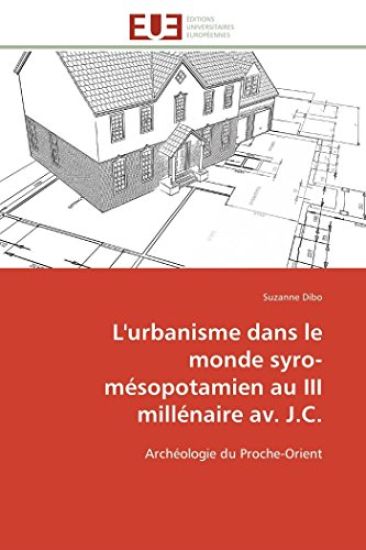
L'Urbanisme Dans Le Monde Syro-M?sopotamien Au III Mill?naire Av. J.C.
Dibo-S
Omniscriptum
2018
pokkari

The Life of the Most Rev. M. J. Spalding
Antigonos Verlag
2025
sidottu


¿uvres De Denis Diderot: M¿moires Historiques Et Philosophiques Sur La Vie Et Les Ouvrages De D. Diderot. Par J.a. Naigeon
Denis Diderot; Jacques Andr¿ Naigeon
Saraswati Press
2012
nidottu

Dialektische Oder Rationale Methoden in Der Nationalokonomie: Eine Erwiderung an J. M. Keynes
Hans Bolza
Duncker Humblot
2013
nidottu
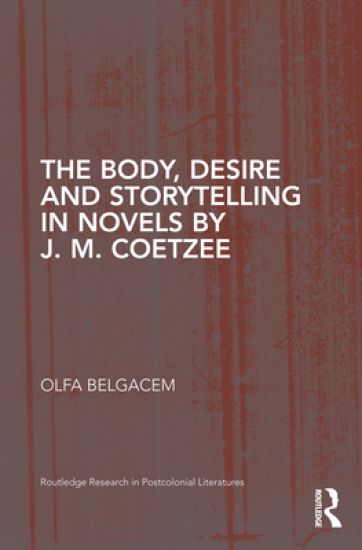
Asserting that Coetzee’s representation of the body as subject to dismemberment counters the colonial representation of the other’s body as exotic and erotically-charged, this study inspects the ambivalence pertaining to Coetzee’s embodied representation of the other and reveals the risks that come with such contrapuntal reiteration. Through the study of the narrative identity of the colonial other and her/his body’s representation, the book also unveils the author’s own authorial identity exposed through the repetitive narrative patterns and characterization choices.





The Melancholy Fate of Sir J. Franklin and his Party, as Disclosed in Dr. Rae's Report (to the Secretary of the Admiralty); Together With the Despatches and Letters of Captain M'Clure
John Rae; John Franklin
Hutson Street Press
2025
sidottu
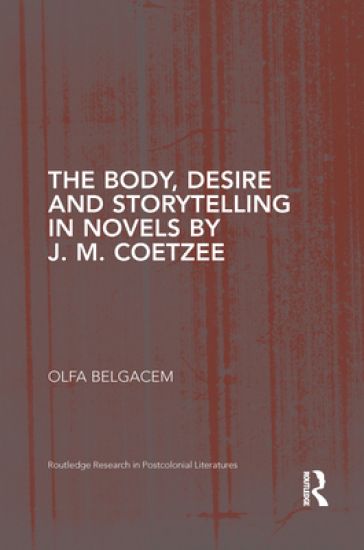
The Body, Desire and Storytelling in Novels by J. M. Coetzee
Olfa Belgacem
Taylor Francis Ltd
2021
nidottu
Asserting that Coetzee’s representation of the body as subject to dismemberment counters the colonial representation of the other’s body as exotic and erotically-charged, this study inspects the ambivalence pertaining to Coetzee’s embodied representation of the other and reveals the risks that come with such contrapuntal reiteration. Through the study of the narrative identity of the colonial other and her/his body’s representation, the book also unveils the author’s own authorial identity exposed through the repetitive narrative patterns and characterization choices.

Letters and Extracts from the Addresses and Occasional Writings of J. Beete Jukes, M.A., F.R.S., F.G.S.
Joseph Beete Jukes
Cambridge University Press
2011
pokkari
The geologist Joseph Beete Jukes (1811–1869) studied at Cambridge under Adam Sedgwick (1785–1873). Between 1839 and 1846, he participated in expeditions to the coasts of Newfoundland, Australia and New Guinea. This posthumous book, edited by Jukes' sister and published in 1871, contains selected highlights from Jukes' professional and personal writings. After a short biographical sketch, the material is arranged chronologically, beginning with Newfoundland and Australia and then focusing on Britain and Ireland, where Jukes was involved with national geological surveys. Linking passages by the editor explain the contexts of the pieces, and the book includes a list of Jukes' publications. Jukes lived during an exciting period that saw far-reaching discoveries and advances in his field, and his energy and enthusiasm permeates even his technical communications. Modern readers, like the original audience, will form a vivid impression of Jukes' lively personality, his 'penetrating glance and his sturdy step'.
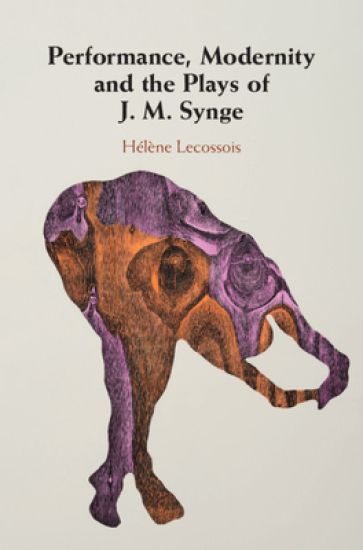
Performance, Modernity and the Plays of J. M. Synge
Hélène Lecossois
Cambridge University Press
2020
sidottu
Irish Revivalist playwright J. M. Synge is often regarded as a realist. Yet what happens when his work is analysed through wider performance studies and situated alongside less familiar historical contexts? By addressing this question, Hélène Lecossois offers new and valuable perspectives on Synge's plays while at the same time engaging with the complexity of his treatment of a range of performance practices – from keening at rural funerals to the performances of 'native villagers' in the entertainment section of International Exhibitions. What emerges from her study is a dramatist acutely aware of the ability of theatre in performance to counteract relentless forward-moving narratives of modernity. Through detailed, contextualized case studies, the book simultaneously makes meaningful contributions to performance studies and opens up theoretical questions of performance relating to the status of the object on stage, the body on stage and theatrical time.
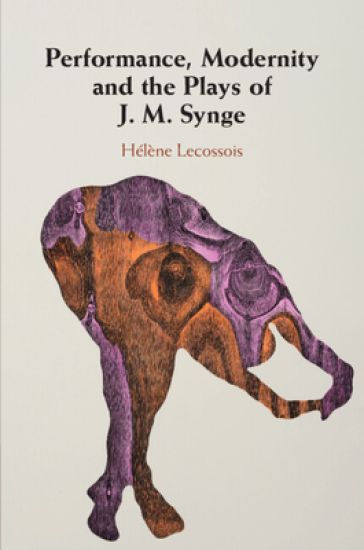
Performance, Modernity and the Plays of J. M. Synge
Hélène Lecossois
Cambridge University Press
2022
pokkari
Irish Revivalist playwright J. M. Synge is often regarded as a realist. Yet what happens when his work is analysed through wider performance studies and situated alongside less familiar historical contexts? By addressing this question, Hélène Lecossois offers new and valuable perspectives on Synge's plays while at the same time engaging with the complexity of his treatment of a range of performance practices – from keening at rural funerals to the performances of 'native villagers' in the entertainment section of International Exhibitions. What emerges from her study is a dramatist acutely aware of the ability of theatre in performance to counteract relentless forward-moving narratives of modernity. Through detailed, contextualized case studies, the book simultaneously makes meaningful contributions to performance studies and opens up theoretical questions of performance relating to the status of the object on stage, the body on stage and theatrical time.

Bechstein, J: Dr. J. M. Bechstein's Forstbotanik Part 2, Boo
Johann Matthaus Bechstein
KESSINGER PUBLISHING, LLC
2010
nidottu

Bechstein, J: Dr. J. M. Bechstein's Forstbotanik Part 2, Boo
Johann Matthaus Bechstein
KESSINGER PUBLISHING, LLC
2010
nidottu