Kirjojen hintavertailu. Mukana 11 342 296 kirjaa ja 12 kauppaa.

Kirjahaku

Etsi kirjoja tekijän nimen, kirjan nimen tai ISBN:n perusteella.

1000 tulosta hakusanalla J.B. Kay

The Monastic Breviary of Hyde Abbey, Winchester

The Monastic Breviary of Hyde Abbey, Winchester

J.B.L. Tolhurst

Henry Bradshaw Society
1938
pokkari
Third of 6 volumes. The project to edit the Hyde Breviary was a considerable one that was to occupy the HBS for a deczde. Hyde Abbey hadbeen founded alongside New Minster, Winchester un 965 by St Ethelwold [c. 908-984], Bishop if Winchester, and a former Abbot of Abingdon, with Abingdon Monks. In 1110 the community moved from its cramped premises to Hyde Meadow, just outside the city walls. The breviary MSS edited were most probably written during thre abbacy of Symon de Kanings [1292-1304]. The Hyde Breviary is one of a small number of surviving MS witneses to the form of the English Benedictine breviary, supplemented by what Tolhurst thought was a single surviving volume of a 1528 printed breviary or portiforium of Abingdon [pars aestivalis, Cambridge, Emmanuel College; there is in fact a full copy at Exeter College, Oxford; STC 15792]. The Hyde relics were here cosen as the most typical and informative. The Rawlinson and Gough MSS [SC 15842, 18338] were written by different scribes but on virtuallly indistinguishable vellum and with illuminations from the same hand.Here they are collated with survivg witnesses to the English Benedictine breviary of the period: yhe breviaries of Durham Cathedral Priory [London, British Library, Harley MSS 4664, c. 1270], Ely Cathedral Priory [Cambridge University Library, Ii.4.20 [c. 1275], Muchelny Abbey, Somerset [London, British Library, Additional 43405-43506, c. 1280].1 The only other non-fragmentary breviary is that of Barttle Abbey in Sussex [Cambridge, Trinity College, MS O.7.31, c. 1500], but this is probably an importation from Marmoutier, and hence is not collated here.

The Customary of the Cathedral Priory Church of Norwich

The Customary of the Cathedral Priory Church of Norwich

J.b.l. Tolhurst

Henry Bradshaw Society
1948
pokkari
The Henry Bradshaw Society was established in 1890 in commemoration of Henry Bradshaw, University Librarian in Cambridge and a distinguished authority on early medieval manuscripts and liturgies, who died in 1886. The Society was founded for the editing of rare liturgical texts'; its principal focus is on the Western (Latin) Church and its rites, and on the medieval period in particular, from the sixth century to the sixteenth (in effect, from the earliest surviving Christian books until the Reformation). Liturgy was at the heart of Christian worship, and during the medieval period the Christian Church was at the heart of Western society. Study of medieval Christianity in its manifold aspects - historical, ecclesiastical, spiritual, sociological - inevitably involves study of its rites, and for that reason Henry Bradshaw Society publications have become standard source-books for an understanding of all aspects of the middle ages. Moreover, many of the Society's publications have been facsimile editions, and these facsimiles have become cornerstones of the science of palaeography. The society was founded for the editing of rare liturgical texts; its principal focus is on the Western (Latin) Church and its rites, and on the medieval period in particular, from the sixth century to the Reformation. Study of medieval Christianity - at the heart of Western society - inevitably involves study of its rites, and the society's publications are essential to an understanding of all aspects (historical, ecclesiastical, spiritual, sociological) of the middle ages.
The Monastic Breviary of Hyde Abbey, Winchester

The Monastic Breviary of Hyde Abbey, Winchester

J.B.L. Tolhurst

Henry Bradshaw Society
1931
pokkari
Second of 6 volumes. The project to edit the Hyde Breviary was a considerable one that was to occupy the HBS for a decade. Hyde Abbey hadbeen founded alongside New Minster, Winchester un 965 by St Ethelwold [c. 908-984], Bishop if Winchester, and a former Abbot of Abingdon, with Abingdon Monks. In 1110 the community moved from its cramped premises to Hyde Meadow, just outside the city walls. The breviary MSS edited were most probably written during thre abbacy of Symon de Kanings [1292-1304]. The Hyde Breviary is one of a small number of surviving MS witneses to the form of the English Benedictine breviary, supplemented by what Tolhurst thought was a single surviving volume of a 1528 printed breviary or portiforium of Abingdon. The Hyde relics were here cosen as the most typical and informative. The Rawlinson and Gough MSS were written by different scribes but on virtuallly indistinguishable vellum and with illuminations from the same hand. Here they are collated with survivg witnesses to the English Benedictine breviary of the period. The sixth volume of the set is 'Introduction to the English Monastic Breviaries', volume 80 in the series.
The Monastic Breviary of Hyde Abbey, Winchester

The Monastic Breviary of Hyde Abbey, Winchester

J.B.L. Tolhurst

Henry Bradshaw Society
1932
pokkari
Fifth of 6 volumes.. The project to edit the Hyde Breviary was a considerable one that was to occupy the HBS for a decade. Hyde Abbey hadbeen founded alongside New Minster, Winchester un 965 by St Ethelwold [c. 908-984], Bishop if Winchester, and a former Abbot of Abingdon, with Abingdon Monks. In 1110 the community moved from its cramped premises to Hyde Meadow, just outside the city walls. The breviary MSS edited were most probably written during thre abbacy of Symon de Kanings [1292-1304]. The Hyde Breviary is one of a small number of surviving MS witneses to the form of the English Benedictine breviary, supplemented by what Tolhurst thought was a single surviving volume of a 1528 printed breviary or portiforium of Abingdon. The Hyde relics were here cosen as the most typical and informative. The Rawlinson and Gough MSS were written by different scribes but on virtuallly indistinguishable vellum and with illuminations from the same hand. Here they are collated with survivg witnesses to the English Benedictine breviary of the period. The final volume of the set is 'Introduction to the English Monastic Breviaries', volume 80 in the series.
The Monastic Breviary of Hyde Abbey, Winchester

The Monastic Breviary of Hyde Abbey, Winchester

J.B.L. Tolhurst

Henry Bradshaw Society
1939
pokkari
Fourth of 6 volumes. The project to edit the Hyde Breviary was a considerable one that was to occupy the HBS for a decade. Hyde Abbey hadbeen founded alongside New Minster, Winchester un 965 by St Ethelwold [c. 908-984], Bishop if Winchester, and a former Abbot of Abingdon, with Abingdon Monks. In 1110 the community moved from its cramped premises to Hyde Meadow, just outside the city walls. The breviary MSS edited were most probably written during thre abbacy of Symon de Kanings [1292-1304]. The Hyde Breviary is one of a small number of surviving MS witneses to the form of the English Benedictine breviary, supplemented by what Tolhurst thought was a single surviving volume of a 1528 printed breviary or portiforium of Abingdon. The Hyde relics were here cosen as the most typical and informative. The Rawlinson and Gough MSS were written by different scribes but on virtuallly indistinguishable vellum and with illuminations from the same hand. Here they are collated with survivg witnesses to the English Benedictine breviary of the period. The sixth volume of the set is 'Introduction to the English Monastic Breviaries', volume 80 in the series.
The Ordinale and Customary of the Benedictine Nuns of Barking Abbey I
The Ordinal and Customary of Barking Abbey was written on the instructions of Sibille Fenton, who was abbess from 1394 to 1419, and the manuscript was presented to the abbey in 1404. The liturgical usages regulated are almost entirely limited to the functioning of the choir. The text is one of a number of liturgical manuscripts which survive from Barking Abbey.
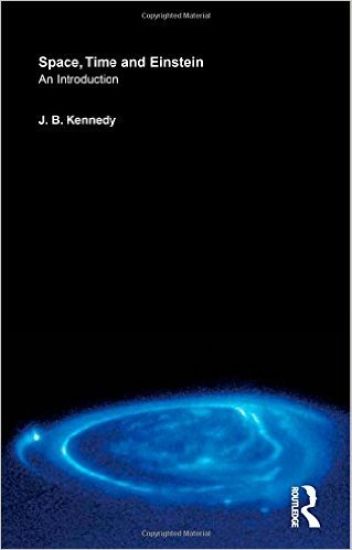
Space, Time and Einstein

Space, Time and Einstein

J.B. Kennedy

Acumen Publishing Ltd
2003
sidottu
This introduction to one of the liveliest and most popular fields in philosophy is written specifically for a beginning readership with no background in philosophy or science. Step-by-step analyses of the key arguments are provided and the philosophical heart of the issues is revealed without recourse to jargon, maths, or logical formulas. The book introduces Einstein's revolutionary ideas in a clear and simple way, along with the concepts and arguments of philosophers, both ancient and modern that have proved of lasting value. Specifically, the theories of the ancient Greek philosophers, Zeno, Euclid and Parmenides are considered alongside the ideas of Newton, Leibniz and Kant as well as the giants of twentieth-century physics, Einstein and Lorentz. The problems at the heart of the philosophy of space and time, such as change, motion, infinity, shape, and inflation, are examined and the seismic impact made by relativity theory and quantum theory is assessed in the light of the latest research. The writing is lucid and entertaining, allowing a beginning readership to grasp some difficult concepts while offering the more experienced reader a succinct and illuminating presentation of the state of the debate. "Space, Time and Einstein" shows the reader the excitement of scientific discovery and the beauty of theory in the search for answers to these fundamental questions.
Space, Time and Einstein

Space, Time and Einstein

J.B. Kennedy

Acumen Publishing Ltd
2003
nidottu
This introduction to one of the liveliest and most popular fields in philosophy is written specifically for a beginning readership with no background in philosophy or science. Step-by-step analyses of the key arguments are provided and the philosophical heart of the issues is revealed without recourse to jargon, maths, or logical formulas. The book introduces Einstein's revolutionary ideas in a clear and simple way, along with the concepts and arguments of philosophers, both ancient and modern that have proved of lasting value. Specifically, the theories of the ancient Greek philosophers, Zeno, Euclid and Parmenides are considered alongside the ideas of Newton, Leibniz and Kant as well as the giants of twentieth-century physics, Einstein and Lorentz. The problems at the heart of the philosophy of space and time, such as change, motion, infinity, shape, and inflation, are examined and the seismic impact made by relativity theory and quantum theory is assessed in the light of the latest research. The writing is lucid and entertaining, allowing a beginning readership to grasp some difficult concepts while offering the more experienced reader a succinct and illuminating presentation of the state of the debate. "Space, Time and Einstein" shows the reader the excitement of scientific discovery and the beauty of theory in the search for answers to these fundamental questions.
Three Men in New Suits

Three Men in New Suits

J B Priestley

IMPERIAL WAR MUSEUM
2025
nidottu
It is spring 1945. Three men who have been serving together overseas return, demobilised, to the same village. Coming from very different walks of life, the war has brought them together in unexpected friendship. Following each man as he returns home and must come to terms with what he finds there, the novel considers the challenges both with returning to find nothing changed, and returning home to unexpected difficulties. As the men resume civilian life, they meet again to consider their futures, and what may be in store both for themselves and wider society in a post-war world, finding themselves 'among the hundreds of millions wistfully looking on and wondering what next'. With an introduction from IWM which puts the novel in historical context, this timely reprint of a 1945 classic is published for the VE Day anniversary in 2025, bringing a forgotten gem by a prolific author back into print and reflecting on the long legacy of the Second World War.
The Keystone Corner

The Keystone Corner

J B Manheim

Milford House Press
2023
pokkari
Thomas Edison didn't invent baseball any more than Abner Doubleday did. But his interest in the game might hold the key to unlocking a surprising secret.The Deadball Era was a time when pitchers threw hundreds of innings, home runs were rare, and the game was played spikes up, a time marked by the consolidation of Major League Baseball, initial moves toward its antitrust exemption, development of the Doubleday myth, and the arrival of The Bambino-all things that would change the game forever.But baseball is always a reflection of the times in which it is played, and the Deadball Era was much more than a frame for the game. It was a time of seismic technological, social, and political change-an era of firsts. Powered flight. Large-scale assembly lines. The Panama Canal. The birth of American Empire. And so much more.And just as baseball had its larger than life personalities-Mathewson, Cobb, Wagner, Ruth-so, too, did the larger world. Roosevelt. Ford. The Wright Brothers. Einstein. But one man of an earlier day stood out well into this new era, perhaps because he literally invented much of it. That man was a diehard baseball fan-Thomas Edison.Fresh from his victory in The Federal Case, young attorney Andy Dennum and his cartographer girlfriend, Keiley Barefoot, use Edison's love of baseball to uncover the secrets hidden in the estate of the inventor's last surviving offspring, "Uncle Frank" Culbertson. You won't believe what they find.