Kirjojen hintavertailu. Mukana 12 595 353 kirjaa ja 12 kauppaa.

Kirjahaku

Etsi kirjoja tekijän nimen, kirjan nimen tai ISBN:n perusteella.

1000 tulosta hakusanalla J.David Logan

School Resources, the Achievement Gap, and the Law

School Resources, the Achievement Gap, and the Law

David J. Armor; John R. Munich; Aron Malatinszky

TAYLOR FRANCIS LTD
2024
sidottu
This book offers a novel and up-to-date exploration of the common belief that increasing conventional school resources will increase academic achievement and help close gaps between various advantaged and disadvantaged students. Taking the scholarship around this question, such as James S. Coleman’s 1965 report on the Equality of Educational Opportunity, as a starting point, it brings in an extensive range of contemporary data sources and statistical analysis to offer an updated, robust, and considered review of the issue. Moving beyond these empirical questions, it also explores how these empirical findings have been utilized in “education adequacy” litigation, discussing the evolving law of adequacy cases, while explaining the challenges of introducing complex data and analyses within a litigation framework. Judges typically have little experience with the complexity of modern education data and the analyses required to draw sound inferences. It will thus be of interest to scholars, researchers, and faculty and jurists with expertise or interest in education policy, the economics and sociology of education, and public policy.

School Resources, the Achievement Gap, and the Law

School Resources, the Achievement Gap, and the Law

David J. Armor; John R. Munich; Aron Malatinszky

TAYLOR FRANCIS LTD
2025
nidottu
This book offers a novel and up-to-date exploration of the common belief that increasing conventional school resources will increase academic achievement and help close gaps between various advantaged and disadvantaged students. Taking the scholarship around this question, such as James S. Coleman’s 1965 report on the Equality of Educational Opportunity, as a starting point, it brings in an extensive range of contemporary data sources and statistical analysis to offer an updated, robust, and considered review of the issue. Moving beyond these empirical questions, it also explores how these empirical findings have been utilized in “education adequacy” litigation, discussing the evolving law of adequacy cases, while explaining the challenges of introducing complex data and analyses within a litigation framework. Judges typically have little experience with the complexity of modern education data and the analyses required to draw sound inferences. It will thus be of interest to scholars, researchers, and faculty and jurists with expertise or interest in education policy, the economics and sociology of education, and public policy.

Personal Identification

Personal Identification

David J. Haas

TAYLOR FRANCIS LTD
2024
nidottu
Personal Identification: Modern Development and Security Implications, Second Edition explains how personal identification – and REAL ID – became part of the American fabric along with their past century’s historical ID development. The development of the “trusted and secure” personal identification documents began with passports and has continued as social changes made IDs more essential. This book describes the convergence of technologies and hundreds of patents that produced our “trusted and secure” documents and IDs from our past right up through to today.Key factors, that created today’s need for public-issued mass ID, are addressed:Chronicles the effects of large and mobile populations beginning a century agoChronicles the effects of “impersonal” electronic & computer communications at a distance, and not face-to-faceThe distribution of services and money by government agencies based on a person’s identity – including “age” and “group” criteriaDescribes recent national security and terrorism concerns that necessitates the need to know: “You are who you say you are.”Personal identification documents (IDs) and the societal need for “trusted” identification by the public is a relatively new social phenomenon. In 1900, most people did not need or have any IDs until passports, with a photograph of the individual, became mandatory when Great Britain entered World War I in 1914. In the United States, the State-issued driver’s license is probably the only trusted ID in one’s wallet today, but they became “trusted and secure” documents only recently with the requirement for REAL ID. With the first photo driver’s license issued by the State of Colorado in 1959, it took until 1984 for the last State (New York, 25 years later) to comply.As a direct result of 9/11, where terrorists used fake driver’s licenses to board planes, Congress passed the Real ID Act in 2005 to make all State-issued driver’s licenses more trusted, uniform, and tamper-resistant – what is now called the Enhanced Driver’s License with non-drivers being issued Enhanced Identification Cards. And with this, every US citizen can now possess a trusted and secure personal identification document.Personal Identification, Second Edition chronicles the path of personal identification measures – including the latest developments of Real ID. Scholars and professional security managers understand that stability, security, and safety necessitate these identity measures to ensure a safer America. The book explains the various stages and advances, providing readers with a unique study of this fascinating history of the relationship between identity and the means by which one validates and proves their own identity. The enactment of the REAL ID Act of 2005, with more secure and tamper-resistant documents for each citizen of the United States, is being instituted so that one can trust: “you are who you say you are.” The State-issued driver’s license is not a National ID Card – it is a Nationally Recognized ID for each citizen.
Personal Identification

Personal Identification

David J. Haas

TAYLOR FRANCIS LTD
2024
sidottu
Personal Identification: Modern Development and Security Implications, Second Edition explains how personal identification – and REAL ID – became part of the American fabric along with their past century’s historical ID development. The development of the “trusted and secure” personal identification documents began with passports and has continued as social changes made IDs more essential. This book describes the convergence of technologies and hundreds of patents that produced our “trusted and secure” documents and IDs from our past right up through to today.Key factors, that created today’s need for public-issued mass ID, are addressed:Chronicles the effects of large and mobile populations beginning a century agoChronicles the effects of “impersonal” electronic & computer communications at a distance, and not face-to-faceThe distribution of services and money by government agencies based on a person’s identity – including “age” and “group” criteriaDescribes recent national security and terrorism concerns that necessitates the need to know: “You are who you say you are.”Personal identification documents (IDs) and the societal need for “trusted” identification by the public is a relatively new social phenomenon. In 1900, most people did not need or have any IDs until passports, with a photograph of the individual, became mandatory when Great Britain entered World War I in 1914. In the United States, the State-issued driver’s license is probably the only trusted ID in one’s wallet today, but they became “trusted and secure” documents only recently with the requirement for REAL ID. With the first photo driver’s license issued by the State of Colorado in 1959, it took until 1984 for the last State (New York, 25 years later) to comply.As a direct result of 9/11, where terrorists used fake driver’s licenses to board planes, Congress passed the Real ID Act in 2005 to make all State-issued driver’s licenses more trusted, uniform, and tamper-resistant – what is now called the Enhanced Driver’s License with non-drivers being issued Enhanced Identification Cards. And with this, every US citizen can now possess a trusted and secure personal identification document.Personal Identification, Second Edition chronicles the path of personal identification measures – including the latest developments of Real ID. Scholars and professional security managers understand that stability, security, and safety necessitate these identity measures to ensure a safer America. The book explains the various stages and advances, providing readers with a unique study of this fascinating history of the relationship between identity and the means by which one validates and proves their own identity. The enactment of the REAL ID Act of 2005, with more secure and tamper-resistant documents for each citizen of the United States, is being instituted so that one can trust: “you are who you say you are.” The State-issued driver’s license is not a National ID Card – it is a Nationally Recognized ID for each citizen.
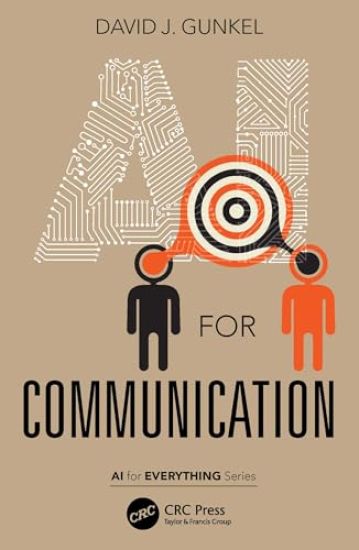
AI for Communication

AI for Communication

David J. Gunkel

TAYLOR FRANCIS LTD
2024
nidottu
AI for Communication offers an engaging exploration into the diverse applications of artificial intelligence (AI) within the realm of communication. By bridging the gap between the scientific and engineering realms of AI and communication, this book reveals how AI, since its inception during the Dartmouth Summer workshop of 1956, has inherently been a science of communication. Exploring key advancements such as machine translation, natural language processing, large language models, computational creativity, and social robotics, this book shows how these innovations not only disrupt but also actively transform human communication.The book is designed for students, teachers, and general readers who want to know how the field of communication impacts and influences the theory and practice of AI and how recent developments in AI will affect all aspects of human social interaction.
AI for Communication

AI for Communication

David J. Gunkel

TAYLOR FRANCIS LTD
2024
sidottu
AI for Communication offers an engaging exploration into the diverse applications of artificial intelligence (AI) within the realm of communication. By bridging the gap between the scientific and engineering realms of AI and communication, this book reveals how AI, since its inception during the Dartmouth Summer workshop of 1956, has inherently been a science of communication. Exploring key advancements such as machine translation, natural language processing, large language models, computational creativity, and social robotics, this book shows how these innovations not only disrupt but also actively transform human communication.The book is designed for students, teachers, and general readers who want to know how the field of communication impacts and influences the theory and practice of AI and how recent developments in AI will affect all aspects of human social interaction.
Introduction to Python for Science and Engineering
Introduction to Python for Science and Engineering offers a quick and incisive introduction to the Python programming language for use in any science or engineering discipline. The approach is pedagogical and “bottom up,” which means starting with examples and extracting more general principles from that experience. No prior programming experience is assumed.Readers will learn the basics of Python syntax, data structures, input and output, conditionals and loops, user-defined functions, plotting, animation, and visualization. They will also learn how to use Python for numerical analysis, including curve fitting, random numbers, linear algebra, solutions to nonlinear equations, numerical integration, solutions to differential equations, and fast Fourier transforms.Readers learn how to interact and program with Python using JupyterLab and Spyder, two simple and widely used integrated development environments.All the major Python libraries for science and engineering are covered, including NumPy, SciPy, Matplotlib, and Pandas. Other packages are also introduced, including Numba, which can render Python numerical calculations as fast as compiled computer languages such as C but without their complex overhead.
The Closing of the Auditor’s Mind?

The Closing of the Auditor’s Mind?

David J. O'Regan

TAYLOR FRANCIS LTD
2024
sidottu
In The Closing of the Auditor’s Mind?, author David J. O’Regan describes internal auditing as an important "binding agent" of social cohesion, for the accountability of individuals and organizations and also at aggregated levels of social trust. However, O’Regan also reveals that internal auditing faces two severe challenges – an external challenge of adaptation and an internal challenge of fundamental reform.The adaptation challenge arises from ongoing, paradigmatic shifts in accountability and social trust. The command-and-control, vertical hierarchies of traditional bureaucracies are being replaced in importance by networked, flattened patterns of accountability. The most challenging assurance demands of the modern era are increasingly located in three institutional domains – in the inner workings of organizations; in intermediary spaces at organizational boundaries; and in extra-mural locations. Internal auditing continues to cling, barnacle-like, to the inner workings of traditional, bureaucratic structures, and it has little to offer the emerging assurance demands on or beyond institutional boundaries. The reform challenge arises from internal auditing’s prevailing tendency toward a rigid, algorithmic, checklist mindset that suppresses practitioners’ creativity and critical thinking. This trend is increasingly narrowing internal auditing’s intellectual and moral horizons. Under the pressures of these challenges, internal auditing is struggling to fulfil its primary purpose of serving the public interest.O’Regan’s powerful book focuses on:The redistribution of social trust from traditional, hierarchical institutions to diffuse, horizontally distributed networksThe perennial validity of the classical virtues as the humane foundation of professional activityThe role of creative expertise in promoting professional wisdomThe Closing of the Auditor’s Mind? is a philosophical audit of a profession on the threshold of crisis. The book presupposes no prior knowledge of philosophy, nor indeed of auditing. Philosophical technicalities are contained in an Appendix, leaving the main text jargon-free. O’Regan provides original and striking perspectives on the malaise of modern internal auditing, and he proposes radical remedies. This captivating and well-informed book is a must-read for all who are concerned with our collective socio-economic and political well-being.
The Closing of the Auditor’s Mind?

The Closing of the Auditor’s Mind?

David J. O'Regan

TAYLOR FRANCIS LTD
2024
nidottu
In The Closing of the Auditor’s Mind?, author David J. O’Regan describes internal auditing as an important "binding agent" of social cohesion, for the accountability of individuals and organizations and also at aggregated levels of social trust. However, O’Regan also reveals that internal auditing faces two severe challenges – an external challenge of adaptation and an internal challenge of fundamental reform.The adaptation challenge arises from ongoing, paradigmatic shifts in accountability and social trust. The command-and-control, vertical hierarchies of traditional bureaucracies are being replaced in importance by networked, flattened patterns of accountability. The most challenging assurance demands of the modern era are increasingly located in three institutional domains – in the inner workings of organizations; in intermediary spaces at organizational boundaries; and in extra-mural locations. Internal auditing continues to cling, barnacle-like, to the inner workings of traditional, bureaucratic structures, and it has little to offer the emerging assurance demands on or beyond institutional boundaries. The reform challenge arises from internal auditing’s prevailing tendency toward a rigid, algorithmic, checklist mindset that suppresses practitioners’ creativity and critical thinking. This trend is increasingly narrowing internal auditing’s intellectual and moral horizons. Under the pressures of these challenges, internal auditing is struggling to fulfil its primary purpose of serving the public interest.O’Regan’s powerful book focuses on:The redistribution of social trust from traditional, hierarchical institutions to diffuse, horizontally distributed networksThe perennial validity of the classical virtues as the humane foundation of professional activityThe role of creative expertise in promoting professional wisdomThe Closing of the Auditor’s Mind? is a philosophical audit of a profession on the threshold of crisis. The book presupposes no prior knowledge of philosophy, nor indeed of auditing. Philosophical technicalities are contained in an Appendix, leaving the main text jargon-free. O’Regan provides original and striking perspectives on the malaise of modern internal auditing, and he proposes radical remedies. This captivating and well-informed book is a must-read for all who are concerned with our collective socio-economic and political well-being.
Introduction to Python for Science and Engineering
Introduction to Python for Science and Engineering offers a quick and incisive introduction to the Python programming language for use in any science or engineering discipline. The approach is pedagogical and “bottom up,” which means starting with examples and extracting more general principles from that experience. No prior programming experience is assumed.Readers will learn the basics of Python syntax, data structures, input and output, conditionals and loops, user-defined functions, plotting, animation, and visualization. They will also learn how to use Python for numerical analysis, including curve fitting, random numbers, linear algebra, solutions to nonlinear equations, numerical integration, solutions to differential equations, and fast Fourier transforms.Readers learn how to interact and program with Python using JupyterLab and Spyder, two simple and widely used integrated development environments.All the major Python libraries for science and engineering are covered, including NumPy, SciPy, Matplotlib, and Pandas. Other packages are also introduced, including Numba, which can render Python numerical calculations as fast as compiled computer languages such as C but without their complex overhead.
Crime Scene Processing in Correctional Facilities and Prisons
Crime scenes within correctional facilities present investigators with myriad challenges, not only in working, investigating, and collecting evidence but also in obtaining reliable eyewitness accounts. As a result, they are some of the most challenging cases and environments that any investigator will encounter.Crime Scene Processing in Correctional Facilities and Prisons addresses the unique challenges in prison, correction, and detention facilities, outlining specific procedures and techniques that will reliably improve any investigation. Issues of contaminated crime scenes can result from guards trying to regain order, few to no dedicated staff with no training or understanding of crime scenes, a lack of cooperation from witnesses and victims, and even the lack of cooperation from the on-scene incident commander – whose main objective may be to return the facility to “normal” rather than allow for the proper collection of evidence. Whatever the challenges faced, this book tackles all of them. While the processing of crime scenes entails standard procedures and practices, a correctional setting can provide anything but. As a result, the investigator must be resourceful, tenacious – yet patient – and perform their duties with objectivity and ethical integrity throughout the process.Features: Serves as the only resource on the market to provide essential investigative and crime scene guidelines unique and specific to correctional facilities Presents the various challenges of gathering and preserving evidence and investigating crimes, in correctional settings – including federal and state prisons, jails, and detention facilities In addition to presenting best practices in handling evidence and investigative procedures, covers unique interview techniques, report writing, and expert testimony Author David Doglietto, as an experienced professional with decades of first-hand experience, walks readers through the best way to perform duties to cut through the challenges and barriers and avoid the pitfalls that come with the oftentimes complex investigations in these environments. Extensive illustrations and case examples are provided within the book, as chapters present best-practice investigative practices in an environment for which there is little published resource and reference material. Crime Scene Processing in Correctional Facilities and Prisons is an invaluable resource for crime scene investigators, legal professionals, and the staff, leadership, and managers of correctional facilities themselves.
Crime Scene Processing in Correctional Facilities and Prisons
Crime scenes within correctional facilities present investigators with myriad challenges, not only in working, investigating, and collecting evidence but also in obtaining reliable eyewitness accounts. As a result, they are some of the most challenging cases and environments that any investigator will encounter.Crime Scene Processing in Correctional Facilities and Prisons addresses the unique challenges in prison, correction, and detention facilities, outlining specific procedures and techniques that will reliably improve any investigation. Issues of contaminated crime scenes can result from guards trying to regain order, few to no dedicated staff with no training or understanding of crime scenes, a lack of cooperation from witnesses and victims, and even the lack of cooperation from the on-scene incident commander – whose main objective may be to return the facility to “normal” rather than allow for the proper collection of evidence. Whatever the challenges faced, this book tackles all of them. While the processing of crime scenes entails standard procedures and practices, a correctional setting can provide anything but. As a result, the investigator must be resourceful, tenacious – yet patient – and perform their duties with objectivity and ethical integrity throughout the process.Features: Serves as the only resource on the market to provide essential investigative and crime scene guidelines unique and specific to correctional facilities Presents the various challenges of gathering and preserving evidence and investigating crimes, in correctional settings – including federal and state prisons, jails, and detention facilities In addition to presenting best practices in handling evidence and investigative procedures, covers unique interview techniques, report writing, and expert testimony Author David Doglietto, as an experienced professional with decades of first-hand experience, walks readers through the best way to perform duties to cut through the challenges and barriers and avoid the pitfalls that come with the oftentimes complex investigations in these environments. Extensive illustrations and case examples are provided within the book, as chapters present best-practice investigative practices in an environment for which there is little published resource and reference material. Crime Scene Processing in Correctional Facilities and Prisons is an invaluable resource for crime scene investigators, legal professionals, and the staff, leadership, and managers of correctional facilities themselves.
Personal Knowledge Management

Personal Knowledge Management

David J. Pauleen

TAYLOR FRANCIS LTD
2024
nidottu
Individuals need to survive and grow in changing and sometimes turbulent organizational environments, while organizations and societies want individuals to have the knowledge, skills and abilities that will enable them to prosper and thrive. Personal Knowledge Management (PKM) is a means of coping with complex environmental changes and developments: it is a form of sophisticated career and life management. Personal Knowledge Management is an evolving concept that focuses on the importance of individual growth and learning as much as on the technology and management processes traditionally associated with organizational knowledge management. This book looks at the emergence of PKM from a multi-disciplinary perspective, and its contributors reflect the diverse fields of study that touch upon it. Relatively little research or major conceptual development has so far been focused on PKM, but already significant questions are being asked, such as 'is there an inherent conflict between personal and organizational knowledge management and how best do we harmonize individual and organizational goals?' This book will inform, stimulate and challenge every reader. By delving both deeply and broadly into its subject, the distinguished authors help all those concerned with 'knowledge work' and 'knowledge workers' to see how PKM supports and affects individuals, organizations and society as a whole; to better understand the concepts involved and to benefit from relevant research in this important area.
The Impact and Legacy of Educational Sloyd

The Impact and Legacy of Educational Sloyd

David J. Whittaker

TAYLOR FRANCIS LTD
2024
nidottu
Originating in Finland in eighteen-sixty-five, Educational Sloyd used handicrafts practised in schools to promote educational completeness through the interdependence of the mind and body. These radical ideas spread throughout Europe and America and had a significant impact on the early development of manual training, manual arts, industrial education and technical education. Today it is generally acknowledged that Educational Sloyd laid the foundations of modern technological education.This book traces the development of Sloyd from its conception by Uno Cygnaeus and the first Sloyd school founded by Otto Salomon, to its enthusiastic take up in Scandinavia and beyond. It examines the debates and controversy which surround the Sloyd system, and considers the transition from ‘hands-on’ craft work to concepts of technology education. Finally, the investigation reveals the lasting legacy of the ideas and practice of Sloyd education, and how it continues to influence technological education.Included in the book:- the foundations of Educational Sloyd- debates, controversy and rival factions- key case studies in Finland and Iceland- the lasting legacy of Sloyd education.This fascinating and comprehensive historical exploration will be of interest to scholars and researchers in the areas of technology education, comparative education and the history of education.
Strategic Community Partnerships, Philanthropy, and Nongovernmental Organization
This important book focuses on particular aspects of the development and implementation of community partnerships based in - and focused on - neighborhoods, municipalities, and regions. Throughout the book, David J. Maurrasse stresses the importance of philanthropy and representation from different types of organizations across public, private, and nongovernmental spectrums. In observing these collaborative efforts both in the US and various countries including Colombia, Malawi, England, India and Australia, two dynamics are emphasized: the role of private philanthropic institutions and their resources in facilitating the creation and continuation of these partnerships, along with the role of nongovernmental organizations as important enduring institutions in localities that are not, historically, considered as agents of community and economic development. It provides an evolving perspective on community partnerships particularly during the COVID-19 pandemic, and racial and income inequity, introducing the geographical, historical and cultural context behind these. Furthermore, the author defines and describes various roles in community partnerships and offers suggestions to help leverage these.Providing insightful case studies on the topic, this book will be key reading for practitioners in the field of community engagement at nonprofit institutions, such as universities, hospitals and philanthropic organizations. It will also be of use for academic researchers focusing on community studies and strategic partnerships.
Survival of the Kindest

Survival of the Kindest

David J Lockett

Friesenpress
2025
pokkari
From a global pandemic and rising poverty rates to political polarization and rising seas, we live in a time of perpetual crisis. Few might think corporations could be the ones to save us. But who is more equipped with the resources needed to face all-encompassing disaster, whether it be climate change, gun violence or the widening chasm of wealth disparity?Survival of the Kindest is a blueprint for transforming corporate social responsibility through what author David Lockett terms "evolutionary driven kindness." Lockett inspiringly argues that profit-driven businesses, more so than governments, have the ability to alleviate our greatest social ills and the responsibility to rise to the challenge. Contrary to what some may believe, it can even serve the corporate bottom line. From his experience building a domestic abuse shelter and involvement in designing and delivering restorative justice and innovative life coaching programs for at-risk youth, Lockett, a successful entrepreneur, understands how scaling social programs can transform the world. Working with a treasure trove of real-life examples, including Alcoholics Anonymous and outdoor clothing company Patagonia, he demonstrates how the same principles that drive business profitability are precisely what will make social programs exponentially more accessible, equitable and successful.Ambitious, original, and provocative, Survival of the Kindest is sure to become a groundbreaking contribution to business literature as the catalyst for the corporate kindness revolution.
Survival of the Kindest

Survival of the Kindest

David J Lockett

Friesenpress
2025
sidottu
From a global pandemic and rising poverty rates to political polarization and rising seas, we live in a time of perpetual crisis. Few might think corporations could be the ones to save us. But who is more equipped with the resources needed to face all-encompassing disaster, whether it be climate change, gun violence or the widening chasm of wealth disparity?Survival of the Kindest is a blueprint for transforming corporate social responsibility through what author David Lockett terms "evolutionary driven kindness." Lockett inspiringly argues that profit-driven businesses, more so than governments, have the ability to alleviate our greatest social ills and the responsibility to rise to the challenge. Contrary to what some may believe, it can even serve the corporate bottom line. From his experience building a domestic abuse shelter and involvement in designing and delivering restorative justice and innovative life coaching programs for at-risk youth, Lockett, a successful entrepreneur, understands how scaling social programs can transform the world. Working with a treasure trove of real-life examples, including Alcoholics Anonymous and outdoor clothing company Patagonia, he demonstrates how the same principles that drive business profitability are precisely what will make social programs exponentially more accessible, equitable and successful.Ambitious, original, and provocative, Survival of the Kindest is sure to become a groundbreaking contribution to business literature as the catalyst for the corporate kindness revolution.
Eastwick Letters

Eastwick Letters

David J Knapp

Friesenpress
2024
pokkari
EASTWICK LETTERS transcribes and illustrates 117 individual sheets written 1844-51 by Andrew McCalla Eastwick, his wife Lydia, their children, and business associates as the family set up works, and home in 19th century St. Petersburg, Russia. Eastwick was one of three partners in the Philadelphia firm of Harrison, Winans & Eastwick. The business had been awarded a $3 million/ five-year contract to build rolling stock, (locomotive engines and cars) for Czar Nicholas I for a railroad to connect St. Petersburg and Moscow.The enterprise required Eastwick and partners to take possession of a large Imperial industrial complex on the Neva River, known as Alexandroffsky Head Mechanical Works. Once in operation they were to use serf labor and Russian materials to fulfill the contract. Concurrently, Major George Washington Whistler (West Point civil engineer and father of the famous artist), was to oversee the construction of the 420 miles of railway track and railbed required.Presented chronologically and extensively illustrated, EASTWICK LETTERS opens a window into the private emotions of the writers, and illustrates a colorful story of Russian life and times at the dawn of the Industrial Revolution. More so than early photographs, the letters vividly reveal the inner thoughts of each writer, and what they observed in a foreign land. In 1851 the Eastwick family returned to Philadelphia where Andrew purchased Bartram's Garden along the Schuylkill River and saved it from industrial development. Years later after Andrew's passing, Lydia Eastwick bequeathed the property to the City of Philadelphia where today, Bartram's Garden is a landmark. The conservatory is open to the public and carries on the legacy of John Bartram, first American botanist to the Colonies.
Eastwick Letters

Eastwick Letters

David J Knapp

Friesenpress
2024
sidottu
EASTWICK LETTERS transcribes and illustrates 117 individual sheets written 1844-51 by Andrew McCalla Eastwick, his wife Lydia, their children, and business associates as the family set up works, and home in 19th century St. Petersburg, Russia. Eastwick was one of three partners in the Philadelphia firm of Harrison, Winans & Eastwick. The business had been awarded a $3 million/ five-year contract to build rolling stock, (locomotive engines and cars) for Czar Nicholas I for a railroad to connect St. Petersburg and Moscow.The enterprise required Eastwick and partners to take possession of a large Imperial industrial complex on the Neva River, known as Alexandroffsky Head Mechanical Works. Once in operation they were to use serf labor and Russian materials to fulfill the contract. Concurrently, Major George Washington Whistler (West Point civil engineer and father of the famous artist), was to oversee the construction of the 420 miles of railway track and railbed required.Presented chronologically and extensively illustrated, EASTWICK LETTERS opens a window into the private emotions of the writers, and illustrates a colorful story of Russian life and times at the dawn of the Industrial Revolution. More so than early photographs, the letters vividly reveal the inner thoughts of each writer, and what they observed in a foreign land. In 1851 the Eastwick family returned to Philadelphia where Andrew purchased Bartram's Garden along the Schuylkill River and saved it from industrial development. Years later after Andrew's passing, Lydia Eastwick bequeathed the property to the City of Philadelphia where today, Bartram's Garden is a landmark. The conservatory is open to the public and carries on the legacy of John Bartram, first American botanist to the Colonies.
What's The Question?

What's The Question?

David J. Hand

TAYLOR FRANCIS LTD
2026
nidottu
Statistics and data science aim to extract understanding from data and guide decision-making. However, before applying any analytical tools we need absolute clarity about what we want to know or accomplish. Ambiguous objectives inevitably lead to mistaken conclusions and flawed actions. This book investigates the deeper challenges of formulating clear questions and matching analytical methods to those questions—issues that apply as much to elementary statistical tools as to sophisticated techniques. Rather than focusing on standard statistical misuses or data provenance issues, this work examines the critical step of ensuring your analysis actually answers the question you mean to ask. Drawing from collaborative work across finance, medicine, government, manufacturing, defense, and other fields, the book deliberately emphasizes basic and familiar tools so the fundamental issues are accessible to everyone. Following John Tukey's insight about the simplest problems of data analysis, the most detailed discussions centre on averages and comparisons between distributions, though the principles apply with even greater force to advanced methods that fewer people fully understand. Key Features: • Focuses on question formulation rather than computational techniques, addressing the step that precedes all successful data analysis • Emphasizes basic statistical tools (averages, comparisons) to make fundamental challenges visible to all practitioners • Contains 130 text boxes presenting essential ideas in non-technical language, creating a "two-in-one" book accessible to both mathematical and non-mathematical readers • Provides real-world examples drawn from diverse fields including finance, healthcare, government, manufacturing, and defense • Offers a deep-dive analysis of a specific comparison method to illustrate the care required for precise statistical reasoning • Structured progression from general principles through detailed mathematical exploration to practical applications across various analytical scenarios This book serves as an essential guide for statisticians, data scientists, researchers, and anyone who uses data to make decisions. Whether you're a practitioner seeking to improve your analytical approach or a student learning to think critically about statistical questions, this work will help you use data analytical tools more effectively and avoid the costly mistakes that arise from asking the wrong questions of your data.