
Kirjahaku
Etsi kirjoja tekijän nimen, kirjan nimen tai ISBN:n perusteella.
1000 tulosta hakusanalla JAMES JOYCE

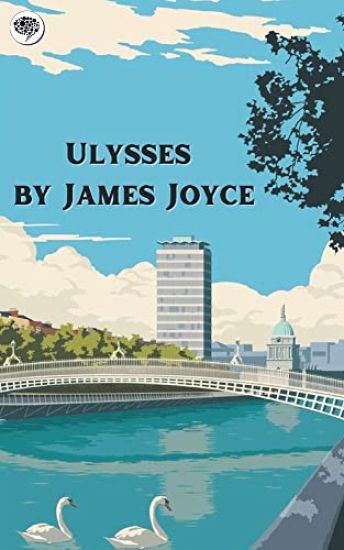
This masterpiece of contemporary writing, loosely inspired on the Odyssey, follows common Dubliners in 1904. Joyce takes Celtic lyricism and obscenity to glorious extremes as he depicts a single day in the life of Dubliner Leopold Bloom, his pals Buck Mulligan and Stephen Dedalus, his wife Molly, and a captivating ensemble of supporting characters. Exciting creative tactics include wordplay, earthy comedy, and introspective monologues. A significant literary achievement of the 20th century
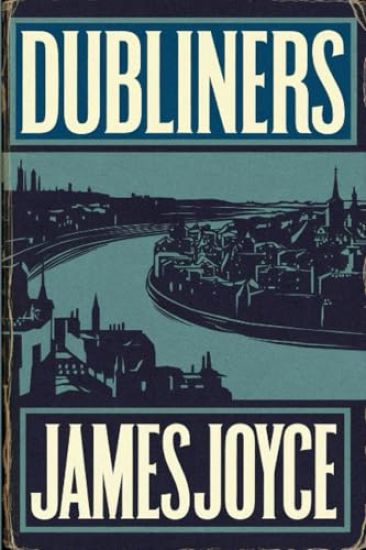
A Masterful Portrait of Life in Dublin Dubliners is James Joyce's celebrated collection of 15 short stories, offering a vivid and poignant portrayal of life in early 20th-century Dublin. Through carefully crafted narratives, Joyce explores themes of identity, paralysis, and longing, capturing the essence of ordinary lives with extraordinary depth and insight. Each story is a gem that stands alone yet contributes to a broader, interconnected vision of the city and its inhabitants. Plot: The stories traverse the stages of life, from childhood and adolescence to adulthood. In "Araby," a young boy grapples with infatuation and disillusionment. "Eveline" portrays a woman torn between duty and the promise of escape. "The Dead," the collection's haunting finale, delves into love, mortality, and the passage of time, culminating in a moment of profound self-realization. Joyce's characters, flawed yet deeply human, reflect universal struggles and desires, making their experiences resonate with readers across generations. Why Read Dubliners? Timeless Themes: Explore universal human experiences such as love, regret, and the quest for meaning. Masterful Storytelling: Joyce's prose combines realism with lyrical beauty, creating stories that linger in the mind. A Glimpse of Dublin: The collection offers an intimate portrait of Dublin's culture, society, and people, serving as both a historical document and a work of art. Whether you're a lover of literary fiction or a newcomer to Joyce, Dubliners is an essential read that reveals the beauty and complexity of everyday life.

Dubliners & A Portrait of the Artist as a Young Man (Edition1st)
James Joyce
JollyJoy Books Pvt Ltd
2024
sidottu
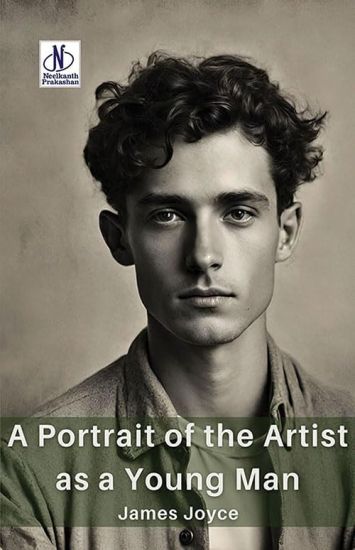
Dubliners & A Portrait of the Artist as a Young Man by James Joyce presents two of the most important works of modernist literature, offering a profound exploration of Irish identity, consciousness, and the human experience. Dubliners is a collection of finely crafted short stories depicting ordinary lives in early 20th-century Dublin, marked by moments of epiphany, quiet despair, and social paralysis. Each story, from "Araby" to "The Dead," reveals Joyce's keen eye for detail and deep empathy for his characters. In A Portrait of the Artist as a Young Man, Joyce traces the intellectual and emotional development of Stephen Dedalus, a young man striving to break free from the constraints of religion, family, and nationalism to embrace art and self-expression. With its lyrical prose and innovative style, this semi-autobiographical novel captures the struggle of becoming and the birth of a creative spirit. Together, these two works form a powerful literary portrait of Ireland and the inner life, marking the early genius of one of the 20th century's greatest writers.
Dubliners & A Portrait of the Artist as a Young Man (Edition1st)
James Joyce
JollyJoy Books Pvt Ltd
2024
nidottu
Dubliners & A Portrait of the Artist as a Young Man by James Joyce presents two of the most important works of modernist literature, offering a profound exploration of Irish identity, consciousness, and the human experience. Dubliners is a collection of finely crafted short stories depicting ordinary lives in early 20th-century Dublin, marked by moments of epiphany, quiet despair, and social paralysis. Each story, from "Araby" to "The Dead," reveals Joyce's keen eye for detail and deep empathy for his characters. In A Portrait of the Artist as a Young Man, Joyce traces the intellectual and emotional development of Stephen Dedalus, a young man striving to break free from the constraints of religion, family, and nationalism to embrace art and self-expression. With its lyrical prose and innovative style, this semi-autobiographical novel captures the struggle of becoming and the birth of a creative spirit. Together, these two works form a powerful literary portrait of Ireland and the inner life, marking the early genius of one of the 20th century's greatest writers.
After the Race & Other Selected Stories by James Joyce gathers a powerful selection of short fiction from one of the most influential literary figures of the 20th century. Centered around After the Race-a tale of youthful ambition, social aspiration, and quiet disillusionment-this collection showcases Joyce's signature style: richly textured prose, sharp psychological insight, and a deep sensitivity to the nuances of everyday life. Drawing from his groundbreaking Dubliners, these stories explore themes of identity, paralysis, class, and the quiet epiphanies that define the human experience. Subtle, profound, and deeply human, this volume reveals Joyce's extraordinary ability to elevate the ordinary into enduring art.

After the Race & Other Selected Stories by James Joyce gathers a powerful selection of short fiction from one of the most influential literary figures of the 20th century. Centered around After the Race-a tale of youthful ambition, social aspiration, and quiet disillusionment-this collection showcases Joyce's signature style: richly textured prose, sharp psychological insight, and a deep sensitivity to the nuances of everyday life. Drawing from his groundbreaking Dubliners, these stories explore themes of identity, paralysis, class, and the quiet epiphanies that define the human experience. Subtle, profound, and deeply human, this volume reveals Joyce's extraordinary ability to elevate the ordinary into enduring art.

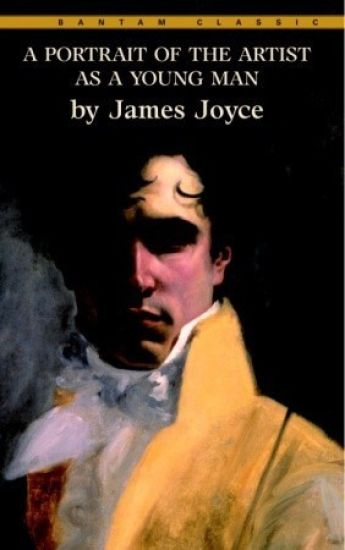
Perhaps Joyce's most personal work, A Portrait Of The Artist As A Young Man depicts the intellectual awakening of one of literature's most memorable young heroes, Stephen Dedalus. Through a series of brilliant epiphanies that parallel the development of his own aesthetic consciousness, Joyce evokes Stephen's youth, from his impressionable years as the youngest student at the Clongowed Wood school to the deep religious conflict he experiences at a day school in Dublin, and finally to his college studies where he challenges the conventions of his upbringing and his understanding of faith and intellectual freedom. James Joyce's highly autobiographical novel was first published in the United States in 1916 to immediate acclaim. Ezra Pound accurately predicted that Joyce's book would "remain a permanent part of English literature," while H.G. Wells dubbed it "by far the most important living and convincing picture that exists of an Irish Catholic upbringing." A remarkably rich study of a developing young mind, A Portrait Of The Artist As A Young Man made an indelible mark on literature and confirmed Joyce's reputation as one of the world's greatest and lasting writers.
A remarkable conflation of mythology, symbolism, philosophy, social realism and humanity, Ulysses is a tale of events over the course of a single day (16 June 1904) in Dublin as encountered by its protagonists-Leopold Bloom, a quiet middle-aged man Devoted to his wife Molly, and the arrogant young intellectual, Stephen Dedalus. Both Bloom and Stephen, while wandering the streets of Dublin, one to run errands and the other to meet his day's chores, cross each other a number of times. Lost in a stream of multitudinous thoughts-from midwives, cockle-pickers and boulders to birth, death and human frailty-the two do not meet until much later, only to know that Stephen seeks a father and Bloom a son. Does their search for companionship and belonging end when Bloom invites Stephen to live with him? Considered Joyce's seminal work,
"Every life is in many days, day after day. We walk through ourselves, meeting robbers, ghosts, giants, old men, young men, wives, widows, brothers-in-love, but always meeting ourselves." ― James Joyce, Ulysses Ulysses (1922) by James Joyce tells the story of it's three central characters-Leopold Bloom, a Jewish advertisement salesman; Bloom's wife, Molly, a sensual and independent woman; and Stephen Dedalus, an arrogant young intellectual taken by Bloom under his wing-the modern equivalents of Ulysses (Odysseus), Penelope and Telemachus, respectively, from Homer's epic poem Odyssey. The book observes Leopold Bloom as he goes from place to place in Dublin from 8 a.m. until 3 a.m. on June 16, 1904. The events of the novel loosely resemble Odysseus's journey home after the Trojan War in Homer's epic.
The Little Review "Ulysses"
James Joyce; Mark Gaipa; Sean Latham; Robert Scholes
Yale University Press
2015
pokkari
James Joyce’s Ulysses first appeared in print in the pages of an American avant-garde magazine, The Little Review, between 1918 and 1920. The novel many consider to be the most important literary work of the twentieth century was, at the time, deemed obscene and scandalous, resulting in the eventual seizure of The Little Review and the placing of a legal ban on Joyce’s masterwork that would not be lifted in the United States until 1933. For the first time, The Little Review “Ulysses” brings together the serial installments of Ulysses to create a new edition of the novel, enabling teachers, students, scholars, and general readers to see how one of the previous century’s most daring and influential prose narratives evolved, and how it was initially introduced to an audience who recognized its radical potential to transform Western literature. This unique and essential publication also includes essays and illustrations designed to help readers understand the rich contexts in which Ulysses first appeared and trace the complex changes Joyce introduced after it was banned.
