

Kirjahaku
Etsi kirjoja tekijän nimen, kirjan nimen tai ISBN:n perusteella.
1000 tulosta hakusanalla James Booth
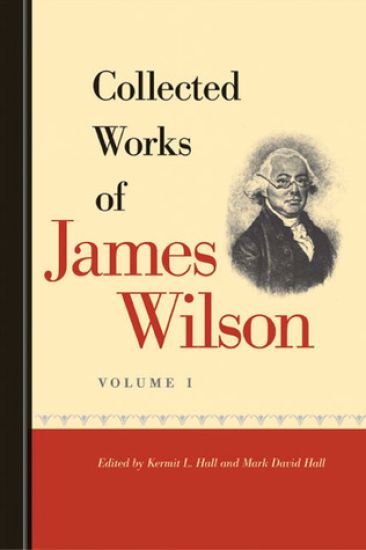
This two-volume set brings together a collection of writings and speeches of James Wilson. Wilson was one of only six signers of both the Declaration of Independence and the United States Constitution, and his writings and speeches had a significant impact on the deliberations that produced the cornerstone documents of our democracy. He was also one of the six original justices appointed to the Supreme Court by George Washington in 1789. Wilson wrote extensively on the concepts of separation of powers, the authority of the judiciary to review acts of the other branches, and the development of principles of representative government. Wilson's signal contribution to the founding of our national government was his advocacy for both a strong national government and an open and democratic political system.

In one of the major publishing endeavors of recent decades, The Collected Works of James M. Buchanan, the Nobel laureate in Economics in 1986, is being published in twenty volumes under the auspices of The Liberty Fund. The series will include ten monographs and all of the important journal articles, papers, and essays that Buchanan has produced in a distinguished career spanning more than a half-century. The monographs will appear in a new form and with the addition of indexes in those cases where no index or only a partial index was originally provided. In addition, each volume includes a foreword by one of the series' three editors, Professors Geoffrey Brennan, Hartmut Kliemt, and Robert D Tollison, each of whom is a distinguished economist in his own right. This is a series that no serious scholar of public choice theory, public economics, or contemporary political theory will want to be without. It is a series that will also appeal to the general student of liberty, for Buchanan has, perhaps more than any other contemporary scholar, helped us to view politics without the romantic gloss that characterizes so much normative political theory and that slips unthinkingly into so much popular commentary. Buchanan has been a resolute defender of 'the ideal of a society of free and responsible individuals,' and has been a painstaking analyst of the institutional structure that might best support such a society. Buchanan stands with von Mises, Hayek, Popper, and Friedman as one of the great twentieth-century scholars of liberty."

Examines the decline of Baldwin’s reputation after the middle 1960s, his tepid reception in mainstream and academic venues, and the ways in which critics have often mis-represented and undervalued his work. Scott develops readings of Tell Me How Long the Train’s Been Gone, If Beale Street Could Talk, and Just Above My Head that explore the interconnected themes in Baldwin’s work: the role of the family in sustaining the arts, the price of success in American society, and the struggle of black artists to change the ways that race, sex, and masculinity are represented in American culture.Scott argues that Baldwin’s later writing crosses the cultural divide between the 1950s and 1960s in response to the civil rights and black power movements. Baldwin’s earlier works, his political activism and sexual politics, and traditions of African American autobiography and fiction all play prominent roles in Scott’s analysis.
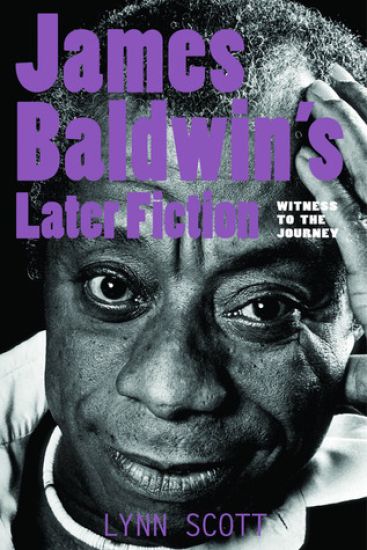
This book examines the decline of Baldwin's reputation after the middle 1960s, his tepid reception in mainstream and academic venues, and the ways in which critics have often mis-represented and undervalued his work. Scott develops readings of Tell Me How Long the Train's Been Gone, If Beale Street Could Talk, and Just Above My Head, that explore the interconnected themes in Baldwin's work: the role of the family in sustaining the arts, the price of success in American society, and the struggle of black artists to change the ways that race, sex, and masculinity are represented in American culture.Scott argues that Baldwin's later writing crosses the cultural divide between the 1950s and 1960s in response to the civil rights and black power movements. Baldwin's earlier works, his political activism and sexual politics, and traditions of African American autobiography and fiction all play prominent roles in Scott's analysis.

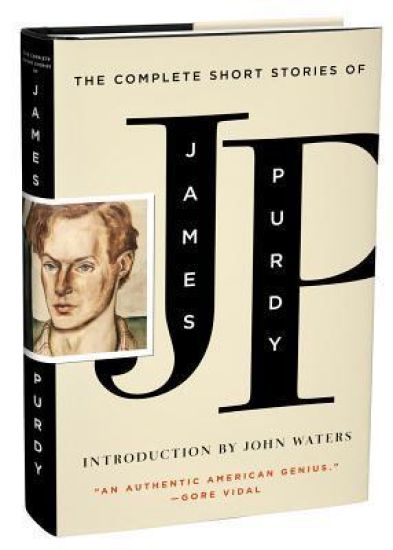
The publication of The Complete Short Stories of James Purdy is a literary event that marks the first time all of James Purdy’s short stories—fifty-six in number, including seven drawn from his unpublished archives—have been collected in a single volume. As prolific as he was unclassifiable, James Purdy was considered one of the greatest—and most underappreciated—writers in America in the latter half of the twentieth century. Championed by writers as diverse as Dame Edith Sitwell, Gore Vidal, Paul Bowles, Tennessee Williams, Carl Van Vechten, John Cowper Powys, and Dorothy Parker, Purdy’s vast body of work has heretofore been relegated to the avant-garde fringes of the American literary mainstream. His unique form and variety of style made the Ohio-born Purdy impossible to categorize in standard terms, though his unique, mercurial talent garnered him a following of loyal readers and made him—in the words of Susan Sontag—“one of the half dozen or so living American writers worth taking seriously." Purdy’s journey to recognition came with as much outrage and condemnation as it did lavish praise and lasting admiration. Some early assessments even dismissed his work as that of a disturbed mind, while others acclaimed the very same work as healing and transformative. Purdy's fiction was considered so uniquely unsettling that his first book, Don't Call Me by My Right Name, a collection of short stories all reprinted in this edition, had to be printed privately in the United States in 1956, after first being published in England. Best known for his novels Malcolm, Cabot Wright Begins, Jeremy's Version, and Eustace Chisholm and the Works, Purdy captured an America that was at once highly realistic and deeply symbolic, a landscape filled with social outcasts living in crisis and longing for love, characterized by his dark sense of humor and unflinching eye. Love, disillusionment, the collapse of the family, ecstatic longing, sharp inner pain, and shocking eruptions of violence pervade the lives of his characters in stories that anticipate both "David Lynch and Desperate Housewives" (Guardian). In "Color of Darkness," for example, a lonely child attempts to swallow his father's wedding ring; in "Eventide," the anguish of two sisters over the loss of their sons is deeply felt in the summer heat; and in the gothic horror of "Mr. Evening," a young man is hypnotized and imprisoned by a predatory old woman. These stories and many others, both haunting and hilarious, form a canvas of deep desperation and immanent sympathy, as Purdy narrates "the inexorable progress toward disaster in such a way that it's as satisfying and somehow life-affirming as progress toward a happy ending" (Jonathan Franzen). It may have taken over fifty years, but American culture is finally in sync with James Purdy. As John Waters writes in his introduction, Purdy, far from the fringe, has "been dead center in the black little hearts of provocateur-hungry readers like myself right from the beginning."
Collected here for the first time are all James Purdy’s short stories—fifty-six—including seven drawn from unpublished archives. Characterised by his dark sense of humour and jaundiced eye towards American culture, Purdy was considered one of the greatest—and most underappreciated—writers in America in the last half of the twentieth century. Although championed by a diverse range of writers, "an authentic American genius" (Gore Vidal) , Purdy’s work has heretofore been relegated to the avant-garde fringes of the American literary mainstream. Marginalised all too often as a "gay author" with themes too scabrous for popular consumption, his stories anticipate both "David Lynch and Desperate Housewives" (The Guardian). American culture has finally caught up with the man Susan Sontag called "one of the half dozen or so living American writers worth taking seriously." Purdy’s journey to recognition came with as much outrage and condemnation as it did lavish praise and lasting admiration. His first book, Don’t Call Me by My Right Name, reprinted in this edition, had to be printed privately in the United States in 1956, after first being published in Britain.
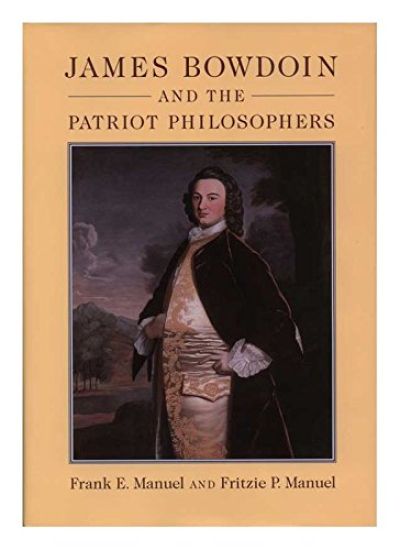
James Bowdoin and the Patriot Philosophers
Frank E. Manuel
American Philosophical Society Press
2003
sidottu
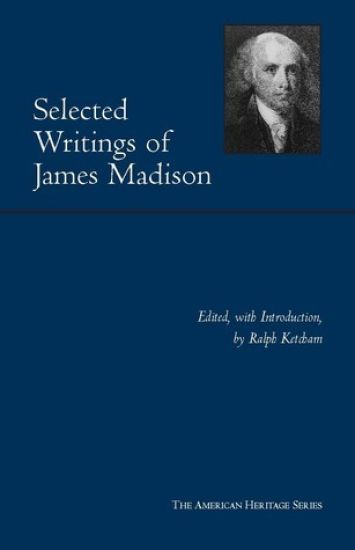
Features selected political writings of James Madison. This work also includes an introduction by the author, a brief chronology, the texts of the Declaration of Independence and Constitution, and an index.

The writings collected here reflect the Madison who emerges from the best scholarship of the last thirty years--scholarship to which Ralph Ketcham, as editor of The Papers of James Madison and in many other ways, has made stunning contributions. Ketcham's Introduction, a brief chronology, the text of the Constitution, and an index further distinguish this collection.
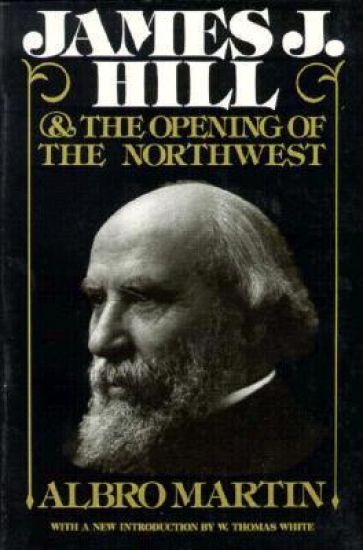
James J.Hill and the Opening of the Northwest
Albro Martin
Minnesota Historical Society Press,U.S.
1991
nidottu
James J. Hill (1838-1916), the Empire Builder, created a vast railroad network across the northwestern United States. In this splendid biography, Martin, the first researcher to have access to Hill's voluminous correspondence, richly portrays a man of many parts: an entrepreneur, a family man, a collector of notable French paintings, a promoter of scientific agriculture, and a booster for the Northwest.

As the Texas Poet Laureate of 2000, James Hoggard writes beautifully on themes of love, loss, and nature. His unique voice, visual imagery, and carefully crafted syntax take his audience on a journey from Texas to Paris, Taos to Rome, and into their own pasts.
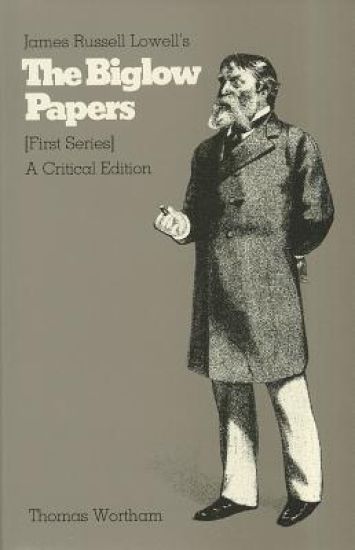
James Russell Lowell's "the Biglow Papers"
Northern Illinois University Press
1977
sidottu
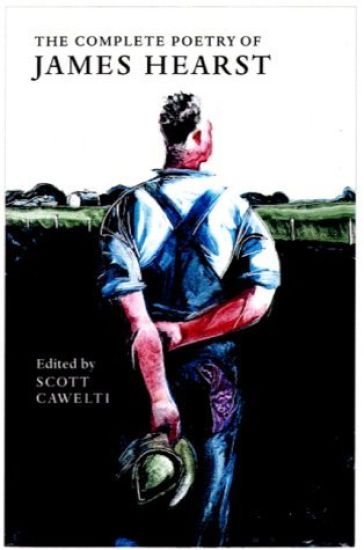
Part of the regionalist movement that included Grant Wood, Paul Engle, Hamlin Garland, and Jay G. Sigmund, James Hearst helped create what Iowa novelist Ruth Suckow called ""a poetry of place."" A lifelong Iowa farner, Hearst began writing poetry at age nineteen and eventually wrote thirteen books of poems, a novel, short stories, cantatas, and essays, which gained him a devoted following Many of his poems were published in the regionalist periodicals of the time, including the Midland, and by the great regional presses, including Carroll Coleman's Prairie Press. Drawing on his experiences as a farmer, Hearst wrote with a distinct voice of rural life and its joys and conflicts, of his own battles with physical and emotional pain (he was partially paralyzed in a farm accident), and of his own place in the world. His clear eye offered a vision of the midwestern agrarian life that was sympathetic but not sentimental - a people and an art rooted in place.

Astrophysicist and space pioneer James Van Allen (1914-2006), for whom the Van Allen radiation belts were named, was among the principal scientific investigators for twenty-four space missions, including Explorer 1 in 1958, the first successful U.S. satellite; Mariner 2's 1962 flyby of Venus, the first successful mission to another planet; and the 1970s Pioneer 10 and Pioneer 11, missions that surveyed Jupiter and Saturn. Although he retired as a University of Iowa professor of physics and astronomy in 1985, he remained an active researcher, using his campus office to monitor data from Pioneer 10 - on course to reach the edge of the solar system when its signal was lost in 2003 - until a short time before his death at the age of ninety-one. Now Abigail Foerstner blends space science drama, military agendas, cold war politics, and the events of Van Allen's lengthy career to create the first biography of this highly influential physicist. Drawing on Van Allen's correspondence and publications, years of interviews with him as well as with more than a hundred other scientists, and declassified documents from such archives as the Jet Propulsion Laboratory, the Kennedy Space Center, and the Applied Physics Laboratory, Foerstner describes Van Allen's life from his Iowa childhood to his first experiments at White Sands to the years of Explorer 1 until his death in 2006. Often called the father of space science, James Van Allen led the way to mapping a new solar system based on the solar wind, massive solar storms, and cosmic rays. Pioneer 10 alone sent him more than thirty years of readings that helped push our recognition of the boundary of the solar system billions of miles past Pluto. Abigail Foerstner's compelling biography charts the eventful life and time of this trailblazing physicist.
James: Faith in Action
Chuck Christensen; Winnie Christensen
Waterbrook Press (A Division of Random House Inc)
2001
nidottu
We live in a world characterized by instability, in-fighting, materialism, and words without actions. Sadly, no one is immune to these problems. Centuries ago, the apostle James could not envision the world we would live in, but he did address the issues we would face. Building a bridge between first-century Christianity and our lives today, James: Faith in Action shows how Christianity can work in a postmodern world and calls you to an active allegiance to Jesus Christ and a commitment to living out your faith through bold action. 10 studies for individuals or groups.