Kirjojen hintavertailu. Mukana 11 627 373 kirjaa ja 12 kauppaa.

Kirjahaku

Etsi kirjoja tekijän nimen, kirjan nimen tai ISBN:n perusteella.

1000 tulosta hakusanalla James Cannon

James Monroe

James Monroe

Brook Poston

University Press of Florida
2020
nidottu
Despite serving his country for 50 years and being among the most qualified men to hold the office of president, James Monroe is an oft-forgotten Founding Father. In this book, Brook Poston reveals how Monroe attempted to craft a legacy for himself as a champion of American republicanism. ?Monroe's dedication to the vision of a modern republic built on liberty began when he joined the American Revolution. His devotion to the cause further developed under his apprenticeship to Thomas Jefferson. These experiences spurred him to support the virtues of republicanism during the French Revolution, when he tried to create an alliance between the United States and the French republic despite ire from the U.S. Federalist party. As Monroe climbed the political ranks, his achievements began to add up: he played a significant role in the Louisiana Purchase, helped lead the fight against Great Britain in the War of 1812, oversaw the acquisition of Florida from Spain, and created the Monroe Doctrine to protect the Americas from the influence of European monarchies. Focusing exclusively on America's fifth president and his complete commitment to republicanism, this book offers new interpretations of James Monroe as a patriot who dedicated his life to what he believed was perhaps the most important cause in human history. A volume in the series Contested Boundaries, edited by Gene Allen Smith.
Collected Epiphanies of James Joyce

Collected Epiphanies of James Joyce

James Joyce

University Press of Florida
2024
sidottu
This book offers the first critical edition of the forty short texts James Joyce called “epiphanies.” Among Joyce’s earliest literary compositions, although published posthumously, the epiphanies are a series of highly polished miniatures, many of which Joyce reused in his later writings. By presenting the epiphanies with background details and thorough annotations, this edition provides a vivid insight into his art.Collected Epiphanies of James Joyce features an introduction to the texts that summarizes Joyce’s concept of epiphany; their biographical and cultural context; their echoes and adaptations in Stephen Hero, Dubliners, A Portrait of the Artist as a Young Man, Ulysses, and Finnegans Wake; and their critical reception and editorial history. Each epiphany is transcribed directly from its original manuscript, accompanied by extensive notes that include more information specific to each piece, as well as textual variants.Styled as prose poems, dramatic sketches, or combinations of the two, the epiphanies can be seen not only as lyrical counterparts to Joyce’s poetry in Chamber Music but also as bridges to the writer’s landmark fiction. This collection demonstrates that the epiphanies offer a paradigm case for studying the development of Joyce’s work as a whole, prompting a reassessment of their literary significance.
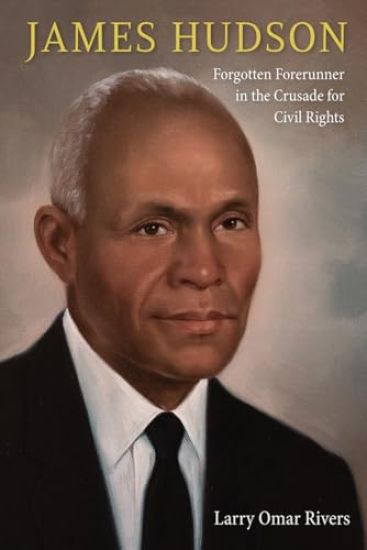
James Hudson

James Hudson

Larry Omar Rivers

University Press of Florida
2024
sidottu
A brilliant philosopher and his influence on the rise of Martin Luther King Jr. and the civil rights movementWhile intellectual histories of the civil rights movement often center Martin Luther King Jr.’s writings, author Larry Omar Rivers argues that this approach leaves out the scholar-activists who set the path for King. In this volume, Rivers tells the mostly unknown story of James Hudson (1903–1980), a Black philosopher, Florida A&M University professor, activist, and religious leader whose philosophical contributions laid a key piece of the groundwork for the emergence of the civil rights movement.Drawing on little-used primary source documents and original interviews with people who knew Hudson well, Rivers examines how Hudson’s training at Morehouse College, Colgate-Rochester Divinity School, and Boston University shaped his approach to activism, including his decision to become a Personalist philosopher. As Rivers shows, Hudson crafted an influential philosophy of life—a blend of Socratic inquiry, moral imagination, African American spirituality, and Gandhian nonviolence—that became an essential foundation for the rise of King, another Personalist philosopher. The book also sheds new light on the connections between the 1955 Montgomery Bus Boycott and the lesser-known 1956 Tallahassee Bus Boycott, which together helped spark the formation of the Southern Christian Leadership Conference.This long-overdue biography is not only an insightful exploration of the intellectual and activist landscape of the Black community from the 1930s to the 1960s but also the story of an unsung hero and his involvement with important scholarly communities that influenced the trajectory of the civil rights movement.Publication of this work made possible by a Sustaining the Humanities through the American Rescue Plan grant from the National Endowment for the Humanities.
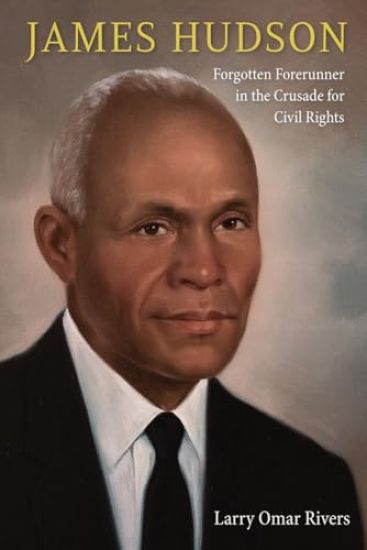
James Hudson

James Hudson

Larry Omar Rivers

University Press of Florida
2024
pokkari
A brilliant philosopher and his influence on the rise of Martin Luther King Jr. and the civil rights movementWhile intellectual histories of the civil rights movement often center Martin Luther King Jr.’s writings, author Larry Omar Rivers argues that this approach leaves out the scholar-activists who set the path for King. In this volume, Rivers tells the mostly unknown story of James Hudson (1903–1980), a Black philosopher, Florida A&M University professor, activist, and religious leader whose philosophical contributions laid a key piece of the groundwork for the emergence of the civil rights movement.Drawing on little-used primary source documents and original interviews with people who knew Hudson well, Rivers examines how Hudson’s training at Morehouse College, Colgate-Rochester Divinity School, and Boston University shaped his approach to activism, including his decision to become a Personalist philosopher. As Rivers shows, Hudson crafted an influential philosophy of life—a blend of Socratic inquiry, moral imagination, African American spirituality, and Gandhian nonviolence—that became an essential foundation for the rise of King, another Personalist philosopher. The book also sheds new light on the connections between the 1955 Montgomery Bus Boycott and the lesser-known 1956 Tallahassee Bus Boycott, which together helped spark the formation of the Southern Christian Leadership Conference.This long-overdue biography is not only an insightful exploration of the intellectual and activist landscape of the Black community from the 1930s to the 1960s but also the story of an unsung hero and his involvement with important scholarly communities that influenced the trajectory of the civil rights movement.Publication of this work made possible by a Sustaining the Humanities through the American Rescue Plan grant from the National Endowment for the Humanities.
Collected Epiphanies of James Joyce

Collected Epiphanies of James Joyce

James Joyce

University Press of Florida
2024
pokkari
Joyce’s early texts, which informed his later masterpieces, available for the first time in a comprehensive critical edition This book offers the first critical edition of the forty short texts James Joyce called “epiphanies.” Among Joyce’s earliest literary compositions, although published posthumously, the epiphanies are a series of highly polished miniatures, many of which Joyce reused in his later writings. By presenting the epiphanies with background details and thorough annotations, this edition provides a vivid insight into his art.Collected Epiphanies of James Joyce features an introduction to the texts that summarizes Joyce’s concept of epiphany; their biographical and cultural context; their echoes and adaptations in Stephen Hero, Dubliners, A Portrait of the Artist as a Young Man, Ulysses, and Finnegans Wake; and their critical reception and editorial history. Each epiphany is transcribed directly from its original manuscript, accompanied by extensive notes that include more information specific to each piece, as well as textual variants.Styled as prose poems, dramatic sketches, or combinations of the two, the epiphanies can be seen not only as lyrical counterparts to Joyce’s poetry in Chamber Music but also as bridges to the writer’s landmark fiction. This collection demonstrates that the epiphanies offer a paradigm case for studying the development of Joyce’s work as a whole, prompting a reassessment of their literary significance.A volume in the Florida James Joyce Series, edited by Sam Slote
James and Esther Cooper Jackson

James and Esther Cooper Jackson

Sara Rzeszutek

The University Press of Kentucky
2015
sidottu
James Jackson and Esther Cooper Jackson grew up understanding that opportunities came differently for blacks and whites, men and women, rich and poor. In turn, they devoted their lives to the fight for equality, serving as career activists throughout the black freedom movement. Having grown up in Virginia during the depths of the Great Depression, the Jacksons also saw a path to racial equality through the Communist Party. This choice in political affiliation would come to shape and define not only their participation in the black freedom movement but also the course of their own marriage as the Cold War years unfolded.In this dual biography, Sara Rzeszutek examines the couple's political involvement as well as the evolution of their personal and public lives in the face of ever-shifting contexts. She documents the Jacksons' significant contributions to the early civil rights movement, discussing their time leading the Southern Negro Youth Congress, which laid the groundwork for youth activists in the 1960s; their numerous published writings in periodicals such as Political Affairs; and their editorial involvement in The Worker and the civil rights magazine Freedomways.Drawing upon a rich collection of correspondence, organizational literature, and interviews with the Jacksons themselves, Haviland follows the couple through the years as they bore witness to economic inequality, war, political oppression, and victory in the face of injustice. Her study reveals a portrait of a remarkable pair who lived during a transformative period of American history and whose story offers a vital narrative of persistence, love, and activism across the long arc of the black freedom movement.
The Papers of James Madison v. 12; 2 March 1789 - 20 January 1790 ; with a Supplement 24 October 1775-24 January 1789
The Papers of James Madison project, housed at the University of Virginia, was established in 1956 to publish annotated volumes of the correspondence and writings of James Madison, the Virginia statesman most often remembered for his public service as "Father of the Constitution" and as fourth president of the United States.The published volumes provide accurate texts of Madison's incoming and outgoing correspondence, informative notes on textual and subject matters, and comprehensive indexes. They are incomparably rich sources for students of Madison's life and valuable research tools for those interested in the general history of the period in which Madison lived (1751-1836). The project has collected more than 27,000 copies of documents related to Madison's life, including letters, essays, notes, diaries, account books, ledgers, wills, legal papers, and inventories. The project serves the public by translating into print these decaying and often nearly illegible manuscripts, thereby preserving them for future generations and making them easier to use. The published volumes also make the contents of Madison-related documents--the originals of which are housed in some 250 archives worldwide--easily accessible to libraries and interested individuals anywhere books travel.The Congressional Series (seventeen volumes) is devoted to the years 1751 to 1801, containing the fullest possible record of Madison's contributions to the creation of the federal government, including his service in the Continental Congress, the Virginia General Assembly, the Constitutional Convention of 1787, the Virginia Ratifying Convention of 1788, and the first four Federal Congresses.
The Papers of James Madison  1 March - 30 September 1809

The Papers of James Madison 1 March - 30 September 1809

James Madison; Robert A. Rutland

University of Virginia Press
1984
sidottu
Edited by Robert A. Rutland and Thomas A. MasonPresidential style is an important attribute for holders of the nation's highest office, but the first volume of James Madison's presidential papers indicate that he was a reserved and unpretentious man concerned more with the substance than the style of the office. As the 1809 letters show, President Madison was besieged by office seekers and eccentric citizens who expected the chief executive to show concern for their personal problem. Ravenous politicians sought jobs for themselves and relatives. Madison personally answered at length the many testimonials from citizens' rallies and political gatherings. The domestic side of White House life--the decorating and improvement of the President's House--also forms an important segment of the documentary record. The multiplicity of presidential concerns revealed in the volume add a new perspective to our historic view of the nation's highest office.
The Papers of James Madison

The Papers of James Madison

James Madison; Robert J. Brugger

University of Virginia Press
1987
sidottu
The Papers of James Madison project, housed at the University of Virginia, was established in 1956 to publish annotated volumes of the correspondence and writings of James Madison, the Virginia statesman most often remembered for his public service as "Father of the Constitution" and as fourth president of the United States.The published volumes provide accurate texts of Madison's incoming and outgoing correspondence, informative notes on textual and subject matters, and comprehensive indexes. They are incomparably rich sources for students of Madison's life and valuable research tools for those interested in the general history of the period in which Madison lived (1751-1836). The project has collected more than 27,000 copies of documents related to Madison's life, including letters, essays, notes, diaries, account books, ledgers, wills, legal papers, and inventories. The project serves the public by translating into print these decaying and often nearly illegible manuscripts, thereby preserving them for future generations and making them easier to use. The published volumes also make the contents of Madison-related documents--the originals of which are housed in some 250 archives worldwide--easily accessible to libraries and interested individuals anywhere books travel.The Secretary of State Series documents Madison's diplomatic and political career in the two administrations of Thomas Jefferson, 1801-9, during which he oversaw the negotiations for the Louisiana Purchase and the integration of those territories into the United States and attempted to maintain a viable neutrality for the United States vis-a-vis warring France and Great Britain. As secretary of state, Madison presided over one of the busiest offices in Washington. He was responsible for the Patent Office, issued all federal commissions, saw that the public laws were put into print, and served as the official liaison between the president and the governors of states and territories. Most important for these volumes, Madison was the addressee of diplomatic pouches and letters from five ministers and over fifty consuls worldwide, as well as about a dozen commissioners.
James Madison

James Madison

Ralph L. Ketcham

University of Virginia Press
1990
nidottu
The best one volume biography of Madison’s life, Ketcham’s biography not only traces Madison’s career, it gives readers a sense of the man. As Madison said of his early years in Virginia under the study of Donald Robertson, who introduced him to thinkers like Montaigne and Montesquieu, "all that I have been in life I owe largely to that man." It also captures a side of Madison that is less rarely on display (including a portrait of the beautiful Dolley Madison).
James Monroe

James Monroe

Harry Ammon

University of Virginia Press
1990
nidottu
A biography of James Monroe who became the fifth president of the United States in 1816. Ammon recreates his remarkable career, through his service in the revolutionary army, the Confederation Congress, to his exertions in James Madison's cabinet and his subsequent presidency.
The Papers of James Madison v. 2; 1 October 1809-2 November 1810
This second volume of the presidential papers of James Madison covers the period between October 1809 and November 1810. These 13 months were dominated by foreign policy problems as Madison laboured to protect American neutral rights from the aggressions of France and Great Britain. The published papers record the president's difficulties in negotiating with the British diplomat Francis James Jackson as well as his struggle to persuade Congress to persevere with policies of economic coercion against the European belligerents. He was not always successful, but by November 1810 Madison had been able to reimpose nonintercourse against Great Britain, thereby setting the stage for the events that led directly to the War of 1812. Equally important was Madison's response to changes in Spanish America, and the editorial annotation of the documents here casts much new light on his decision to annex parts of Spanish West Florida to the United States in October 1810. The volume also illuminates the range of Madison's executive activities on the domestic front - from dealing with congress to supervising the construction of the public buildings in Washington, DC and conducting diplomacy with increasingly restless Indians on the frontier. Of interest, too, is the material on Madison's relationships with his cabinet colleagues, particularly his controversial Secretary of State, Robert Smith. These papers show a president constantly involved in the daily business of government, and they will enable scholars to develop fresh perspectives on the growth of the executive branch.
The Papers of James Madison v. 2; 1 August 1801-28 February 1802
This volume covers developments in Europe that greatly affected the international position of the USA and its citizens. Letters to the Secretary of State, James Madison, from shipowners and from the American minister to France following the 31 July ratification of the Franco-American Convention of 1800, show both the extent of the American claims for ships seized during the Quasi-War and the reluctance of the financially embarrassed French government to pay them promptly. More ominous, however, were rumours of the retrocession of Louisiana to France, which exacerbated fears about Napolean's ambitions for territorial expansion and desire to control the western waterways. In response, Madison urged Livingston in France and Pinkney in Spain to suggest the cession or sale of the Floridas to the USA. The signing of the preliminary articles of peace between the UK and France on 1 October foreshadowed the end of the lucrative neutral carrying trade, and prices for American produce dropped as the European need for food and other supplies decreased. Madison's letters to American diplomats in France, the UK, Holland and Spain, instructing them to press for the lifting of trade restrictions, demonstrate the depth of his concern about this commercial setback, even as the correspondence from American agents abroad also brought happier reports of the Royal Navy's release of impressed American seamen. In the consular dispatches sent to the State Department, Madison followed both the progress of the war against Tripoli and the beginnings of the ill-fated French attempt to reconquer Saint-Dominique. On the domestic front, Madison's correspondence was devoted largely to reports on elections and patronage problems as the Jefferson administration continued to consolidate its position.
The Papers of James Madison v. 5

The Papers of James Madison v. 5

James Madison

University of Virginia Press
2000
sidottu
The fifth volume of the ""Secretary of State"" series of James Madison's papers. It covers Madison's tenure in that office from 16 May to 31 October 1803. His correspondence deals with a wide array of domestic and foreign problems, particularly relations with France, Great Britain and Spain.
The Papers of James Madison v. 6; 1 November 1803-31 March 1804
In the five-month period covered by this volume of the Secretary of State Series, Madison and Jefferson work jointly to acquire final possession of, and establish a preliminary government for, the territory acquired in the Louisiana Purchase of May 1803 while simultaneously dealing with merchants' complaints arising from the associated claims convention. The loss and destruction of the frigate Philadelphia at Tripoli and the enslavement of the crew, an incident which Madison considered of far less import than did U.S. consuls in Europe and Africa and later historians, shocked Americans. From France, Robert R. Livingston reported the discovery of a royalist assassination plot against Napoleon and the retaliatory kidnapping and execution of the duc d'Enghien, scion of the Condes. At Madrid, Charles Pinckney continued his attempts to persuade the Spanish court to accept both responsibility for French depredations against U.S. commerce in Spanish ports and the American interpretation of the boundary between Louisiana and Florida. Because of the range of State Department responsibilities, Madison's correspondence displays a broad overview of not only the diplomatic but also the social and commercial life of the early republic. The volume documents Jefferson's experiment in republican etiquette leading to the infamous controversy involving Jefferson, Madison, and British minister Anthony Merry at Washington and James Monroe at London. Also covered are the slow deterioration of the close relationship between Madison and Spanish minister Carlos Yrujo, who were linked by the friendship between their wives, and the case of a married worker at the Philadelphia Mint who absconded with another woman, leaving behind him a series of complaints against his supervisor. Consular dispatches chronicle the quarantine of U.S. vessels throughout Europe from fear of yellow fever imported from the Americas; the customs, terrain, and agriculture of Algiers as described by Consul General Tobias Lear; and the sad tale of the U.S. consul at Rotterdam whose mind was so deranged as to require him to be ""subjected to the Straight Waistcoat."" Access to people, places, and events discussed is facilitated by detailed annotation and a comprehensive index.
Papers James Madison Vol 5 10Th July-7 Feb 1813

Papers James Madison Vol 5 10Th July-7 Feb 1813

James Madison

University of Virginia Press
2004
sidottu
The Papers of James MadisonPresidential Series, Volume 510 July 1812-7 February 1813Edited by J. C. A. Stagg, Martha J. King, Ellen J. Barber, Anne Mandeville Colony, Angela Kreider, Jewel L. SpanglerVolume 5 of the Presidential Series covers the first seven months of the War of 1812, documenting the problems Madison faced as he led the United States into its first major military conflict under the Federal Constitution. The planned American invasions of Canada faltered because of General Henry Dearborn's inept leadership in the East and General William Hull's shocking surrender at Detroit. Quarrels about the role of the state militias and recruitment and supply difficulties contributed to these and subsequent setbacks. General William Henry Harrison's inability to achieve a major victory in the Northwest, the failure of two poorly planned offensives on the Niagara peninsula, and the U.S. defeat at the river Raisin in January 1813 round out the dismal picture of U.S. military affairs presented by documents in this volume. Meanwhile, Madison faced pressure not only from Federalists, whose numerous angry letters occasionally included threats of secession, but also from Republicans dissatisfied with his leadership. Many of the latter supported De Witt Clinton in his unsuccessful bid to unseat Madison in the election of 1812. Others urged the president to take steps to "intimidate" his political opponents; Madison, however, declined to use federal power to enforce loyalty. Two of his cabinet colleagues added to the president's problems: Secretary of War William Eustis was so "profoundly oppressed" by U.S. defeats that Paul Hamilton, secretary of the navy, suspected "a danger of his mind being affected"; Hamilton, an alcoholic, had tolerated sloppy bookkeeping and alleged corruption in the Navy Department. By the end of 1812 both had resigned. On the diplomatic front, the volume documents U.S. charge d'affaires Jonathan Russell's unsuccessful peace talks with Great Britain and the midwinter odyssey of minister to France Joel Barlow, who, returning from negotiations with Napoleon at Vilna, died of pneumonia in a Polish village. Also covered is Madison's continuing effort to craft a policy serving American interests in the Spanish borderlands. Access to people, places, and events discussed is facilitated by detailed annotation and a comprehensive index.