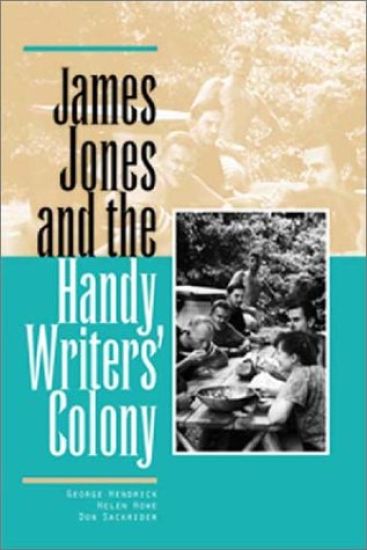
This story of James Jones and the Handy Colony is a popular account of one of the most unusual writing colonies ever established in the United States.Between his Army enlistment in 1939 and the wound that sent him to a Memphis hospital in 1943, James Jones suffered the loss of both his mother and his father, a victim of suicide. Psychologically precarious, Jones drank heavily, often brawling in bars. Concerned about his erratic behavior, his aunt took Jones to meet Lowney Handy, who took virtual control of his life, securing his discharge from the army and, with her husband Harry, inviting him into their home. Lowney became Jones's writing teacher--and his lover. An aspiring but unpublished writer when she began the Handy Writers' Colony in Marshall, Illinois, Lowney Handy developed a reputation as an inspirational teacher of writing. Her husband, an oil refinery executive from nearby Robinson, supported her in this endeavor, which proved quite successful. The Handy colony achieved national attention through the success of Jones, its most celebrated member and the author of From Here to Eternity and Some Came Running.
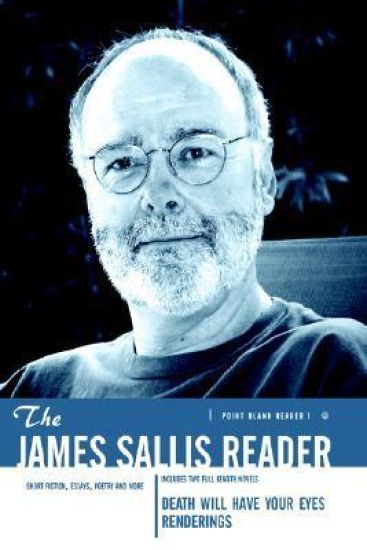
The POINT BLANK READER series is dedicated to introducing you to the finest novelists in the mystery and crime fiction genres in carefully selected volumes that each include a full length novel, selected shorter fiction and other writings by the author. JAMES SALLIS is the author of the acclaimed Lew Griffin series of detective novels, multiple collections of short fiction, essays, poems, musicology, a biography of Chester Himes, and several other books. This volume includes his novels DEATH WILL HAVE YOUR EYES and RENDERINGS, numerous short stories, poems, personal essays and articles on crime writers such as Patricia Highsmith, Gerald Kersh and others. "Ever among the most unconventional and interesting writers of crime fiction." KIRKUS REVIEWS
James Joyce and the Philosophers at Finnegans Wake explores how Joyce used the philosophers Nicholas Cusanus, Giordano Bruno, and Giambattista Vico as the basis upon which to write Finnegans Wake. Very few Joyce critics know enough about these philosophers and therefore often miss their influence on Joyce’s great work. Joyce embraces these philosophic companions to lead him through the underworld of history with all its repetitions and resurrections, oppositions and recombinations.We as philosophical readers of the Wake go along with them to meet everybody and in so doing are bound “to encounter for the millionth time the reality of experience and to forge in the smithy” of our souls the “uncreated conscience” of humankind. Verene builds his study on the basis of years of teaching Finnegans Wake side by side with Cusanus, Bruno, and Vico, and his book will serve as a guide to readers of Joyce’s novel.
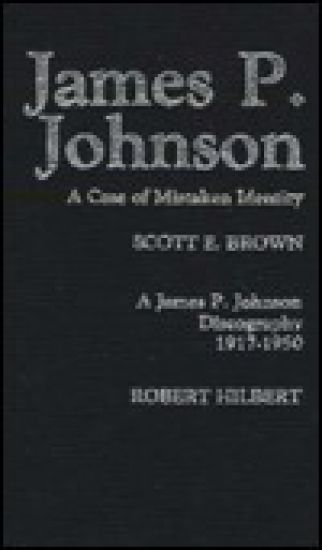
Known to serious students of jazz as the "Father of Stride Piano," James P. Johnson has only recently begun to receive the acclaim he merits. Born in New Brunswick, NJ and reared in the cultural hotbed of Harlem, Johnson spanned the ragtime era, through the roaring twenties (to which he contributed its theme song the Charleston) and into the swing era. Part I is a chronological biography, with listings of his musical revues, extended compositions, film work, and all other song and instrumental pieces; a comprehensive bibliography; and photos. Part II is an exhaustive discography.
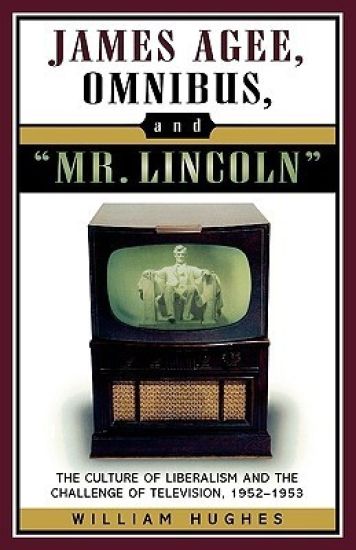
In 1952 CBS, in conjunction with the Ford Foundation, launched Omnibus, a remarkable experiment in television. The objective was to raise the programming standards of an emerging medium that figured to profoundly influence American life. The centerpiece of Omnibus during its inaugural season was "Mr. Lincoln," a series of five films about the early life of our foremost political icon. James Agee, the distinguished American author, was the principal creator of "Mr. Lincoln." At the time, his scripts were hailed as 'the most beautiful writing ever done for television," and even today Agee's characterization of Lincoln remains " among the finest—perhaps the finest—film about Abraham Lincoln ever made." Regrettably, this important and sensitive work, a revealing expression of American culture at mid-century, has been consigned to the archives and has not been available to the public for many years. Author William Hughes aims to keep alive Agee's neglected masterpiece, placing "Mr. Lincoln" in the context of the period's prevailing ideology (Cold War liberalism) and conveying the institutional framework in which the work originated. In addition, Hughes takes into account Agee's personal experiences, his social and political views, and his related writings (for and about film), all of which came into play when he reworked the Lincoln legend for the television age. Based on extensive archive research and an interview with Norman Lloyd, who directed the five films, this book fully documents the cultural and historical importance of "Mr. Lincoln."
James M. Cain wrote some of the grittiest novels in American literature, including such classics as The Postman Always Rings Twice, Double Indemnity, and Mildred Pierce. James M. Cain: Hard-Boiled Mythmaker is a critical overview of the author's life, work, and legacy. An updated and expanded edition of two of David Madden's scholarly works on Cain, this new book improves upon the previous works by collecting the most essential writing on Cain by Madden into one volume. In addition to melding existing material, this work contains updated and new material, including fresh commentaries on later books, such as Rainbow's End, Cloud Nine, and The Enchanted Isle, as well as later film adaptations, including Butterfly. It also responds to 40 years' worth of criticism on Cain and reevaluates his influence. Providing an overview of all of Cain's fiction, including an analysis of the major themes of his entire literary career, the book also describes Cain's impact on and importance in 20th-century culture, film in particular. In addition to a biographical summary and thematic outline of Cain's nearly 50-year career, Madden and Mecholsky examine how Cain's works explore the nightmare consequences of the persistent American dream. Finally, Madden and Mecholsky consider Cain's technical innovations of the novel and survey the major film adaptations of Cain's novels. With its significant in-depth analysis and a foreword by Edgar-award winning author Max Allan Collins, this volume will be of interest to Cain scholars as well as anyone interested in 20th century American literature and film.
Because Harry Levin's view is large, as opposed to the many necessary exegeses and close textual studies, he leads the reader easily into the delights to be found in Joyce, from the comparatively simple prose of Dubliners, through Ulysses and into the complexities of Finnegans Wake. The insight and brilliance of this "critical introduction," first published by New Directions in 1941, make it as rewarding for the expert as the student. For this revised edition, Mr. Levin, who is Irving Babbitt Professor of Comparative Literature at Harvard, has made revisions and added a new preface and a long "postscript" which he calls "Revising Joyce." He examines the works that have come to light in the last few years and some of the important later biographical writings about Joyce.
As a poet, the late James Laughlin (1914-1997) was perhaps best known for his love lyrics. Marjorie Perloff has written, "Who else . . . writes such bittersweet, ironic, rueful, erotic, toughminded, witty love poems, poems that run the gamut from ecstasy to loss?" Andrei Codrescu wrote, "Under deep cover as Godfather of Modernism, James Laughlin has secretly raised and made himself into the Poetry Chieftain of Sane Eros, the Catullus of fin-de-siecle America." This small paperback edition of his finest love poems is a perfect memorial to one of the twentieth century's most important men of letters.
Published in his centenary year, The Collected Poems of James Laughlin encompasses in one majestic volume all of the poetry (with the exception of his verse memoirs, Byways) written by the publisher-poet. Witty, technically brilliant, slyly satiric and heartbreakingly poignant about the vagaries of love, Laughlin charted his own poetic course for over six decades prompting astonishment and joy in those fellow poets who had discovered his unique genius. As Charles Simic enthused, “The secret is out, the publisher of Williams and Pound is himself a great lyric poet.” Compiled and edited by Peter Glassgold, Laughlin’s chosen poetry editor for the last two decades, The Collected Poems of James Laughlin includes more than 1250 poems from the early lyrics written in Laughlin’s signature “typewriter” metric, to the “long-line” poems of his later years, to the playful antics of his dopplegänger Hiram Handspring, to the trenchant commentary of the five-line pentastichs that occupied his last days. Despite all the awards and accolades that James Laughlin received for his publishing achievements and service to literature, the honor that pleased him most was his election to the American Academy of Arts and Letters (1996)—as a poet.
A collection of 22 profiles and more than 60 recipes. It includes more than 100 photos, in a coffee table trim, that exists to commemmorate the 25th anniversary of the James Beard House.
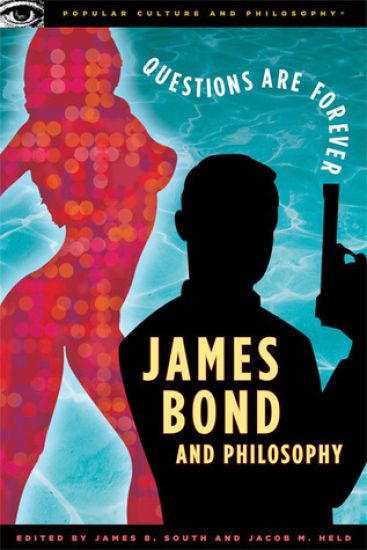
"A collection of philosophical essays about the fictional world of James Bond as seen in Ian Fleming's novels and the ongoing film series. Issues addressed include existentialism and the good life, crime and punishment, gender politics, the cold war and nuclear proliferation, and human interrelation with technology"--Provided by publisher.
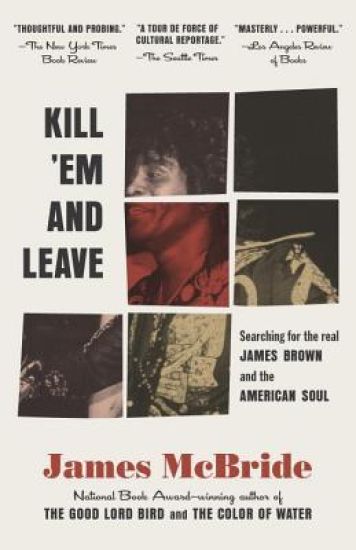
"You won't leave this hypnotic book without feeling that James Brown is still out there, howling."--The Boston Globe From the New York Times bestselling author of The Good Lord Bird, winner of the 2013 National Book Award for Fiction, Deacon King Kong, and Five-Carat Soul Kill 'Em and Leave is more than a book about James Brown. Brown embodied the contradictions of American life: He was an unsettling symbol of the tensions between North and South, black and white, rich and poor. After receiving a tip that promises to uncover the man behind the myth, James McBride goes in search of the "real" James Brown. McBride's travels take him to forgotten corners of Brown's never-before-revealed history, illuminating not only our understanding of the immensely troubled, misunderstood, and complicated Godfather of Soul, but the ways in which our cultural heritage has been shaped by Brown's enduring legacy. Praise for Kill 'Em and Leave "A tour de force of cultural reportage."--The Seattle Times "Thoughtful and probing."--The New York Times Book Review "Masterly . . . powerful."--Los Angeles Review of Books "McBride provides something lacking in most of the books about James Brown: an intimate feeling for the musician, a veracious if inchoate sense of what it was like to be touched by him. . . . It may be as close to 'the real James Brown'] as we'll ever get."--David Hajdu, The Nation "A feat of intrepid journalistic fortitude."--USA Today " McBride is] the biographer of James Brown we've all been waiting for. . . . McBride's true subject is race and poverty in a country that doesn't want to hear about it, unless compelled by a voice that demands to be heard."--Boris Kachka, New York "Illuminating . . . engaging."--The Washington Post "A gorgeously written piece of reportage that gives us glimpses of Brown's genius and contradictions."--O: The Oprah Magazine