Kirjojen hintavertailu. Mukana 11 244 527 kirjaa ja 12 kauppaa.

Kirjahaku

Etsi kirjoja tekijän nimen, kirjan nimen tai ISBN:n perusteella.

1000 tulosta hakusanalla James Perry

James's Will-To-Believe Doctrine

James's Will-To-Believe Doctrine

James C.S. Wernham

McGill-Queen's University Press
1997
sidottu
In 1896 William James published an essay entitled The Will to Believe, in which he defended the legitimacy of religious faith against the attacks of such champions of scientific method as W.K. Clifford and Thomas Huxley. James's work quickly became one of the most important writings in the philosophy of religious belief. James Wernham analyses James's arguments, discusses his relation to Pascal and Renouvier, and considers the interpretations, and misinterpretations, of James's major critics. Wernham shows convincingly that James was unaware of many destructive ambiguitities in his own doctrines and arguments, although clear and consistent in his view that our obligation to believe in theism is not a moral but a prudential obligation -- a foolish-not-to-believe doctrine, rather than a not-immoral-to-believe one. Wernham also shows that the doctrine is best read as affirming the wisdom of gambling that God exists, a notion which James failed to distinguish from believing and which, among other things, he explicitly identified with faith. James's pragmatism, a theory concerning the meaning of truth, is shown to be quite distinct from the doctrine of The Will to Believe. In concentrating on a careful analysis of this doctrine of the will-to-believe, Wernham not only makes a major contribution to understanding James's philosophy, but also clarifies issues in the philosophy of religion and in the analysis of belief and faith.
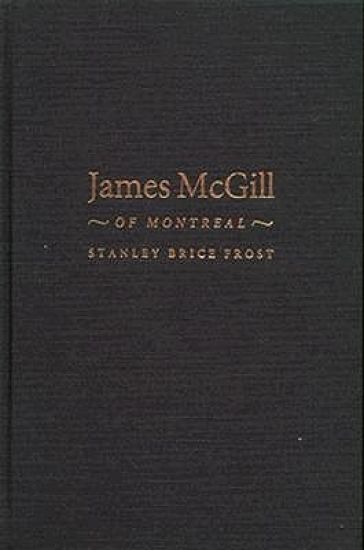
James McGill of Montreal

James McGill of Montreal

Stanley Brice Frost

McGill-Queen's University Press
1995
sidottu
McGill came to Canada from Scotland in 1766 at the age of twenty-two. After ten years as a fur trader, he moved to Montreal and cofounded Todd, McGill & Co. He continued in the fur trade but also encouraged general trade and in later years pioneered the export of goods to Britain. Active in politics, McGill was a magistrate of Montreal and a member of the first parliament of Lower Canada. He also served for many years as a member of the Governor's Executive Council. During the War of 1812 he commanded the militia that defended Montreal, helping to foil the United States's attempts to annex Canada. Educated at Glasgow University, McGill never lost his love of learning, and his bequest of land and an endowment to found a college bearing his name was a gesture fully consistent with his generous character and strong commitment to the city he had made his own.
James McGill of Montreal

James McGill of Montreal

Stanley Brice Frost

McGill-Queen's University Press
1995
nidottu
McGill came to Canada from Scotland in 1766 at the age of twenty-two. After ten years as a fur trader, he moved to Montreal and cofounded Todd, McGill & Co. He continued in the fur trade but also encouraged general trade and in later years pioneered the export of goods to Britain. Active in politics, McGill was a magistrate of Montreal and a member of the first parliament of Lower Canada. He also served for many years as a member of the Governor's Executive Council. During the War of 1812 he commanded the militia that defended Montreal, helping to foil the United States's attempts to annex Canada. Educated at Glasgow University, McGill never lost his love of learning, and his bequest of land and an endowment to found a college bearing his name was a gesture fully consistent with his generous character and strong commitment to the city he had made his own.
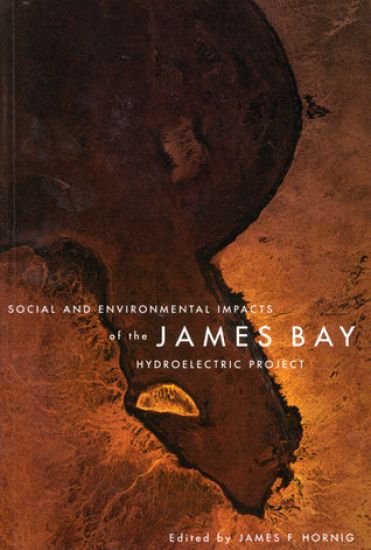
Social and Environmental Impacts of the James Bay Hydroelectric Project
The first mega-scale hydro project to be built in the sub-Arctic, capable of generating as much electricity as fifteen nuclear power plants, its impact includes disruption of vast areas in an extremely fragile ecosystem as well as displacement of native peoples and the introduction of dangerous levels of mercury into their food supply. The debate over these complex environmental issues has been further complicated by political issues stemming from the importance of the project to the economic development of Quebec and the sale of at least ten percent of the electricity generated the United States. The contributors examine core issues of the controversy both in relation to James Bay and to other large hydroelectric projects, such as the Aswan dam in Egypt and the Three Gorges dam in China. Providing insights from an unusual variety of disciplines, the authors offer important considerations that must be taken into account as Quebec assesses additional phases of hydroelectric development of the watershed east of Hudson Bay. Contributors include Raymond B. Coppinger (Hampshire College), Bill Dale Roebuck (Dartmouth Medical School), Will Ryan (Hampshire College), Adrian Tanner (Memorial University), Stanley L. Warner (Hampshire College), Kessler E. Woodward (University of Alaska), and Oran R. Young (Dartmouth College).
Social and Environmental Impacts of the James Bay Hydroelectric Project
The first mega-scale hydro project to be built in the sub-Arctic, capable of generating as much electricity as fifteen nuclear power plants, its impact includes disruption of vast areas in an extremely fragile ecosystem as well as displacement of native peoples and the introduction of dangerous levels of mercury into their food supply. The debate over these complex environmental issues has been further complicated by political issues stemming from the importance of the project to the economic development of Quebec and the sale of at least ten percent of the electricity generated the United States. The contributors examine core issues of the controversy both in relation to James Bay and to other large hydroelectric projects, such as the Aswan dam in Egypt and the Three Gorges dam in China. Providing insights from an unusual variety of disciplines, the authors offer important considerations that must be taken into account as Quebec assesses additional phases of hydroelectric development of the watershed east of Hudson Bay. Contributors include Raymond B. Coppinger (Hampshire College), Bill Dale Roebuck (Dartmouth Medical School), Will Ryan (Hampshire College), Adrian Tanner (Memorial University), Stanley L. Warner (Hampshire College), Kessler E. Woodward (University of Alaska), and Oran R. Young (Dartmouth College).
James Cook: The Voyages

James Cook: The Voyages

William Frame; Laura Walker

MCGILL-QUEEN'S UNIVERSITY PRESS
2018
sidottu
The twenty-fifth of August 2018 marks the 250th anniversary of the departure of the Endeavour from Plymouth, England, and the first of three voyages by James Cook that would nearly complete the map of the world. Interweaving accounts of scientific discovery with the personal stories of the voyages' key participants, William Frame and Laura Walker explore the charting of the Pacific and the natural world, the first encounters and exchange between Western and indigenous cultures, and the representation of the voyages in art. The illustrations, many of which have never before been published, include drawings by all the artists employed on the voyages, including Alexander Buchan, Sydney Parkinson, William Hodges, and John Webber. It also includes the only surviving paintings by Tupaia, a Polynesian high priest and navigator who joined the first voyage at Tahiti and sailed with Cook to New Zealand and Australia. A stunningly illustrated object-centred history, James Cook: The Voyages offers a once-in-a-generation opportunity to discover the extensive Captain Cook collection of the British Library, including original maps, artworks, journals, and printed books.
James Baldwin: Cambridge Debate Speech: Cambridge Debate Speech
James Baldwin was an author, social critic, and activist known for his deep understanding of race and class in the United States. This book introduces readers to his speech from a 1965 debate at Cambridge University in which he argues for racial equality in the civil rights era. The social and political circumstances of the era are discussed as well as Baldwin's persuasive argument that, despite contributing to the making of the United States, African Americans are not allowed to fully participate in the American Dream.
James J. Corbett

James J. Corbett

Armond Fields

McFarland Co Inc
2001
pokkari
When he died in 1933, James J. "Gentleman Jim" Corbett was honored by two distinguished groups of people: the professional boxing public, who celebrated him as America's greatest boxing champion, and the world of popular theater admirers, who revered him as one of Broadway's top vaudeville headliners. Corbett was uniquely instrumental in making boxing and popular theater both justifiable commercial enterprises, to be enjoyed by all classes of people. He became America's first national sports hero and went on to formulate the theater world's star system. This is the first definitive biography of the man who knocked out heavyweight champion John L. Sullivan, and who also knocked out audiences who flocked to see him in vaudeville and silent pictures. The focus herein is on the real man, the influences on his life, and the social and commercial environment within which he functioned. The author reveals that Corbett was a complex, driven, enigmatic man whose dedicated participation in popular entertainment changed American social values and mores, and at the same time reinvented the notion of a national hero.
James Fenimore Cooper versus the Cult of Domesticity
Between 1820 and 1860 a set of established cultural values deemed the "Cult of Domesticity" sought to shape the private and public lives of individuals in a rapidly changing American society. Promoting the ideals of conformity in religious, domestic and personal development, the cult was particularly concerned with maintaining a status quo of piety, purity, obedience and domesticity in 19th century female behavior. While a number a female writers responded through literature to the social standards they were urged to emulate, the prominent male writer James Fenimore Cooper reacted as well, addressing the predominant cultural climate through texts that establish women as an integral part of the plot line. This book provides a comprehensive discussion of James Fenimore Cooper's view of family dynamics and explores his attempts to simultaneously present and critique the forces shaping the social development of the nation. The study places 10 relevant Cooper novels within the context of popular literary works by 19th century writers Lydia Maria Child, Catherine Maria Sedgwick, Susan Warner and Maria Cummins to demonstrate how Cooper approaches issues of Victorian domesticity and how his representations compare to those crafted by the contemporary women writers. Opening chapters discuss why Cooper chose the women's fiction genre as his vehicle and present an overview of the "Cult of Domesticity" in fiction and nonfiction, delineating the origins and effects of 19th century domestic life. Remaining chapters address the role of the mother, the father and the central daughter figure in domestic fiction.
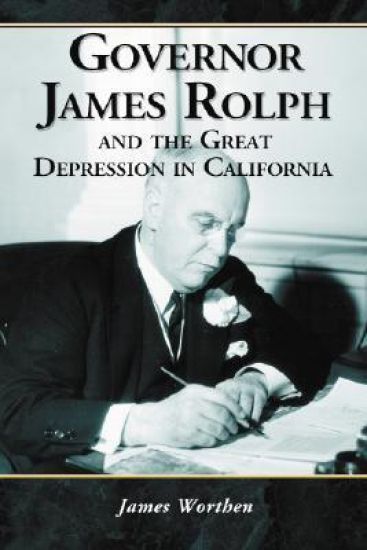
Governor James Rolph and the Great Depression in California
In 1911, when businessman James Rolph first ran for mayor of San Francisco, he promised, "I will be mayor of the whole city, and not the mayor for any particular section." This statement seemed to characterize Rolph's political career. After serving an unprecedented five terms as mayor, he went on to win California's 1930 gubernatorial election. Rolph, however, had severely underestimated the challenges he would be up against as a Depression-era governor. A genuine love of people and desire to help had gotten him as far as the governor's office but could do little to help him solve the new problems he found. Lack of a firm agenda coupled with an unrealistic (or perhaps idealistic) governing style left him at odds with the legislature and found his chief lieutenants forming into warring cliques. Ultimately, Rolph--in spite of good intentions and a love of civil service--was unable to translate his mayoral triumph, with all its charm and style, into a gubernatorial success. This biography relies heavily on primary sources such as contemporary newspaper articles and firsthand recollections. Beginning with Rolph's mayoral career, the book enumerates the qualities which led to his phenomenal success as San Francisco's top politician. The work then examines the criticisms levied against Rolph as governor and the ways in which these complaints were, and were not, justified. The unfortunate historical timing of Rolph's governorship is also discussed. In many ways, Rolph's attempt to translate from prosperous '20s mayor to Depression-era '30s governor was simply ill-fated from the very beginning. A detailed bibliography and index is also provided.
James Lee Burke and the Soul of Dave Robicheaux
When he created the character Dave Robicheaux, author James Lee Burke lent the New Orleans homicide detective a few of his own characteristics: a daughter named Alafair, a lifetime struggle with alcohol, his Roman Catholic faith, and his love for fishing and the outdoors. On the other hand, Robicheaux is portrayed as a veteran of the Vietnam war, something Burke never experienced firsthand. Yet the demons Burke has known allow him to write convincingly about demons he never knew. Thus Burke has created a realistic, complex and compelling protagonist for his crime fiction series. That depth is one element that elevates Burke's writing above the status of genre fiction. This book explores how James Lee Burke, through the first person narrative of detective Dave Robicheaux, probes the world of law and order, crime and disorder, and one man's internal conflicts with modern moral issues. The first chapter reveals the similarities and differences between real life creator and fictional protagonist. Next, chapters arranged by theme explore the roles of women, Robicheaux's paternal side as revealed through his adopted daughter, the paternal influences in the detective's own life, and the contrasting personality of his half-brother, Jimmie. The next chapters probe the roots of the detective's moral dilemmas: his battle with alcohol, the Vietnam war's lingering trauma, and religion. Next the author explores Burke's use of the supernatural, sense of place, and music to deepen his stories. Final chapters delve into Robicheaux's moral quandaries as a law enforcement officer, the character's contrast to his reckless and funny partner, Clete, and how Burke reveals truths about life through Robicheaux. An interview with Burke is included.
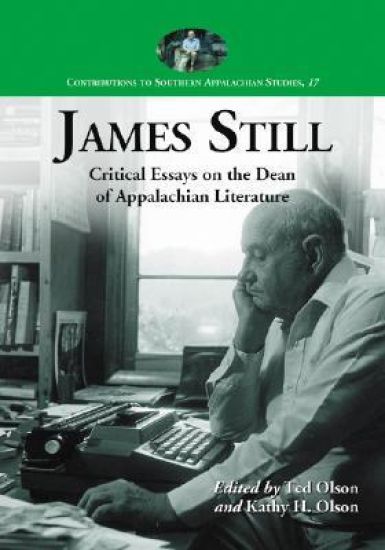
James Still

James Still

McFarland Co Inc
2007
pokkari
Best known as the author of the acclaimed novel River of Earth (1940), Alabama native James Still is one of the most critically acclaimed writers of Appalachian literature. This compilation of scholarly essays (new and reprinted from hard-to-find sources) exploring Still's literary work is the first book-length collection of its kind and features contributions from leading scholars and writers, including Wendell Berry, Fred Chappell, Jim Wayne Miller, Jeff Daniel Marion, Diane Fisher, Dean Cadle, and Hal Crowther. The book explores the full range of Still's literary interests, with separate chapters devoted to River of Earth, his short stories, poetry, folkloric writings, and writings for children.
James Ellroy

James Ellroy

Jim Mancall

McFarland Co Inc
2014
pokkari
This comprehensive guide to James Ellroy's work and life is arranged as an encyclopedia covering his entire career, from his first private-eye novel, Brown's Requiem, to his 2012 e-book Shakedown. It introduces new readers to his characters and plots, and provides experienced Ellroy fans and scholars with detailed analyses of the themes, motifs and stylistic innovations of his books. The work is a tour of Ellroy's dark underworld, highlighting the controversies and unsettling questions that characterize his work, as well as assessing Ellroy's place in the annals of American literature.
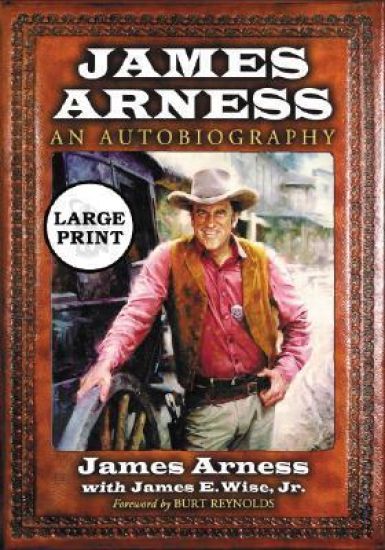
James Arness

James Arness

Arness James

McFarland Co Inc
2008
nidottu
This is the long anticipated, never-before-told account of one of the icons of 20th-century TV. James Arness gives a full account of his early years and his family, his military career and his film work in Hollywood which included appearances in the cult-favorite science fiction movies ""Them!"" and ""The Thing"". He had a long run on ""Gunsmoke"" and a role in the highly popular TV miniseries ""How The West Was Won"". There are many personal revelations of interacting with some of the ""Gunsmoke"" family ensemble, such as Miss Kitty, Doc and Festus. His own work as a producer is covered. Throughout are rare, previously unpublished photographs from the author's personal collection.
James Still in Interviews, Oral Histories and Memoirs
One of the most admired and influential authors to work in and write about Appalachia, James Still excelled in every genre of literature in which he worked, from novels and short stories to poetry, children's books, and folklore collections. This book is intended to help readers more fully understand and appreciate the many facets of Still's literary voice and vision, compiling transcribed versions of virtually all the interviews and oral histories ever conducted with James Still, along with numerous memoirs in which some of the leading voices in the Appalachian studies movement memorably express their appreciation for Still and his literary legacy.
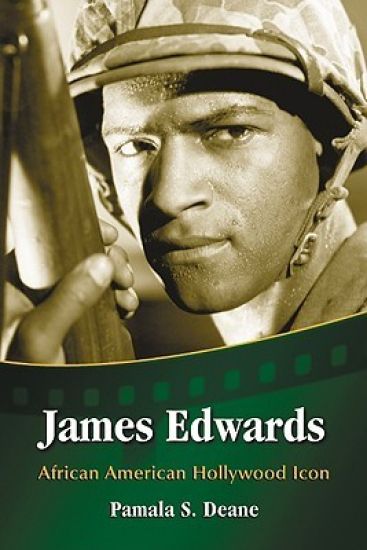
James Edwards

James Edwards

Pamala S. Deane

McFarland Co Inc
2009
pokkari
One of Hollywood's most heralded postwar African American movie stars, James Edwards catapulted to stardom following his breakout role in Stanley Kramer's Home of the Brave. In his groundbreaking performance as a U.S. soldier experiencing racial prejudice during combat in the South Pacific, Edwards proved that African American actors could handle serious film roles. Edwards performed on radio, television, and theatre, and appeared in two-dozen or more films, including Stanley Kubrick's breakthrough indie The Killing, John Frankenheimer's The Manchurian Candidate, and Franklin J. Schaffner's Patton. This book tells the story of Edwards' life and career, describing his unlikely climb to fame following a serious wartime injury and detailing how this native of Muncie, Indiana, paved the way for the careers of Sidney Poitier, Harry Belafonte, and other African American stars to follow.