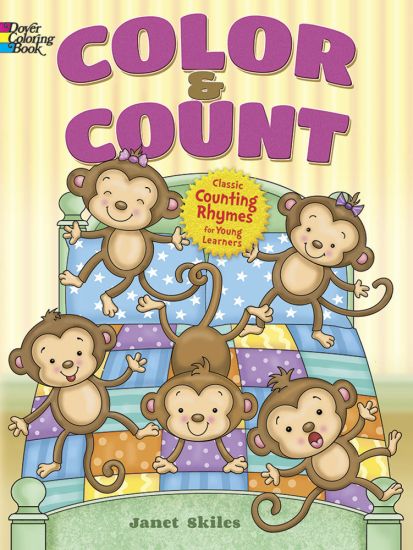
Cute little counting rhymes, 1-2-3, will be fun to color for all to see From five little monkeys jumping on the bed to ten fluffy chicks and their watchful mother hen, these classic counting rhymes are accompanied by adorable pictures to color. Whimsical illustrations and irresistible verses ― featuring perky penguins, dancing bears, frisky frogs, and other creatures ― provide educational entertainment for kids ages 3 to 7.
Kids can celebrate their birthdays in a special way with these cute temporary tattoos. Six colorful images include a cheerful chick in a party hat with balloons, joyful bears enjoying birthday cake and playing with noisemakers, a yummy cupcake, and other festive figures. Tattoos are easy to apply and remove.
Everything's ducky with this flock of 20 vivid stickers. An irresistible assortment of baby ducks strike all sorts of cute poses ― reclining in a peapod hammock, popping out of a gift box, cuddling a teddy bear, playing baseball, savoring an ice cream cone, and enjoying other whimsical activities.
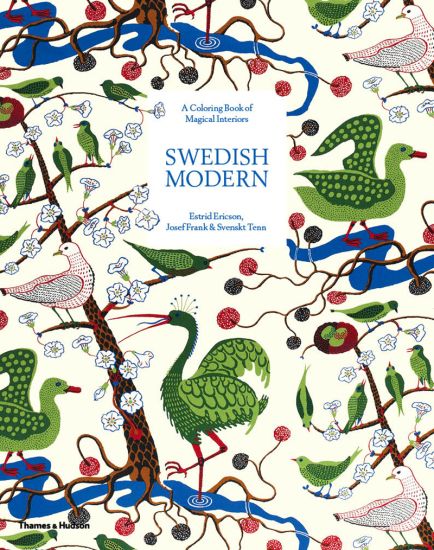
Swedish Modern is a playful exploration of the philosophy and heritage of the legendary Swedish interior design and furniture company, Svenskt Tenn. The company was founded in 1924 by the pioneering design entrepreneur Estrid Ericson and joined ten years later by Austrian designer and architect Josef Frank. Together they created eclectic, elegant and boldly patterned interior design style known as Swedish Modern that has made Svenskt Tenn world-renowned. This colouring book is your invitation to explore their world of magical interiors.
The latest magical romance in the Spellbound Falls series from the New York Times bestselling author of From Kiss to Queen and The Highlander Next Door Welcome back to Spellbound Falls, Maine--where love is the greatest magic of all... Katy MacBain moved to Spellbound Falls with secrets she plans to keep. The newest member of the Fire and Rescue Team, she disappeared for three weeks before arriving on the job. She doesn't understand why Gunnar Wolfe--the town's interim fire chief and her boss--seems determined to uncover the truth of what happened to her during that time. Or why she's more attracted to him than she's ever been to any other man. A confident firefighter, Gunnar Wolfe doesn't give up--and he's resolved to find out what's wrong with the mysterious and beautiful Katy. Since she is the newest member of his team, he's naturally protective of her, but he's surprised to find himself captivated by the tenacious and talented woman who is so...magical.
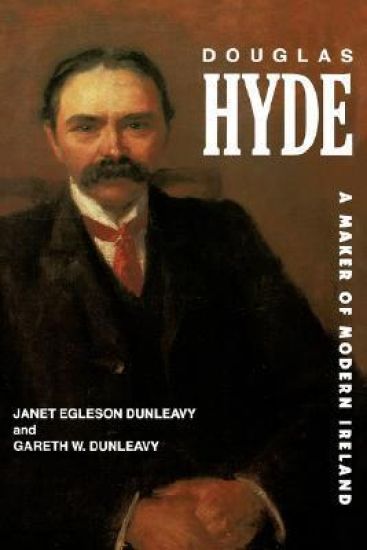
In 1938, at an age when most men are long retired, Douglas Hyde (1860-1949) was elected first president of modern Ireland. The unanimous choice of delegates from all political factions, he was no stranger to public life or to fame. Until now, however, there has been no full-scale biography of this important historical and literary figure. Known as a tireless nationalist, Hyde attracted attention on both sides of the Atlantic from a very early age. He was hailed by Yeats as a source of the Irish Literary Renaissance; earned international recognition for his contributions to the theory and methodology of folklore; joined Lady Gregory, W. B. Yeats, George Moore, and Edward Martyn in shaping an Irish theater; and as president of the Gaelic League worked for twenty-two years on behalf of Irish Ireland. Yet in spite of these and other accomplishments Hyde remained an enigmatic figure throughout his life. Why did he become an Irish nationalist? Why were his two terms as Irish Free State senator so curiously passive? Why, when he had threatened it earlier, did he oppose the use of physical force in 1916? How did he nevertheless retain the support of his countrymen and the trust and friendship of such a man as Eamon de Valera? Douglas Hyde: A Maker of Modern Ireland dispels for the first time the myths and misinformation that have obscured the private life of this extraordinary scholar and statesman.
Janet Hoskins provides both an ethnographic study of the organization of time in an Eastern Indonesian society and a theoretical argument about alternate temporalities in the modern world. Based on more than three years of field work with the Kodi people of the island of Sumba, her book focuses on Kodi calendrical rituals, exchange transactions, and confrontations with the historical forces of the colonial and postcolonial world. Hoskins explores the contingent, contested, and often contradictory precedent of the past to show how local systems of knowledge are in dialogue with wider historical forces. Arguing that traditional temporality is more complex than many theorists have realized, Hoskins highlights the flexibility and relativity of local time concepts, whose sophistication belies the cliche of simple societies living in a world outside of time.
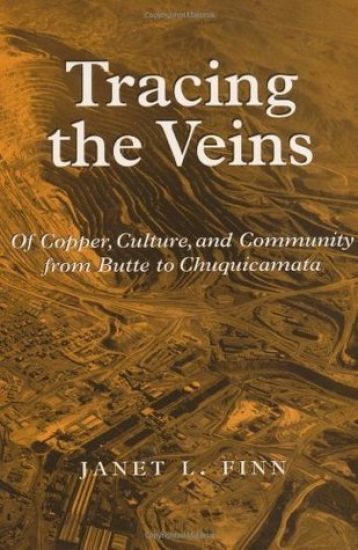
This tale of two cities--Butte, Montana, and Chuquicamata, Chile--traces the relationship of capitalism and community across cultural, national, and geographic boundaries. Combining social history with ethnography, Janet Finn shows how the development of copper mining set in motion parallel processes involving distinctive constructions of community, class, and gender in the two widely separated but intimately related sites. While the rich veins of copper in the Rockies and the Andes flowed for the giant Anaconda Company, the miners and their families in both places struggled to make a life as well as a living for themselves. Miner's consumption, a popular name for silicosis, provides a powerful metaphor for the danger, wasting, and loss that penetrated mining life. Finn explores themes of privation and privilege, trust and betrayal, and offers a new model for community studies that links local culture and global capitalism.
Germany of the 1920s offers a stunning moment in modernity, a time when surface values first became determinants of taste, activity, and occupation: modernity was still modern, spectacle was still spectacular. Janet Ward's luminous study revisits Weimar Germany via the lens of metropolitan visual culture, analyzing the power that 1920s Germany holds for today's visual codes of consumerism.
Selected by "The Los Angeles Times Book Review" as one of the best books of the year, "Project Girl" is the powerful account of a young woman's struggle to realize her dreams while remaining true to who she was before attending Ivy League schools and receiving impressive diplomas. It tells of the spectacular failures and unlikely comebacks of a ghetto kid whose academic talent opens doors onto a world of private schools, rich classmates, and plum jobs but who back home confronts a neighborhood of growing poverty, drug abuse, and crime. "Project Girl" is McDonald's story of her divided life and terrible battle to reconcile opposing worlds.
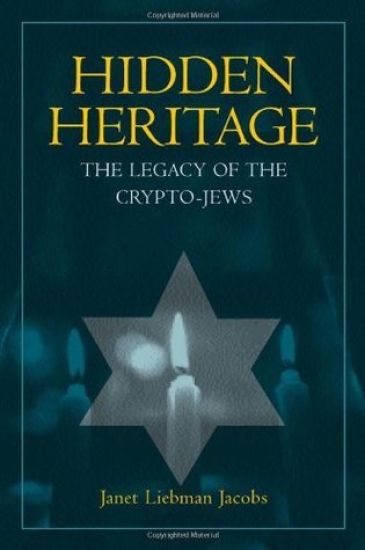
This study of contemporary crypto-Jews--descendants of European Jews forced to convert to Christianity during the Spanish Inquisition--traces the group's history of clandestinely conducting their faith and their present-day efforts to reclaim their past. Janet Liebman Jacobs masterfully combines historical and social scientific theory to fashion a brilliant analysis of hidden ancestry and the transformation of religious and ethnic identity.
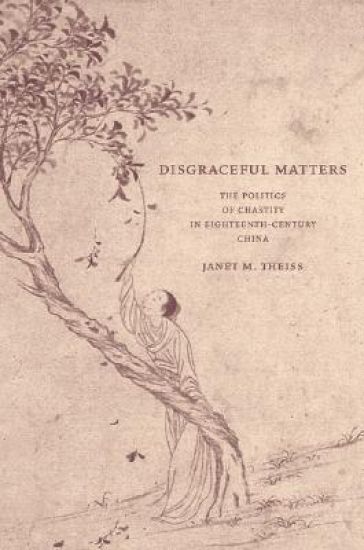
Looking beyond the familiar trappings of the cult of female chastity-such as hagiographies of widows and chastity shrines--in late imperial China, this book explores the cult's political significance and practical ramifications in everyday life during the eighteenth century. In the first full-length study of the subject, Janet Theiss examines a vast number of laws, legal cases, regulations, and policies to illustrate the social and political processes through which female virtue was defined, enforced, and contested. Along the way, she provides rich details of social life and cultural practices among ordinary Chinese people through narratives of criminal cases of sexual assault, harassment, adultery, and domestic violence.
Trauma Cinema focuses on a new breed of documentary films and videos that adopt catastrophe as their subject matter and trauma as their aesthetic. Incorporating oral testimony, home-movie footage, and documentary reenactment, these documentaries express the havoc trauma wreaks on history and memory. Janet Walker uses incest and the Holocaust as a double thematic focus and fiction films as a point of comparison. Her astute and original examination considers the Hollywood classic Kings Row and the television movie Sybil in relation to vanguard nonfiction works, including Errol Morris's Mr. Death, Lynn Hershman's video diaries, and the chilling genealogy of incest, Just, Melvin. Both incest and the Holocaust have also been featured in contemporary psychological literature on trauma and memory. The author employs theories of post traumatic stress disorder and histories of the so-called memory wars to illuminate the amnesias, fantasies, and mistakes in memory that must be taken into account, along with corroborated evidence, if we are to understand how personal and public historical meaning is made. Janet Walker's engrossing narrative demonstrates that the past does not come down to us purely and simply through eyewitness accounts and tangible artifacts. Her incisive analysis exposes the frailty of memory in the face of disquieting events while her joint consideration of trauma cinema and psychological theorizing radically reconstructs the roadblocks at the intersection of catastrophe, memory, and historical representation.
How did our children end up eating nachos, pizza, and Tater Tots for lunch? Taking us on an eye-opening journey into the nation's school kitchens, this superbly researched book is the first to provide a comprehensive assessment of school food in the United States. Janet Poppendieck explores the deep politics of food provision from multiple perspectives - history, policy, nutrition, environmental sustainability, taste, and more. How did we get into the absurd situation in which nutritionally regulated meals compete with fast food items and snack foods loaded with sugar, salt, and fat? What is the nutritional profile of the federal meals? How well are they reaching students who need them? Opening a window onto our culture as a whole, Poppendieck reveals the forces - the financial troubles of schools, the commercialization of childhood, the reliance on market models - that are determining how lunch is served. She concludes with a sweeping vision for change: fresh, healthy food for all children as a regular part of their school day.
How did our children end up eating nachos, pizza, and Tater Tots for lunch? Taking us on an eye-opening journey into the nation's school kitchens, this superbly researched book is the first to provide a comprehensive assessment of school food in the United States. Janet Poppendieck explores the deep politics of food provision from multiple perspectives - history, policy, nutrition, environmental sustainability, taste, and more. How did we get into the absurd situation in which nutritionally regulated meals compete with fast food items and snack foods loaded with sugar, salt, and fat? What is the nutritional profile of the federal meals? How well are they reaching students who need them? Opening a window onto our culture as a whole, Poppendieck reveals the forces - the financial troubles of schools, the commercialization of childhood, the reliance on market models - that are determining how lunch is served. She concludes with a sweeping vision for change: fresh, healthy food for all children as a regular part of their school day.
At no time during the Great Depression was the contradiction between agriculture surplus and widespread hunger more wrenchingly graphic than in the government's attempt to raise pork prices through the mass slaughter of miliions of "unripe" little pigs. This contradiction was widely perceived as a "paradox." In fact, as Janet Poppendieck makes clear in this newly expanded and updated volume, it was a normal, predictable working of an economic system rendered extreme by the Depression. The notion of paradox, however, captured the imagination of the public and policy makers, and it was to this definition of the problem that surplus commodities distribution programs in the Hoover and Roosevelt administrations were addressed. This book explains in readable narrative how the New Deal food assistance effort, originally conceived as a relief measure for poor people, became a program designed to raise the incomes of commercial farmers. In a broader sense, the book explains how the New Deal years were formative for food assistance in subsequent administrations; it also examines the performance - or lack of performance - of subsequent in-kind relief programs. Beginning with a brief survey of the history of the American farmer before the depression and the impact of the Depression on farmers, the author describes the development of Hoover assistance programs and the events at the end of that administration that shaped the "historical moment" seized by the early New Deal. Poppendieck goes on to analyze the food assistance policies and programs of the Roosevelt years, the particular series of events that culminated in the decision to purchase surplus agriculture products and distribute them to the poor, the institutionalization of this approach, the resutls achieved, and the interest groups formed. The book also looks at the takeover of food assistance by the U.S. Department of Agriculture and its gradual adaptation for use as a tool in the maintenance of farm income. Utliizing a wide variety of official and unofficial sources, the author reveals with unusual clarity the evolution from a policy directly responsive to the poor to a policy serving mainly democratic needs.
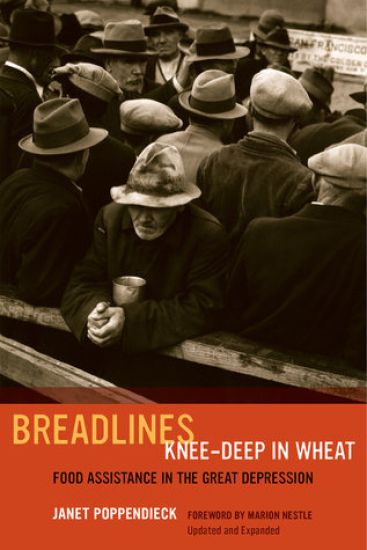
At no time during the Great Depression was the contradiction between agriculture surplus and widespread hunger more wrenchingly graphic than in the government's attempt to raise pork prices through the mass slaughter of miliions of "unripe" little pigs. This contradiction was widely perceived as a "paradox." In fact, as Janet Poppendieck makes clear in this newly expanded and updated volume, it was a normal, predictable working of an economic system rendered extreme by the Depression. The notion of paradox, however, captured the imagination of the public and policy makers, and it was to this definition of the problem that surplus commodities distribution programs in the Hoover and Roosevelt administrations were addressed. This book explains in readable narrative how the New Deal food assistance effort, originally conceived as a relief measure for poor people, became a program designed to raise the incomes of commercial farmers. In a broader sense, the book explains how the New Deal years were formative for food assistance in subsequent administrations; it also examines the performance--or lack of performance--of subsequent in-kind relief programs. Beginning with a brief survey of the history of the American farmer before the depression and the impact of the Depression on farmers, the author describes the development of Hoover assistance programs and the events at the end of that administration that shaped the "historical moment" seized by the early New Deal. Poppendieck goes on to analyze the food assistance policies and programs of the Roosevelt years, the particular series of events that culminated in the decision to purchase surplus agriculture products and distribute them to the poor, the institutionalization of this approach, the resutls achieved, and the interest groups formed. The book also looks at the takeover of food assistance by the U.S. Department of Agriculture and its gradual adaptation for use as a tool in the maintenance of farm income. Utliizing a wide variety of official and unofficial sources, the author reveals with unusual clarity the evolution from a policy directly responsive to the poor to a policy serving mainly democratic needs.
In 1963, Kenya gained independence from Britain, ending decades of white colonial rule. While tens of thousands of whites relocated in fear of losing their fortunes, many stayed. But over the past decade, protests, scandals, and upheavals have unsettled families with colonial origins, reminding them that their belonging is tenuous. In this book, Janet McIntosh looks at the lives and dilemmas of settler descendants living in post-independence Kenya. From clinging to a lost colonial identity to pronouncing a new Kenyan nationality, the public face of white Kenyans has undergone changes fraught with ambiguity. Drawing on fieldwork and interviews, McIntosh focuses on their discourse and narratives to ask: What stories do settler descendants tell about their claim to belong in Kenya? How do they situate themselves vis-a-vis the colonial past and anti-colonial sentiment, phrasing and re-phrasing their memories and judgments as they seek a position they feel is ethically acceptable? McIntosh explores contradictory and diverse responses: moral double consciousness, aspirations to uplift the nation, ideological blind-spots, denials, and self-doubt as her respondents strain to defend their entitlements in the face of mounting Kenyan rhetorics of ancestry.
In 1963, Kenya gained independence from Britain, ending decades of white colonial rule. While tens of thousands of whites relocated in fear of losing their fortunes, many stayed. But over the past decade, protests, scandals, and upheavals have unsettled families with colonial origins, reminding them that their belonging is tenuous. In this book, Janet McIntosh looks at the lives and dilemmas of settler descendants living in post-independence Kenya. From clinging to a lost colonial identity to pronouncing a new Kenyan nationality, the public face of white Kenyans has undergone changes fraught with ambiguity. Drawing on fieldwork and interviews, McIntosh focuses on their discourse and narratives to ask: What stories do settler descendants tell about their claim to belong in Kenya? How do they situate themselves vis-a-vis the colonial past and anti-colonial sentiment, phrasing and re-phrasing their memories and judgments as they seek a position they feel is ethically acceptable? McIntosh explores contradictory and diverse responses: moral double consciousness, aspirations to uplift the nation, ideological blind-spots, denials, and self-doubt as her respondents strain to defend their entitlements in the face of mounting Kenyan rhetorics of ancestry.