Kirjojen hintavertailu. Mukana 12 538 833 kirjaa ja 12 kauppaa.

Kirjahaku

Etsi kirjoja tekijän nimen, kirjan nimen tai ISBN:n perusteella.

1000 tulosta hakusanalla Jeremy Akerman

The Politics of James Bond

The Politics of James Bond

Jeremy M. Black

Praeger Publishers Inc
2000
sidottu
The adventures and antics of James Bond have provided the world with many of the most gripping story lines of the last half-century. Fleming's novels were best-sellers in their day, and the Bond films have been even more popular, becoming the most enduring and successful film franchise in history. By some estimates, half of the world's population—billions of people—have seen a James Bond movie, thus viewing an image of global struggle through Western eyes and obtaining a particular perception of Britain and the world. This fascinating and accessible account of the global phenomenon uses the plots and characterizations in the novels and the blockbuster films to place Bond in a historical, cultural, and political context.Black charts and explores how the settings and the dynamics of the Bond adventures have changed over time in response to shifts in the real-world environment in which the fictional Bond operates. Sex, race, class, and violence are each important factors as 007 evolves from Cold Warrior to foe of SPECTRE and eventually to world defender pitted against megalomaniacal foes. The development of Bond, his leading ladies, and the major plots all shed light on world political attitudes and reflect elements of the real espionage history of the period. This look at Bond's world and his lasting legacy offers an intriguing glimpse into both cultural history and popular entertainment.
America as a Military Power

America as a Military Power

Jeremy M. Black

Praeger Publishers Inc
2002
nidottu
How have military actions shaped the history of the United States and the country's role in world history? Noted military historian Jeremy Black examines American military exceptionalism with the critical eye of a foreign scholar. The British fought two wars with the Americans and followed American developments with keen interest. Black marshals contemporary British commentary to contextualize American military actions within a global perspective.Several major conflicts are covered:^L^DBLThe War for Independence^DBLThe War of 1812^DBLThe Mexican War^DBLWar with Native Americans^DBLThe Civil War^LThroughout this phase of America military action, one sees a shift from a state in conflict with neighboring states to a nation divided, fighting for its very survival. This study clarifies the unique combination of political, social, intellectual, and physical factors-including potential threats-that shaped, and were shaped, by the general American culture during this period.
The Age of Total War, 1860-1945

The Age of Total War, 1860-1945

Jeremy M. Black

Praeger Publishers Inc
2006
sidottu
What is total war? Definitions abound, but one thing is certain—the concept of total war has come to be seen as a defining concept of the modern age. Celebrated historian Jeremy Black explores the rise and demise of an era of total war, which he defines in terms of the intensity of the struggle, the range (geographical and/or chronological) of conflict, the nature of the goals, and the extent to which civil society was involved. He contends that this era (roughly 1860-1945) was markedly different from the warfare that characterized earlier periods; and that it is very different from the situation that has evolved since, with its emphasis on asymmetrical conflict and limited warfare.Acknowledging that various definitions are problematic and often contradictory, Black argues that 1860 to 1945 was an era in which the prospect of war and the consequences of it were crucially important for human history. He focuses primarily on conflict between Western powers, including Japanese participation in the Russo-Japanese War. Trends and developments subsequent to 1945 have combined, Black asserts, to make a return to total war unlikely.
A Military History of Britain

A Military History of Britain

Jeremy M. Black

Praeger Publishers Inc
2006
sidottu
Starting his account at a time when Britain was poised to rule the world's oceans—and much of its land as well—prolific historian Jeremy Black details the nation's involvement in global affairs from the late-18th century to the present. A Military History of Britain is an account of military structures and cultures, and relevant socio-political contexts, as well as of conflicts. As in all of his writing, Black seeks to challenge conventional assumptions and offer illuminating new perspectives. Black begins by setting the background to British military history, in particular the anti-(large) army ideology, the maritime tradition, and the growing geo-political rivalry with France. After the defeat of the French in North America, Britain would become the world's leading maritime power. The 19th Century would see tension between Britain and the new United States, France, Germany, and an increasing emphasis on imperial conquests. Organized in three parts: Britain as Imperial Parent; Britain as Imperial Rival; and Britain as Imperial Partner. A primary focus of this account will be the 20th century, examining Britain and World War I (including Britain as a world power and issues of imperial overstretch) and World War II (and the subsequent wars of Imperial Retention in Malaya, Kenya, and Cyprus). As in all of his writing, Black seeks to challenge conventional assumptions, and offer illuminating new perspectives. Black details the involvement of Britain in global affairs up to the present. Recent issues of continuing importance include Britain as a nuclear power, the end of the East of Suez policy, NATO membership; out-of-area conflict (from the Falklands to Iraq), and the adjustment to new global roles. This wide-ranging and broadly-based account is designed for students and for the general reader.
Time to Act

Time to Act

Jeremy Williams

SPCK Publishing
2020
pokkari
'The climate crisis is the biggest issue facing humanity today. . . It is only together that we can make a difference.' Amanda Khozi Mukwashi, Christian Aid Written by members and friends of Christian Climate Action, this stimulating resource book sets out the moral and religious case for joining the struggle against climate change. It reflects on the Christian tradition of non-violent direct action, and offers deeply moving testimonies by those engaged in such protests today, along with powerful sermons, prayers, liturgies and other spiritual resources. Now is the time to act! Don't let it pass you by! 'This is a landmark book. It is nothing short of an invitation to join the holy uprising of people sweeping the globe who will not be silent in the face of the destruction of God's earth.' Shane Claiborne, Red Letter Christians
The Folds of Parnassos

The Folds of Parnassos

Jeremy McInerney

University of Texas Press
2000
pokkari
Independent city-states (poleis) such as Athens have been viewed traditionally as the most advanced stage of state formation in ancient Greece. By contrast, this pioneering book argues that for some Greeks the ethnos, a regionally based ethnic group, and the koinon, or regional confederation, were equally valid units of social and political life and that these ethnic identities were astonishingly durable. Jeremy McInerney sets his study in Phokis, a region in central Greece dominated by Mount Parnassos that shared a border with the panhellenic sanctuary at Delphi. He explores how ecological conditions, land use, and external factors such as invasion contributed to the formation of a Phokian territory. Then, drawing on numerous interdisciplinary sources, he traces the history of the region from the Archaic age down to the Roman period. McInerney shows how shared myths, hero cults, and military alliances created an ethnic identity that held the region together over centuries, despite repeated invasions. He concludes that the Phokian koinon survived because it was founded ultimately on the tenacity of the smaller communities of Greece.
Conjuring Property

Conjuring Property

Jeremy M. Campbell

University of Washington Press
2015
sidottu
Winner of the 2017 James M. Blaut Award from the Cultural and Political Ecology Specialty Group of the Association of American GeographersHonorable Mention for the 2016 Book Prize from the Association for Political and Legal AnthropologySince the 1960s, when Brazil first encouraged large-scale Amazonian colonization, violence and confusion have often accompanied national policies concerning land reform, corporate colonization, indigenous land rights, environmental protection, and private homesteading. Conjuring Property shows how, in a region that many perceive to be stateless, colonists - from highly capitalized ranchers to landless workers - adopt anticipatory stances while they await future governance intervention regarding land tenure. For Amazonian colonists, property is a dynamic category that becomes salient in the making: it is conjured through papers, appeals to state officials, and the manipulation of landscapes and memories of occupation. This timely study will be of interest to development studies scholars and practitioners, conservation ecologists, geographers, and anthropologists.
Conjuring Property

Conjuring Property

Jeremy M. Campbell

University of Washington Press
2015
pokkari
Winner of the 2017 James M. Blaut Award from the Cultural and Political Ecology Specialty Group of the Association of American GeographersHonorable Mention for the 2016 Book Prize from the Association for Political and Legal AnthropologySince the 1960s, when Brazil first encouraged large-scale Amazonian colonization, violence and confusion have often accompanied national policies concerning land reform, corporate colonization, indigenous land rights, environmental protection, and private homesteading. Conjuring Property shows how, in a region that many perceive to be stateless, colonists - from highly capitalized ranchers to landless workers - adopt anticipatory stances while they await future governance intervention regarding land tenure. For Amazonian colonists, property is a dynamic category that becomes salient in the making: it is conjured through papers, appeals to state officials, and the manipulation of landscapes and memories of occupation. This timely study will be of interest to development studies scholars and practitioners, conservation ecologists, geographers, and anthropologists.
Modern Noise, Fluid Genres

Modern Noise, Fluid Genres

Jeremy Wallach

University of Wisconsin Press
2008
muu
What happens to 'local' sound when globalization exposes musicians and audiences to cultural influences from around the world? Jeremy Wallach explores this question as it plays out in the eclectic, evolving world of Indonesian music after the fall of the repressive Soeharto regime. Against the backdrop of Indonesia's chaotic and momentous transition to democracy, Wallach takes us to recording studios, music stores, concert venues, university campuses, video shoots, and urban neighborhoods.Integrating ground-level ethnographic research with insights drawn from contemporary cultural theory, he shows that access to globally circulating music and technologies has neither extinguished nor homogenized local music-making in Indonesia. Instead, it has provided young Indonesians with creative possibilities for exploring their identity in a diverse nation undergoing dramatic changes in an increasingly interconnected world. Ultimately, he finds, the unofficial, multicultural nationalism of Indonesian popular music provides a viable alternative to the religious, ethnic, regional, and class-based extremism that continues to threaten unity and democracy in that country.
War and the World

War and the World

Jeremy Black

Yale University Press
2000
pokkari
In this brilliant history of warfare, Jeremy Black is the first to approach the entire modern era from a comprehensive global perspective. He provides a wide-ranging account of the nature, purpose, and experience of war over the past half-millennium and argues the importance of viewing the rise of European power within a wider international context. Investigating both land and sea warfare, Black examines weaponry, tactics, strategy, and resources as well as the political, social, and cultural impact of conflict. The book takes issue with established interpretations, not least those that emphasize technology, and challenges the view that European military and naval forces were dominant throughout the period. European mastery at sea did not always translate into equivalent success on land, says Black, and many non-European military systems—the Ottomans in their expansionist years, Babur and the Mughals in sixteenth-century India, and the Manchu in China in the following century, for example—were formidable in their own right. The author contends that in the nineteenth century, the focal period of Europe’s military revolution, the international military balance shifted decisively. Black shows how military developments, combined with political, economic, and ideological shifts, influenced the nature and success of European imperialism. Linking debates on early modern history with those of more recent centuries, he offers a fundamental reexamination of the role of war in the progress of nations.
Maps and History

Maps and History

Jeremy Black

Yale University Press
2000
pokkari
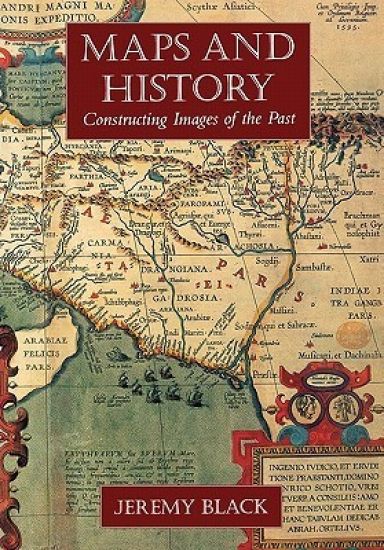
Historical atlases offer an understanding of the past that is invaluable to historians, not only because they convey a previous age's sense of space and distance but also because they reveal what historians and educators of those periods thought important to include or omit. This book—the first comprehensive and wide-ranging account of the historical atlas—explores the role, development, and nature of this important reference and discusses its impact on the presentation of the past. Jeremy Black begins with a consideration of the "pre-history" of the historical atlas: individual maps depicting the Holy Land at the time of Christ and maps of the classical world. He then examines the first known historical atlas, the Parergon of Abraham Ortel, which was published in Antwerp in 1579 and was followed by other works that mapped the world of the Bible and the classics. In the eighteenth century, there was a growing interest in mapping the post-Classical world, and works appeared that included maps of medieval Europe. In the nineteenth century, historical maps came increasingly to embody a clear political emphasis, mapping blocs of territory separated by clear linear frontiers and reflecting an approach to the past focused on undivided sovereignty and the development of the nation-state.In the twentieth century, historical atlases have both contributed to and responded to other ideologies, portraying peoples, languages, and cultural differences in an immediate and often striking visual form. Since 1945 the range of atlases has broadened to include maps devoted to the global environment, health, population trends, and other sociological, cultural, and economic changes. And the "liberation" of the Third World and the ending of the Cold War have stimulated a full scale re-mapping of the globe and the way it is perceived.
Timpani and Percussion

Timpani and Percussion

Jeremy Montagu

Yale University Press
2002
nidottu
This fascinating book presents the history of percussion instruments from the Old Stone Age to the present day. Jeremy Montagu, a performer, historian, and curator of musical instruments, discusses common and uncommon percussion instruments from all parts of the world, tracing their development and use through the ages and across cultures. After exploring the origins and antiquity of percussion instruments, Montagu investigates their appearance in the Middle Ages, in particular the nakers, tabors, cymbals, and triangles that are immediately ancestral to those we use today. He then describes instruments of the Renaissance and Early Baroque, High Baroque (from which we can trace surviving instruments and specific music), Classical, Romantic, and Modern Periods. Montagu follows the development of orchestral and band percussion from the late eighteenth century, moving from the introduction of the "Turkish music" to the modern pop bands, military, marching, and concert bands, and concert and studio orchestras. The book concludes with a wide-ranging survey of world percussion, covering instruments commonly played in schools, colleges, and orchestras. It incorporates appendices on playing techniques, technical matters, and the sociology of drummers, and is abundantly illustrated with rare images.
The British Seaborne Empire

The British Seaborne Empire

Jeremy Black

Yale University Press
2004
sidottu
Sea-power made the British Empire what it was: without sea-power there would have been no empire, or at least no empire in the form it actually took. In this masterful analysis of the role of the sea in the history of the British Empire, Jeremy Black follows in the tradition of classic works by C. R. Boxer on the Dutch and Portuguese seaborne empires and by J. H. Parry on the Spanish seaborne empire. Black considers how the ocean affected British exploration, defense, trade, commerce, and the navy, as well as the attitudes and perceptions of the British people themselves.The book covers the process of imperial expansion, the decline of the Empire, and the role of the navy in the postimperial age. Attractively illustrated and wide in scope, the book demonstrates the profound influence that proximity to the sea has exerted on virtually every aspect of British history and culture.
Class, Race, and Inequality in South Africa

Class, Race, and Inequality in South Africa

Jeremy Seekings; Nicoli Nattrass

Yale University Press
2006
sidottu
The distribution of incomes in South Africa in 2004, ten years after the transition to democracy, was probably more unequal than it had been under apartheid. In this book, Jeremy Seekings and Nicoli Nattrass explain why this is so, offering a detailed and comprehensive analysis of inequality in South Africa from the midtwentieth century to the early twenty-first century. They show that the basis of inequality shifted in the last decades of the twentieth century from race to class. Formal deracialization of public policy did not reduce the actual disadvantages experienced by the poor nor the advantages of the rich. The fundamental continuity in patterns of advantage and disadvantage resulted from underlying continuities in public policy, or what Seekings and Nattrass call the “distributional regime.” The post-apartheid distributional regime continues to divide South Africans into insiders and outsiders. The insiders, now increasingly multiracial, enjoy good access to well-paid, skilled jobs; the outsiders lack skills and employment.
Selected Writings

Selected Writings

Jeremy Bentham

Yale University Press
2011
pokkari
Jeremy Bentham (1748–1832), philosopher and reformer, is one of the most influential thinkers of the modern age. This introduction to his writings presents a representative selection of texts authoritatively restored by the Bentham Project, University College London. As well as more familiar pieces on utility, law, and politics/policy, highlights include the succinct essay “On Retrenchment” and a never-before-published treatise on sex. The volume is completed by major interpretative essays by Mark Canuel, David Lieberman, Jennifer Pitts, and Philip Schofield. The texts included in the book are: -Sex -An Introduction to the Principles of Morals and Legislation, Preface and Chapters 1–5 -Place and Time -Rationale of Judicial Evidence, Specially Applied to English Practice, Book 1, Chapter 1 -Constitutional Code Rationale, Chapters 1 and 2 -Pannomial Fragments -Panopticon, or, the Inspection-House, Letters 1, 2, and 6 -Of Publicity -Manual of Political Economy, Chapters 1 and 2 -Nonsense Upon Stilts (excluding the Observations on Sieyes) -On Retrenchment
George III

George III

Jeremy Black

Yale University Press
2008
nidottu
The first full new study of George III in thirty years The sixty-year reign of George III (1760–1820) witnessed and participated in some of the most critical events of modern world history: the ending of the Seven Years’ War with France, the American War of Independence, the French Revolutionary Wars, the campaign against Napoleon Bonaparte and battle of Waterloo in 1815, and Union with Ireland in 1801. Despite the pathos of the last years of the mad, blind, and neglected monarch, it is a life full of importance and interest. Jeremy Black’s biography deals comprehensively with the politics, the wars, and the domestic issues, and harnesses the richest range of unpublished sources in Britain, Germany, and the United States. But, using George III’s own prolific correspondence, it also interrogates the man himself, his strong religious faith, and his powerful sense of moral duty to his family and to his nation. Black considers the king’s scientific, cultural, and intellectual interests as no other biographer has done, and explores how he was viewed by his contemporaries. Identifying George as the last British ruler of the Thirteen Colonies, Black reveals his strong personal engagement in the struggle for America and argues that George himself, his intentions and policies, were key to the conflict.
In the Demon's Bedroom

In the Demon's Bedroom

Jeremy Dauber

Yale University Press
2011
sidottu
This important study is the first to offer a sustained look at a variety of early modern Yiddish masterworks—and their writers and readers—paying particular attention to their treatment of supernatural themes and beings.
"Partly Laws Common to All Mankind"

"Partly Laws Common to All Mankind"

Jeremy Waldron

Yale University Press
2012
sidottu
Should judges in United States courts be permitted to cite foreign laws in their rulings? In this book Jeremy Waldron explores some ideas in jurisprudence and legal theory that could underlie the Supreme Court’s occasional recourse to foreign law, especially in constitutional cases. He argues that every society is governed not only by its own laws but partly also by laws common to all mankind (ius gentium). But he takes the unique step of arguing that this common law is not natural law but a grounded consensus among all nations. The idea of such a consensus will become increasingly important in jurisprudence and public affairs as the world becomes more globalized.
Jitish Kallat

Jitish Kallat

Jeremy Strick

Yale University Press
2011
sidottu
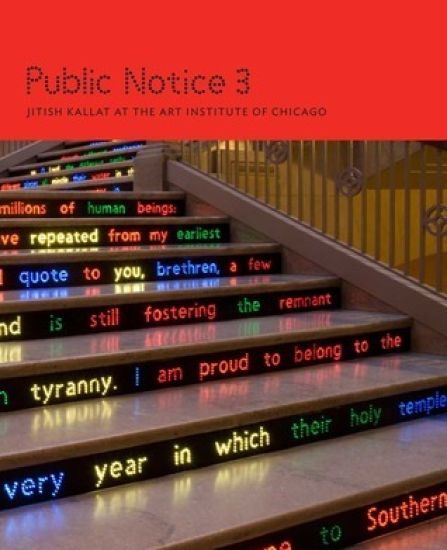
The Swami Vivekananda's speech to the World's Parliament of Religions in Chicago in 1893 is the centerpiece of Indian artist Jitish Kallat's new work, Public Notice 3. The installation went on view at the Art Institute of Chicago on September 11, 2010, exactly 108 years after Vivekananda delivered his groundbreaking address calling for an end to "bigotry and fanaticism." The text of the speech appears on the risers of the Art Institute of Chicago's Grand Staircase where it is illuminated in the five colors—red, orange, yellow, blue, and green—designated by the United States Homeland Security Advisory System to signify threat levels. This companion book, which documents the installation, is the first full-scale exploration of Kallat's work published by a North American institution. Along with an interview with the artist, essays contextualize Public Notice 3 within the space of the installation and evaluate Kallat's oeuvre within an international context.Distributed for the Art Institute of ChicagoExhibition Schedule:The Art Institute of Chicago(09/11/10-09/11/11)