Kirjojen hintavertailu. Mukana 11 348 867 kirjaa ja 12 kauppaa.

Kirjahaku

Etsi kirjoja tekijän nimen, kirjan nimen tai ISBN:n perusteella.

1000 tulosta hakusanalla Jeremy a. Rodgers

Jeremy Fink and the Meaning of Life

Jeremy Fink and the Meaning of Life

Wendy Mass

Little, Brown Books for Young Readers
2008
nidottu
★ "This exquisitely executed plot twist, combined with an ending that requires a few tissues, makes this soulful novel one not to miss." --Publisher's Weekly, starred review A sweet, funny, and intriguing novel about two friends' search for the meaning of life by award-winning and New York Times bestselling author Wendy Mass In one month Jeremy Fink will turn thirteen. But does he have what it takes to be a teenager? He collects mutant candy, he won't venture more than four blocks from his apartment if he can help it, and he definitely doesn't like surprises. On the other hand, his best friend, Lizzy, isn't afraid of anything, even if that might get her into trouble now and then. Jeremy's summer takes an unexpected turn when a mysterious wooden box arrives in the mail. According to the writing on the box, it holds the meaning of life Jeremy is supposed to open it on his thirteenth birthday. The problem is, the keys are missing, and the box is made so that only the keys will open it without destroying what's inside. Jeremy and Lizzy set off to find the keys, but when one of their efforts goes very wrong, Jeremy starts to lose hope that he'll ever be able to open the box. But he soon discovers that when you're meeting people named Oswald Oswald and using a private limo to deliver unusual objects to strangers all over the city, there might be other ways of finding out the meaning of life. Lively characters, surprising twists, and thought-provoking ideas make Wendy Mass's latest novel an unforgettable read.
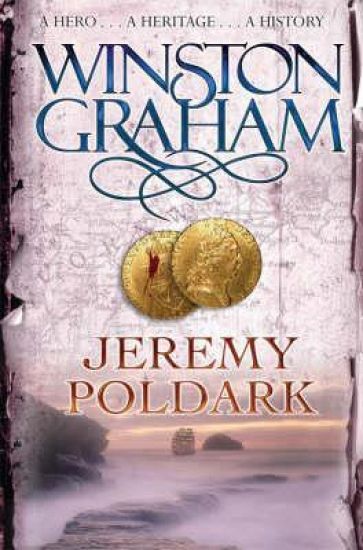
Jeremy Poldark

Jeremy Poldark

Winston Graham

Pan Books
2008
pokkari
Jeremy Poldark is the third novel in Winston Graham's hugely popular Poldark series, which has become a television phenomenon starring Aidan Turner.Cornwall 1790. Ross Poldark faces the darkest hour of his life. Accused of wrecking two ships, he is to stand trial at the Bodmin Assizes. Despite their stormy married life, Demelza has tried to rally support for her husband. But there are enemies in plenty who would be happy to see Ross convicted, not least George Warleggan, the powerful banker, whose personal rivalry with Ross grows ever more intense.Jeremy Poldark is followed by the fourth book in this evocative series, Warleggan. 'From the incomparable Winston Graham.. who has everything that anyone else has, then a whole lot more.' Guardian
Jeremy Thorpe

Jeremy Thorpe

Michael Bloch

Little, Brown Book Group
2016
pokkari
* A brilliantly written, insightful and entertaining life of the disgraced former leader of the Liberal Party - one of the most colourful characters of post-war British politics
Jeremy Bentham's Economic Writings
This volume contains all the writings that are grouped around Bentham's boldest idea - the proposal of a 'circulating currency': a government sponsored currency which would be both a kind of savings certificate and a kind of paper money. The roots of this proposal are illustrated in two pamphlets from 1794-96, along with subsequent pamphlets and discussions which show Bentham's unsuccessful negotiations with the trasury on this matter.
Jeremy Bentham's Economic Writings
This set reprints three classic volumes on Jeremy Bentham's economic writings. Before these volumes were published a great deal of Jeremy Bentham's economic work was completely unknown. All three volumes contain historical introductions and collections of passages from Bentham's non-economic writings which illustrate his views on economics as a science and the problems of methodology. First published by George Allen & Unwin in the 1950s.
Jeremy Bentham
Jeremy Bentham, the father of utilitarianism, not only created a philosophical system which sought a rational solution to the problems of ethics, but was also concerned with the practical application of his theories to social reforms, administration, education and the law. This reissued volume represents a comprehensive collection of essays on Bentham’s work from J. S. Mill to the year of the book’s first publication in 1974.The wide range of Bentham’s concern and the varied reactions he provoked are well represented by the essays in this volume. It begins with Mill’s famous appraisal of the virtues and deficiencies of the theory that had so much influence on his own, followed by the criticisms of perhaps the ablest of Bentham’s (and Mill’s) contemporary opponents, William Whewell. Bentham’s psychology and analysis of human motivation is dealt with by John Watson, and in the editor’s own essay on the thorny problem of the justification of the principle of utility, the whole question of the link between specific human desires and the general desire for pleasure is examined as a psychological as well as a logical problem.The seldom-considered subject of Bentham’s logic and the way in which he anticipates in some respects the work of Frege and Wittgenstein is considered by H. L. A. Hart, who has also contributed a paper on the question of sovereignty. Bentham’s Political Fallacies is examined by Professor Burns, and the Constitutional Code and its projection of Bentham’s ideal republic as considered by Thomas Peardon makes interesting reading in the light of David Robert’s analysis of the impact Bentham had on the Victorian administrative state. Finally, there is Wesley C. Mitchell’s interesting paper on the notorious felicific calculus.The editor has written an extensive introduction which will prove useful not only to those unfamiliar with Bentham’s writings but to those acquainted with only one aspect of his work. Philosophers, jurists and political scientists should all find something of interest in this collection.
Jeremy Bentham
Jeremy Bentham, the father of utilitarianism, not only created a philosophical system which sought a rational solution to the problems of ethics, but was also concerned with the practical application of his theories to social reforms, administration, education and the law. This reissued volume represents a comprehensive collection of essays on Bentham’s work from J. S. Mill to the year of the book’s first publication in 1974.The wide range of Bentham’s concern and the varied reactions he provoked are well represented by the essays in this volume. It begins with Mill’s famous appraisal of the virtues and deficiencies of the theory that had so much influence on his own, followed by the criticisms of perhaps the ablest of Bentham’s (and Mill’s) contemporary opponents, William Whewell. Bentham’s psychology and analysis of human motivation is dealt with by John Watson, and in the editor’s own essay on the thorny problem of the justification of the principle of utility, the whole question of the link between specific human desires and the general desire for pleasure is examined as a psychological as well as a logical problem.The seldom-considered subject of Bentham’s logic and the way in which he anticipates in some respects the work of Frege and Wittgenstein is considered by H. L. A. Hart, who has also contributed a paper on the question of sovereignty. Bentham’s Political Fallacies is examined by Professor Burns, and the Constitutional Code and its projection of Bentham’s ideal republic as considered by Thomas Peardon makes interesting reading in the light of David Robert’s analysis of the impact Bentham had on the Victorian administrative state. Finally, there is Wesley C. Mitchell’s interesting paper on the notorious felicific calculus.The editor has written an extensive introduction which will prove useful not only to those unfamiliar with Bentham’s writings but to those acquainted with only one aspect of his work. Philosophers, jurists and political scientists should all find something of interest in this collection.