Kirjojen hintavertailu. Mukana 11 244 527 kirjaa ja 12 kauppaa.

Kirjahaku

Etsi kirjoja tekijän nimen, kirjan nimen tai ISBN:n perusteella.

1000 tulosta hakusanalla John Absolon

Sir John Fortescue: On the Laws and Governance of England

Sir John Fortescue: On the Laws and Governance of England

John Fortescue

Cambridge University Press
1997
pokkari
Sir John Fortescue CJKB (c.1395–c.1477) was undoubtedly the foremost English political scientist of the fifteenth century. This convenient volume brings together for the first time new editions of his two major works - In Praise of the Laws of England and The Governance of England - with references and suggestions for further reading for the student. In her introduction, Shelley Lockwood presents a clear reassessment of the work of John Fortescue and places these key texts in their historical and intellectual contexts. These works, arguably the earliest in English political thought, were written from the perspective of a self-consciously analytical and highly experienced lawyer and government official during a time of war and political upheaval. They form a coherent argument for justice against tyranny and afford unique insights into the law and governance of fifteenth-century England.
John's Apologetic Christology

John's Apologetic Christology

James F. McGrath

Cambridge University Press
2004
pokkari
The Gospel according to John presents Jesus in a unique way as compared with other New Testament writings. Scholars have long puzzled and pondered over why this should be. In this book, James McGrath offers a convincing explanation of how and why the author of the Fourth Gospel arrived at a christological portrait of Jesus that is so different from that of other New Testament authors, and yet at the same time clearly has its roots in earlier tradition. McGrath suggests that as the author of this Gospel sought to defend his beliefs about Jesus against the objections brought by opponents, he developed and drew out further implications from the beliefs he inherited. The book studies this process using insights from the field of sociology which helps to bring methodological clarity to the important issue of the development of Johannine Christology.
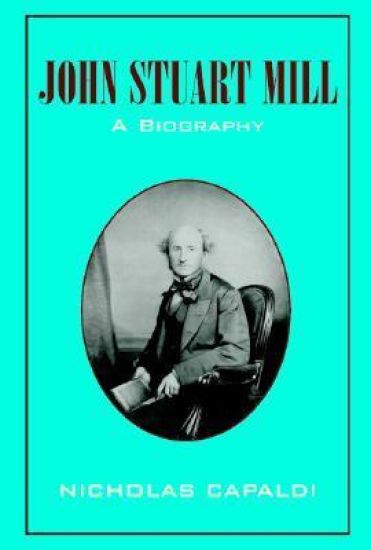
John Stuart Mill

John Stuart Mill

Nicholas Capaldi

Cambridge University Press
2004
sidottu
Nicholas Capaldi’s biography of John Stuart Mill traces the ways in which Mill’s many endeavours are related and explores the significance of Mill’s contribution to metaphysics, epistemology, ethics, social and political philosophy, the philosophy of religion, and the philosophy of education. He shows how Mill was groomed for his life by both his father James Mill, and Jeremy Bentham, the two most prominent philosophical radicals of the early nineteenth century. Yet Mill revolted against this education and developed friendships with both Thomas Carlyle and Samuel Taylor Coleridge who introduced him to Romanticism and political conservatism. A special feature of this biography is the attention devoted to his relationship with Harriet Taylor. No one exerted a greater influence than the woman he was eventually to marry. Nicholas Capaldi reveals just how deep her impact was on Mill’s thinking about the emancipation of women.
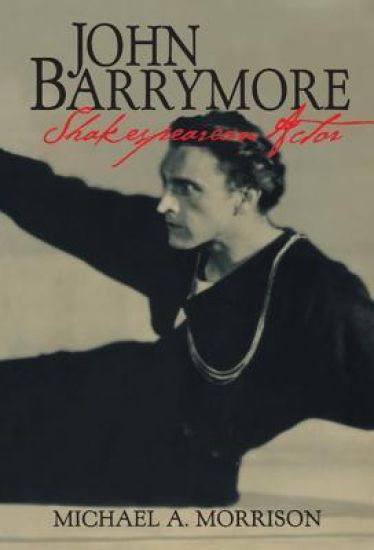
John Barrymore, Shakespearean Actor

John Barrymore, Shakespearean Actor

Michael A. Morrison

Cambridge University Press
1997
sidottu
John Barrymore’s Richard III and Hamlet, first seen in New York during the 1919–20 and 1922–23 seasons, stand as high-water marks of twentieth-century Shakespearean interpretation. Many of the conventions of modern practice can be traced to Barrymore’s performances: he was the first actor to bring the vocal and physical manner of a post-War gentleman to Shakespeare’s tragic protagonists; he was the first to reinterpret time-honored roles in light of modern psychological theory. Michael Morrison reconstructs these historic performances through analysis of the production preparation, audience response, reviews, and memoirs. Tracing the Victorian and Edwardian antecedents of Shakespearean performance, this book situates Barrymore’s distinctive contribution in light of past and ensuing tradition. As well, it provides a biographical sketch of one of the most revered and tragic actors of the twentieth century.
John Dee's Conversations with Angels

John Dee's Conversations with Angels

Deborah E. Harkness

Cambridge University Press
1999
sidottu
John Dee’s angel conversations have been an enigmatic facet of Elizabethan England’s most famous natural philosopher’s life and work. Professor Harkness contextualizes Dee’s angel conversations within the natural philosophical, religious and social contexts of his time. She argues that they represent a continuing development of John Dee’s earlier concerns and interests. These conversations include discussions of the natural world, the practice of natural philosophy, and the apocalypse.
The Journal of John Wodehouse First Earl of Kimberley, 1862–1902
The political journal of John Wodehouse, first Earl of Kimberley (1862–1902) is one of the finest political diaries of the last half of the nineteenth century. Born into an old Tory family, Kimberley followed his forebears in attending Eton and Christ Church, Oxford, but shocked his neighbours by adopting Liberal principles. As Lord Clarendon's protege, he was appointed minister plenipotentiary to Russia following the Crimean War, and under-secretary at the Foreign Office after his return (1859–61). With Lord John Russell's elevation to the peerage in 1861, Kimberley resigned, and shortly after began the journal that he regularly kept until his death in 1902. Uniquely placed as an observer, Kimberley was the only Liberal to serve in every Cabinet of the Gladstone/Rosebery era. The Kimberley Journal is replete with humorous anecdotes, information regarding policy development, and acute observations about politicians and political situations.
John Scott, Lord Eldon, 1751–1838

John Scott, Lord Eldon, 1751–1838

Rose Melikan

Cambridge University Press
1999
sidottu
John Scott, Lord Eldon (1751–1838) was a dominant figure in Georgian public life, and ranks among the most important Lord Chancellors in the long history of that office. This biography - the first for one hundred and fifty years - also surveys Eldon's earlier career as an MP and Law Officer. As a lawyer entering Parliament, he encountered both prejudices against 'learned gentlemen' and opportunities for advancement. Once in office he swiftly made his presence felt, drafting the Regency bill of 1788, and conducting the government's legal campaign against Republicanism. Retiring at last in 1827, Eldon spent his final years opposing political reform. Labelled by many as a relic of 'Old Toryism', Eldon's views of government, politics, and the constitution represent an important strand in Georgian political thinking, and his career illuminates the work of the major legal offices of British government.
John Barrymore, Shakespearean Actor

John Barrymore, Shakespearean Actor

Michael A. Morrison

Cambridge University Press
1999
pokkari
John Barrymore’s Richard III and Hamlet, first seen in New York during the 1919–20 and 1922–23 seasons, stand as high-water marks of twentieth-century Shakespearean interpretation. Many of the conventions of modern practice can be traced to Barrymore’s performances: he was the first actor to bring the vocal and physical manner of a post-War gentleman to Shakespeare’s tragic protagonists; he was the first to reinterpret time-honored roles in light of modern psychological theory. Michael Morrison reconstructs these historic performances through analysis of the production preparation, audience response, reviews, and memoirs. Tracing the Victorian and Edwardian antecedents of Shakespearean performance, this book situates Barrymore’s distinctive contribution in light of past and ensuing tradition. As well, it provides a biographical sketch of one of the most revered and tragic actors of the twentieth century.
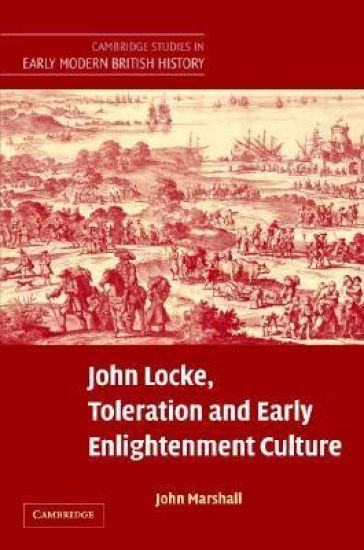
John Locke, Toleration and Early Enlightenment Culture

John Locke, Toleration and Early Enlightenment Culture

John Marshall

Cambridge University Press
2006
sidottu
This book is a major intellectual and cultural history of intolerance and toleration in early modern and early Enlightenment Europe. John Marshall offers an extensive study of late seventeenth-century practices of religious intolerance and toleration in England, Ireland, France, Piedmont and the Netherlands and the arguments that John Locke and his associates made in defence of 'universal religious toleration'. He analyses early modern and early Enlightenment discussions of toleration, debates over toleration for Jews and Muslims as well as for Christians, the limits of toleration for the intolerant, atheists, 'libertines' and 'sodomites', and the complex relationships between intolerance and resistance theories including Locke's own Treatises. This study is a significant contribution to the history of the 'republic of letters' of the 1680s and the development of early Enlightenment culture and is essential reading for scholars of early modern European history, religion, political science and philosophy.
John Doe Level 1

John Doe Level 1

Antoinette Moses

Cambridge University Press
1999
pokkari
Cambridge English Readers is an exciting new series of original fiction, specially written for learners of English. Graded into six levels - from elementary to advanced - the stories in this series provide easy and enjoyable reading on a wide range of contemporary topics and themes. The man they call John Doe lies in a hospital bed. He watches and thinks but says nothing. The doctor wants to know who he is. But John Doe doesn't answer his questions. John Doe leaves the hospital. And to their horror the doctor and nurse find out more about him than just his real name. The cassette contains a recording of the full text of the book.
John Searle's Philosophy of Language

John Searle's Philosophy of Language

Cambridge University Press
2007
pokkari
This is a volume of original essays on key aspects of John Searle's philosophy of language. It examines Searle's work in relation to current issues of central significance, including internalism versus externalism about mental and linguistic content, truth-conditional versus non-truth-conditional conceptions of content, the relative priorities of thought and language in the explanation of intentionality, the status of the distinction between force and sense in the theory of meaning, the issue of meaning scepticism in relation to rule-following, and the proper characterization of 'what is said' in relation to the semantics/pragmatics distinction. Written by a distinguished team of contemporary philosophers, and prefaced by an illuminating essay by Searle, the volume aims to contribute to a deeper understanding of Searle's work in philosophy of language, and to suggest innovative approaches to fundamental questions in that area.
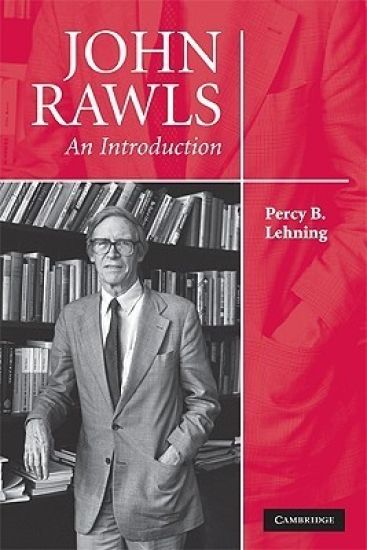
John Rawls

John Rawls

Percy B. Lehning

Cambridge University Press
2009
pokkari
What is a just political order? What does justice require of us? These are perennial questions of political philosophy. John Rawls, generally acknowledged to be one of the most influential political philosophers of the twentieth century, answered them in a way that has drawn widespread attention, not only from political philosophers, but from political scientists, economists, those in the field of public policy, and experts in jurisprudence. It is not only academics who have been inspired by Rawls' ideas; they have also influenced the theory of government and continue to play a role in actual public political debates. This introduction outlines Rawls' work on the theory of justice. Focusing on Rawls' own writings, from his first publication in 1951 to his final ones some fifty years later, Percy B. Lehning demonstrates how and why they can be considered as one consistent and coherent body of work.
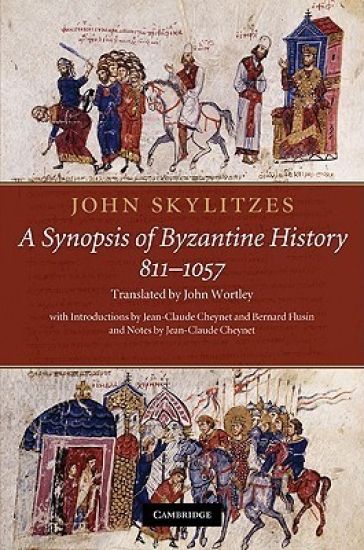
John Skylitzes: A Synopsis of Byzantine History, 811–1057

John Skylitzes: A Synopsis of Byzantine History, 811–1057

John Skylitzes; John Wortley

Cambridge University Press
2010
sidottu
John Skylitzes' extraordinary Middle Byzantine chronicle covers the reigns of the Byzantine emperors from the death of Nicephorus I in 811 to the deposition of Michael VI in 1057, and provides the only surviving continuous narrative of the late tenth and early eleventh centuries. A high official living in the late eleventh century, Skylitzes used a number of existing Greek histories (some of them no longer extant) to create a digest of the previous three centuries. It is without question the major historical source for the period and is cited constantly in modern scholarship. This edition features introductions by Jean-Claude Cheynet and Bernard Flusin, along with extensive notes. It will be an essential and exciting addition to the libraries of all historians of the Byzantine age.
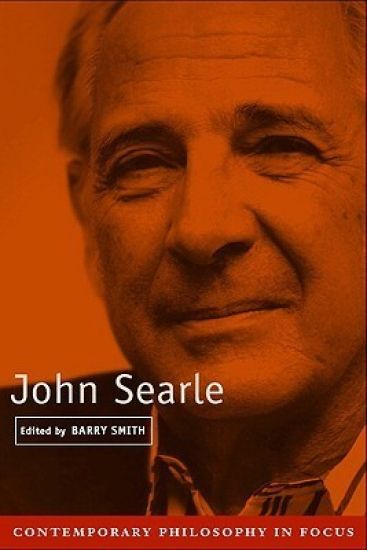
John Searle

John Searle

Cambridge University Press
2003
sidottu
From his groundbreaking book Speech Acts to his most recent studies of consciousness, freedom and rationality John Searle has been a dominant and highly influential figure amongst contemporary philosophers. This systematic introduction to the full range of Searle's work begins with the theory of speech acts and proceeds with expositions of Searle's writings on intentionality, consciousness and perception, as well as a careful presentation of the so-called Chinese Room argument. The volume considers Searle's recent work on social ontology and his views on the nature of law and obligation. It concludes with an appraisal of Searle's spirited defence of truth and scientific method in the face of the criticisms of Derrida and other postmodernists. This is the only comprehensive introduction to Searle's work, and as such it will be of particular value to advanced undergraduates, graduates and professionals in philosophy, psychology, linguistics, cognitive and computer science and literary theory.
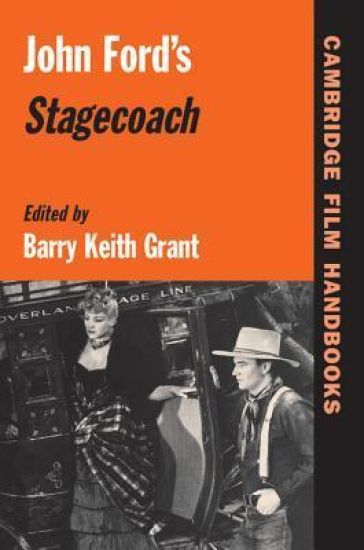
John Ford's Stagecoach

John Ford's Stagecoach

Cambridge University Press
2002
sidottu
Stagecoach is one of the classics of Hollywood cinema. Made in 1939, it revitalized the Western genre, served as a milestone in John Ford's career, and made John Wayne a star. This volume offers a rich overview of the film in essays by six leading film critics. Approaching Stagecoach from a variety of critical perspectives, they place the film within the contexts of authorship, genre, American history and culture. Also examined are the film's commentary on race, class, gender and democracy, while remaining attentive to the film's artistry.
John's Apologetic Christology

John's Apologetic Christology

James F. McGrath

Cambridge University Press
2001
sidottu
The Gospel according to John presents Jesus in a unique way as compared with other New Testament writings. Scholars have long puzzled and pondered over why this should be. In this book, James McGrath offers a convincing explanation of how and why the author of the Fourth Gospel arrived at a christological portrait of Jesus that is so different from that of other New Testament authors, and yet at the same time clearly has its roots in earlier tradition. McGrath suggests that as the author of this Gospel sought to defend his beliefs about Jesus against the objections brought by opponents, he developed and drew out further implications from the beliefs he inherited. The book studies this process using insights from the field of sociology which helps to bring methodological clarity to the important issue of the development of Johannine Christology.
John Locke's Politics of Moral Consensus

John Locke's Politics of Moral Consensus

Greg Forster

Cambridge University Press
2005
sidottu
The aim of this book is twofold: to explain the reconciliation of religion and politics in the work of John Locke, and to explore the relevance of that reconciliation for politics in our own time. Confronted with deep social divisions over ultimate beliefs, Locke sought to unite society in a single liberal community. Reason could identify divine moral laws that would be acceptable to members of all cultural groups, thereby justifying the authority of government. Greg Forster demonstrates that Locke's theory is liberal and rational but also moral and religious, providing an alternative to the two extremes of religious fanaticism and moral relativism. This account of Locke's thought will appeal to specialists and advanced students across philosophy, political science and religious studies.
John Lydgate and the Making of Public Culture

John Lydgate and the Making of Public Culture

Maura Nolan

Cambridge University Press
2005
sidottu
Inspired by the example of his predecessors Chaucer and Gower, John Lydgate articulated in his poetry, prose and translations many of the most serious political questions of his day. In the fifteenth century Lydgate was the most famous poet in England, filling commissions for the court, the aristocracy, and the guilds. He wrote for an elite London readership that was historically very small, but that saw itself as dominating the cultural life of the nation. Thus the new literary forms and modes developed by Lydgate and his contemporaries helped shape the development of English public culture in the fifteenth century. Maura Nolan offers a major re-interpretation of Lydgate's work and of his central role in the developing literary culture of his time. Moreover, she provides a wholly new perspective on Lydgate's relationship to Chaucer, as he followed Chaucerian traditions while creating innovative new ways of addressing the public.