Kirjojen hintavertailu. Mukana 11 244 527 kirjaa ja 12 kauppaa.

Kirjahaku

Etsi kirjoja tekijän nimen, kirjan nimen tai ISBN:n perusteella.

1000 tulosta hakusanalla John Cheever

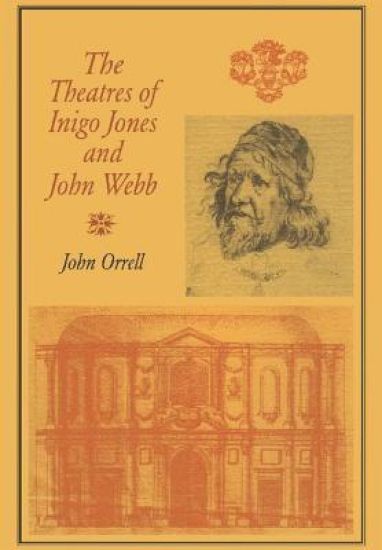
The Theatres of Inigo Jones and John Webb

The Theatres of Inigo Jones and John Webb

John Orrell

Cambridge University Press
1985
sidottu
The English stage of Shakespeare's day was a place superbly fitted for the rhetorical drama of the times; by the Restoration it had been replaced by a kind of playhouse better suited to the 'Scenes and Machines' which dealt in spectacles. The seventeenth century was therefore a crucial one in the history of the stage, yet concrete evidence of the playhouses constructed during this time has been scarce and elusive. The best of it lies in the drawing which Inigo Jones, Surveyor of the King's Works, and his pupil, John Webb, made for a succession of playhouses and Court theatres. Jones was responsible for the visual aspects of the masques performed at the various royal palaces, and both he and Webb designed a number of regular theatres at Court. In this 1985 book, the author establishes Jones and Webb as the most effective London theatre builders and scene designers of the seventeenth century.
The Works of John Webster

The Works of John Webster

John Webster

Cambridge University Press
2003
sidottu
This is the second volume to appear in the Cambridge edition of the works of John Webster and includes The Devil's Law-Case, A Cure for a Cuckold and Appius and Virginia. This critical edition preserves the original spelling of all the plays; incorporates editorial scholarship, including valuable information on Webster's share in the collaborative plays; and employs alternative critical methods and textual theory. In particular, the edition integrates theatrical aspects of the plays with their bibliographical and literary features in a way not previously attempted in a scholarly edition of a Jacobean dramatist. The edition presents all of Webster's plays (with the exception of those collaborative plays already published in the Cambridge editions of Dekker, and Beaumont and Fletcher) and provides a brief biography, an account of Webster canon, illustrations, and critical and theatrical history of each play.
The Political Thought of John Locke

The Political Thought of John Locke

John Dunn

Cambridge University Press
1982
pokkari
This is a reinterpretation of Locke's political thought. The author restores Locke's ideas to their exact context, and so stresses the historical question of what Locke in the "Two Treatises of Government" was intending to claim, and its predominantly theological character.
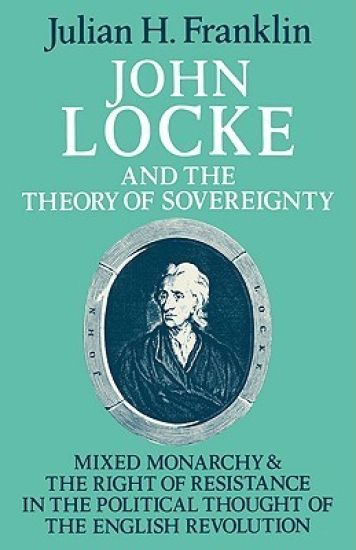
John Locke and the Theory of Sovereignty

John Locke and the Theory of Sovereignty

Julian H. Franklin

Cambridge University Press
1981
pokkari
This volume is a sequel to the author's earlier work on the development of European theories of sovereignity and constitutionalism. Professor Franklin here explains a major innovation associated with the English Civil Wars. It was only now, he shows, that there finally emerged a theory of sovereignity and resistance that was fully compatible with a mixed constitution. The new conception of resistance in a mixed constitution was to enter the main tradition via Locke, who stood alone among major writers of the 1680s in holding that the effect of tyranny by any constituted power, even by the King alone, was entire dissolution of the government and the reversion of power to the general community. When this familiar position is read against the background of preceding constitutionalist theory, the Second Treatise reveals a new dimension of novelty and historical significance.
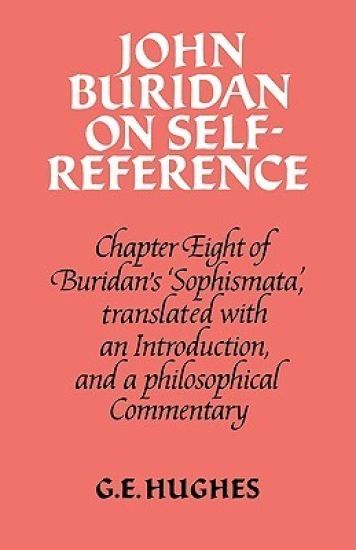
John Buridan on Self-Reference

John Buridan on Self-Reference

John Buridan

Cambridge University Press
1982
pokkari
John Buridan was a fourteenth-century philosopher who enjoyed an enormous reputation for about two hundred years, was then totally neglected, and is now being 'rediscovered' through his relevance to contemporary work in philosophical logic. The final chapter of Buridan's Sophismata deals with problems about self-reference, and in particular with the semantic paradoxes. He offers his own distinctive solution to the well-known 'Liar Paradox' and introduces a number of other paradoxes that will be unfamiliar to most logicians. Buridan also moves on from these problems to more general questions about the nature of propositions, the criteria of their truth and falsity and the concepts of validity and knowledge. This edition of that chapter is intended to make Buridan's ideas and arguments accessible to a wider range of readers. The volume should interest many philosophers, linguists and logicians, who are increasingly finding in medieval work striking anticipations of their own concerns.
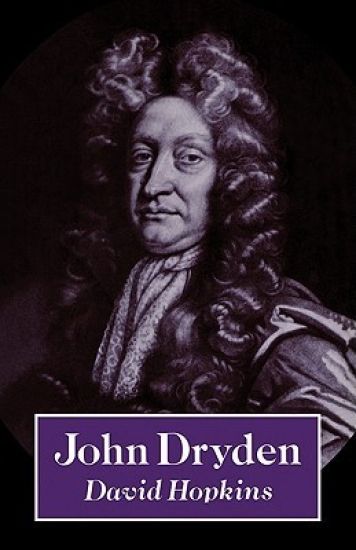
John Dryden

John Dryden

David Hopkins

Cambridge University Press
1986
sidottu
Dryden has sometimes been regarded as a writer narrowly of his period, a Restoration satirist whose work is largely concerned with the personalities, debates, and tastes of his own age. In this study David Hopkins shows him to be both a man of his time and a writer for all times - a great philosophical poet, the author of penetrating and exhilarating verse of general and permanent interest about love, the natural world, and the laws of human life. Dr Hopkins also analyses the personal, commercial, political, literary, and religious influences on his writing, and discusses in detail his major poetry, prose, and drama - paying special attention to the often neglected verse translations of his old age. With its emphasis on Dryden as a poet - as opposed simply to topical commentator or controversialist - the book will prove an ideal introduction for students of his work.
John Dryden

John Dryden

David Hopkins

Cambridge University Press
1986
pokkari
Dryden has sometimes been regarded as a writer narrowly of his period, a Restoration satirist whose work is largely concerned with the personalities, debates, and tastes of his own age. In this study David Hopkins shows him to be both a man of his time and a writer for all times - a great philosophical poet, the author of penetrating and exhilarating verse of general and permanent interest about love, the natural world, and the laws of human life. Dr Hopkins also analyses the personal, commercial, political, literary, and religious influences on his writing, and discusses in detail his major poetry, prose, and drama - paying special attention to the often neglected verse translations of his old age. With its emphasis on Dryden as a poet - as opposed simply to topical commentator or controversialist - the book will prove an ideal introduction for students of his work.
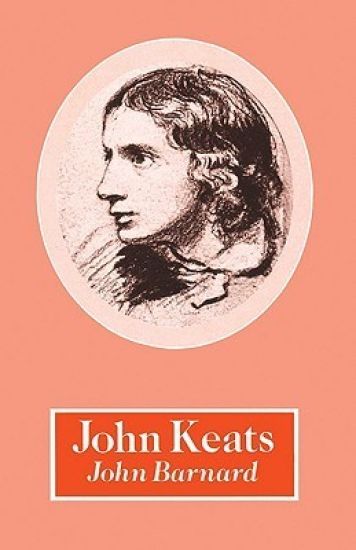
John Keats

John Keats

John Barnard

Cambridge University Press
1987
pokkari
This book offers a revaluation of Keats’ major poetry. It reveals how Keats’ work is both an oblique criticism of the dominant attitudes to literature, sexuality, religion and politics in his period, and a powerful critique of the claims of the imagination. For all that he shares the optimistic humanism of progressives like Hazlitt, Leigh Hunt, and Shelley, Keats nevertheless questions the sufficiency of either Art or Beauty. Professor Barnard shows how the notorious attack on Keats as a Cockney poet was motivated by class and political bias. He analyses the problems facing Keats as a second-generation Romantic, his continuing difficulty in finding an appropriate style for ‘Poesy’, and his uncertain judgement of his own work. The ambiguities and stresses evident in the poetry’s treatment of women and sexual love are seen to reflect divisions in Keats and his society. The maturing use of myth from Poems (1817) to The Fall of Hyperion, and the achievement of the major odes are set in relation to Keats’ whole career.
John of Salisbury: Policraticus

John of Salisbury: Policraticus

John of Salisbury

Cambridge University Press
1990
sidottu
John of Salisbury (c.1115–1180) was the foremost political theorist of his age. He was trained in scholastic theology and philosophy at Paris, and his writings are invaluable for summarising many of the metaphysical speculations of his time. The Policraticus is his main work, and is regarded as the first complete work of political theory to be written in the Latin Middle Ages. Cary Nederman's 1991 edition and translation is primarily aimed at undergraduate students of the history of political thought and medieval history. His translation shows how important this text is in understanding the mores, forms of conduct and beliefs of the most powerful and learned segments of twelfth-century Western Europe.
John of Salisbury: Policraticus

John of Salisbury: Policraticus

John of Salisbury

Cambridge University Press
1990
nidottu
John of Salisbury (c.1115–1180) was the foremost political theorist of his age. He was trained in scholastic theology and philosophy at Paris, and his writings are invaluable for summarising many of the metaphysical speculations of his time. The Policraticus is his main work, and is regarded as the first complete work of political theory to be written in the Latin Middle Ages. Cary Nederman’s new edition and translation, currently the only available version in English, is primarily aimed at undergraduate students of the history of political thought and medieval history. His new translation shows how important this text is in understanding the mores, forms of conduct and beliefs of the most powerful and learned segments of twelfth-century Western Europe.
John Steinbeck

John Steinbeck

Cambridge University Press
1996
sidottu
This volume is the first to collect the critical responses of Steinbeck’s generation to his many fiction and non-fiction works, as they appeared from the late 1920s onwards. The articles trace the record of Steinbeck’s progress through the 1930s and go on to reflect Steinbeck’s steady series of achievements through the 1960s, including his attainment of the Nobel Prize in 1967. These articles offer a means of seeing Steinbeck’s writings as they were perceived by his contemporaries, whose task it was first to evaluate and interpret them for an ever-growing readership.
John Oman and his Doctrine of God

John Oman and his Doctrine of God

Stephen Bevans

Cambridge University Press
1992
sidottu
The Scottish theologian John Oman (1860–1939) conceived of God in terms of a personal reality who calls forth - rather than inhibits - freedom, creativity, and responsibility. Although he never wrote a book on God as such, all Oman's thought is based on this conception of God's radically personal nature and gracious - though often challenging - dealing with humanity. This book systematizes the thoughts on God which are scattered throughout Oman's writings, and places Oman in his historical and cultural context of the late nineteenth and early twentieth centuries. In the picture which emerges, evil and suffering are the result of cosmic independence and human freedom; God's power is revealed not in his ability to override human freedom, but in the patience to deal with its consequences, which include the emergence of moral and physical evil. For Oman, God's face has been revealed most clearly in the life, death, and resurrection of Jesus, whose gracious dealing with men and women shows God to be both eternal Father and abiding Spirit.
Sir John Fortescue: On the Laws and Governance of England

Sir John Fortescue: On the Laws and Governance of England

John Fortescue

Cambridge University Press
1997
sidottu
Sir John Fortescue CJKB (c.1395–c.1477) was undoubtedly the foremost English political scientist of the fifteenth century. This convenient volume brings together for the first time new editions of his two major works - In Praise of the Laws of England and The Governance of England - with references and suggestions for further reading for the student. In her introduction, Shelley Lockwood presents a clear reassessment of the work of John Fortescue and places these key texts in their historical and intellectual contexts. These works, arguably the earliest in English political thought, were written from the perspective of a self-consciously analytical and highly experienced lawyer and government official during a time of war and political upheaval. They form a coherent argument for justice against tyranny and afford unique insights into the law and governance of fifteenth-century England.
John Clare in Context

John Clare in Context

Cambridge University Press
1994
sidottu
The marginalisation of John Clare, despite renewed interest in Romanticism and the literature of madness, is still an enigma. Perhaps more than any other poet of the period, Clare has never found the contexts in which his poetry can be read. This important collection of new critical essays locates Clare’s work from diverse points of view, identifying the obstacles to his reception as a major poet. It includes chapters on landscape and botany, Clare’s politics, his madness, Clare and the critics, and a remarkable essay by Seamus Heaney on Clare’s importance as a poetic precursor. This volume will be a landmark in the history of his reception, revealing the ways in which an appreciation of this unique poet revises the canon of Romantic and Victorian literature.
John Locke

John Locke

John Marshall

Cambridge University Press
1994
pokkari
This book provides a new contextual account of the development of John Locke’s political, religious, social and moral thought. It analyses many of Locke’s unpublished manuscripts and relatively neglected works as well as the Two Treatises, the Letter Concerning Toleration and the Essay Concerning Human Understanding. Professor Marshall studies the development of Locke’s political thought from absolutism to resistance, and provides significant revisions to current explanations of the immediate contexts and purposes of composition of the Two Treatises. He also sets out major new accounts of Locke’s moral, social and religious thought both as extremely important subjects in their own right and in order to challenge many scholars' interpretations of their influences on Locke’s political thought.
John as Storyteller

John as Storyteller

Mark W. G. Stibbe

Cambridge University Press
1994
pokkari
In this widely acclaimed study of John’s Gospel, Mark W. G. Stibbe shows how the fourth evangelist uses all the tactics of a skilled storyteller to promote his distinctive Christology. Literary and historical methodologies are integrated by the author in his narrative criticism, and a new, holistic approach to the gospel literature is suggested thereby.