Kirjojen hintavertailu. Mukana 11 627 381 kirjaa ja 12 kauppaa.

Kirjahaku

Etsi kirjoja tekijän nimen, kirjan nimen tai ISBN:n perusteella.

1000 tulosta hakusanalla John J H Saint

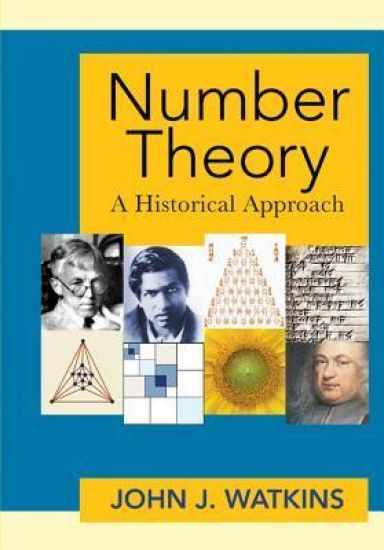
Number Theory

Number Theory

John J. Watkins

PRINCETON UNIVERSITY PRESS
2013
sidottu
The natural numbers have been studied for thousands of years, yet most undergraduate textbooks present number theory as a long list of theorems with little mention of how these results were discovered or why they are important. This book emphasizes the historical development of number theory, describing methods, theorems, and proofs in the contexts in which they originated, and providing an accessible introduction to one of the most fascinating subjects in mathematics. Written in an informal style by an award-winning teacher, Number Theory covers prime numbers, Fibonacci numbers, and a host of other essential topics in number theory, while also telling the stories of the great mathematicians behind these developments, including Euclid, Carl Friedrich Gauss, and Sophie Germain. This one-of-a-kind introductory textbook features an extensive set of problems that enable students to actively reinforce and extend their understanding of the material, as well as fully worked solutions for many of these problems. It also includes helpful hints for when students are unsure of how to get started on a given problem. * Uses a unique historical approach to teaching number theory * Features numerous problems, helpful hints, and fully worked solutions * Discusses fun topics like Pythagorean tuning in music, Sudoku puzzles, and arithmetic progressions of primes * Includes an introduction to Sage, an easy-to-learn yet powerful open-source mathematics software package * Ideal for undergraduate mathematics majors as well as non-math majors * Digital solutions manual (available only to professors)
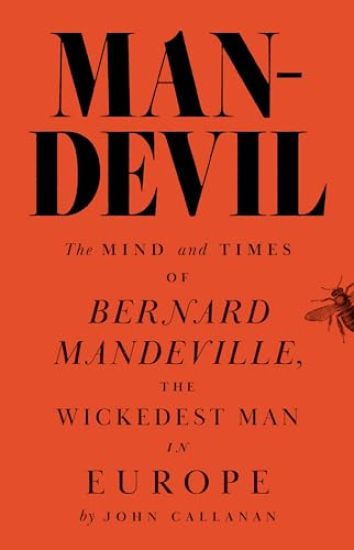
Man-Devil

Man-Devil

John J. Callanan

PRINCETON UNIVERSITY PRESS
2025
sidottu
A lively and provocative account of Bernard Mandeville and the work that scandalized and appalled his contemporaries—and made him one of the most influential thinkers of the eighteenth centuryIn 1714, doctor, philosopher and writer Bernard Mandeville published The Fable of the Bees, a humorous tale in which a prosperous hive full of greedy and licentious bees trade their vices for virtues and immediately fall into economic and societal collapse. Outrage among the reading public followed; philosophers took up their pens to refute what they saw as the fable’s central assertion. How could it be that an immoral community thrived but the introduction of morality caused it to crash and burn? In Man-Devil, John Callanan examines Mandeville and his famous fable, showing how its contentious claim—that vice was essential to the economic flourishing of any society—formed part of Mandeville’s overall theory of human nature. Mandeville, Callanan argues, was perfectly suited to analyze and satirize the emerging phenomenon of modern society—and reveal the gap between its self-image and its reality.Callanan shows that Mandeville’s thinking was informed by his medical training and his innovative approach to the treatment of illness with both physiological and psychological components. Through incisive and controversial analyses of sexual mores, gender inequality, economic structures, and political ideology, Mandeville sought to provide a naturalistic account of human behavior—one that put humans in close continuity with animals. Aware that his fellow human beings might find this offensive, he cloaked his theories in fables, poems, anecdotes, and humorous stories. Mandeville mastered irony precisely for the purpose of making us aware of uncomfortable aspects of our deepest natures—aspects that we still struggle to acknowledge today.
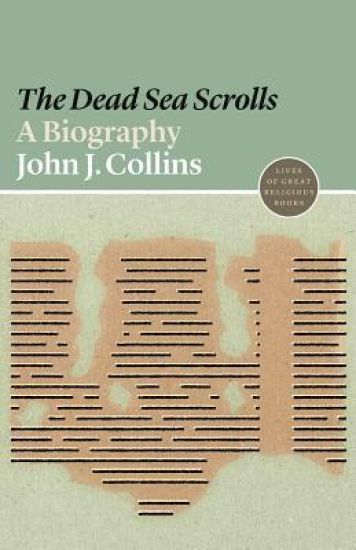
The Dead Sea Scrolls

The Dead Sea Scrolls

John J. Collins

Princeton University Press
2019
pokkari
Unraveling the controversies surrounding the Dead Sea ScrollsSince they were first discovered in the caves at Qumran in 1947, the Dead Sea Scrolls have aroused more fascination—and controversy—than perhaps any other archaeological find. They appear to have been hidden in the Judean desert by the Essenes, a Jewish sect that existed around the time of Jesus, and they continue to inspire veneration to this day. In this concise and accessible book, John Collins tells the story of the scrolls and the bitter conflicts that have swirled around them since their startling discovery. He explores whether the scrolls were indeed the property of an isolated, quasi-monastic community or more broadly reflected the Judaism of their time. He unravels the impassioned disputes surrounding the scrolls and Christianity, and looks at attempts to “reclaim” the scrolls for Judaism after the full corpus became available in the 1990s. Collins also describes how the decades-long delay in publishing the scrolls gave rise to sensational claims and conspiracy theories.
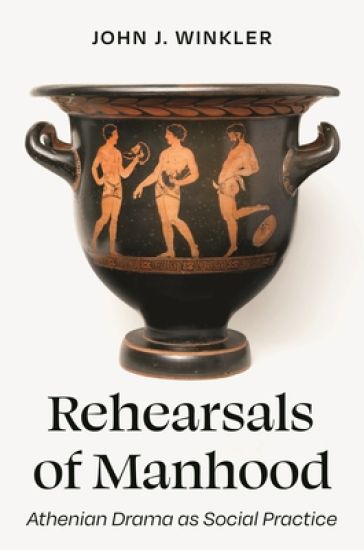
Rehearsals of Manhood

Rehearsals of Manhood

John J. Winkler

PRINCETON UNIVERSITY PRESS
2023
sidottu
A bold reconception of ancient Greek drama by one of the most brilliant and original classical scholars of his generationWhen John Winkler died in 1990, he left an unpublished manuscript containing a highly original interpretation of the development and meaning of ancient Greek drama. Rehearsals of Manhood makes this groundbreaking work available for the first time, presenting an entirely novel picture of Greek tragedy and a vivid portrait of the cultural poetics of Athenian manhood.Ancient Athens was a military conclave as well as an urban capital, and male citizens were expected to embody the ideal of the Athenian citizen-soldier. Winkler understands Attic drama as a secular manhood ritual, a collaborative aesthetic and civic enterprise focused on the initiation of boys into manhood and the training, testing, and representation of young male warriors. Past efforts to discover the origins and development of Greek tragedy have largely treated drama as a literary genre, isolating it from other Athenian social practices. Winkler returns Greek tragedy to its social context, showing how it was one among many forms of display and performance cultivated by elite males in ancient Greece.The final work of a celebrated classical scholar, Rehearsals of Manhood highlights the civic function of the dramatic festivals at classical Athens as occasions for the examination and representation of boys on the verge of manhood, and offers a fresh explanation of how dramatic performance fit into the social life and gender politics of the Athenian state.
The International Politics of the Nigerian Civil War, 1967-1970

The International Politics of the Nigerian Civil War, 1967-1970

John J. Stremlau

Princeton University Press
2015
pokkari
Biafra's declaration of independence on May 30, 1967, precipitated a civil war with important implications for the territorial integrity of all newly independent African states. Allegations of genocide commanded the world's attention and brought forth unprecedented humanitarian intervention. This full account of the internationalization of that conflict draws on hitherto confidential records and more than two hundred interviews with foreign policymakers, including Yakubu Gowon and C. Odumegwu Ojukwu. Originally published in 1977. The Princeton Legacy Library uses the latest print-on-demand technology to again make available previously out-of-print books from the distinguished backlist of Princeton University Press. These editions preserve the original texts of these important books while presenting them in durable paperback and hardcover editions. The goal of the Princeton Legacy Library is to vastly increase access to the rich scholarly heritage found in the thousands of books published by Princeton University Press since its founding in 1905.
Mythology in the Modern Novel

Mythology in the Modern Novel

John J. White

Princeton University Press
2015
pokkari
J. J. White reexamines the use of myth in fiction in order to bring a new terminological precision into the field. While concentrating on the German novel (Mann, Broch, and Nossack), he discusses the work of Alberto Moravia, John Bowen, Michel Butor, and Macdonald Harris as well, in order to show the modern predilection for myth in whatever national literature. Throughout his discussion, Mr. White delineates carefully his specific subject: the novel in which mythological motifs are used to prefigure events and character--Joyce's Ulysses is, of course, the archetypal novel in this tradition. Setting forth his terms, and making clear his use of them, Mr. White then analyzes the wide appeal of the mythological novel for both twentieth-century novelists and critics: he distinguishes four ways in which modern novelists use myth and surveys the range of critical literature on the subject. His concluding chapters are discussions of specific texts in which he differentiates between novels which have a unilinear parallel between myth and plot, novels of "juxtaposition" in which chapters retelling myth parallel modern action, and novels of fusion in which the action of the modern account synthesizes more than one mythic prefiguration of mythological motif. Originally published in 1972. The Princeton Legacy Library uses the latest print-on-demand technology to again make available previously out-of-print books from the distinguished backlist of Princeton University Press. These editions preserve the original texts of these important books while presenting them in durable paperback and hardcover editions. The goal of the Princeton Legacy Library is to vastly increase access to the rich scholarly heritage found in the thousands of books published by Princeton University Press since its founding in 1905.
The International Politics of the Nigerian Civil War, 1967-1970

The International Politics of the Nigerian Civil War, 1967-1970

John J. Stremlau

Princeton University Press
2016
sidottu
Biafra's declaration of independence on May 30, 1967, precipitated a civil war with important implications for the territorial integrity of all newly independent African states. Allegations of genocide commanded the world's attention and brought forth unprecedented humanitarian intervention. This full account of the internationalization of that conflict draws on hitherto confidential records and more than two hundred interviews with foreign policymakers, including Yakubu Gowon and C. Odumegwu Ojukwu. Originally published in 1977. The Princeton Legacy Library uses the latest print-on-demand technology to again make available previously out-of-print books from the distinguished backlist of Princeton University Press. These editions preserve the original texts of these important books while presenting them in durable paperback and hardcover editions. The goal of the Princeton Legacy Library is to vastly increase access to the rich scholarly heritage found in the thousands of books published by Princeton University Press since its founding in 1905.
Mythology in the Modern Novel

Mythology in the Modern Novel

John J. White

Princeton University Press
2016
sidottu
J. J. White reexamines the use of myth in fiction in order to bring a new terminological precision into the field. While concentrating on the German novel (Mann, Broch, and Nossack), he discusses the work of Alberto Moravia, John Bowen, Michel Butor, and Macdonald Harris as well, in order to show the modern predilection for myth in whatever national literature. Throughout his discussion, Mr. White delineates carefully his specific subject: the novel in which mythological motifs are used to prefigure events and character--Joyce's Ulysses is, of course, the archetypal novel in this tradition. Setting forth his terms, and making clear his use of them, Mr. White then analyzes the wide appeal of the mythological novel for both twentieth-century novelists and critics: he distinguishes four ways in which modern novelists use myth and surveys the range of critical literature on the subject. His concluding chapters are discussions of specific texts in which he differentiates between novels which have a unilinear parallel between myth and plot, novels of "juxtaposition" in which chapters retelling myth parallel modern action, and novels of fusion in which the action of the modern account synthesizes more than one mythic prefiguration of mythological motif. Originally published in 1972. The Princeton Legacy Library uses the latest print-on-demand technology to again make available previously out-of-print books from the distinguished backlist of Princeton University Press. These editions preserve the original texts of these important books while presenting them in durable paperback and hardcover editions. The goal of the Princeton Legacy Library is to vastly increase access to the rich scholarly heritage found in the thousands of books published by Princeton University Press since its founding in 1905.
Keeping the Peoples' Liberties

Keeping the Peoples' Liberties

John J. Dinan

University Press of Kansas
1998
sidottu
By examining legislative statutes, judicial decisions, convention proceedings and popular initiatives, John Dinan shows that there are three ways rights in America have been secured. He also analyzes the relative ability of legislators, citizens and judges to serve as guardians of rights.
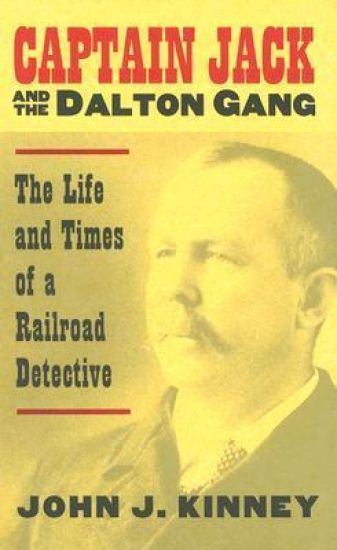
Captain Jack and the Dalton Gang

Captain Jack and the Dalton Gang

John J. Kinney

University Press of Kansas
2005
sidottu
Early evening, July 14, 1892: a train carrying a heavily armed posse chugs slowly into the small town of Adair in the Indian Territory. Seven or eight rough-looking men - the notorious Dalton Gang - have already taken over the depot. Peering at a watch just stolen from the station agent, they are reassured that the train is on time and nothing is amiss. But only moments later, hundreds of gunshots shatter the air, an innocent bystander is killed, and at least three of the posse are wounded, before the Daltons break into the train's express car and rob the safe. Harking back to an era of desperados and lawmen, during the heyday of train robberies, this book chronicles the tale of Captain John Kinney - chief detective for the Missouri, Kansas, and Texas (""Katy"") Railroad - and his confrontation with the Dalton gang. Contemporary accounts of the forty-minute battle at Adair vary widely, some praising the posse's courage, others accusing them of cowardice. Historians, however, all agree that this was the first time the Daltons encountered any organized armed resistance. John J. Kinney, Jr., great-grandson of Captain Jack, grew up with tales of Captain Jack and the Daltons and set out to uncover the truth. Searching old journals and newspaper accounts for details of Captain Jack's life and facts about the Daltons, he has pieced together a totally captivating story of outlaws, lawmen, and the search for ancestral roots. Captain Jack's exploits were by no means confined to that one day in July. He was also the chief detective for the Atchison, Topeka, and Santa Fe Railroad, a Texas Ranger, and a U.S. deputy marshal affiliated with ""Hanging Judge"" Isaac Parker's court. Kinney fleshes out all of Jack's exploits with engaging and insightful detail. He tells the life story of this unsung hero, breathes life back into a bygone and colorful era, and offers a unique perspective on America's westward growth. Along the way, he peeks into such curious topics as the significance of Crandall hammers in American history, the unexpected connection between Ben Franklin and the Daltons, and the giant spiders of Hermosillo, Mexico. While some figures like the Daltons flash through history like comets, others seem to be lost in their light. This book rescues one such figure and secures for Captain Jack Kinney his rightful place in the annals of the American West.
Captain Jack and the Dalton Gang

Captain Jack and the Dalton Gang

John J. Kinney

University Press of Kansas
2005
nidottu
Early evening, July 14, 1892: a train carrying a heavily armed posse chugs slowly into the small town of Adair in the Indian Territory. Seven or eight rough-looking men - the notorious Dalton Gang - have already taken over the depot. Peering at a watch just stolen from the station agent, they are reassured that the train is on time and nothing is amiss. But only moments later, hundreds of gunshots shatter the air, an innocent bystander is killed, and at least three of the posse are wounded, before the Daltons break into the train's express car and rob the safe. Harking back to an era of desperados and lawmen, during the heyday of train robberies, this book chronicles the tale of Captain John Kinney - chief detective for the Missouri, Kansas, and Texas (""Katy"") Railroad - and his confrontation with the Dalton gang. Contemporary accounts of the forty-minute battle at Adair vary widely, some praising the posse's courage, others accusing them of cowardice. Historians, however, all agree that this was the first time the Daltons encountered any organized armed resistance. John J. Kinney, Jr., great-grandson of Captain Jack, grew up with tales of Captain Jack and the Daltons and set out to uncover the truth. Searching old journals and newspaper accounts for details of Captain Jack's life and facts about the Daltons, he has pieced together a totally captivating story of outlaws, lawmen, and the search for ancestral roots. Captain Jack's exploits were by no means confined to that one day in July. He was also the chief detective for the Atchison, Topeka, and Santa Fe Railroad, a Texas Ranger, and a U.S. deputy marshal affiliated with ""Hanging Judge"" Isaac Parker's court. Kinney fleshes out all of Jack's exploits with engaging and insightful detail. He tells the life story of this unsung hero, breathes life back into a bygone and colorful era, and offers a unique perspective on America's westward growth. Along the way, he peeks into such curious topics as the significance of Crandall hammers in American history, the unexpected connection between Ben Franklin and the Daltons, and the giant spiders of Hermosillo, Mexico. While some figures like the Daltons flash through history like comets, others seem to be lost in their light. This book rescues one such figure and secures for Captain Jack Kinney his rightful place in the annals of the American West.
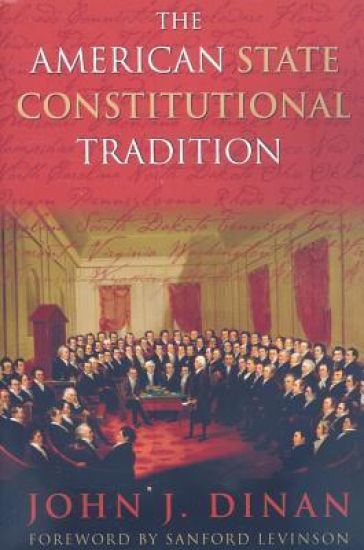
The American State Constitutional Tradition

The American State Constitutional Tradition

John J. Dinan

University Press of Kansas
2006
sidottu
For too long, the American constitutional tradition has been defined solely by the U.S. Constitution drafted in 1787. Yet, constitutional debates at the state level open a window on how Americans, in different places and at different times, have chosen to govern themselves. From New Hampshire in 1776 to Louisiana in 1992, state constitutional conventions have served not only as instruments of democracy but also as forums for revising federal principles and institutions. In ""The American State Constitutional Tradition"", John Dinan shows that state constitutions are much more than mere echoes of the federal document. The first comprehensive study of all 114 state constitutional conventions for which there are recorded debates, his book shows that state constitutional debates in many ways better reflect the accumulated wisdom of American constitution-makers than do the more traditional studies of the federal constitution. Wielding extraordinary command over a mass of historical detail, Dinan clarifies the alternatives considered by state constitution makers and the reasons for the adoption or rejection of various governing principles and institutions. Among other things, he shows that the states are nearly universal in their rejection of the rigid federal model of the constitutional amendment process, favoring more flexible procedures for constitutional change; they often grant citizens greater direct participation in law-making; they have debated and at times rejected the value of bicameralism; and they have altered the veto powers of both the executive and judicial branches. Dinan also shows that, while the Founders favored a minimalist design and focused exclusively on protecting individuals from government action, state constitution makers have often adopted more detailed constitutions, sometimes specifying positive rights that depend on government action for their enforcement. Moreover, unlike the federal constitution, state constitutions often contain provisions dedicated to the formation of citizen character, ranging from compulsory schooling to the regulation of gambling or liquor. By integrating state constitution making with the federal constitutional tradition, this path-breaking work widens and deepens our understanding of the principles by which we've chosen to govern ourselves.
The American State Constitutional Tradition

The American State Constitutional Tradition

John J. Dinan

University Press of Kansas
2006
nidottu
Shows that state constitutions are more than mere echoes of the federal document. This comprehensive study of all 114 state constitutional conventions for which there are recorded debates, shows that state constitutional debates reflect the wisdom of American constitution-makers than do the traditional studies of the federal constitution.
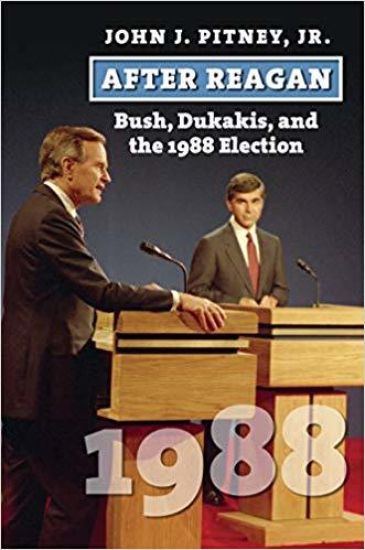
After Reagan

After Reagan

John J. Jr. Pitney

University Press of Kansas
2019
sidottu
Upon the 2018 death of George H. W. Bush, pundits and politicians mourned the passing of an exemplar of the statesmanship and bipartisan ethos of an earlier day. The judgment, though sound, would have shocked observers of the 1988 election that put Bush in the White House. From a scholar who played a small role in that long-ago election, After Reagan provides an eye-opening look at a presidential campaign that few suspected marked the end of an era—or the rise of forces roiling our political landscape today.Willie Horton. “Read my lips: No new taxes.” Michael Dukakis in a helmet, in a tank. Though these are remembered as pivotal moments in a presidential campaign recalled as whisker-close, in his book John J. Pitney Jr. reminds us how large Bush’s victory actually was, and how much it depended on social conditions and political dynamics that would change dramatically in the coming years. A turning point toward the post-Cold War, hyper-partisan, culturally divided politics of our time, the election of 1988 took place in a very different world. After Reagan captures a moment when campaigns were funded from the federal Treasury; when Republicans had a lock on the presidency and Democrats controlled Congress; when the electorate was considerably whiter and less educated than today’s; and when the fall of the Berlin Wall and the Soviet Union—and the subsequent rise of globalization—were virtually unimaginable.Many books tell us that elections have consequences. Pitney’s explains how campaigns are consequential—the 1988 campaign more than most. From the perspective of the last thirty years, After Reagan shows us the 1988 election in a truly new light—one that, in turn, reveals the links between the campaign of 1988 and the politics of the twenty-first century.
Keeping the People's Liberties

Keeping the People's Liberties

John J. Dinan

UNIVERSITY PRESS OF KANSAS
2021
nidottu
Which branch of government should be entrusted with safeguarding individual rights? Conventional wisdom assigns this responsibility to the courts, on the grounds that liberty can only be protected through judicial interpretation of bills of rights. In fact it is difficult for many people even to conceive of any other way that rights might be protected. John Dinan challenges this understanding by tracing and evaluating the different methods that have been used to protect rights in the United States from the founding until the present era.By examining legislative statutes, judicial decisions, convention proceedings, and popular initiatives in four representative states—Massachusetts, Virginia, Michigan, and Oregon—Dinan shows that rights have been secured in the American polity in three principal ways. Throughout the eighteenth and nineteenth centuries, rights were protected primarily through representative institutions. Then in the early twentieth century, citizens began to turn to direct democratic institutions to secure their rights. It was not until the mid-twentieth century that judges came to be seen as the chief protectors of liberties.By analyzing the relative ability of legislators, citizens, and judges to serve as guardians of rights, Dinan's study demonstrates that each is capable of securing certain rights in certain situations. Elected representatives are generally capable of protecting most rights, but popular initiatives provide an effective mechanism for securing rights in the face of legislative intransigence, and judicial decisions offer a superior means of protecting liberties in crisis times. Accordingly, rather than viewing rights protection as the peculiar province of any single institution, this task ought to be considered the proper responsibility of all these institutions.By undertaking a comparison of these institutional methods across such a wide expanse of time, Keeping the People's Liberties makes a highly original contribution to the literature on rights protection and provides a new perspective on debates about the contemporary role of representative, populist, and judicial institutions.
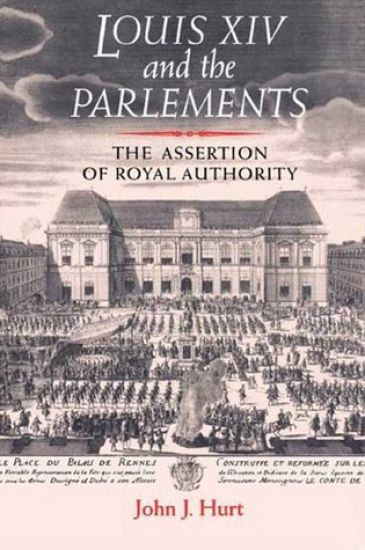
Louis XIV and the Parlements

Louis XIV and the Parlements

John J. Hurt

Manchester University Press
2004
nidottu
This is the first scholarly study of the political and economic relationship between Louis XIV and the parlements of France, the Parlement of Paris and all the provincial tribunals. The author explains how the king managed to impose strict political discipline for which this reign, and only this reign, is known. Hurt shows that the king built upon that discipline to extract large sums of money from the judges in the parlements, thus damaging their economic interests. When the king died in 1715, the regent, Philippe d’Orléans, after a brief attempt to befriend the parlements through compromise, resorted to the authoritarian methods of Louis XIV and perpetuated the Sun King’s political and economic legacy.This study calls into question current revisionist understanding of Louis XIV and insists that absolute government had a harsh reality at its core. Based upon extensive archival research, this remarkable book will be of interest to all students of the history of early modern France and the monarchies of Europe.An electronic edition of this book is freely available under a Creative Commons (CC BY-NC-ND) licence.
Global Risk Assessment and Strategic Planning

Global Risk Assessment and Strategic Planning

John J McLaughlin; Agi Oldfield; Barry Trebes

Thomas Telford Ltd
2015
nidottu
Global Risk Assessment and Strategic Planning is a combined risk-based methodology for management planning and decision making in projects. GRASP uses multi-stakeholder perspectives to enlarge the project team’s knowledge base and increase awareness of the circumstances in which the project can make real progress. The book provides a practical, infinitely scalable process for managing project risk, improving project delivery planning and executing stakeholder engagement programmes; all intended to increase the likelihood of better project outcomes. As a 'how-to' manual, the book combines user-friendly information with examples that allow a practitioner to use the GRASP methodology in an efficient and effective manner. Global Risk Assessment and Strategic Planning: delivers a flexible, methodological approach to create a richer picture of a project for all parties operating at any level in the participating organisationhelps improve managers’ ability to plan, assess and understand their projects and the risks inherent in themprovides managers with a more informed view of their project, which in turn helps them to make more informed decisionscontributes to a manager’s toolkit by being an essential and practical everyday facilitation aid. Global Risk Assessment and Strategic Planning has been designed to promote a culture of openness and positive attitudes to risk, stakeholder engagement and problem solving within projects. The methodology has been developed over several years and is in regular use by a number of forward-looking project sponsors and project management teams.