Kirjojen hintavertailu. Mukana 11 244 527 kirjaa ja 12 kauppaa.

Kirjahaku

Etsi kirjoja tekijän nimen, kirjan nimen tai ISBN:n perusteella.

1000 tulosta hakusanalla John Percy; Graham Millar

The Variorum Edition of the Poetry of John Donne, Volume 7.1
Praise for previous volumes:"This variorum edition will be the basis of all future Donne scholarship." —ChroniqueThis is the 4th volume of The Variorum Edition of the Poetry of John Donne to appear. This volume presents a newly edited critical text of the Holy Sonnets and a comprehensive digest of the critical-scholarly commentary on them from Donne's time through 1995. The editors identify and print both an earlier and a revised authorial sequence of sonnets, as well as presenting the scribal collection—which contains unique authorial versions of several of the sonnets—inscribed by Donne's friend Rowland Woodward in the Westmoreland manuscript.
The Variorum Edition of the Poetry of John Donne

The Variorum Edition of the Poetry of John Donne

John Donne

Indiana University Press
2021
sidottu
Based on an exhaustive study of the manuscripts and printed editions in which these poems have appeared, the eighth in the series of The Variorum Edition of the Poetry of John Donne presents newly edited critical texts of thirteen Divine Poems and details the genealogical history of each poem, accompanied by a thorough prose discussion. Arranged chronologically within sections, the material is organized under the following headings: Dates and Circumstances; General Commentary; Genre; Language, Versification, and Style; the Poet/Persona; and Themes. The volume also offers a comprehensive digest of general and topical commentary on the Divine Poems from Donne's time through 2012.
The Variorum Edition of the Poetry of John Donne, Volume 4.3
This tenth, and final, volume in the series of The Variorum Edition of the Poetry of John Donne presents newly edited critical texts of 32 love lyrics. Based on an exhaustive study of the manuscripts and printed editions in which these poems have appeared, Volume 4.3 details the genealogical history of each poem, accompanied by a thorough prose discussion. The volume also presents a comprehensive digest of the commentary on these Songs and Sonets from Donne's time through 1999. Arranged chronologically within sections, the material for each poem is organized under various headings that complement the volume's companions, Volume 4.1 and Volume 4.2.
The Variorum Edition of the Poetry of John Donne, Volume 4.2
This volume, the ninth in the series of The Variorum Edition of the Poetry of John Donne, presents newly edited critical texts of 25 love lyrics. Based on an exhaustive study of the manuscripts and printed editions in which these poems have appeared, Volume 4.2 details the genealogical history of each poem, accompanied by a thorough prose discussion, as well as a General Textual Introduction of the Songs and Sonets collectively. The volume also presents a comprehensive digest of the commentary on these Songs and Sonets from Donne's time through 1999. Arranged chronologically within sections, the material for each poem is organized under various headings that complement the volume's companions, Volume 4.1 and Volume 4.3.
John Dewey's Pragmatic Technology

John Dewey's Pragmatic Technology

Larry A. Hickman

Indiana University Press
1990
pokkari
" . . . a comprehensive canvass of Dewey's logic, metaphysics, aesthetics, philosophy of history, and social thought." —Choice " . . . a major addition to the recent accumulation of in-depth studies of Dewey." —Journal of Speculative Philosophy "Larry Hickman has done an exemplary job in demonstrating the relevance of John Dewey's philosophy to modern-day discussions of technology." —Ethics
John Ford Made Westerns

John Ford Made Westerns

Indiana University Press
2001
pokkari
Fresh perspectives on some of the most influential films of John Ford. The Western is arguably the most popular and enduring form in cinematic history, and the acknowledged master of that genre was John Ford. His Westerns, including The Searchers, Stagecoach, and The Man Who Shot Liberty Valance, have had an enormous influence on contemporary U.S. films, from Star Wars to Taxi Driver. In John Ford Made Westerns, nine major essays by prominent scholars of Hollywood film situate the sound-era Westerns of John Ford within contemporary critical contexts and regard them from fresh perspectives. These range from examining Ford's relation to other art forms (most notably literature, painting, and music) to exploring the development of the director's reputation as a director of Westerns. While giving attention to film style and structure, the volume also treats the ways in which these much-loved films engage with notions of masculinity and gender roles, capitalism and community, as well as racial, sexual, and national identity. Contributors include Charles Ramirez Berg, Matthew Bernstein, Edward Buscombe, Joan Dagle, Barry Keith Grant, Kathryn Kalinak, Peter Lehman, Charles J. Maland, Gaylyn Studlar, and Robin Wood. Contents Part I Introduction, Gaylyn Studlar & Matthew Bernstein "'Shall We Gather at the River?': The Late Films of John Ford," Robin Wood "Sacred Duties, Poetic Passions: John Ford and Issue of Femininity in the Western," Gaylyn Studlar "The Margin as Center: The Multicultural Dynamics of John Ford's Westerns," Charles Ramirez Berg "Linear Patterns and Ethnic Encounters in the Ford Western," Joan Dagle "How the West Wasn't Won: the Repression of Capitalism in John Ford's Westerns," Peter Lehman "Painting the Legend: Frederic Remington and the Western," Edward Buscombe "'The Sound of Many Voices': Music in John Ford's Westerns," Kathryn Kalinak "John Ford and James Fenimore Cooper: Two Rode Together," Barry Keith Grant "From Aesthete to Pappy: The Evolution of John Ford's Public Reputation," Charles J. Maland Part II—Dossier Emanuel Eisenberg, "John Ford: Fighting Irish," New Theater, April 1936 Frank S. Nugent, "Hollywood's Favorite Rebel," Saturday Evening Post, July 23, 1949 John Ford, "John Wayne—My Pal," Hollywood, no. 237 (March 17, 1951), translated from the Italian by Gloria Monti Bill Libby, "The Old Wrangler Rides Again," Cosmopolitan, March 1964 "About John Ford," Action 8.8 (Nov.-Dec. 1973)
John Dewey and Moral Imagination

John Dewey and Moral Imagination

Steven Fesmire

Indiana University Press
2003
pokkari
While examining the important role of imagination in making moral judgments, John Dewey and Moral Imagination focuses new attention on the relationship between American pragmatism and ethics. Steven Fesmire takes up threads of Dewey's thought that have been largely unexplored and elaborates pragmatism's distinctive contribution to understandings of moral experience, inquiry, and judgment. Building on two Deweyan notions—that moral character, belief, and reasoning are part of a social and historical context and that moral deliberation is an imaginative, dramatic rehearsal of possibilities—Fesmire shows that moral imagination can be conceived as a process of aesthetic perception and artistic creativity. Fesmire's original readings of Dewey shed new light on the imaginative process, human emotional make-up and expression, and the nature of moral judgment. This original book presents a robust and distinctly pragmatic approach to ethics, politics, moral education, and moral conduct.
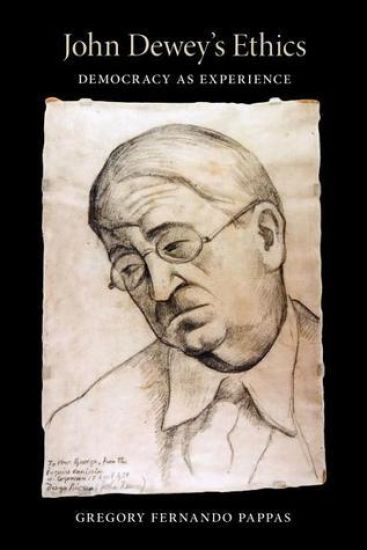
John Dewey's Ethics

John Dewey's Ethics

Gregory Pappas

Indiana University Press
2008
pokkari
John Dewey, widely known as "America's philosopher," provided important insights into education and political philosophy, but surprisingly never set down a complete moral or ethical philosophy. Gregory Fernando Pappas presents the first systematic and comprehensive treatment of Dewey's ethics. By providing a pluralistic account of moral life that is both unified and coherent, Pappas considers ethics to be key to an understanding of Dewey's other philosophical insights, especially his views on democracy. Pappas unfolds Dewey's ethical vision by looking carefully at the virtues and values of ideal character and community. Showing that Dewey's ethics are compatible with the rest of his philosophy, Pappas corrects the reputation of American pragmatism as a philosophy committed to skepticism and relativism. Readers will find a robust and boldly detailed view of Dewey's ethics in this groundbreaking book.
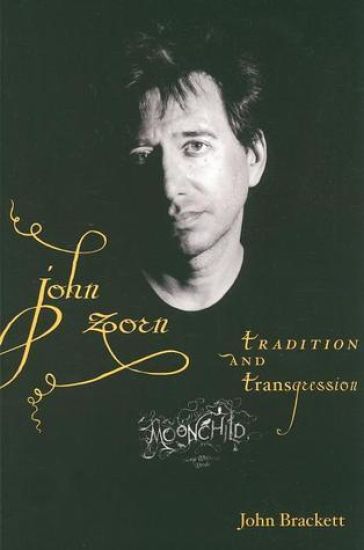
John Zorn

John Zorn

John Brackett

Indiana University Press
2008
pokkari
John Zorn is one of the most prolific and active American composers/performers working today. He has been a fixture of New York's "Downtown Scene" since the mid-70s as a tireless proponent of avant-garde and experimental music. Despite the acclaim and respect he has achieved in America and abroad, very little attention has been paid to Zorn by musicologists or music theorists. Author John Brackett suggests that the reason for the relative paucity of writing on Zorn's music and musical thought has to do with the difficulties and challenges they present both for listeners and scholars. Zorn's musical language—an amalgam of seemingly incongruous techniques, sounds, styles, and genres—creates complex and sometimes confusing listening experiences that are difficult to categorize in terms of overarching thematic or narrative design. Brackett offers a number of perspectives for understanding Zorn's music and musical practices, while challenging certain assumptions that limit the ways in which contemporary music is typically addressed.
The Variorum Edition of the Poetry of John Donne, Volume 6
"The appearance of the first volume . . . is an occasion for celebration. Among the most ambitious and valuable collaborative scholarly enterprises at the end of the twentieth century . . . " —Claude J. Summers, Early Modern Literary Studies " . . . especially valuable for its wide-ranging and reliable summaries of textual and critical commentary on these works . . . This variorum edition will be the basis of all future Donne scholarship." —Bibliotèque d'Humanisme et Renaissance " . . . the most important collaborative project in 17th-century studies in recent history . . . " —Seventeenth-Century News A major editorial and interpretive undertaking, this edition includes a newly edited critical text based on exhaustive study of all known manuscripts and significant printed editions of Donne's poetry and a complete digest of critical and scholarly commentary on the poetry from Donne's time to the present.
The Variorum Edition of the Poetry of John Donne, Volume 2
From reviews of previous volumes: "This variorum edition will be the basis of all future Donne scholarship." —Chronique "Academic libraries and specialists in Renaissance and 17th-century studies should feel compelled to own each and every volume of this series." —Seventeenth Century News "An occasion for celebration. Among the most ambitious and valuable collaborative scholarly enterprises at the end of the twentieth century. Superb." —Early Modern Literary Studies This latest addition to the Donne variorum, the third to appear in a projected eight-volume series, presents a newly edited critical text of Donne's elegies and a comprehensive variorum commentary. As with previous volumes, Volume 2 is based on a study of all known manuscript sources and significant printed editions of Donne's poetry and on an examination of the criticism and scholarship of the past four centuries.
The Variorum Edition of the Poetry of John Donne, Volume 7.1
Praise for previous volumes: "This variorum edition will be the basis of all future Donne scholarship." —Chronique This is the 4th volume of The Variorum Edition of the Poetry of John Donne to appear. This volume presents a newly edited critical text of the Holy Sonnets and a comprehensive digest of the critical-scholarly commentary on them from Donne's time through 1995. The editors identify and print both an earlier and a revised authorial sequence of sonnets, as well as presenting the scribal collection—which contains unique authorial versions of several of the sonnets—inscribed by Donne's friend Rowland Woodward in the Westmoreland manuscript.
John von Neumann and the Origins of Modern Computing
William Aspray provides the first broad and detailed account of von Neumann's many different contributions to computing.John von Neumann (1903-1957) was unquestionably one of the most brilliant scientists of the twentieth century. He made major contributions to quantum mechanics and mathematical physics and in 1943 began a new and all-too-short career in computer science. William Aspray provides the first broad and detailed account of von Neumann's many different contributions to computing. These, Aspray reveals, extended far beyond his well-known work in the design and construction of computer systems to include important scientific applications, the revival of numerical analysis, and the creation of a theory of computing.Aspray points out that from the beginning von Neumann took a wider and more theoretical view than other computer pioneers. In the now famous EDVAC report of 1945, von Neumann clearly stated the idea of a stored program that resides in the computer's memory along with the data it was to operate on. This stored program computer was described in terms of idealized neurons, highlighting the analogy between the digital computer and the human brain. Aspray describes von Neumann's development during the next decade, and almost entirely alone, of a theory of complicated information processing systems, or automata, and the introduction of themes such as learning, reliability of systems with unreliable components, self-replication, and the importance of memory and storage capacity in biological nervous systems; many of these themes remain at the heart of current investigations in parallel or neurocomputing.Aspray allows the record to speak for itself. He unravels an intricate sequence of stories generated by von Neumann's work and brings into focus the interplay of personalities centered about von Neumann. He documents the complex interactions of science, the military, and business and shows how progress in applied mathematics was intertwined with that in computers.William Aspray is Director of the Center for the History of Electrical Engineering at The Institute of Electrical and Electronics Engineers.
Finding the Way Through John

Finding the Way Through John

John Fenton

Mowbray
1995
nidottu
This edition incorporates the text of the Revised English Bible. A short guide to John's Gospel, the book concentrates on the main themes of the gospel as they are expressed in stories, dialogues and speeches, and attempts to explain how to read the gospel as a book about faith in Jesus.
IISermon Notes of John Henry Cardinal Newman, 1849-1878

IISermon Notes of John Henry Cardinal Newman, 1849-1878

John Henry Cardinal Newman

University of Notre Dame Press
2001
sidottu
Newman was told that Catholic priests do not read sermons, but this does not mean that he made them up as he went along. He planned his Catholic sermons as meticulously as he did his famous Parochial and Plain, but he committed them to memory and then he made notes afterwards. His sermons, delivered over a period of thirty years, provide some fascinating insights into his active mind and the range of subjects he covered within the framework of the Church's liturgical year. James Mozley, writing in 1946, said, "A sermon of Mr. Newman's enters into our feelings, ideas, and modes of viewing things. Persons look into Mr. Newman's sermons and see their own thoughts in them." Unpublished for ninety years, Sermon Notes of John Henry Cardinal Newman shows Newman's brilliant mind at work.
The Remarkable Life of John Murray Spear

The Remarkable Life of John Murray Spear

John Benedict Buescher

University of Notre Dame Press
2006
sidottu
John Murray Spear was one of nineteenth-century America's most interesting characters. A leading social agitator against slavery and capital punishment, Spear also became the nation's most flamboyant spiritualist, inventor of "spirit machines," and advocate of free love. In his captivating biography, John Buescher brings to life Spear's superlatively odd story. While no photograph or engraving of Spear exists, and his letters and personal papers are scarce, Buescher recreates in this book a sympathetic, even heroic, figure who spent the most energetic decades of his career absent, in a sense, from his own life, displaced by other spirits. Born in 1804, John Murray Spear started his career as a Universalist minister. He later was a close colleague of William Lloyd Garrison and Theodore Parker in the abolitionist movement, an operator on the underground railroad in Boston, an influential leader in the effort to end the death penalty and to reform prison conditions, and a public advocate of the causes of pacifism, women's rights, labor reform, and socialism. Buescher chronicles Spear's work as an activist among the New England reformers and Transcendentalists such as Bronson Alcott, Lydia Maria Child, and Dorothea Dix. In mid-life Spear turned to the new revelation of spiritualism and came under the thrall of what he believed were spirit messages. Spear's spirits dictated that he and a small group of associates embark on plans for a perpetual motion machine, an electric ship propelled by psychic batteries, a vehicle that would levitate in the air, and a sewing machine that would work with no hands. As Buescher documents, Spear's spirit-guided efforts to harness technology to human liberation—sexual and otherwise—were far stranger than anyone outside his closest associates imagined, and were aimed at the eventual manufacturing of human beings and the improvement of the race. Buescher also examines the way in which Spear's story was minimized by his embarrassed fellow radicals. In the last years of his life, retired by the spirits and regarded by fellow Gilded Age progressives as a visitor from another age, if not another planet, Spear helped organize support for anarchist, socialist, peace, and labor causes. Buescher portrays Spear's life as an odd mixture of comic absurdity and serious foreshadowing of the future—for both good and ill—that provides us with a unique perspective on nineteenth-century American religious and social life.
John Buridan

John Buridan

Jack Zupko

University of Notre Dame Press
2003
sidottu
John Buridan (ca. 1300–1361) was the most famous philosophy teacher of his time, and probably the most influential. In this important new book, Jack Zupko offers the first systematic exposition of Buridan's thought to appear in any language. Zupko uses Buridan's own conception of the order and practice of philosophy to depict the most salient features of his thought, beginning with his views on the nature of language and logic and then illustrating their application to a series of topics in metaphysics, natural philosophy, and ethics. Part 1 of John Buridan considers the picture of language and logic developed in Buridan's Summulae de dialectica. Buridan systematically overhauled the logic he first learned and later taught at the University of Paris, redeeming the older tradition of Aristotelian logic in terms, propositions, and arguments. This made possible newer and more powerful forms of philosophical discourse. The second part of this volume provides a reading of Buridan's philosophy, showing how this discourse shaped his treatment of speculative questions such as the relation between soul and body, the nature of knowledge, the proper subject of psychology, the function of the virtues, and the freedom of the will. This groundbreaking book is sure to become the standard work on John Buridan.
John Buridan

John Buridan

Jack Zupko

University of Notre Dame Press
2003
nidottu
John Buridan (ca. 1300–1361) was the most famous philosophy teacher of his time, and probably the most influential. In this important new book, Jack Zupko offers the first systematic exposition of Buridan's thought to appear in any language. Zupko uses Buridan's own conception of the order and practice of philosophy to depict the most salient features of his thought, beginning with his views on the nature of language and logic and then illustrating their application to a series of topics in metaphysics, natural philosophy, and ethics. Part 1 of John Buridan considers the picture of language and logic developed in Buridan's Summulae de dialectica. Buridan systematically overhauled the logic he first learned and later taught at the University of Paris, redeeming the older tradition of Aristotelian logic in terms, propositions, and arguments. This made possible newer and more powerful forms of philosophical discourse. The second part of this volume provides a reading of Buridan's philosophy, showing how this discourse shaped his treatment of speculative questions such as the relation between soul and body, the nature of knowledge, the proper subject of psychology, the function of the virtues, and the freedom of the will. This groundbreaking book is sure to become the standard work on John Buridan.
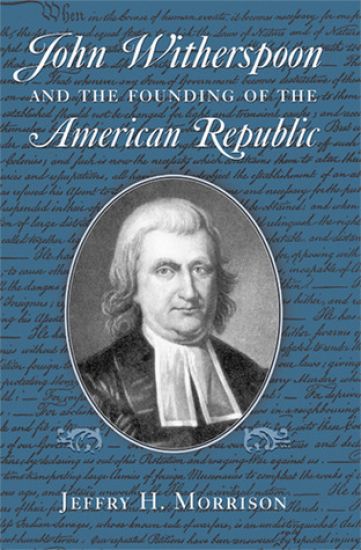
John Witherspoon and the Founding of the American Republic: Catholicism in American Culture
Jeffry H. Morrison offers readers the first comprehensive look at the political thought and career of John Witherspoon--a Scottish Presbyterian minister and one of America's most influential and overlooked founding fathers. Witherspoon was an active member of the Continental Congress and was the only clergyman both to sign the Declaration of Independence and to ratify the federal Constitution. During his tenure as president of the College of New Jersey at Princeton, Witherspoon became a mentor to James Madison and influenced many leaders and thinkers of the founding period. He was uniquely positioned at the crossroads of politics, religion, and education during the crucial first decades of the new republic. Morrison locates Witherspoon in the context of early American political thought and charts the various influences on his thinking. This impressive work of scholarship offers a broad treatment of Witherspoon's constitutionalism, including his contributions to the mediating institutions of religion and education, and to political institutions from the colonial through the early federal periods. This book will be appreciated by anyone with an interest in American political history and thought and in the relation of religion to American politics.
John Witherspoon and the Founding of the American Republic

John Witherspoon and the Founding of the American Republic

Jeffry H. Morrison

University of Notre Dame Press
2003
nidottu
Jeffry H. Morrison offers readers the first comprehensive look at the political thought and career of John Witherspoon—a Scottish Presbyterian minister and one of America's most influential and overlooked founding fathers. Witherspoon was an active member of the Continental Congress and was the only clergyman both to sign the Declaration of Independence and to ratify the federal Constitution. During his tenure as president of the College of New Jersey at Princeton, Witherspoon became a mentor to James Madison and influenced many leaders and thinkers of the founding period. He was uniquely positioned at the crossroads of politics, religion, and education during the crucial first decades of the new republic. Morrison locates Witherspoon in the context of early American political thought and charts the various influences on his thinking. This impressive work of scholarship offers a broad treatment of Witherspoon's constitutionalism, including his contributions to the mediating institutions of religion and education, and to political institutions from the colonial through the early federal periods. This book will be appreciated by anyone with an interest in American political history and thought and in the relation of religion to American politics.