Kirjojen hintavertailu. Mukana 11 342 296 kirjaa ja 12 kauppaa.

Kirjahaku

Etsi kirjoja tekijän nimen, kirjan nimen tai ISBN:n perusteella.

1000 tulosta hakusanalla John Ruston Pagan

John Clare in Context

John Clare in Context

Cambridge University Press
1994
sidottu
The marginalisation of John Clare, despite renewed interest in Romanticism and the literature of madness, is still an enigma. Perhaps more than any other poet of the period, Clare has never found the contexts in which his poetry can be read. This important collection of new critical essays locates Clare’s work from diverse points of view, identifying the obstacles to his reception as a major poet. It includes chapters on landscape and botany, Clare’s politics, his madness, Clare and the critics, and a remarkable essay by Seamus Heaney on Clare’s importance as a poetic precursor. This volume will be a landmark in the history of his reception, revealing the ways in which an appreciation of this unique poet revises the canon of Romantic and Victorian literature.
John Locke

John Locke

John Marshall

Cambridge University Press
1994
pokkari
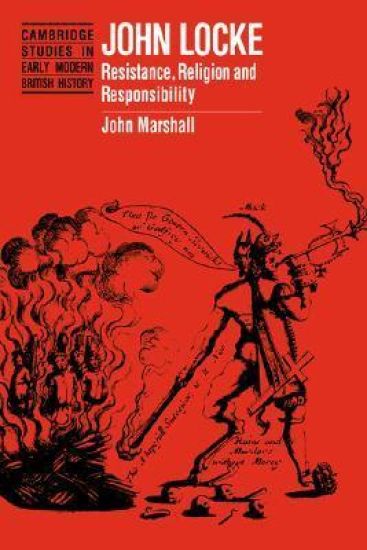
This book provides a new contextual account of the development of John Locke’s political, religious, social and moral thought. It analyses many of Locke’s unpublished manuscripts and relatively neglected works as well as the Two Treatises, the Letter Concerning Toleration and the Essay Concerning Human Understanding. Professor Marshall studies the development of Locke’s political thought from absolutism to resistance, and provides significant revisions to current explanations of the immediate contexts and purposes of composition of the Two Treatises. He also sets out major new accounts of Locke’s moral, social and religious thought both as extremely important subjects in their own right and in order to challenge many scholars' interpretations of their influences on Locke’s political thought.
John as Storyteller

John as Storyteller

Mark W. G. Stibbe

Cambridge University Press
1994
pokkari
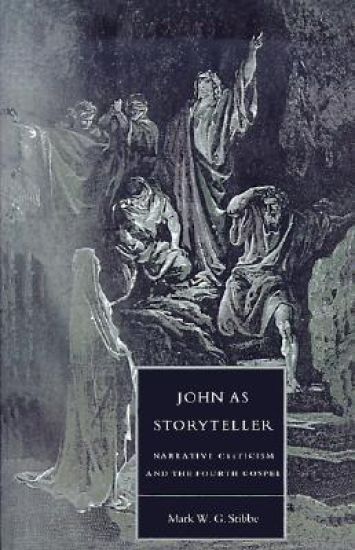
In this widely acclaimed study of John’s Gospel, Mark W. G. Stibbe shows how the fourth evangelist uses all the tactics of a skilled storyteller to promote his distinctive Christology. Literary and historical methodologies are integrated by the author in his narrative criticism, and a new, holistic approach to the gospel literature is suggested thereby.
John of Wales

John of Wales

Jenny Swanson

Cambridge University Press
2002
pokkari
This book examines the selected writings of John of Wales, a thirteenth-century Franciscan scholar. Though overshadowed historically by men like Thomas Aquinas and Bonaventure, John contributed significantly to the preaching explosion of the later Middle Ages, devoting his scholastic energies to the production of encyclopedic preaching aids for the growing number of the devout and learned emerging from the new universities. Through a detailed analysis of his world view, the author establishes John’s strong interest in politics and contemporary social issues and helps to explain why his writings appealed to young preachers and the popular imagination. John’s historic popularity and literary influence are also fully explored. His works seem to have been an important source of classical material for European literary texts of the period, and therefore, in addition to historians and theologians, this unprecedented book will appeal to those interested in the survival and transmission of Greek and Latin literature.
John Skelton and the Politics of the 1520s

John Skelton and the Politics of the 1520s

Greg Walker

Cambridge University Press
2002
pokkari
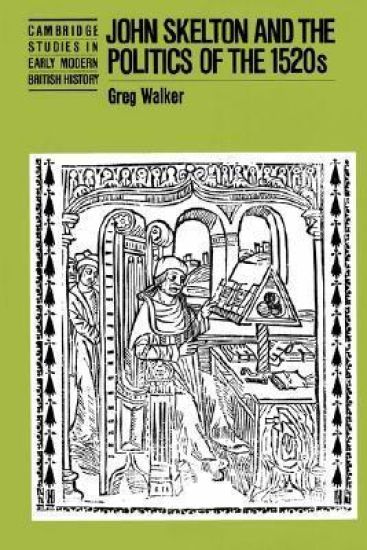
The series of satirical poems and invectives written against Thomas, Cardinal Wolsey, the chief minister of Henry VIII, by the poet John Skelton has long been used by scholars as evidence of the sins and follies of Wolsey’s regime. Yet the poems have never undergone serious political analysis. At the heart of this book is a detailed examination of these texts which aims to rectify that omission. For the first time they are subjected to a close reading which both elucidates their major themes and purpose, and sets them firmly in their political context. The book questions the orthodoxies of previous scholarship and challenges received opinions concerning the poet’s status at the court of Henry VIII, his employment by the noble house of Howard, and his motives for launching the satirical assault upon Wolsey. From this analysis emerges a very different Skelton to that provided by earlier accounts.
John de Witt

John de Witt

Herbert H. Rowen

Cambridge University Press
2003
pokkari
If the combination of superb political skills and a powerful intelligence were enough to make a ‘philosopher-king’ such as Plato dreamed of, the Dutch ‘Grand Pensionary’ John de Witt (1625–72) would fit the prescription as well as any statesman in history. Manoeuvring among the powers of Europe in the period of France’s growing ascendancy, and facing the bitter commercial and political rivalry of the English, he managed to preserve the eminent position the United Provinces had reached when Spain recognized their independence at Munster in 1648. Not until the kings of France and England combined against the Republic in 1672 did De Witt’s political system, called the ‘True Freedom’ and consisting of the maximum autonomy of the provinces and the exclusion of Prince William III of Orange from high office, collapse during the French invasion, an event accompanied by the horrific assassination of De Witt and his brother Cornelius.
John Locke and the Origins of Private Property

John Locke and the Origins of Private Property

Matthew H. Kramer

Cambridge University Press
2004
pokkari
John Locke’s labor theory of property is one of the seminal ideas of political philosophy and served to establish its author’s reputation as one of the leading social and political thinkers of all time. Through it Locke addressed many of his most pressing concerns, and earned a reputation as an outstanding spokesman for political individualism - a reputation that lingers widely despite some partial challenges that have been raised in recent years. In this major new study Matthew Kramer offers an extensive critique of the labor theory and investigates the consequences of its downfall. With incisive analyses of the merits and failings of many aspects of Locke’s political thought, Kramer advances a powerful challenge to Locke’s image as an individualist. Employing a rigorously philosophical methodology, but remaining aware of the insights generated by historical approaches to Locke, Kramer concludes that Locke’s political vision was in fact profoundly communitarian.
John Locke and the Ethics of Belief

John Locke and the Ethics of Belief

Nicholas Wolterstorff

Cambridge University Press
1996
pokkari
Nicholas Wolterstorff discusses the ethics of belief which Locke developed in Book IV of his Essay Concerning Human Understanding, where Locke finally argued his overarching aim: how we ought to govern our belief, especially on matters of religion and morality. Wolterstorff shows that this concern was instigated by the collapse, in Locke’s day, of a once-unified moral and religious tradition in Europe into warring factions. His was thus a culturally and socially engaged epistemology. This view of Locke invites a new interpretation of the origins of modern philosophy. He maintained that instead of following tradition we ought to let ‘reason be our guide.’ Accordingly, after discussing Hume’s powerful attack on Locke’s recommended practice, Wolterstorff argues for Locke’s originality and emphasizes his contribution to the ‘modernity’ of post-sixteenth-century philosophy.
John Locke and the Origins of Private Property

John Locke and the Origins of Private Property

Matthew H. Kramer

Cambridge University Press
1997
sidottu
John Locke’s labor theory of property is one of the seminal ideas of political philosophy and served to establish its author’s reputation as one of the leading social and political thinkers of all time. Through it Locke addressed many of his most pressing concerns, and earned a reputation as an outstanding spokesman for political individualism - a reputation that lingers widely despite some partial challenges that have been raised in recent years. In this major new study Matthew Kramer offers an extensive critique of the labor theory and investigates the consequences of its downfall. With incisive analyses of the merits and failings of many aspects of Locke’s political thought, Kramer advances a powerful challenge to Locke’s image as an individualist. Employing a rigorously philosophical methodology, but remaining aware of the insights generated by historical approaches to Locke, Kramer concludes that Locke’s political vision was in fact profoundly communitarian.
John Huston's Filmmaking

John Huston's Filmmaking

Brill Lesley

Cambridge University Press
1997
pokkari
John Huston’s Filmmaking offers an analysis of the life and work of one of the greatest American independent filmmakers. Always visually exciting, Huston’s films sensitively portray humankind in all its incarnations, chronicling the attempts by protagonists to conceive and articulate their identities. Fundamental questions of selfhood, happiness and love are intimately connected to the idea of home, which for the filmmaker also signified a congenial place among other people in the world. In this study, Lesley Brill shows Huston’s films to be far more than formulaic adventures of masculine failure, arguing instead that they demonstrate the close connection between humanity, the natural world, and divinity.
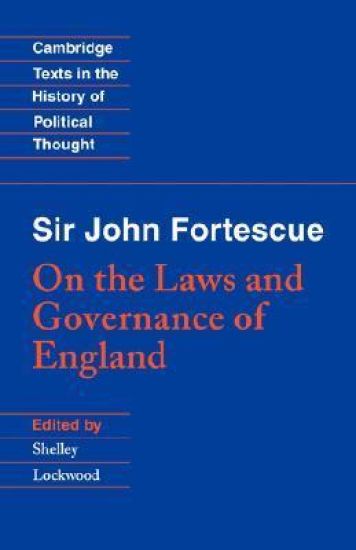
Sir John Fortescue: On the Laws and Governance of England

Sir John Fortescue: On the Laws and Governance of England

John Fortescue

Cambridge University Press
1997
pokkari
Sir John Fortescue CJKB (c.1395–c.1477) was undoubtedly the foremost English political scientist of the fifteenth century. This convenient volume brings together for the first time new editions of his two major works - In Praise of the Laws of England and The Governance of England - with references and suggestions for further reading for the student. In her introduction, Shelley Lockwood presents a clear reassessment of the work of John Fortescue and places these key texts in their historical and intellectual contexts. These works, arguably the earliest in English political thought, were written from the perspective of a self-consciously analytical and highly experienced lawyer and government official during a time of war and political upheaval. They form a coherent argument for justice against tyranny and afford unique insights into the law and governance of fifteenth-century England.
John's Apologetic Christology

John's Apologetic Christology

James F. McGrath

Cambridge University Press
2004
pokkari
The Gospel according to John presents Jesus in a unique way as compared with other New Testament writings. Scholars have long puzzled and pondered over why this should be. In this book, James McGrath offers a convincing explanation of how and why the author of the Fourth Gospel arrived at a christological portrait of Jesus that is so different from that of other New Testament authors, and yet at the same time clearly has its roots in earlier tradition. McGrath suggests that as the author of this Gospel sought to defend his beliefs about Jesus against the objections brought by opponents, he developed and drew out further implications from the beliefs he inherited. The book studies this process using insights from the field of sociology which helps to bring methodological clarity to the important issue of the development of Johannine Christology.
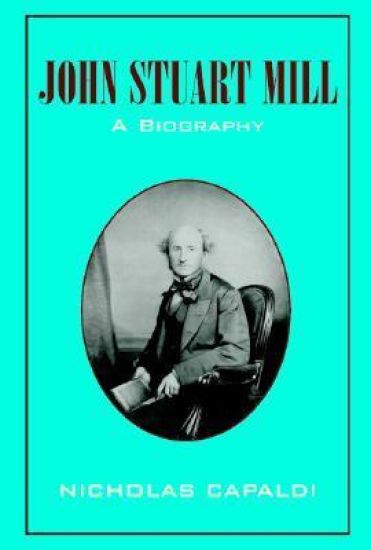
John Stuart Mill

John Stuart Mill

Nicholas Capaldi

Cambridge University Press
2004
sidottu
Nicholas Capaldi’s biography of John Stuart Mill traces the ways in which Mill’s many endeavours are related and explores the significance of Mill’s contribution to metaphysics, epistemology, ethics, social and political philosophy, the philosophy of religion, and the philosophy of education. He shows how Mill was groomed for his life by both his father James Mill, and Jeremy Bentham, the two most prominent philosophical radicals of the early nineteenth century. Yet Mill revolted against this education and developed friendships with both Thomas Carlyle and Samuel Taylor Coleridge who introduced him to Romanticism and political conservatism. A special feature of this biography is the attention devoted to his relationship with Harriet Taylor. No one exerted a greater influence than the woman he was eventually to marry. Nicholas Capaldi reveals just how deep her impact was on Mill’s thinking about the emancipation of women.
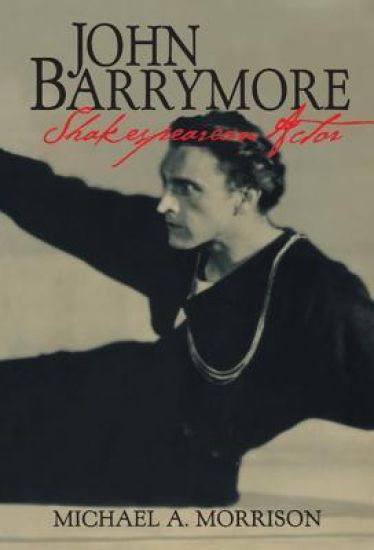
John Barrymore, Shakespearean Actor

John Barrymore, Shakespearean Actor

Michael A. Morrison

Cambridge University Press
1997
sidottu
John Barrymore’s Richard III and Hamlet, first seen in New York during the 1919–20 and 1922–23 seasons, stand as high-water marks of twentieth-century Shakespearean interpretation. Many of the conventions of modern practice can be traced to Barrymore’s performances: he was the first actor to bring the vocal and physical manner of a post-War gentleman to Shakespeare’s tragic protagonists; he was the first to reinterpret time-honored roles in light of modern psychological theory. Michael Morrison reconstructs these historic performances through analysis of the production preparation, audience response, reviews, and memoirs. Tracing the Victorian and Edwardian antecedents of Shakespearean performance, this book situates Barrymore’s distinctive contribution in light of past and ensuing tradition. As well, it provides a biographical sketch of one of the most revered and tragic actors of the twentieth century.
John Dee's Conversations with Angels

John Dee's Conversations with Angels

Deborah E. Harkness

Cambridge University Press
1999
sidottu
John Dee’s angel conversations have been an enigmatic facet of Elizabethan England’s most famous natural philosopher’s life and work. Professor Harkness contextualizes Dee’s angel conversations within the natural philosophical, religious and social contexts of his time. She argues that they represent a continuing development of John Dee’s earlier concerns and interests. These conversations include discussions of the natural world, the practice of natural philosophy, and the apocalypse.
The Journal of John Wodehouse First Earl of Kimberley, 1862–1902
The political journal of John Wodehouse, first Earl of Kimberley (1862–1902) is one of the finest political diaries of the last half of the nineteenth century. Born into an old Tory family, Kimberley followed his forebears in attending Eton and Christ Church, Oxford, but shocked his neighbours by adopting Liberal principles. As Lord Clarendon's protege, he was appointed minister plenipotentiary to Russia following the Crimean War, and under-secretary at the Foreign Office after his return (1859–61). With Lord John Russell's elevation to the peerage in 1861, Kimberley resigned, and shortly after began the journal that he regularly kept until his death in 1902. Uniquely placed as an observer, Kimberley was the only Liberal to serve in every Cabinet of the Gladstone/Rosebery era. The Kimberley Journal is replete with humorous anecdotes, information regarding policy development, and acute observations about politicians and political situations.
John Scott, Lord Eldon, 1751–1838

John Scott, Lord Eldon, 1751–1838

Rose Melikan

Cambridge University Press
1999
sidottu
John Scott, Lord Eldon (1751–1838) was a dominant figure in Georgian public life, and ranks among the most important Lord Chancellors in the long history of that office. This biography - the first for one hundred and fifty years - also surveys Eldon's earlier career as an MP and Law Officer. As a lawyer entering Parliament, he encountered both prejudices against 'learned gentlemen' and opportunities for advancement. Once in office he swiftly made his presence felt, drafting the Regency bill of 1788, and conducting the government's legal campaign against Republicanism. Retiring at last in 1827, Eldon spent his final years opposing political reform. Labelled by many as a relic of 'Old Toryism', Eldon's views of government, politics, and the constitution represent an important strand in Georgian political thinking, and his career illuminates the work of the major legal offices of British government.
John Barrymore, Shakespearean Actor

John Barrymore, Shakespearean Actor

Michael A. Morrison

Cambridge University Press
1999
pokkari
John Barrymore’s Richard III and Hamlet, first seen in New York during the 1919–20 and 1922–23 seasons, stand as high-water marks of twentieth-century Shakespearean interpretation. Many of the conventions of modern practice can be traced to Barrymore’s performances: he was the first actor to bring the vocal and physical manner of a post-War gentleman to Shakespeare’s tragic protagonists; he was the first to reinterpret time-honored roles in light of modern psychological theory. Michael Morrison reconstructs these historic performances through analysis of the production preparation, audience response, reviews, and memoirs. Tracing the Victorian and Edwardian antecedents of Shakespearean performance, this book situates Barrymore’s distinctive contribution in light of past and ensuing tradition. As well, it provides a biographical sketch of one of the most revered and tragic actors of the twentieth century.
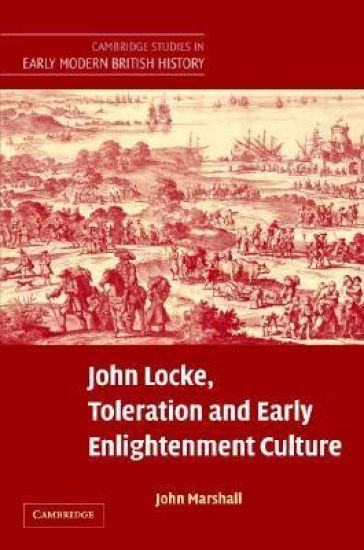
John Locke, Toleration and Early Enlightenment Culture

John Locke, Toleration and Early Enlightenment Culture

John Marshall

Cambridge University Press
2006
sidottu
This book is a major intellectual and cultural history of intolerance and toleration in early modern and early Enlightenment Europe. John Marshall offers an extensive study of late seventeenth-century practices of religious intolerance and toleration in England, Ireland, France, Piedmont and the Netherlands and the arguments that John Locke and his associates made in defence of 'universal religious toleration'. He analyses early modern and early Enlightenment discussions of toleration, debates over toleration for Jews and Muslims as well as for Christians, the limits of toleration for the intolerant, atheists, 'libertines' and 'sodomites', and the complex relationships between intolerance and resistance theories including Locke's own Treatises. This study is a significant contribution to the history of the 'republic of letters' of the 1680s and the development of early Enlightenment culture and is essential reading for scholars of early modern European history, religion, political science and philosophy.
John Doe Level 1

John Doe Level 1

Antoinette Moses

Cambridge University Press
1999
pokkari
Cambridge English Readers is an exciting new series of original fiction, specially written for learners of English. Graded into six levels - from elementary to advanced - the stories in this series provide easy and enjoyable reading on a wide range of contemporary topics and themes. The man they call John Doe lies in a hospital bed. He watches and thinks but says nothing. The doctor wants to know who he is. But John Doe doesn't answer his questions. John Doe leaves the hospital. And to their horror the doctor and nurse find out more about him than just his real name. The cassette contains a recording of the full text of the book.