Kirjojen hintavertailu. Mukana 12 363 943 kirjaa ja 12 kauppaa.

Kirjahaku

Etsi kirjoja tekijän nimen, kirjan nimen tai ISBN:n perusteella.

1000 tulosta hakusanalla Jordan Allen

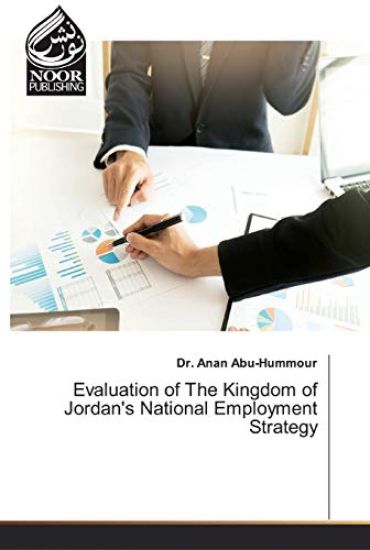
Evaluation of The Kingdom of Jordan's National Employment Strategy
Unemployment in Jordan is a seriously negative phenomenon as it adversely affects people in many ways. It increases in complexity and demands a deep investigation for comprehending its reasons to find out proper policy plans for such crisis. It is a universal issue with negative effects. All countries including Jordan confront this issue. This issue is growing in Arab countries, while, more than fifteen million jobless people in these Arab countries. Say: My Allah Enhance my knowledge" Holly Quran EDUCATION IS LIFE: EDUCATION IS YOUR POWER
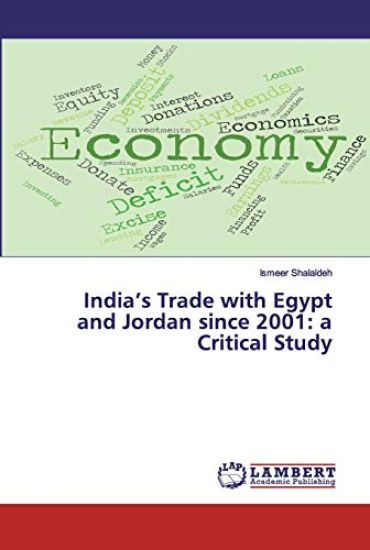
India's Trade with Egypt and Jordan since 2001

India's Trade with Egypt and Jordan since 2001

Ismeer Shalaldeh

LAP Lambert Academic Publishing
2020
pokkari
With objective to find out existing pattern and trends of India's trade with Egypt and Jordan an endeavor has been made to assess the trade prospects and suggest measures for the expansion of the trade between these countries, the important pillar of the democracy in the world. When trade is introduced into a primitive economy, it acts as a dynamic force widening the extent of the market and the scope for "division of labor". Foreign trade also facilitates the dissemination of technical knowledge, transmission of ideas, and import of know-how/skills, managerial talents, and entrepreneurship. The detailed trade statistics on India's trade with Egypt and Jordan provide an idea of the scope that exists in this market. Hence India has to make elaborate efforts to increase its exports to the world market. Trade with these countries is new experience for India and some initial difficulties are naturally bound to be there. Some are political considerations. Indian Government is already taking a number of measures to protect and develop the Indian trade. However, our efforts are not sufficient to meet the global required standards.
Post King Hussein era of Jordan

Post King Hussein era of Jordan

Kemal Yildirim

LAP Lambert Academic Publishing
2020
pokkari
Ḥussein, in full Ḥussein ibn Ṭalāl, Ḥussein also spelled Ḥusayn, (born November 14, 1935, Amman, Transjordan now Jordan]-died February 7, 1999, Amman, Jordan), king of Jordan from 1953 to 1999 and a member of the Hāshimite dynasty, considered by many Muslims to be among the Ahl al-Bayt ("People of the House," the direct descendants of the Prophet Muhammad) and the traditional guardians of the holy cities of Mecca and Medina. His reign marked the shaping of the modern kingdom of Jordan, and his policies greatly increased the Jordanian standard of living. Following the July 1951 assassination of Ḥussein's grandfather King ʿAbdullāh in Jerusalem, his father Ṭalāl, ascended to the throne but was in 1952 declared unfit to rule by parliament owing to mental illness. King Ṭalāl abdicated in favour of Ḥussein, who after spending some months at Sandhurst Royal Military College in England, assumed full constitutional powers on May 2, 1953. Ḥussein's policies fostered slow but steady economic progress, though he was forced to depend on significant financial aid from the West. Ḥussein's base of support was his country's indigenous Bedouin tribesmen, with whom he fostered close personal ties.
Rural Capitalist Development in The Jordan Valley

Rural Capitalist Development in The Jordan Valley

Mohamed F. Tarawneh

Sidestone Press
2013
nidottu
The case of Deir Alla is a social and economic case study of developing Third World agriculture. The study is based upon historical sources, contemporary public information with statistics, and field work in the Jordanian village of Deir Alla. This fieldwork took place in 1986 and a report was prepared in 1989. For this publication additional field work in 1997 accounted for the rapidly changing social and economic situation.The Ottoman feudal system, with the local harrath (ploughman) economy, changed gradually to private ownership since 1936, affecting the social relations of production. From 1950 onwards this development was strongly influenced by a sudden population increase (Palestinian refugees), the East Ghor irrigation system, the strong promotion of vegetable production and new technologies and institutions. Share cropping became the dominant feature of agrarian relations, but during the last decades international migrant labour expanded the wage labour system.Some types of production organization, such as the small-owner-family-labour system, proved to be more successful than others, but with the current difficult economic situation the debt trap is felt by many of these small owners.The book is important for the understanding of the social and economic history of the region, showing the dynamics of social change, but also because of its thorough analysis of the current situation, assessing theoretical models and predicting developments in a rapidly changing agricultural world.Mohamed Fayez Tarawneh is Associate Professor at Yarmouk University, specialized in the Anthropology of development and particularly interested in rural development and social change. Furthermore, he is the general manager of the Hashemite Fund for the Development of Jordan Badia. Some of his major publications concern a historical and social geographic study of the Jordanian town and countryside of Kerak, the participatory development in Wadi Araba and Poverty in Jordan.
The Rob Roy On The Jordan, Nile, Red Sea & Gennesareth, &C.
The book, The Rob Roy On The Jordan, Nile, Red Sea & Gennesareth, &C.: A Canoe Cruise In Palestine And Egypt, And The Waters Of Damascus, has been considered by academicians and scholars of great significance and value to literature. This forms a part of the knowledge base for future generations. So that the book is never forgotten we have represented this book in a print format as the same form as it was originally first published. Hence any marks or annotations seen are left intentionally to preserve its true nature.
Women and the Media in Jordan

Women and the Media in Jordan

Ebtihal Mahadeen

SPRINGER VERLAG, SINGAPORE
2022
sidottu
This book provides a feminist, critical study of how gender power relations are played out through and across multiple mediated arenas in contemporary Jordan. It departs from an understanding of women’s status in Jordan as a highly charged subject, and a view of the media as not just a locale where tensions play out, but also an important arena for contestation and resistance. The book examines the dynamic relationship between women and the media in Jordan as it manifests at three key levels: labour, representation, and activism. To do so, it engages with wider issues: the political economy of the media, regulatory and legal frameworks, Jordanian women’s economic participation, the history of Jordanian feminist activism, gender-based violence, and the political context of the Arab Spring in Jordan. Through choice case studies, the book unpacks the complex role of legal, political, and social factors in shaping women’s relationship to the media. It centres women’s experiences and highlights their agency, disobedience, and efforts to negotiate and resist the limitations imposed by Jordanian patriarchy and, in doing so, it illustrates how gender, power, and resistance interplay through and within Jordanian media.
Women and the Media in Jordan

Women and the Media in Jordan

Ebtihal Mahadeen

SPRINGER VERLAG, SINGAPORE
2023
nidottu
This book provides a feminist, critical study of how gender power relations are played out through and across multiple mediated arenas in contemporary Jordan. It departs from an understanding of women’s status in Jordan as a highly charged subject, and a view of the media as not just a locale where tensions play out, but also an important arena for contestation and resistance. The book examines the dynamic relationship between women and the media in Jordan as it manifests at three key levels: labour, representation, and activism. To do so, it engages with wider issues: the political economy of the media, regulatory and legal frameworks, Jordanian women’s economic participation, the history of Jordanian feminist activism, gender-based violence, and the political context of the Arab Spring in Jordan. Through choice case studies, the book unpacks the complex role of legal, political, and social factors in shaping women’s relationship to the media. It centres women’s experiences and highlights their agency, disobedience, and efforts to negotiate and resist the limitations imposed by Jordanian patriarchy and, in doing so, it illustrates how gender, power, and resistance interplay through and within Jordanian media.
Jumpman: The Making and Meaning of Michael Jordan
How Michael Jordan's path to greatness was shaped by race, politics, and the consequences of fame To become the most revered basketball player in America, it wasn't enough for Michael Jordan to merely excel on the court. He also had to become something he never intended: a hero. Reconstructing the defining moment of Jordan's career--winning his first NBA championship during the 1990-1991 season--sports historian Johnny Smith examines Jordan's ubiquitous rise in American culture and the burden he carried as a national symbol of racial progress. Jumpman reveals how Jordan maintained a "mystique" that allowed him to seem more likable to Americans who wanted to believe race no longer mattered. In the process of achieving greatness, he remade himself into a paradox: universally known, yet distant and unknowable. Blending dramatic game action with grand evocations of the social forces sweeping the early nineties, Jumpman demonstrates how the man and the myth together created the legend we remember today.
The Third Bank of the Jordan River

The Third Bank of the Jordan River

Hussein Barghouthi

SEAGULL BOOKS LONDON LTD
2026
nidottu
A dreamlike novel from Palestine that traces a restless soul’s journey through landscapes of memory, longing, alienation, and exile. In this profound and evocative novel, acclaimed Palestinian author Hussein Barghouthi invites readers on an extraordinary, youthful journey through a landscape of memory, longing, alienation, and exile. Translated with great sensitivity by his son, Áthar Barghouthi, this deeply personal narrative unfurls as a stream-of-consciousness odyssey, blurring the lines between reality and dream. Haunted by a pervasive sense of loss, the prose, rich with poetic imagery, explores themes of displacement, identity, and the enduring shadows of a contested homeland. The Third Bank of the Jordan River is a powerful, meditative work that defies conventional boundaries. With unflinching honesty, Barghouthi confronts the political through deeply human stories, capturing the restless search for meaning and the enduring human hunger for connection and freedom.