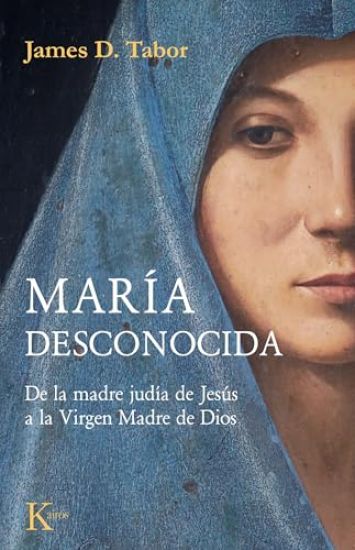
Mar a, madre de Jes s, es probablemente la mujer m s conocida y a la vez menos comprendida de la historia. Venerada por millones, ha sido el et reo s mbolo de la pureza y la virginidad. Pero qu hay de la Mar a hist rica? La joven jud a, madre soltera de ocho hijos; la ciudadana desafiante de una Galilea ocupada por Roma, que sobrevivi en uno de los periodos m s peligrosos de la historia jud a; una poca que se cobr la vida de tres de sus hijos: Jes s y Sim n, crucificados; y Santiago, lapidado. Hablamos de la Mar a hist rica, cuyos ejemplos y ense anzas podr an convertirla, de hecho, en la fundadora de lo que hoy llamamos cristianismo. Esta Mar a ha sido sistem ticamente borrada a lo largo de dos milenios por un proyecto teol gico, cultural y pol tico que buscaba excluirla del mbito humano y marginarla por su condici n de mujer, madre y jud a. En Mar a desconocida James D. Tabor deconstruye la historia gracias a m s de tres d cadas de indagaci n textual y arqueol gica. La b squeda de la Mar a hist rica proporciona una nueva perspectiva de Jes s y sus primeros seguidores, recuperando la esencia del cristianismo original. Mary, mother of Jesus, is the best known--and least known--woman in history. Revered and worshipped by millions, she remains a figment of the imagination, the ethereal subject of Raphaels and Botticellis, bathed in heavenly light, too virginal and pure to move among us. But what about the real Mary? The young Jewish woman and single mother of eight--five boys and three girls. The defiant citizen of Roman-occupied Galilee who survived through one of the most dangerous periods of Jewish history--an ancient "game of thrones" that claimed the lives of three of her sons: Jesus and Simon by crucifixion, James by stoning. The historical Mary whose teachings and courageous example may in fact make her the "first founder" of what we now call Christianity. This Mary has not only been lost to us--she has been systematically erased over the past two millennia by a theological, cultural, and political program intent on removing her from the human realm and marginalizing her womanhood, motherhood, and Jewishness. In The Lost Mary, James D. Tabor corrects the record, laying out the results of his intensive textual and archaeological sleuthing over the past three decades, including new evidence regarding Mary's genealogy (which may be hiding in plain sight in the New Testament ). Tabor's quest for the historical Mary offers a transformative perspective on Jesus and his early followers, and recovers the nature and essence of earliest Christianity.