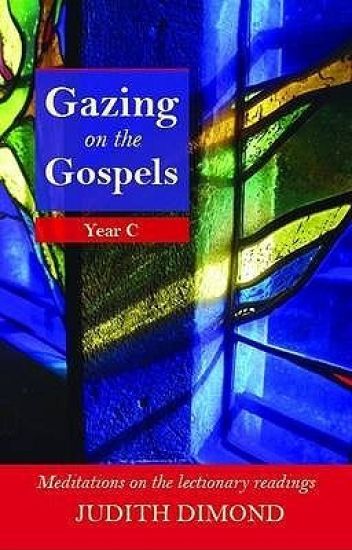
'Gaze on him . . . Consider him . . . Contemplate him . . . As you desire to imitate him.' This advice from St Clare of Assisi is the key to unlocking the door to the heart of Jesus' teaching. Her words provide a pattern of meditation that brings alive the Gospel reading for every Sunday of the Revised Common Lectionary. 'At every point the author persuades the reader that the Gospel readings really are relevant to our contemporary lives . . . she offers many images that will help congregations and preachers alike . . . For its sheer poetry and imagination, Judith Dimond's Gazing on the Gospels . . . is well worth buying'. Robin Gill, in Outlook
'Gaze on him . . . Consider him . . . Contemplate him . . . As you desire to imitate him.' This advice from St Clare of Assisi is the key to unlocking the door to the heart of Jesus' teaching. Her words provide a pattern of meditation that brings alive the Gospel reading for every Sunday of the Revised Common Lectionary. 'At every point the author persuades the reader that the Gospel readings really are relevant to our contemporary lives . . . she offers many images that will help congregations and preachers alike . . . For its sheer poetry and imagination, Judith Dimond's Gazing on the Gospels . . . is well worth buying'. Robin Gill, in Outlook
'Gaze on him . . . Consider him . . . Contemplate him . . . As you desire to imitate him.' This advice from St Clare of Assisi is the key to unlocking the door to the heart of Jesus' teaching. Her words provide a pattern of meditation that brings alive the Gospel reading for every Sunday of the Revised Common Lectionary. 'At every point the author persuades the reader that the Gospel readings really are relevant to our contemporary lives . . . she offers many images that will help congregations and preachers alike . . . For its sheer poetry and imagination, Judith Dimond's Gazing on the Gospels . . . is well worth buying'. Robin Gill, in Outlook
This Lent book will explore biblical stories and characters that exemplify a whole range of relationships, in good times and bad. Relationships will be defined very widely, to include even people who don't see themselves in relationship. The stories will be related to common emotions - love, friendship, rivalry, conflict, trust, hatred, fear - and linked with 21st-century attitudes, culture and moral dilemmas. The book will cover OT stories as well as NT, and explore dysfunctional as well as functional relationships to make clear how experiences of loss and failure - which culminated, for Jesus, in the Cross - are inevitably part of our relationships, but can be healed by the Resurrection. The making of choices is pivotal in our life journey and these meditations will focus on key moments of decision, and their consequences. This will often involve reflection on the power of temptation: the ways in which biblical characters respond to it, and their varying success in withstanding it. The reflections will range widely, but will start with Jesus' temptations and conclude with stories from Holy Week and Easter, so that the relevance to Lent is maintained.
Is there anything you can do when development threatens your local forest, beach, prairie, or wetland? Yes, there is. Across America, citizen activists are fighting and winning battles against unwanted development in their own communities. To help you resist the urban sprawl and absentee landowners that can wreck small towns and cities alike, this book is a practical, hands-on guide for building a grassroots campaign to defeat undesirable development. Written by a successful activist, Citizen's Primer for Conservation Activism takes you through all the steps necessary to stop unplanned development in your community: Identifying the issues at stake Getting involved and developing leadership Devising a strategy Hiring and working with legal counsel Building coalitions and partnerships Influencing local government Conducting a media campaign Raising money Countering developer tactics Managing the whole process With the proven strategies in this easy-to-access book, you can quickly gear up to challenge unwanted development and preserve the character of your local community.
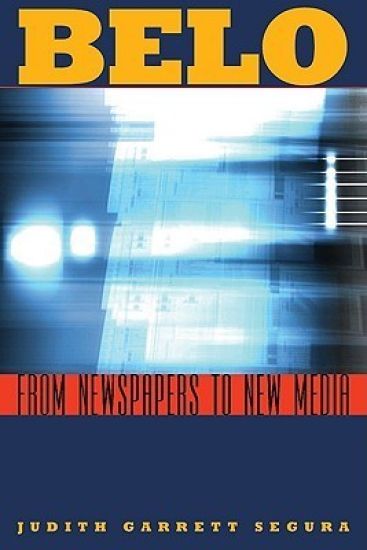
Founded in Galveston in 1842 with the launch of the Daily News, the Belo Corporation entered the twenty-first century as a powerhouse conglomerate, owning four daily newspapers (including the Dallas Morning News), twenty-six television and cable stations, and over thirty interactive Web sites. The first comprehensive work to bring to life this remarkable success story, Belo blends biography with a history of corporate strategies. Drawing on company archives and private papers of key figures, including A. H. Belo and G. B. Dealey, former company archivist Judith Garrett Segura brings to life important chapters in the cultural life of Texas, from Galveston's days as the largest and most vibrant town in the Republic of Texas, through the wars that followed statehood, periods of economic hardship, and the effects of sweeping social change. Turning points in the company's history, such as the sale of its Galveston paper when company revenues were dramatically affected by candid reporting of Ku Klux Klan activities in the 1920s, highlight crucial elements of the press's role in the life of a community. Segura also charts technological advances, from the telegraph and the typographers' union to the dawn of the Information Age. Finally, she includes the most complete portrait of the Dallas Times Herald Company to date, documenting the rise and fall of Belo's chief rival. This is a story of frontier survival and futuristic thinking, marketing genius and historic reporting, nurtured by a family of mavericks.
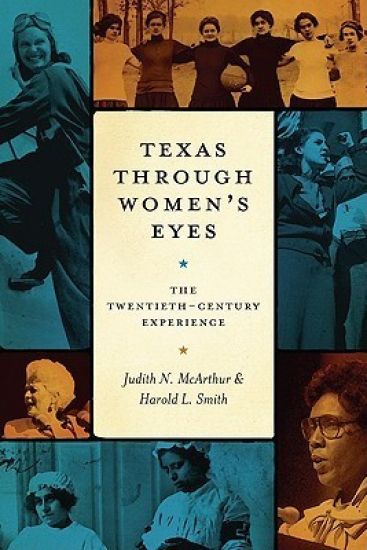
Winner, Liz Carpenter Award For Research in the History of Women, Texas State Historical Association, 2010Texas women broke barriers throughout the twentieth century, winning the right to vote, expanding their access to higher education, entering new professions, participating fully in civic and political life, and planning their families. Yet these major achievements have hardly been recognized in histories of twentieth-century Texas. By contrast, Texas Through Women's Eyes offers a fascinating overview of women's experiences and achievements in the twentieth century, with an inclusive focus on rural women, working-class women, and women of color.McArthur and Smith trace the history of Texas women through four eras. They discuss how women entered the public sphere to work for social reforms and the right to vote during the Progressive era (1900–1920); how they continued working for reform and social justice and for greater opportunities in education and the workforce during the Great Depression and World War II (1920–1945); how African American and Mexican American women fought for labor and civil rights while Anglo women laid the foundation for two-party politics during the postwar years (1945–1965); and how second-wave feminists (1965–2000) promoted diverse and sometimes competing goals, including passage of the Equal Rights Amendment, reproductive freedom, gender equity in sports, and the rise of the New Right and the Republican party.
By the mid-twentieth century, Eastern European Jews had become one of Argentina's largest minorities. Some represented a wave of immigration begun two generations before; many settled in the province of Entre RÍos and founded an agricultural colony. Taking its title from the resulting hybrid of acculturation, The Invention of the Jewish Gaucho examines the lives of these settlers, who represented a merger between native cowboy identities and homeland memories. The arrival of these immigrants in what would be the village of Villa Clara coincided with the nation's new sense of liberated nationhood. In a meticulous rendition of Villa Clara's social history, Judith Freidenberg interweaves ethnographic and historical information to understand the saga of European immigrants drawn by Argentine open-door policies in the nineteenth century and its impact on the current transformation of immigration into multicultural discourses in the twenty-first century. Using Villa Clara as a case study, Freidenberg demonstrates the broad power of political processes in the construction of ethnic, class, and national identities. The Invention of the Jewish Gaucho draws on life histories, archives, material culture, and performances of heritage to enhance our understanding of a singular population-and to transform our approach to social memory itself.
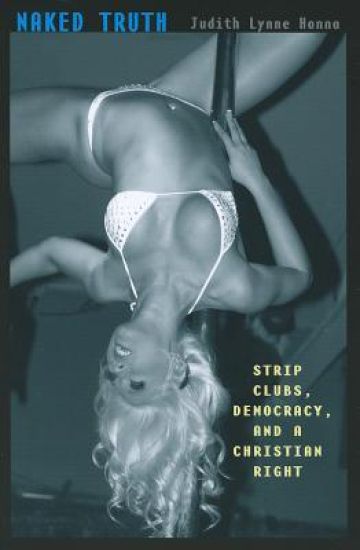
Across America, strip clubs have come under attack by a politically aggressive segment of the Christian Right. Using plausible-sounding but factually untrue arguments about the harmful effects of strip clubs on their communities, the Christian Right has stoked public outrage and incited local and state governments to impose onerous restrictions on the clubs with the intent of dismantling the exotic dance industry. But an even larger agenda is at work, according to Judith Lynne Hanna. In Naked Truth, she builds a convincing case that the attack on exotic dance is part of the activist Christian Right's "grand design" to supplant constitutional democracy in America with a Bible-based theocracy.Hanna takes readers onstage, backstage, and into the community and courts to reveal the conflicts, charges, and realities that are playing out at the intersection of erotic fantasy, religion, politics, and law. She explains why exotic dance is a legitimate form of artistic communication and debunks the many myths and untruths that the Christian Right uses to fight strip clubs. Hanna also demonstrates that while the fight happens at the local level, it is part of a national campaign to regulate sexuality and punish those who do not adhere to Scripture-based moral values. Ultimately, she argues, the naked truth is that the separation of church and state is under siege and our civil liberties-free speech, women's rights, and free enterprise-are at stake.
Women in television news have made great strides in the past twenty-five years. No longer limited to being the token pretty face on the nightly newscast, women have taken their places as working journalists in newsrooms, on the campaign trail, in war zones, and in the highest echelons of network news management. Barbara Walters and Connie Chung have even occupied the coveted network anchor's chair, if only briefly. In this book, 70 of the foremost women in television news reflect on their professional successes, the personal and professional sacrifices that often bought those successes, and the barriers that still confront women in the news business. Weaving their interviews into a compelling text, Judith Marlane covers a wide range of issues, including looks versus ability and experience, sexual harassment, the resistance to women news anchors, the difficulties of balancing work and family life, women's and men's salaries, and the willingness of women to help other women in the business. This book builds from Marlane's 1976 work, Women in Television News. Interviews with many of the same women highlight the gains that women have made in broadcast journalism. Simultaneously, Marlane has expanded her range of informants to include fifteen of America's most famous male anchors and correspondents to gather their assessments of the role of women in broadcasting today.
The Performer-Audience Connection is a pioneering foray into one of the major puzzles of human communication: the communication of emotion in dance. It is the first attempt of its kind systematically to investigate what performers wish to convey and what audiences perceive in the performance of dance. The centerpiece of this provocative book is an examination of performer intentions and audience response at eight dance performances in Washington, D.C. Part of the Smithsonian Institution Division of Performing Arts Dance Series, these concerts featured a variety of dance genres and cultures: American tap dance, Kathakali dance-drama from Kerala, India, Japanese Kabuki, contemporary avant-garde dance, Philippine folk dance, the Indian classical tradition of Kuchipudi, and modern dance to an AfroAmerican spiritual. How did dancer and audience interact at the emotional level on these eight occasions? What affected performer-audience rapport? Through interviews of both spectators and dancers, Judith Lynne Hanna explores the performers' ways of imparting emotion through movement and audience members' expectations and responses. In doing so she casts new light on important issues of cultural identity, sex role, historic attitudes toward dance, and even marketing the arts today. A landmark work not only for performers who wish to reach their audiences more effectively but also for choreographers, anthropologists, specialists in nonverbal communication, behavioral scientists, educators, and all who are fascinated by the arts and the special magic of the "performer-audience connection."
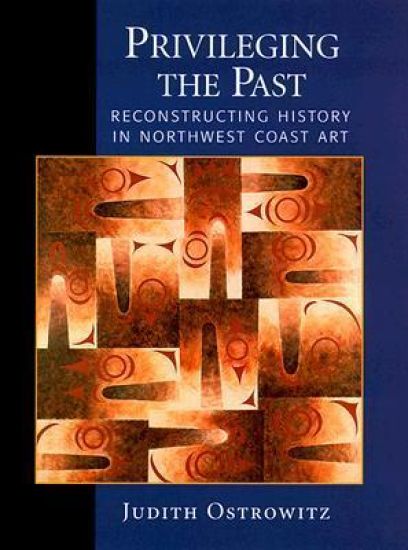
What makes Northwest Coast Native American art authentic? And why, when most of art history is a history of the avant-garde, is tradition so deeply valued by contemporary Native American artists and their patrons? In Privileging the Past, Judith Ostrowitz approaches these questions through a careful consideration of replicas, reproductions, and creative translations of past forms of Northwest Coast dances, ceremonies, masks, painted screens, and houses.Ostrowitz examines several different art forms—two very different architectural constructions, a dance performance, and modern sculptures and dance paraphernalia—considering their relations to arts of the past. Chief Shakes' Community House has endured, in various forms, at the same site in Wrangell, Alaska, for close to 170 years as an "old style" Tlingit tribal house. The Grand Hall of the Canadian Museum of Civilization at Hull, Quebec, is constructed as a Native village with an assemblage of replicated houses made by contemporary Native artists, both old and new totem poles, and references to the Northwest Coast landscape. The opening ceremonies of the exhibition Chiefly Feasts: The Enduring Kwakiutl Potlatch at the American Museum of Natural History in New York in October 1991 included a dance program by a group of Native performers from Vancouver Island, B.C., adapting traditional elements for a long and complex theatrical presentation. Finally, artists such as Art Thompson, Beau Dick, Doug Cranmer, Robert Davidson, Susan Point, and Jim Schoppert produce vital and lively art—masks, rattles, prints, and paintings are considered here—that utilizes inherited subject matter and conventionalized stylistic devices. Ostrowitz finds that these replicas and performances function as do most other works of art, referencing history in a highly selective manner.Ostrowitz draws on an extensive body of interviews she conducted with tribal leaders, artists, and artisans long known and highly respected in both Native and non-Native venues. Throughout the book, we hear their voices—members of the Alfred, Cranmer, Hunt, Tallio, and Webster families, and many other individuals—as they relate their responses to the modern adaptation of their cultural heritage.Privileging the Past explores intellectual issues raised by postmodern theory, supported by detailed studies of projects that will interest a broad audience of students, historians, museum-goers, and those intrigued by Native American art and cultural history.
Interventions examines how members of Native American and Canadian First Nation groups situate their art in contemporary global environments, creating a new kind of nexus between the requirements of Native communities and the forms of public display that are of interest to worldwide audiences.Judith Ostrowitz selects several critical cases to demonstrate this strategic tacking between macro- and micro-identities. The long-term implications of the totem pole restoration projects of the second half of the twentieth century; the opening of the National Museum of the American Indian; the dance event in Juneau known as Celebration; the impact of modernism and postmodernism on Indian art; and the use of electronic media to establish Indian territory on the Internet all demonstrate facets of the purposeful and context-driven strategies of self-representation designed by Native communities.The NMAI may be the paramount example of the construction of public identity originating from Indian Country to date. Ostrowitz describes how, in the course of the museum's creation, the distinctions among many specific groups of origin were selectively blurred in service of larger goals. In contrast, the purpose of the gathering of Tlingit, Haida, and Tsimshian people at the biennial Celebration is to rejoice in distinct Native groups and in the vitality of their traditions. Postmodernism has afforded twentieth- and twenty-first century Native artists the opportunity to penetrate mainstream art worlds, where experimentation is encouraged and the former criteria for the production of "Native art" are selectively referenced.Through close readings of Native cultural productions, Ostrowitz puts Native art practices into conversation with larger issues in cultural studies. Art audiences are becoming familiar with many works that address global communities but are generated in environments affected by specific ethnic, gendered, and cultural perspectives. As the work of non-Native artists in world-system venues is now also interpreted in the context of the biographical and cultural histories of their makers, all works of art may be better appreciated as expressions of local artistic position.
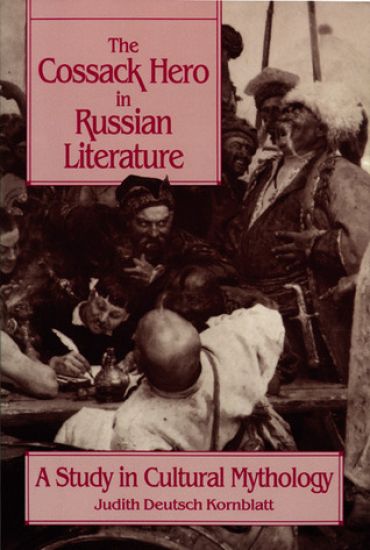
The Cossack Hero in Russian Literature studies the development of the Cossack hero and identifies him as part of Russian cultural mythology. Judith Kornblatt explores the power of the myth as a literary image, providing new and challenging readings of 19th- and 20th-century works by Pushkin, Gogol, Tolstoi, Khlebnikov, Babel, Tsvetaeva, Sholokhov and a number of lesser-known writers, all of whom were attracted to the Cossack. By comparing the Cossack with the American cowboy, she reveals what is both unique and universal about the Russian self-image. Grappling with the phenomenon of myth-formation Kornblatt places the Cossack hero in historical and sociopolitical context, chronicling the growth of the Cossack myth of unbounded wholeness and life, its gradually increasing influence on the Russian national consciousness during the 19th and early 20th centuries, and its eventual demise under the strictures of Stalinist socialist realism. Kornblatt's eclectic methodology draws upon Barthes, White, Turner and other Western theorists as well as upon such leading Russian critics and philosophers of language as Bakhtin, Lotman and Uspensky.
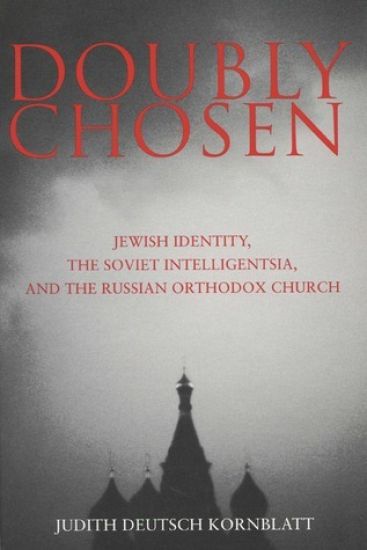
This work provides a detailed study of a phenomenon in post-Stalinist Russia - the conversion of thousands of Russian Jewish intellectuals to Orthodox Christianity in the 1960s and in the 1980s, the decades before and after the great exodus of Jews from the Soviet Union. It contends that the choice of baptism into the Church was an act of moral courage in the face of Soviet persecution, motivated by solidarity with Russian Christian dissidents and intellectuals. It considers the dwindling Jewish religious practice in Russia, the transformation of Jews from a religious community to an ethnic one, a longing for spiritual values, and the forging of a new Jewish identity within the dissident movement.
Fellows's first book for the Press, Farm Boys: Lives of Gay Men from the Rural Midwest, is one of our all-time and ongoing bestsellers and is the third bestseller at InsightOut Book Club. In A Passion to Preserve, Fellows expands upon the art of oral history he perfected in Farm Boys. Fellows' portraits of gay conservationists and preservationists should be eye opening and possibly controversial.
A wide-ranging study of empire, religious prophecy, and nationalism in literature, Russia's Rome: Imperial Visions, Messianic Dreams, 1890-1940 provides the first examination of Russia's self-identification with Rome during a period that encompassed the revolutions of 1905 and 1917 and the rise of the Soviet state. Analyzing Rome-related texts by six writers--Dmitrii Merezhkovskii, Valerii Briusov, Aleksandr Blok, Viacheslav Ivanov, Mikhail Kuzmin, and Mikhail Bulgakov--Judith E. Kalb argues that the myth of Russia as the 'Third Rome' was resurrected to create a Rome-based discourse of Russian national identity that endured even as the empire of the tsars declined and fell and a new state replaced it. Russia generally finds itself beyond the purview of studies concerned with the ongoing potency of the classical world in modern society. Slavists, for their part, have only recently begun to note the influence of classical civilization not only during Russia's neo-classical eighteenth century but also during its modernist period. With its interdisciplinary scope, Russia's Rome fills a gap in both Russian studies and scholarship on the classical tradition, providing valuable material for scholars of Russian culture and history, classicists, and readers interested in the classical heritage.
Traversing time, cities, and voices, The Apollonia Poems finds its central aesthetic in place: physical and locational, perceptual and imagined. Judith Vollmer's poet-wanderer explores the layered terrains of urban environments from Pittsburgh to the Mediterranean to the Carpathians. Employing narratives and lyrics, songs and reports, and a short verse-play in three voices, Vollmer's meditations are by turns elegiac and celebratory, colloquial and lyrical.