Kirjojen hintavertailu. Mukana 11 213 693 kirjaa ja 11 kauppaa.

Kirjahaku

Etsi kirjoja tekijän nimen, kirjan nimen tai ISBN:n perusteella.

1000 tulosta hakusanalla Judithe Little

Antigone's Claim

Antigone's Claim

Judith Butler

Columbia University Press
2002
pokkari
The celebrated author of Gender Trouble here redefines Antigone's legacy, recovering her revolutionary significance and liberating it for a progressive feminism and sexual politics. Butler's new interpretation does nothing less than reconceptualize the incest taboo in relation to kinship-and open up the concept of kinship to cultural change. Antigone, the renowned insurgent from Sophocles's Oedipus, has long been a feminist icon of defiance. But what has remained unclear is whether she escapes from the forms of power that she opposes. Antigone proves to be a more ambivalent figure for feminism than has been acknowledged, since the form of defiance she exemplifies also leads to her death. Butler argues that Antigone represents a form of feminist and sexual agency that is fraught with risk. Moreover, Antigone shows how the constraints of normative kinship unfairly decide what will and will not be a livable life. Butler explores the meaning of Antigone, wondering what forms of kinship might have allowed her to live. Along the way, she considers the works of such philosophers as Hegel, Lacan, and Irigaray. How, she asks, would psychoanalysis have been different if it had taken Antigone-the "postoedipal" subject-rather than Oedipus as its point of departure? If the incest taboo is reconceived so that it does not mandate heterosexuality as its solution, what forms of sexual alliance and new kinship might be acknowledged as a result? The book relates the courageous deeds of Antigone to the claims made by those whose relations are still not honored as those of proper kinship, showing how a culture of normative heterosexuality obstructs our capacity to see what sexual freedom and political agency could be.
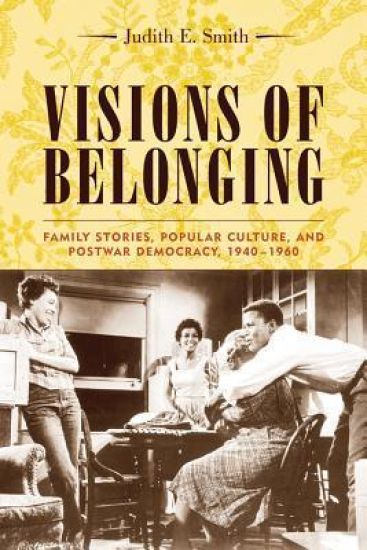
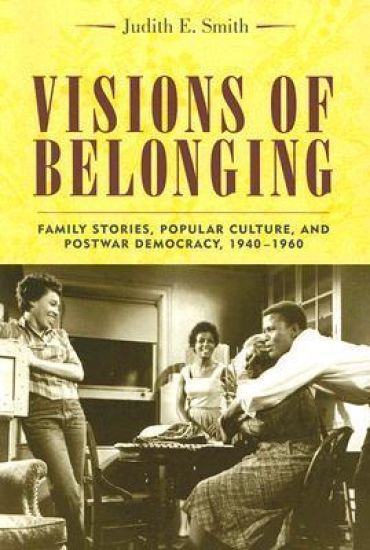
Visions of Belonging

Visions of Belonging

Judith Smith

Columbia University Press
2004
sidottu
Visions of Belonging explores how beloved and still-remembered family stories-A Tree Grows in Brooklyn, I Remember Mama, Gentleman's Agreement, Death of a Salesman, Marty, and A Raisin in the Sun-entered the popular imagination and shaped collective dreams in the postwar years and into the 1950s. These stories helped define widely shared conceptions of who counted as representative Americans and who could be recognized as belonging. The book listens in as white and black authors and directors, readers and viewers reveal divergent, emotionally textured, and politically charged social visions. Their diverse perspectives provide a point of entry into an extraordinary time when the possibilities for social transformation seemed boundless. But changes were also fiercely contested, especially as the war's culture of unity receded in the resurgence of cold war anticommunism, and demands for racial equality were met with intensifying white resistance. Judith E. Smith traces the cultural trajectory of these family stories, as they circulated widely in bestselling paperbacks, hit movies, and popular drama on stage, radio, and television. Visions of Belonging provides unusually close access to a vibrant conversation among white and black Americans about the boundaries between public life and family matters and the meanings of race and ethnicity. Would the new appearance of white working class ethnic characters expand Americans'understanding of democracy? Would these stories challenge the color line? How could these stories simultaneously show that black families belonged to the larger "family" of the nation while also representing the forms of danger and discriminations that excluded them from full citizenship? In the 1940s, war-driven challenges to racial and ethnic borderlines encouraged hesitant trespass against older notions of "normal." But by the end of the 1950s, the cold war cultural atmosphere discouraged probing of racial and social inequality and ultimately turned family stories into a comforting retreat from politics. The book crosses disciplinary boundaries, suggesting a novel method for cultural history by probing the social history of literary, dramatic, and cinematic texts. Smith's innovative use of archival research sets authorial intent next to audience reception to show how both contribute to shaping the contested meanings of American belonging.
Visions of Belonging

Visions of Belonging

Judith Smith

Columbia University Press
2006
pokkari
Visions of Belonging explores how beloved and still-remembered family stories-A Tree Grows in Brooklyn, I Remember Mama, Gentleman's Agreement, Death of a Salesman, Marty, and A Raisin in the Sun-entered the popular imagination and shaped collective dreams in the postwar years and into the 1950s. These stories helped define widely shared conceptions of who counted as representative Americans and who could be recognized as belonging. The book listens in as white and black authors and directors, readers and viewers reveal divergent, emotionally textured, and politically charged social visions. Their diverse perspectives provide a point of entry into an extraordinary time when the possibilities for social transformation seemed boundless. But changes were also fiercely contested, especially as the war's culture of unity receded in the resurgence of cold war anticommunism, and demands for racial equality were met with intensifying white resistance. Judith E. Smith traces the cultural trajectory of these family stories, as they circulated widely in bestselling paperbacks, hit movies, and popular drama on stage, radio, and television. Visions of Belonging provides unusually close access to a vibrant conversation among white and black Americans about the boundaries between public life and family matters and the meanings of race and ethnicity. Would the new appearance of white working class ethnic characters expand Americans'understanding of democracy? Would these stories challenge the color line? How could these stories simultaneously show that black families belonged to the larger "family" of the nation while also representing the forms of danger and discriminations that excluded them from full citizenship? In the 1940s, war-driven challenges to racial and ethnic borderlines encouraged hesitant trespass against older notions of "normal." But by the end of the 1950s, the cold war cultural atmosphere discouraged probing of racial and social inequality and ultimately turned family stories into a comforting retreat from politics. The book crosses disciplinary boundaries, suggesting a novel method for cultural history by probing the social history of literary, dramatic, and cinematic texts. Smith's innovative use of archival research sets authorial intent next to audience reception to show how both contribute to shaping the contested meanings of American belonging.
Empowerment Practice with Families in Distress

Empowerment Practice with Families in Distress

Judith Bula Wise

Columbia University Press
2005
sidottu
For more than 150 years, empowering practices have been used by social workers in their work with families, but the techniques of today differ significantly from those of the pioneers or even from those of a few years ago. Today's practitioners recognize that empowering others is impossible; social workers can, however, assist others as they empower themselves. This book integrates time-honored approaches with today's more modest goals, mindful of what empowerment can and cannot do. Synthesizing several theoretical supports-the strengths perspective, system theory, theories of family well-being, and theories of coping-the author responds to the question "What works?" with today's families in need. Practice illustrations are provided throughout to bring concepts to life and, more important, to present families describing their own experiences with achieving empowerment.
Empowerment Practice with Families in Distress

Empowerment Practice with Families in Distress

Judith Bula Wise

Columbia University Press
2005
pokkari
For more than 150 years, empowering practices have been used by social workers in their work with families, but the techniques of today differ significantly from those of the pioneers or even from those of a few years ago. Today's practitioners recognize that empowering others is impossible; social workers can, however, assist others as they empower themselves. This book integrates time-honored approaches with today's more modest goals, mindful of what empowerment can and cannot do. Synthesizing several theoretical supports-the strengths perspective, system theory, theories of family well-being, and theories of coping-the author responds to the question "What works?" with today's families in need. Practice illustrations are provided throughout to bring concepts to life and, more important, to present families describing their own experiences with achieving empowerment.
Different Views in Hudson River School Painting

Different Views in Hudson River School Painting

Judith Hansen O'Toole

Columbia University Press
2008
pokkari
Hudson River School artists shared an awe of the magnificence of nature as well as a belief that the untamed American scenery reflected the national character. In this new work, color reproductions of more than 115 paintings capture the beauty and illuminate the aesthetic and philosophical principles of the Hudson River School painters. The pieces included in this volume reflect a period (1825-1875) when American landscape painting was most thoroughly explored and formalized with personal, artistic, cultural, and national identifications. Judith Hansen O'Toole reveals the subtleties and quiet majesty of the works and discusses their shared iconography, the ways in which artists responded to one another's paintings, and how the paintings reflected nineteenth-century American cultural, intellectual, and social milieus. Different Views is also the first major study to examine closely the Hudson River School artists' practice of creating thematically related pairs and series of paintings. O'Toole considers painters' use of this method to express different moods and philosophical concepts. She observes artists' representations of landscape and their nuanced depictions of weather, light, and season. By comparing and contrasting Hudson River School paintings, O'Toole reveals differences in meaning, emotion, and cultural connotation. Different Views in Hudson River School Painting contains reproductions of works from a range of prominent and lesser-known artists, including Jasper Francis Cropsey, Sanford Robinson Gifford, Asher B. Durand, Frederic Edwin Church, Albert Bierstadt, John Frederic Kensett, and John William Casilear. The works come from a leading private collection and were recently exhibited at the Westmoreland Museum of American Art.
Pragmatism and Social Hope

Pragmatism and Social Hope

Judith M. Green

Columbia University Press
2008
sidottu
Since 9/11, citizens of all nations have been searching for a democratic public philosophy that provides practical and inspiring answers to the problems of the twenty-first century. Drawing on the wisdom of past and present pragmatist thinkers, Judith M. Green maps a contemporary form of citizenship that emphasizes participation and cooperation and reclaims the critical role of social movements and nongovernmental organizations. Starting with empowering processes of storytelling, truth and reconciliation, and collaborative vision-questing that allow individuals to give voice and new meaning to their loss, anxiety, and hope, Green frames cooperative inquiries to guide transformative actions. From this "second strand" of the democratic experience, leaders and participating citizens can help to shape a more desirable democratic future. In dialogue with Richard Rorty, Judith Butler, James Baldwin, Martin Luther King Jr., Elie Wiesel, Viktor Frankl, Cornel West, and other contemporary thinkers, Green defines the need for deeper understanding and fulfillment of the potentials of the democratic ideal. Drawing insights from Thomas Jefferson, Walt Whitman, William James, John Dewey, Jane Adams, and other earlier thinkers, Green frames a pragmatist understanding of emerging realities and possibilities, growing wells of shared truths, multifaceted histories, and mutually transformative experiences of citizenship. Employing examples from America's complex history and from recent world events, Green locates four sites for effective citizen activism: government at all levels, nonprofit organizations, issue-focused campaigns and social movements, and daily urban living. Green shows how citizens can revive social hope and deepen the democratic experience by drawing on their own knowledge and developing their capabilities through inclusive civic participation.
Parting Ways

Parting Ways

Judith Butler

Columbia University Press
2012
sidottu
Judith Butler follows Edward Said's late suggestion that through a consideration of Palestinian dispossession in relation to Jewish diasporic traditions a new ethos can be forged for a one-state solution. Butler engages Jewish philosophical positions to articulate a critique of political Zionism and its practices of illegitimate state violence, nationalism, and state-sponsored racism. At the same time, she moves beyond communitarian frameworks, including Jewish ones, that fail to arrive at a radical democratic notion of political cohabitation. Butler engages thinkers such as Edward Said, Emmanuel Levinas, Hannah Arendt, Primo Levi, Martin Buber, Walter Benjamin, and Mahmoud Darwish as she articulates a new political ethic. In her view, it is as important to dispute Israel's claim to represent the Jewish people as it is to show that a narrowly Jewish framework cannot suffice as a basis for an ultimate critique of Zionism. She promotes an ethical position in which the obligations of cohabitation do not derive from cultural sameness but from the unchosen character of social plurality. Recovering the arguments of Jewish thinkers who offered criticisms of Zionism or whose work could be used for such a purpose, Butler disputes the specific charge of anti-Semitic self-hatred often leveled against Jewish critiques of Israel. Her political ethic relies on a vision of cohabitation that thinks anew about binationalism and exposes the limits of a communitarian framework to overcome the colonial legacy of Zionism. Her own engagements with Edward Said and Mahmoud Darwish form an important point of departure and conclusion for her engagement with some key forms of thought derived in part from Jewish resources, but always in relation to the non-Jew. Butler considers the rights of the dispossessed, the necessity of plural cohabitation, and the dangers of arbitrary state violence, showing how they can be extended to a critique of Zionism, even when that is not their explicit aim. She revisits and affirms Edward Said's late proposals for a one-state solution within the ethos of binationalism. Butler's startling suggestion: Jewish ethics not only demand a critique of Zionism, but must transcend its exclusive Jewishness in order to realize the ethical and political ideals of living together in radical democracy.
Parting Ways

Parting Ways

Judith Butler

Columbia University Press
2013
pokkari
Judith Butler follows Edward Said's late suggestion that through a consideration of Palestinian dispossession in relation to Jewish diasporic traditions a new ethos can be forged for a one-state solution. Butler engages Jewish philosophical positions to articulate a critique of political Zionism and its practices of illegitimate state violence, nationalism, and state-sponsored racism. At the same time, she moves beyond communitarian frameworks, including Jewish ones, that fail to arrive at a radical democratic notion of political cohabitation. Butler engages thinkers such as Edward Said, Emmanuel Levinas, Hannah Arendt, Primo Levi, Martin Buber, Walter Benjamin, and Mahmoud Darwish as she articulates a new political ethic. In her view, it is as important to dispute Israel's claim to represent the Jewish people as it is to show that a narrowly Jewish framework cannot suffice as a basis for an ultimate critique of Zionism. She promotes an ethical position in which the obligations of cohabitation do not derive from cultural sameness but from the unchosen character of social plurality. Recovering the arguments of Jewish thinkers who offered criticisms of Zionism or whose work could be used for such a purpose, Butler disputes the specific charge of anti-Semitic self-hatred often leveled against Jewish critiques of Israel. Her political ethic relies on a vision of cohabitation that thinks anew about binationalism and exposes the limits of a communitarian framework to overcome the colonial legacy of Zionism. Her own engagements with Edward Said and Mahmoud Darwish form an important point of departure and conclusion for her engagement with some key forms of thought derived in part from Jewish resources, but always in relation to the non-Jew. Butler considers the rights of the dispossessed, the necessity of plural cohabitation, and the dangers of arbitrary state violence, showing how they can be extended to a critique of Zionism, even when that is not their explicit aim. She revisits and affirms Edward Said's late proposals for a one-state solution within the ethos of binationalism. Butler's startling suggestion: Jewish ethics not only demand a critique of Zionism, but must transcend its exclusive Jewishness in order to realize the ethical and political ideals of living together in radical democracy.
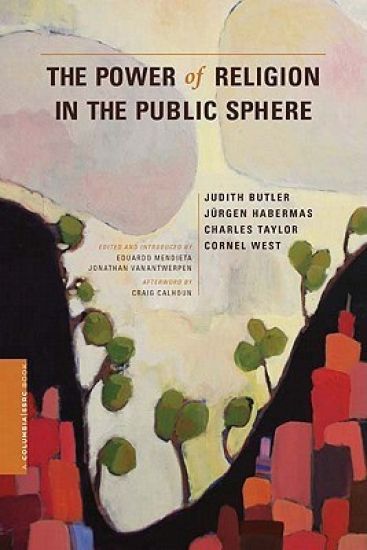
The Power of Religion in the Public Sphere

The Power of Religion in the Public Sphere

Judith Butler; Jurgen Habermas; Charles Taylor; Cornel West; Craig Calhoun

Columbia University Press
2011
sidottu
The Power of Religion in the Public Sphere represents a rare opportunity to experience a diverse group of preeminent philosophers confronting one pervasive contemporary concern: what role does--or should--religion play in our public lives? Reflecting on her recent work concerning state violence in Israel-Palestine, Judith Butler explores the potential of religious perspectives for renewing cultural and political criticism, while Jurgen Habermas, best known for his seminal conception of the public sphere, thinks through the ambiguous legacy of the concept of "the political" in contemporary theory. Charles Taylor argues for a radical redefinition of secularism, and Cornel West defends civil disobedience and emancipatory theology. Eduardo Mendieta and Jonathan VanAntwerpen detail the immense contribution of these philosophers to contemporary social and political theory, and an afterword by Craig Calhoun places these attempts to reconceive the significance of both religion and the secular in the context of contemporary national and international politics.
The Power of Religion in the Public Sphere

The Power of Religion in the Public Sphere

Judith Butler; Jurgen Habermas; Charles Taylor; Cornel West; Craig Calhoun

Columbia University Press
2011
pokkari
The Power of Religion in the Public Sphere represents a rare opportunity to experience a diverse group of preeminent philosophers confronting one pervasive contemporary concern: what role does--or should--religion play in our public lives? Reflecting on her recent work concerning state violence in Israel-Palestine, Judith Butler explores the potential of religious perspectives for renewing cultural and political criticism, while Jurgen Habermas, best known for his seminal conception of the public sphere, thinks through the ambiguous legacy of the concept of "the political" in contemporary theory. Charles Taylor argues for a radical redefinition of secularism, and Cornel West defends civil disobedience and emancipatory theology. Eduardo Mendieta and Jonathan VanAntwerpen detail the immense contribution of these philosophers to contemporary social and political theory, and an afterword by Craig Calhoun places these attempts to reconceive the significance of both religion and the secular in the context of contemporary national and international politics.
The Novel After Theory

The Novel After Theory

Judith Ryan

Columbia University Press
2011
sidottu
Novels began to incorporate literary theory in unexpected ways in the late twentieth century. Through allusion, parody, or implicit critique, theory formed an additional strand in fiction that raised questions about the nature of authorship and the practice of writing. Studying this phenomenon provides fresh insight into the recent development of the novel and the persistence of modern theory beyond the period of its greatest success. In this book, Judith Ryan opens these questions to a range of readers, drawing them into debates over the value of theory. Ryan investigates what prompted fiction writers to incorporate and respond to theory nearly thirty years ago. Designed for readers unfamiliar with the complexities of theory, Ryan's book introduces the discipline's major trends and controversies and notes the salient ideas of a carefully selected set of individual thinkers. Ryan follows novelists' adaptation to and engagement with arguments drawn from theory as they translate abstract ideas into language, structure, and fictional strategy. At the core of her book is a fascinating microstudy of French poststructuralism in its dialogue with narrative fiction. Investigating theories of textuality, psychology, and society in the work of Don DeLillo, Thomas Pynchon, J. M. Coetzee, Margaret Atwood, W. G. Sebald, and Umberto Eco, as well as Monika Maron, Alain Robbe-Grillet, Marguerite Duras, Marilynne Robinson, David Foster Wallace, and Christa Wolf, Ryan identifies subtle negotiations between author and theory and the richness this dynamic adds to texts. Resetting the way we think and learn about literature, her book reads current literary theory while uniquely tracing its shaping of a genre.
The Novel After Theory

The Novel After Theory

Judith Ryan

Columbia University Press
2014
pokkari
Novels began to incorporate literary theory in unexpected ways in the late twentieth century. Through allusion, parody, or implicit critique, theory formed an additional strand in fiction that raised questions about the nature of authorship and the practice of writing. Studying this phenomenon provides fresh insight into the recent development of the novel and the persistence of modern theory beyond the period of its greatest success. In this book, Judith Ryan opens these questions to a range of readers, drawing them into debates over the value of theory. Ryan investigates what prompted fiction writers to incorporate and respond to theory nearly thirty years ago. Designed for readers unfamiliar with the complexities of theory, Ryan's book introduces the discipline's major trends and controversies and notes the salient ideas of a carefully selected set of individual thinkers. Ryan follows novelists' adaptation to and engagement with arguments drawn from theory as they translate abstract ideas into language, structure, and fictional strategy. At the core of her book is a fascinating microstudy of French poststructuralism in its dialogue with narrative fiction. Investigating theories of textuality, psychology, and society in the work of Don DeLillo, Thomas Pynchon, J. M. Coetzee, Margaret Atwood, W. G. Sebald, and Umberto Eco, as well as Monika Maron, Alain Robbe-Grillet, Marguerite Duras, Marilynne Robinson, David Foster Wallace, and Christa Wolf, Ryan identifies subtle negotiations between author and theory and the richness this dynamic adds to texts. Resetting the way we think and learn about literature, her book reads current literary theory while uniquely tracing its shaping of a genre.
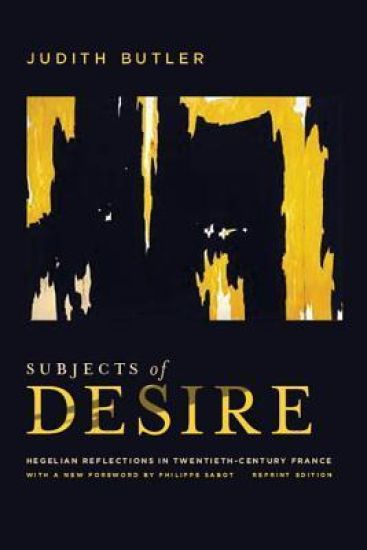
Subjects of Desire

Subjects of Desire

Judith Butler; Philippe Sabot

Columbia University Press
2012
sidottu
This classic work by one of the most important philosophers and critics of our time charts the genesis and trajectory of the desiring subject from Hegel's formulation in Phenomenology of Spirit to its appropriation by Kojeve, Hyppolite, Sartre, Lacan, Deleuze, and Foucault. Judith Butler plots the French reception of Hegel and the successive challenges waged against his metaphysics and view of the subject, all while revealing ambiguities within his position. The result is a sophisticated reconsideration of the post-Hegelian tradition that has predominated in modern French thought, and her study remains a provocative and timely intervention in contemporary debates over the unconscious, the powers of subjection, and the subject.
Subjects of Desire

Subjects of Desire

Judith Butler; Philippe Sabot

Columbia University Press
2012
pokkari
This classic work by one of the most important philosophers and critics of our time charts the genesis and trajectory of the desiring subject from Hegel's formulation in Phenomenology of Spirit to its appropriation by Kojeve, Hyppolite, Sartre, Lacan, Deleuze, and Foucault. Judith Butler plots the French reception of Hegel and the successive challenges waged against his metaphysics and view of the subject, all while revealing ambiguities within his position. The result is a sophisticated reconsideration of the post-Hegelian tradition that has predominated in modern French thought, and her study remains a provocative and timely intervention in contemporary debates over the unconscious, the powers of subjection, and the subject.
A Light in Dark Times

A Light in Dark Times

Judith Friedlander

Columbia University Press
2019
sidottu
The New School for Social Research opened in 1919 as an act of protest. Founded in the name of academic freedom, it quickly emerged as a pioneer in adult education—providing what its first president, Alvin Johnson, liked to call “the continuing education of the educated.” By the mid-1920s, the New School had become the place to go to hear leading figures lecture on politics and the arts and recent developments in new fields of inquiry, such as anthropology and psychoanalysis. Then in 1933, after Hitler rose to power, Johnson created the University in Exile within the New School. Welcoming nearly two hundred refugees, Johnson, together with these exiled scholars, defiantly maintained the great traditions of Europe’s imperiled universities.Judith Friedlander reconstructs the history of the New School in the context of ongoing debates over academic freedom and the role of education in liberal democracies. Against the backdrop of World War I and the first red scare, the rise of fascism and McCarthyism, the student uprisings during the Vietnam War and the downfall of communism in Eastern Europe, Friedlander tells a dramatic story of intellectual, political, and financial struggle through illuminating sketches of internationally renowned scholars and artists. These include, among others, Charles A. Beard, John Dewey, José Clemente Orozco, Robert Heilbroner, Hannah Arendt, and Ágnes Heller. Featured prominently as well are New School students, trustees, and academic leaders. As the New School prepares to celebrate its one-hundredth anniversary, A Light in Dark Times offers a timely reflection on the legacy of this unique institution, which has boldly defended dissident intellectuals and artists in the United States and overseas.
A Light in Dark Times

A Light in Dark Times

Judith Friedlander

Columbia University Press
2023
pokkari
The New School for Social Research opened in 1919 as an act of protest. Founded in the name of academic freedom, it quickly emerged as a pioneer in adult education—providing what its first president, Alvin Johnson, liked to call “the continuing education of the educated.” By the mid-1920s, the New School had become the place to go to hear leading figures lecture on politics and the arts and recent developments in new fields of inquiry, such as anthropology and psychoanalysis. Then in 1933, after Hitler rose to power, Johnson created the University in Exile within the New School. Welcoming nearly two hundred refugees, Johnson, together with these exiled scholars, defiantly maintained the great traditions of Europe’s imperiled universities.Judith Friedlander reconstructs the history of the New School in the context of ongoing debates over academic freedom and the role of education in liberal democracies. Against the backdrop of World War I and the first red scare, the rise of fascism and McCarthyism, the student uprisings during the Vietnam War and the downfall of communism in Eastern Europe, Friedlander tells a dramatic story of intellectual, political, and financial struggle through illuminating sketches of internationally renowned scholars and artists. These include, among others, Charles A. Beard, John Dewey, José Clemente Orozco, Robert Heilbroner, Hannah Arendt, and Ágnes Heller. Featured prominently as well are New School students, trustees, and academic leaders. As the New School prepares to celebrate its one-hundredth anniversary, A Light in Dark Times offers a timely reflection on the legacy of this unique institution, which has boldly defended dissident intellectuals and artists in the United States and overseas.
What World Is This?

What World Is This?

Judith Butler

Columbia University Press
2022
sidottu
The pandemic compels us to ask fundamental questions about our place in the world: the many ways humans rely on one another, how we vitally and sometimes fatally breathe the same air, share the surfaces of the earth, and exist in proximity to other porous creatures in order to live in a social world. What we require to live can also imperil our lives. How do we think from, and about, this common bind?Judith Butler shows how COVID-19 and all its consequences—political, social, ecological, economic—have challenged us to reconsider the sense of the world that such disasters bring about. Drawing on the work of Max Scheler, Maurice Merleau-Ponty, and critical feminist phenomenology, Butler illuminates the conditions in which we seek to make sense of our disorientation, precarity, and social bonds. What World Is This? offers a new account of interdependency in which touching and breathing, capacities that amid a viral outbreak can threaten life itself, challenge the boundaries of the body and selfhood. Criticizing notions of unlimited personal liberty and the killing forces of racism, sexism, and classism, this book suggests that the pandemic illuminates the potential of shared vulnerabilities as well as the injustice of pervasive inequalities.Exposing and opposing forms of injustice that deny the essential interrelationship of living creatures, Butler argues for a radical social equality and advocates modes of resistance that seek to establish new conditions of livability and a new sense of a shared world.
What World Is This?

What World Is This?

Judith Butler

Columbia University Press
2022
pokkari
The pandemic compels us to ask fundamental questions about our place in the world: the many ways humans rely on one another, how we vitally and sometimes fatally breathe the same air, share the surfaces of the earth, and exist in proximity to other porous creatures in order to live in a social world. What we require to live can also imperil our lives. How do we think from, and about, this common bind?Judith Butler shows how COVID-19 and all its consequences—political, social, ecological, economic—have challenged us to reconsider the sense of the world that such disasters bring about. Drawing on the work of Max Scheler, Maurice Merleau-Ponty, and critical feminist phenomenology, Butler illuminates the conditions in which we seek to make sense of our disorientation, precarity, and social bonds. What World Is This? offers a new account of interdependency in which touching and breathing, capacities that amid a viral outbreak can threaten life itself, challenge the boundaries of the body and selfhood. Criticizing notions of unlimited personal liberty and the killing forces of racism, sexism, and classism, this book suggests that the pandemic illuminates the potential of shared vulnerabilities as well as the injustice of pervasive inequalities.Exposing and opposing forms of injustice that deny the essential interrelationship of living creatures, Butler argues for a radical social equality and advocates modes of resistance that seek to establish new conditions of livability and a new sense of a shared world.