
Kirjahaku
Etsi kirjoja tekijän nimen, kirjan nimen tai ISBN:n perusteella.
1000 tulosta hakusanalla Judy Sims
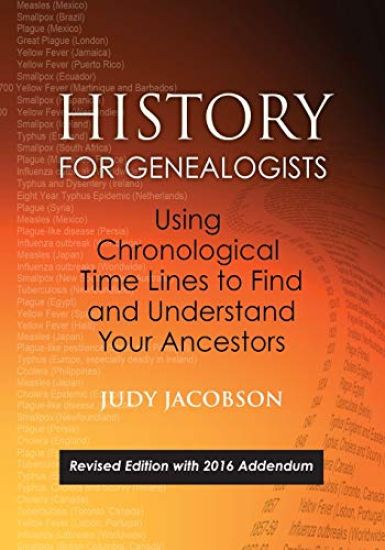
History for Genealogists, Using Chronological TIme Lines to Find and Understand Your Ancestors
Judy Jacobson
Genealogical Publishing Company
2017
sidottu

For Moms About To Rock (We Salute You) When suburban mother of two Judy Davids picked up a guitar and conspired with the neighborhood moms to form an all-mom rock band, she never imagined it would actually happen. Within weeks, the Mydols were born. Did they have a clue what they were doing? Nope. But from that point on, it was full steam ahead and never mind the laundry. Rock Star Mommy is a rallying cry for every woman who fondly recalls when she spent more time in mosh pits than "Mommy and Me" classes. From the moment Judy Davids donned a pair of go-go boots and jumped onstage, she embarked on an unforgettable journey. Rock Star Mommy chronicles Davids' experiences as a music fan, a mother, and the leader of the Mydols--one of the first "mommy" rock bands in the country. If you've ever had the urge to grab a guitar, dye your hair pink, and turn your minivan into a makeshift tour bus, you'll find a kindred spirit in Judy Davids. Rock Star Mommy is the perfect companion for any mom who's ever wanted to raise good kids--and raise a little hell at the same time "Let's get one thing clear: The Mydols don't take any lip." --People Judy Davids was a suburban soccer mom with rock 'n' roll dreams when she picked up a guitar and decided to start a mom rock band. Soon after, the Mydols were born. Suddenly Judy found herself in the pages of the supermarket tabloid The Sun while shopping for Lunchables. She lives in Royal Oak, Michigan, with her husband, John, sons Dylan and Willie, and a black Labrador retriever named Ozzie.
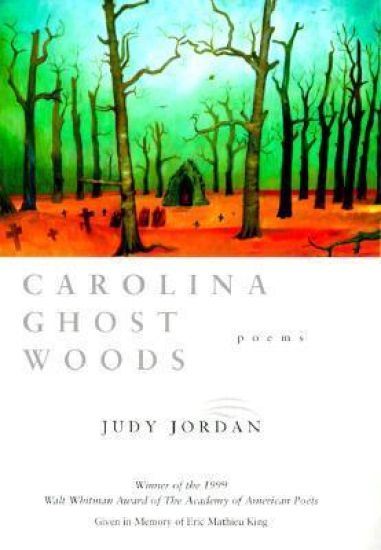
The daughter of sharecroppers and raised on a small farm near the Carolinas' border, Judy Jordan in her first poetry collection transforms the harshness of her youth with the beauty, inventiveness, and musicality of language. Physical and emotional privation, familial violence, racial enmity, and recurrent death haunt Carolina Ghost Woods, which is set amid the lush landscape of the South and enfolds the wildness, inclement and consoling by turns, of nature and agriculture. Jordan, though, reveals compassion as well as passion for her subject matter and the people in her poems, creating lines of hope and chords of ecstatic energy out of despair: ""Yet another attempt to find what the guidebooks can't say / in this place smelling green-walnut bitter / and drifting up at each kicked leaf: / something that promises we will go on.""Expansive, ambitious, risk-taking, these narrative-lyrics, often elegiac, engage the timeless subjects of absence and distance, using metaphor in a way that surprises the reader to a different level of awareness, ""like the years / that have paused to rub their furred mouths against my leg and pass on."" An extraordinary rendering of the mystery, heat, and closeness of the undisclosed, Carolina Ghost Woods offers a poetry of witness that does not sacrifice the aesthetics of language and rhythm: ""Here I bring my sorrows / like the delft-blue mussel shells, / fingertip tiny, most beautiful when strewn wide with loss.
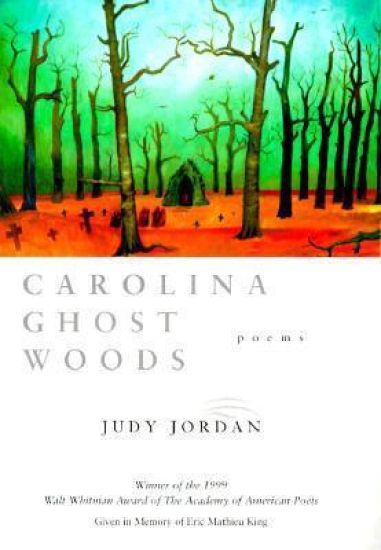
The daughter of sharecroppers and raised on a small farm near the Carolinas' border, Judy Jordan in her first poetry collection transforms the harshness of her youth with the beauty, inventiveness, and musicality of language. Physical and emotional privation, familial violence, racial enmity, and recurrent death haunt Carolina Ghost Woods, which is set amid the lush landscape of the South and enfolds the wildness, inclement and consoling by turns, of nature and agriculture. Jordan, though, reveals compassion as well as passion for her subject matter and the people in her poems, creating lines of hope and chords of ecstatic energy out of despair: ""Yet another attempt to find what the guidebooks can't say / in this place smelling green-walnut bitter / and drifting up at each kicked leaf: / something that promises we will go on.""Expansive, ambitious, risk-taking, these narrative-lyrics, often elegiac, engage the timeless subjects of absence and distance, using metaphor in a way that surprises the reader to a different level of awareness, ""like the years / that have paused to rub their furred mouths against my leg and pass on."" An extraordinary rendering of the mystery, heat, and closeness of the undisclosed, Carolina Ghost Woods offers a poetry of witness that does not sacrifice the aesthetics of language and rhythm: ""Here I bring my sorrows / like the delft-blue mussel shells, / fingertip tiny, most beautiful when strewn wide with loss.
Following her critically acclaimed first book of poetry, Carolina Ghost Woods, Judy Jordan here returns to a time in her life when she was homeless and working as a pizza deliverer at a Greek immigrant--owned restaurant. She absorbs the life experiences and unmet dreams of her coworkers, the parking lot prostitutes, and the other homeless with whom she shares coffee refills and the warmth of the bus station terminal. Their voices, along with Jordan's, come together in a haunting chorus that bears witness to the misery of poverty in the richest country in the world.Childhood abuse, drug use, violence, disease, and war enter into many of the stories that form this collective tale. Sometimes broken and eerie, sometimes lyrical and beautiful, and other times quirkily humorous, the poems gain an added edginess by the use of fixed forms and the re-imagining of the sonnet in the mouths of the twentieth century's wounded and alienated. Ultimately, Jordan explores the place of beauty, verse, and narrative in helping to move us into a future in which everyone's story is told. ""Tell me Chris are there nights long after the sun's// yolk has broken across the mountains' blue ridge// when time becomes so bold it crawls its way// from hibernation and shimmies naked// and shivering to the trees' highest branches,// when the river weeps so loud and long// the fish choke on their own old sorrows,// when the wild onions close their eyes one by one// and the Queen Anne's Lace fold up// their blood-spotted handkerchiefs// and lie down in ditch weed and sorrel the final time,// nights when the steel band of your ribs tightens// and your hands go cold, nights when you know// you will never see Greece again. Never.
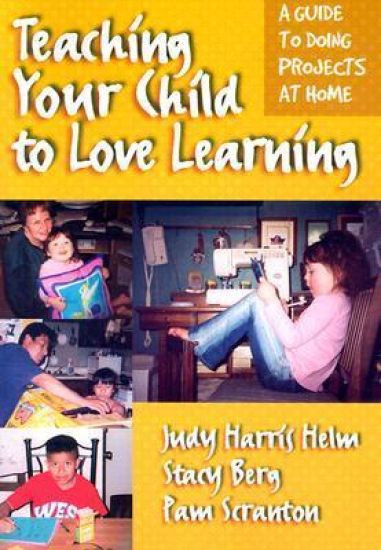
Teaching Your Child to Love Learning
Judy Harris Helm; Stacey Berg; Pam Scranton
Teachers' College Press
2004
nidottu
Do you want to raise children who love to learn? Maybe you are simply looking for a way to unplug your child from the TV or video games? Just by reading this book, you will be taking a proactive step in providing your child with meaningful experiences that will result in growth and plenty of family fun! The “project approach” has long been a tremendous tool for educators working with young children. In this book, three experienced teachers show parents, grandparents, and other caregivers how to do meaningful and exciting projects in their home and community. Featuring many photos of children doing project work, this volume: Thoroughly explains the benefits to both you and your child of doing projects together. Helps you transform your home into a place to learn, including guidance for collecting and storing materials, making time for projects, and documenting your child’s work. Presents the stories of seven projects that were done by children with the support of a parent or grandparent: Maude the Dog Project, Slime Project, Caterpillar Project, Race Car Project, Mexican Bakery Project, Horse Project, and Bus Project. Shows appropriate expectations and how to coach and build your child’s skills in reading and writing, mathematical development, scientific thinking, and more. Provides ideas for adapting the project approach for use in family daycare centers, home schooling, and gifted education.
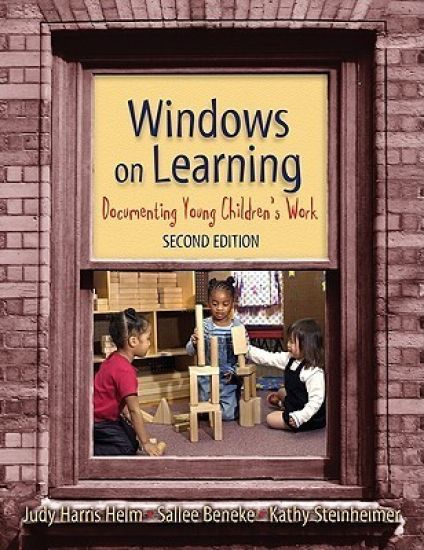
Windows on Learning
Judy Harris Helm; Sallee Beneke; Kathy Steinheimer; Lillian G. Katz
Teachers' College Press
2007
nidottu
Completely updated, this popular guide provides teachers with a proven method for documenting (collecting, analyzing, and displaying) young children's work at school. Written by teachers for teachers, this classic resource also shows principals, curriculum coordinators, and directors of Head Start and other early intervention programs how to develop children's portfolios to share with parents or to use for assessment and other accountability purposes.Applicable to many different curriculum models, the updated Second Edition: combines two books in one by integrating the teacher forms, materials, and planning sheets from the Teacher Materials companion resource into this single volume; features a larger size to accommodate more examples and photographs of children's and teachers' work; includes more information on incorporating standards in documentation; discusses how to analyze and talk about documentation in professional learning communities; provides additional information on preparing teacher portfolios; and, documents the Movie Theater Project, a literacy-rich project from an inner-city pre-kindergarten classroom.
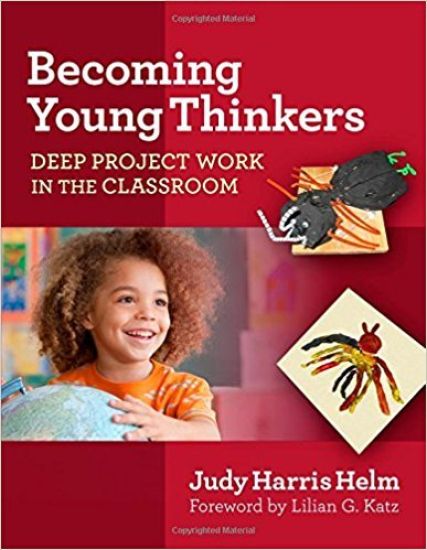
Continuing the exploration of project work in the author’s bestselling book, Young Investigators, Second Edition, this book is designed for preschool through primary grade teachers who know how to do project work but are ready to move to the next level. Focusing on how children become young thinkers, the book begins with mind, brain, and education science and instructional guidelines for all learning experiences, and then connects these to the rich foundation of the project approach. Helm provides specific strategies for deepening project work, including how to select meaningful topics, plan for projects, integrate standards (including the Common Core), support children's questioning, create provocations to promote engagement, and help children represent their ideas. This practical resource will extend practitioners’ knowledge about project-based learning so they can move beyond the basics to create project work that is more engaging, meaningful, and productive.
Young Investigators
Judy Harris Helm; Lilian G. Katz; Rebecca Wilson
TEACHERS' COLLEGE PRESS
2023
nidottu
Young Investigators has been expanded to guide today’s teachers through the process of conducting meaningful investigations with young children. This fourth edition of the bestseller begins with a new chapter, “How Children Really Learn,” which summarizes insights from mind-brain education research, showing how experiences firmly rooted in children’s curiosity and interest build intellectual capacity. The book then introduces the Project Approach with step-by-step guidance for incorporating child initiation and direction into curriculum while simultaneously addressing content standards. A new focus on critical Teacher Decision Points uses fresh-from-the-classroom examples to show how teachers think through project work. The emphasis on STEM experiences has been expanded to include STEAM through a new chapter, “The Role of Project Work in the Arts” This book makes project-based learning possible with the youngest children (toddlers through 2nd grade) who are not yet proficient in reading and writing, but capable of deep, focused thinking. Throughout, readers empathize with teachers’ concerns, witness how they find solutions to challenges, and feel the excitement of children during project work. Young Investigators is appropriate for teachers new to using the Project Approach, as well as for those who already have experience. Book Features: • Examples of projects from child care centers and preschool, K–2, and special education classrooms. • Instructions for incorporating standards and STEAM skills into project work. • A variety of experiences to help children connect to the natural world. • Toddler projects that reflect knowledge from recent mind-brain research. • Tools for integrating required curriculum goals and for assessing achievement. • A Teacher Project Planning Journal that leads teachers through the major decision points of project work. • Full-color photographs of children engaged with projects. • A study guide for pre- and inservice teachers (available at www.tcpress.com).
Young Investigators
Judy Harris Helm; Lilian G. Katz; Rebecca Wilson
TEACHERS' COLLEGE PRESS
2023
sidottu
Young Investigators has been expanded to guide today's teachers through the process of conducting meaningful investigations with young children. This fourth edition of the bestseller begins with a new chapter, "How Children Really Learn," which summarizes insights from mind-brain education research, showing how experiences firmly rooted in children's curiosity and interest build intellectual capacity. The book then introduces the Project Approach with step-by-step guidance for incorporating child initiation and direction into curriculum while simultaneously addressing content standards. A new focus on critical Teacher Decision Points uses fresh-from-the-classroom examples to show how teachers think through project work. The emphasis on STEM experiences has been expanded to include STEAM through a new chapter, "The Role of Project Work in the Arts." This book makes project-based learning possible with the youngest children (toddlers through 2nd grade) who are not yet proficient in reading and writing, but capable of deep, focused thinking. Throughout, readers empathize with teachers' concerns, witness how they find solutions to challenges, and feel the excitement of children during project work. Young Investigators is appropriate for teachers new to using the Project Approach, as well as for those who already have experience.Book Features:Examples of projects from child care centers and preschool, K–2, and special education classrooms.Instructions for incorporating standards and STEAM skills into project work.A variety of experiences to help children connect to the natural world. Toddler projects that reflect knowledge from recent mind-brain research.Tools for integrating required curriculum goals and for assessing achievement.A Teacher Project Planning Journal that leads teachers through the major decision points of project work.Full-color photographs of children engaged with projects. A study guide for pre- and inservice teachers (available at www.tcpress.com).

An annotated bibliography that lists 1,070 articles, books, and reviews pertaining to rap music, artists, culture, and politics and published from 1980 through 1990. A 76-entry discography covers rap albums released during those years that contributed to rap music's evolution or popularity, or to the development or popularity of a subgenre. Includes date and subject indexes.
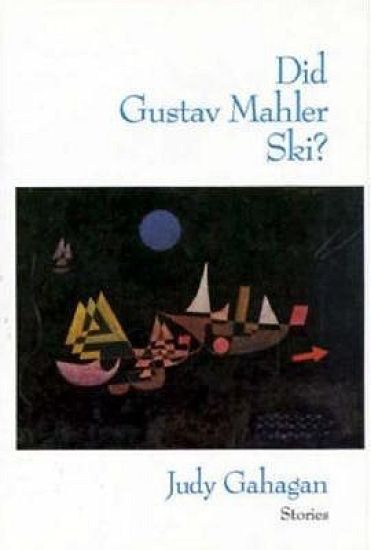
After many years in England as a practicing psychologist and published author (specializing in sociolinguistics), Judy Gahagan now makes her fiction debut with Did Gustav Mahler Ski? The twelve stories collected here often revolve around a modern female Quixote’s attempt to do battle with the century and reinvent the quotidian. Shrewd and eccentric observers, her characters travel in real and imagined territory. They make their journeys with one eye fixed keenly on the world and the other trained on an often tumultuous inner life. Italy, well-known harbor for escapists and mythmakers, is frequently the background: from the Italian alps where an ill-at-ease and infatuated girl comes upon the house where Mahler wrote “The Song of the Earth” to the deep south where a freewheeler visits her boyfriend’s village only to find that neither the place nor the person match her expectations.
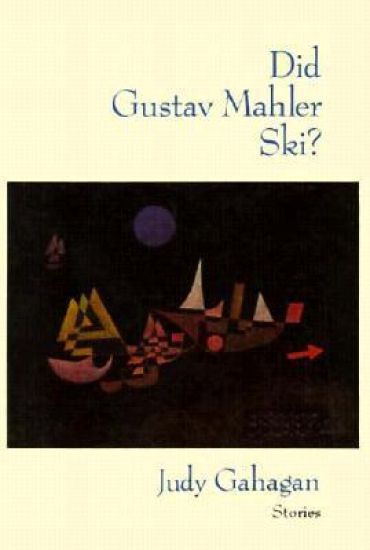
After many years in England as a practicing psychologist and published author (specializing in sociolinguistics), Judy Gahagan now makes her fiction debut with Did Gustav Mahler Ski? The twelve stories collected here often revolve around a modern female Quixote’s attempt to do battle with the century and reinvent the quotidian. Shrewd and eccentric observers, her characters travel in real and imagined territory. They make their journeys with one eye fixed keenly on the world and the other trained on an often tumultuous inner life. Italy, well-known harbor for escapists and mythmakers, is frequently the background: from the Italian alps where an ill-at-ease and infatuated girl comes upon the house where Mahler wrote “The Song of the Earth” to the deep south where a freewheeler visits her boyfriend’s village only to find that neither the place nor the person match her expectations.

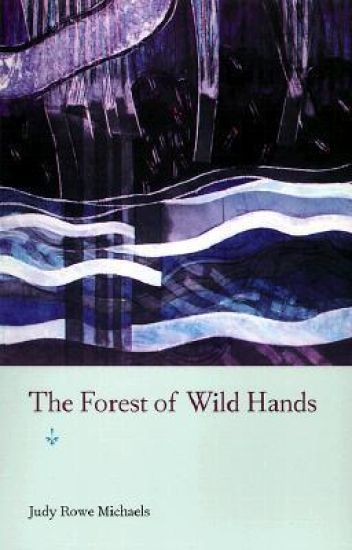
In these moving poems, Judy Michaels illuminates an intense period of five years in her life: against a backdrop that celebrates her young students, an enduring marriage, and the power of music and mountains, she writes about the sudden loss of her mother to cancer, her father's ensuing depression and alcoholism, and her own experience with ovarian cancer. Michaels's witty, passionate style and wide range of subject matter set her collection above raw confessionalism - as the title of one poem asserts, ""You Don't Need Another Cancer Poem."" With its fresh look at all-too-familiar situations, the narrative establishes a spirit of celebration and independence that accounts for the poet's resilience in the face of loss. She tells us about cheese-rolling contests in England, what it's like to have a mother with emerald-chocolate-streak eyes, and how to teach jumping at a teachers' convention. One poem delineates the anatomy and metaphysics of viola jokes. Another implies that French kissing is just as good at 54 as at 17. Favorite poets drift through the book, too - Jane Kenyon, Akhmatova and Tsvetayeva, Bishop and Rukeyser, Basho, Shikibu, and Rumi. And when, near the end, Michaels envisions putting her mother on the Brooklyn ferry, a tactless but reassuring Walt Whitman is on board.
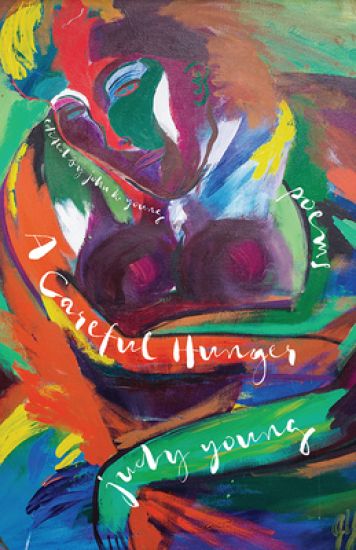
A Careful Hunger
Judy Young; Mary Ann Taylor-Hall; Susan Starr Richards
The University Press of Kentucky
2019
nidottu
Judy Young (1940--2015) was a gifted but private poet. Over the years, she established provisional collections of her best work but refrained from seeking publication due to her trepidation with sharing her deeply personal poems with an audience. She found her voice in a collective group of creatives that included Susan Starr Richards, Mary Ann Taylor-Hall, and the late Donna Boyd, Jane Gentry, Audrey Robinson, and Carolyn Hisel. This illustrious circle of friends met monthly for almost thirty years and gave her the courage to share her work -- a lyrical medley of pain, beauty, strength, and redemption.Revealed is the story of a woman's inner life -- an intimate tale of abuse and personal struggle -- from a traumatic childhood through marriage, parenthood, and lifelong friendships. Based on the final manuscript that was drafted before the author's death, this compilation traces the path of a woman finding her poetic voice in middle age, returning to an often-harrowing upbringing while closely observing the natural world -- especially the populations of birds moving through the space between her back porch and the lake below -- and meditating on the nature of creativity. With a submerged narrative behind the poems and several calls to nature through repeated motifs, the poet shares seminal emotions and experiences.A Careful Hunger is the last creative testament of this extraordinary artist -- her final act of fearlessness in a troubled yet joyful life. In the words of the poet: "I am alive and must say so / one way or another."
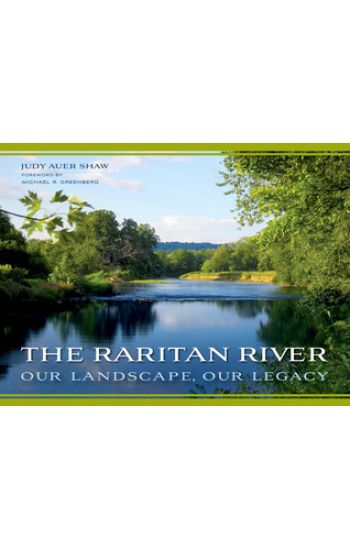
On the banks of the old Raritan, environmental expert Judy Shaw gives readers a tour of the remarkable river, a major waterway 90 miles long, with 2,000 miles of tributary streams and brooks that twists and turns from its source in Morris County, down to the Raritan Bay. It is the longest river that is completely within New Jersey, includes the state’s largest contiguous stretch of wildlife habitat, and runs through one of the most populated areas of the United States.The Raritan River shows New Jersey for what it is—home to some of the most beautiful scenery in the country. This lavishly illustrated book tells the story of an amazing region where protected environments coexist with land left in ruins by rampant industrialization and where the reckless pursuit of commerce scarred the lands along its banks. Shaw argues that as we work to protect this historically wooded and agricultural land from further development, we need to replace our outmoded infrastructure and rethink outdated design and management practices that currently limit our progress toward a clean and beautiful environment. With over 350 photographs and 20 paintings, Shaw captures scenes of the river, the wildlife on the shores, and the human activities along its banks. The illustrations show what is possible when we rescue the land, restore the habitat, and create harmony with nature. The Raritan River reminds us that people are the solution—we need to engage locally, to educate ourselves, and to work with those who manage our parks and open spaces to adopt new practices that enrich our natural resources instead of neglecting them for another generation.Watch a video with Judy A. Shaw:Watch video now. (http://www.youtube.com/watch?v=yXPP8tqP-xU).