Kirjojen hintavertailu. Mukana 11 699 587 kirjaa ja 12 kauppaa.

Kirjahaku

Etsi kirjoja tekijän nimen, kirjan nimen tai ISBN:n perusteella.

1000 tulosta hakusanalla Julie Morgan

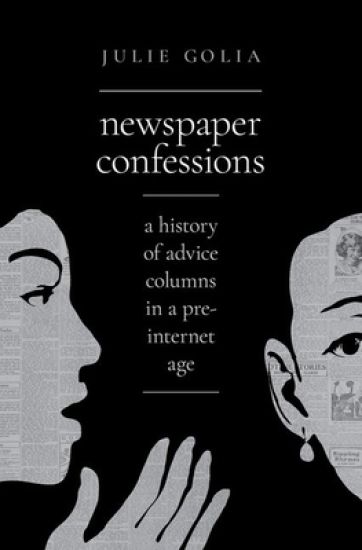
Newspaper Confessions

Newspaper Confessions

Julie Golia

Oxford University Press Inc
2021
sidottu
What can century-old advice columns tell us about the Internet today? This book reveals the little-known history of advice columns in American newspapers and the virtual communities they created among their readers. Imagine a community of people who had never met writing into a media outlet, day after day, to reveal intimate details about their lives, anxieties, and hopes. The original "virtual communities" were born not on the Internet in chat rooms but a century earlier in one of America's most ubiquitous news features: the advice column. Newspaper Confessions is the first history of the newspaper advice column, a genre that has shaped Americans' relationships with media, their experiences with popular therapy, and their virtual interactions across generations. Emerging in the 1890s, advice columns became unprecedented virtual forums where readers could debate the most resonant cultural crises of the day with strangers in an anonymous, yet strikingly public, forum. Early advice columns are essential-and overlooked-precursors to today's digital culture: forums, social media groups, chat rooms, and other online communities that define how present-day American communicate with each other. By charting the economic and cultural motivations behind the rise of this influential genre, Julie Golia offers a nuanced analysis of the advice given by a diverse sample of columns across several decades, emphasizing the ways that advice columnists framed their counsel as modern, yet upheld the racial and gendered status quo of the day. She offers lively, surprising, and poignant case studies, demonstrating how columnists and everyday newspaper readers transformed advice columns into active and participatory virtual communities of confession, advice, debate, and empathy.
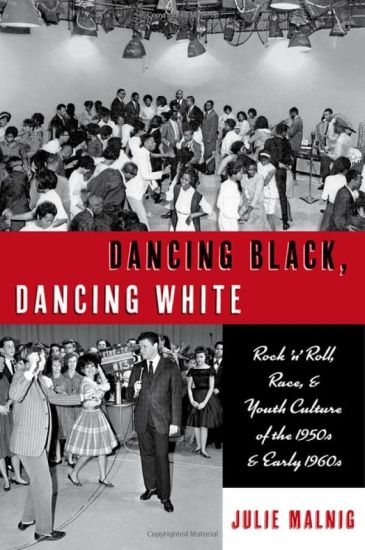
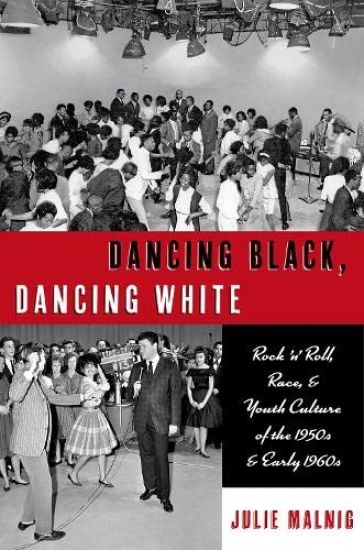
Dancing Black, Dancing White

Dancing Black, Dancing White

Julie Malnig

OXFORD UNIVERSITY PRESS INC
2023
sidottu
Dancing Black, Dancing White: Rock 'n' Roll, Race, and Youth Culture of the 1950s and Early 1960s offers a new look at the highly popular phenomenon of the televised teen dance program. These teen shows were incubators of new styles of social and popular dance and both reflected and shaped pressing social issues of the day. Often referred to as "dance parties," the televised teen dance shows helped cultivate a nascent youth culture in the post-World War II era. The youth culture depicted on the shows, however, was primarily white. Black teenagers certainly had a youth culture of their own, but the injustice was glaring: Black culture was not always in evident display on the airwaves, as television, like the nation at large, was deeply segregated and appealed to a primarily white, homogenous audience. The crux of the book, then, is twofold: to explore how social and popular dance styles were created and disseminated within the new technology of television and to investigate how the shows both reflected and re-affirmed the racial politics and attitudes of the time. The 1950s was a watershed decade for American culture and dance. The era witnessed the ascendancy of rock and roll music and recorded sound, the rise of the teenager as a marketing demographic, the beginnings of television, and a new phase of the country's struggle with race. The story of televised teen dance told here is about Black and white teenagers wanting to dance to rock 'n' roll music despite the barriers placed on their ability to do so. It is also a story that fuses issues of race, morality, and sexuality. Dancing Black, Dancing White weaves together these elements to tell two stories: that of the different experiences of Black and white adolescents and their desires to have a space of their own where they could be seen, heard, appreciated, and understood.
Dancing Black, Dancing White

Dancing Black, Dancing White

Julie Malnig

OXFORD UNIVERSITY PRESS INC
2023
nidottu
Dancing Black, Dancing White: Rock 'n' Roll, Race, and Youth Culture of the 1950s and Early 1960s offers a new look at the highly popular phenomenon of the televised teen dance program. These teen shows were incubators of new styles of social and popular dance and both reflected and shaped pressing social issues of the day. Often referred to as "dance parties," the televised teen dance shows helped cultivate a nascent youth culture in the post-World War II era. The youth culture depicted on the shows, however, was primarily white. Black teenagers certainly had a youth culture of their own, but the injustice was glaring: Black culture was not always in evident display on the airwaves, as television, like the nation at large, was deeply segregated and appealed to a primarily white, homogenous audience. The crux of the book, then, is twofold: to explore how social and popular dance styles were created and disseminated within the new technology of television and to investigate how the shows both reflected and re-affirmed the racial politics and attitudes of the time. The 1950s was a watershed decade for American culture and dance. The era witnessed the ascendancy of rock and roll music and recorded sound, the rise of the teenager as a marketing demographic, the beginnings of television, and a new phase of the country's struggle with race. The story of televised teen dance told here is about Black and white teenagers wanting to dance to rock 'n' roll music despite the barriers placed on their ability to do so. It is also a story that fuses issues of race, morality, and sexuality. Dancing Black, Dancing White weaves together these elements to tell two stories: that of the different experiences of Black and white adolescents and their desires to have a space of their own where they could be seen, heard, appreciated, and understood.
Can You Be a Catholic and a Feminist?

Can You Be a Catholic and a Feminist?

Julie Hanlon Rubio

OXFORD UNIVERSITY PRESS INC
2024
sidottu
An eminent theologian addresses an enduring--but newly urgent--question Is it possible to be both a faithful Catholic and an avowed feminist? Earlier generations of feminists first formulated answers to this question in the 1970s. Their views are still broadly held, but with increasing tentativeness and a growing sense of their inadequacy. Even now, Catholic women and men still say, "It's my Church and I'm not leaving," "Change will only happen if people like me stay and fight," and "The Church's work for social justice is more important than the issues that concern me as a feminist." Yet in a post-#MeToo, #ChurchToo moment, when the Church seems disconnected from struggles for racial justice and LGBTQ inclusion, those answers sound increasingly insufficient. Today, tensions between Catholicism and feminism are more visible and ties to Catholic communities are increasingly weak. Can Catholic feminism survive? Julie Hanlon Rubio argues that it can. But if it is going to do so, it is necessary to rethink how women and men who experience the pull of feminism and Catholicism can credibly claim both identities. In Can You Be a Catholic and a Feminist? Rubio argues that Catholic feminist identity is only tenable if we frankly acknowledge tensions between Catholicism and feminism, bring forward shared concerns, and embrace the future with ambiguity and creativity. Rubio explores the potential for synergy and dialogue between Catholics and feminists through various lenses, including sexual violence, gender theory, pregnancy and pre-natal loss, work-life balance, relationships and family life, spirituality, conscience, and what it means to be human. This book gives those who struggle to balance Catholicism and feminism a credible path to authentic belonging.
Beyond Interdisciplinarity

Beyond Interdisciplinarity

Julie Thompson Klein

Oxford University Press Inc
2021
sidottu
Beyond Interdisciplinarity examines the broadening meaning of core concept across academic disciplines and other forms of knowledge. In this book, Associate Editor of The Oxford Handbook of Interdisciplinarity and internationally recognized scholar Julie Thompson Klein depicts the heterogeneity and boundary work of inter- and trans-disciplinarity in a conceptual framework based on an ecology of spatializing practices in transaction spaces, including trading zones and communities of practice. The book includes both "crossdisciplinary" work (encompassing multi-, inter-, and trans-disciplinary forms) as well as "cross-sector" work (spanning disciplines, fields, professions, government and industry, and communities). The first section of the book defines and explains boundary work, discourses of interdisciplinarity, and the nature of interdisciplinary fields. In the second section, Klein examines dynamics of working across disciplines, including communication, collaboration, and learning with concrete examples and lessons from research projects and programs that transcend traditional fields. The closing chapter examines reasons for failure and success then presents gateways to literature and other resources. Throughout the book, Klein emphasizes the roles of contextualization and historical change while factoring in the shifting relationship of disciplinarity and interdisciplinarity, ascendancy of transdisciplinarity, and intersections with other constructs including Mode 2 knowledge production, convergence, team science, and postdisciplinarity. The conceptual framework she provides also includes the role of boundary objects, agents, and organizations in brokering differences and creating for platforms for change. Klein further explains why translation, interlanguage, and a communication boundary space are vital to achieving intersubjectivity and collective identity. They foster not only pragmatics of negotiation and integration but also reflexivity, transactivity, and co-production of knowledge with stakeholders beyond the academy. Rhetorics of holism and synthesis compete with instrumentalities of problem solving and transgressive critiques. However, typical warrants today include complexity, contextualization, collaboration, and socially-robust knowledge. Crossing boundaries remains complex, but this book guides readers through the density of pertinent literature while expanding understandings of crossdisciplinary and cross-sector work.
Beyond Interdisciplinarity

Beyond Interdisciplinarity

Julie Thompson Klein

Oxford University Press Inc
2021
nidottu
Beyond Interdisciplinarity examines the broadening meaning of core concept across academic disciplines and other forms of knowledge. In this book, Associate Editor of The Oxford Handbook of Interdisciplinarity and internationally recognized scholar Julie Thompson Klein depicts the heterogeneity and boundary work of inter- and trans-disciplinarity in a conceptual framework based on an ecology of spatializing practices in transaction spaces, including trading zones and communities of practice. The book includes both "crossdisciplinary" work (encompassing multi-, inter-, and trans-disciplinary forms) as well as "cross-sector" work (spanning disciplines, fields, professions, government and industry, and communities). The first section of the book defines and explains boundary work, discourses of interdisciplinarity, and the nature of interdisciplinary fields. In the second section, Klein examines dynamics of working across disciplines, including communication, collaboration, and learning with concrete examples and lessons from research projects and programs that transcend traditional fields. The closing chapter examines reasons for failure and success then presents gateways to literature and other resources. Throughout the book, Klein emphasizes the roles of contextualization and historical change while factoring in the shifting relationship of disciplinarity and interdisciplinarity, ascendancy of transdisciplinarity, and intersections with other constructs including Mode 2 knowledge production, convergence, team science, and postdisciplinarity. The conceptual framework she provides also includes the role of boundary objects, agents, and organizations in brokering differences and creating for platforms for change. Klein further explains why translation, interlanguage, and a communication boundary space are vital to achieving intersubjectivity and collective identity. They foster not only pragmatics of negotiation and integration but also reflexivity, transactivity, and co-production of knowledge with stakeholders beyond the academy. Rhetorics of holism and synthesis compete with instrumentalities of problem solving and transgressive critiques. However, typical warrants today include complexity, contextualization, collaboration, and socially-robust knowledge. Crossing boundaries remains complex, but this book guides readers through the density of pertinent literature while expanding understandings of crossdisciplinary and cross-sector work.
Between Truth and Power: The Legal Constructions of Informational Capitalism
A work of ambitious interdisciplinary scholarship that explores the ways that law and technology interact. Our current legal system is to a great extent the product of an earlier period of social and economic transformation. From the late nineteenth century through the mid-twentieth century, as accountability for industrial-age harms became a pervasive source of conflict, the US legal system underwent profound, tectonic shifts. Today, struggles over ownership of information-age resources and accountability for information-age harms are producing new systemic changes. In Between Truth and Power, Julie E. Cohen explores the relationships between legal institutions and political and economic transformation. Systematically examining struggles over the conditions of information flow and the design of information architectures and business models, she argues that as law is enlisted to help produce the profound economic and sociotechnical shifts that have accompanied the emergence of the informational economy, it is too is transforming in fundamental ways. Drawing on elements from legal theory, science and technology studies, information studies, communication studies and organization studies to develop a complex theory of institutional change, Cohen develops an account of the gradual emergence of legal institutions adapted to the information age and of the power relationships that such institutions reflect and reproduce. A tour de force of ambitious interdisciplinary scholarship, Between Truth and Power will transform our thinking about the possible futures of law and legal institutions in the networked information era.
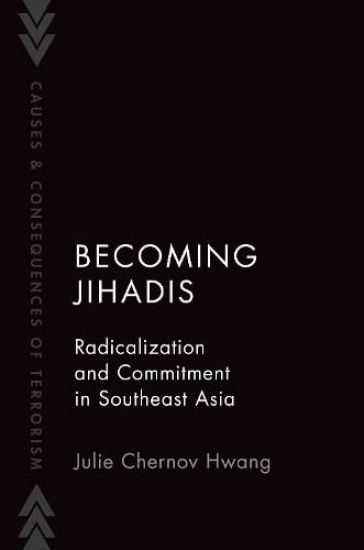
Becoming Jihadis

Becoming Jihadis

Julie Chernov Hwang

OXFORD UNIVERSITY PRESS INC
2023
sidottu
Why does someone join an extremist group? What are the pathways via which individuals join such groups? How does one show commitment to an extremist group? Why does someone participate in acts of terrorism? Drawing on 175 interviews with current and former members of Islamist extremist groups in Indonesia and the Philippines, Becoming Jihadis: Radicalization and Commitment in Southeast Asia answers these questions by exploring the socio-emotional underpinnings of joining an extremist group. This book argues that social ties play a critical role at every juncture in the joining process, from initial engagement to commitment to participation in jihad experiences, paramilitary training, and terrorism. It unpacks the process by which members build a sense of community, connection, solidarity, and brotherhood; how they come to trust and love one another; and how ideology functions as a binding agent, not a cause. Becoming Jihadis draws its conclusions from broad patterns data based on nearly a decade of iterated interviews with current and former members of Islamist extremist groups between 2010 and 2019, as well as partial life histories detailing the journeys of men and women who joined Indonesian and Filipino extremist groups. This book makes a unique contribution to the literature on terrorism and radicalization for students, practitioners, and policymakers.
Becoming Jihadis

Becoming Jihadis

Julie Chernov Hwang

OXFORD UNIVERSITY PRESS INC
2023
nidottu
Why does someone join an extremist group? What are the pathways via which individuals join such groups? How does one show commitment to an extremist group? Why does someone participate in acts of terrorism? Drawing on 175 interviews with current and former members of Islamist extremist groups in Indonesia and the Philippines, Becoming Jihadis: Radicalization and Commitment in Southeast Asia answers these questions by exploring the socio-emotional underpinnings of joining an extremist group. This book argues that social ties play a critical role at every juncture in the joining process, from initial engagement to commitment to participation in jihad experiences, paramilitary training, and terrorism. It unpacks the process by which members build a sense of community, connection, solidarity, and brotherhood; how they come to trust and love one another; and how ideology functions as a binding agent, not a cause. Becoming Jihadis draws its conclusions from broad patterns data based on nearly a decade of iterated interviews with current and former members of Islamist extremist groups between 2010 and 2019, as well as partial life histories detailing the journeys of men and women who joined Indonesian and Filipino extremist groups. This book makes a unique contribution to the literature on terrorism and radicalization for students, practitioners, and policymakers.
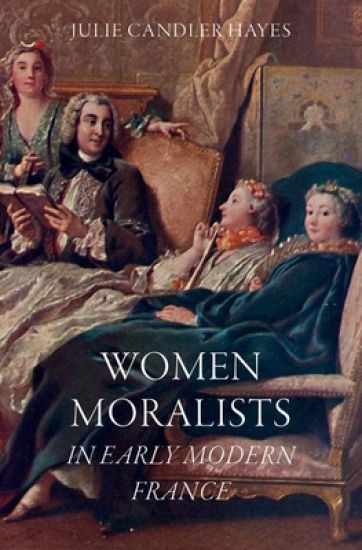
Women Moralists in Early Modern France

Women Moralists in Early Modern France

Julie Candler Hayes

OXFORD UNIVERSITY PRESS INC
2024
sidottu
Early modern women writers left their mark in multiple domains--novels, translations, letters, history, and science. Although recent scholarship in literary and cultural studies has enriched our understanding of these accomplishments, less attention has been paid to other forms of women's writing. Women Moralists in Early Modern France explores the contributions of seventeenth and eighteenth-century French women philosophers and intellectuals to moralist writing, the observation of human motives and behavior. This distinctively French genre draws on philosophical and literary traditions extending back to classical antiquity. Moralist short forms such as the maxim, dialogue, character portrait, and essay engage social and political questions, epistemology, moral psychology, and virtue ethics. Although moralist writing was closely associated with the salon culture in which women played a major role, women's contributions to the genre have received scant scholarly attention. Julie Candler Hayes examines major moralist writers such as Madeleine de Scudéry, Anne-Thérèse de Lambert, Émilie Du Châtelet, and Germaine de Staël, as well as nearly two dozen of their contemporaries. Their reflections range from traditional topics such as the nature of the self, friendship, happiness, and old age, to issues that were very much part of their own lifeworld, such as the institution of marriage and women's nature and capabilities. Each chapter traces the evolution of women's moralist thought on a given topic from the late seventeenth century to the Enlightenment and the decades immediately following the French Revolution, a period of tremendous change in the horizon of possibilities for women as public figures and intellectuals. Hayes demonstrates how, through their critique of institutions and practices, their valorization of introspection and self-expression, and their engagement with philosophical issues, women moralists carved out an important space for the public exercise of their reason.
Robert Schumann's Leipzig Chamber Works

Robert Schumann's Leipzig Chamber Works

Julie Hedges Brown

OXFORD UNIVERSITY PRESS INC
2024
sidottu
The first in-depth study in almost half a century of Robert Schumann's multi-movement Leipzig chamber works, this book offers novel and diverse encounters with the three Op. 41 String Quartets, the Op. 44 Piano Quintet, and the Op. 47 Piano Quartet. The volume adopts a two-pronged approach, exploring the reception of this music from both composer- and listener-oriented perspectives. On the one hand, it shows how this repertory illuminates Schumann's response to certain past and contemporary composers; to his own youthful, experimental past; and to various literary and cultural influences. At the same time, the book explores how different people have heard this music: listeners in Schumann's own day and beyond, in both Germanic and non-Germanic regions, and comprising the voices of critics, performers, audiences, even figures in disciplines outside of music. Such reception stories yield new insights into whether these works represent a more conservative or progressive mindset for the composer. The book thus offers a more nuanced understanding of Schumann's stylistic development. Balancing new critical and contextual frameworks with close analyses of selected movements in a wide range of forms, author Julie Hedges Brown offers new pathways for rehearing the Leipzig chamber repertory.
Understanding and Effectively Utilizing Experiential Therapy

Understanding and Effectively Utilizing Experiential Therapy

Julie Anne Laser; Nicole Nicotera

OXFORD UNIVERSITY PRESS INC
2025
nidottu
Experiential Therapy provides hands-on, engaged, holistic experiences aimed at exploring, better understanding, and resolving clinical issues. The methodology includes guided activities, games, mental puzzles, time in nature, and physical challenges. The resulting experience gives rise to words, thoughts, feelings, and future actions that a client might not have found through traditional talk therapy alone. Understanding and Effectively Utilizing Experiential Therapy gives practical advice and skills to enable new or seasoned clinicians to create their own Experiential Therapy practice. Through didactic presentation of basic concepts, concrete description of techniques, and numerous illustrative clinical examples, the book guides readers to become proficient clinicians in Experiential Therapy. The book emphasizes knowledge and skills for supporting diverse clients across a variety of identities to successfully engage in these non-traditional clinical modalities to increase well-being and resilience and promote recovery and growth after trauma.
Law as Performance

Law as Performance

Julie Stone Peters

Oxford University Press
2026
nidottu
Tirades against legal theatrics are nearly as old as law itself, and yet so is the age-old claim that law must not merely be done: it must be "seen to be done." Law as Performance traces the history of legal performance and spectatorship through the early modern period. Viewing law as the product not merely of edicts or doctrines but of expressive action, it investigates the performances that literally created law: in civic arenas, courtrooms, judges' chambers, marketplaces, scaffolds, and streets. It examines the legal codes, learned treatises, trial reports, lawyers' manuals, execution narratives, rhetoric books, images, (and more) that confronted these performances, praising their virtues or denouncing their evils. In so doing, it recovers a long, rich, and largely overlooked tradition of jurisprudential thought about law as a performance practice. This tradition not only generated an elaborate poetics and politics of legal performance. It provided western jurisprudence with a set of constitutive norms that, in working to distinguish law from theatrics, defined the very nature of law. In the crucial opposition between law and theatre, law stood for cool deliberation, by-the-book rules, and sovereign discipline. Theatre stood for deceptive artifice, entertainment, histrionics, melodrama. And yet legal performance, even at its most theatrical, also appeared fundamental to law's realization: a central mechanism for shaping legal subjects, key to persuasion, essential to deterrence, indispensable to law's power—as it still does today.
Theatre of the Book, 1480-1880

Theatre of the Book, 1480-1880

Julie Stone Peters

Oxford University Press
2000
sidottu
Theatre of the Book is an account of the entangled histories of print and the theatre in Europe between the Renaissance and the late nineteenth century: a history of European dramatic publication (providing comparative and historical perspective to the growing field of textual studies); an examination of the creation of the modern notion of text and performance; and a comparative genealogy of ideas about theatrical and textual reception. It shows that, far from being marginal to Renaissance dramatists, the printing press had an essential role to play in the birth of the modern theatre, crucially shaping the normative conception of 'theatre' as a distinct aesthetic medium and of drama as a distinct narrative form, helping to forge a theatricalist aesthetics in opposition to 'the book'. Treating playtexts, engravings, actor portraits, notation systems, and theatrical ephemera at once as material objects and expressions of complex cultural formations, Theatre of the Book examines the European theatre's continual refashioning of itself in the world of print.
Complementary Medicine and the Law

Complementary Medicine and the Law

Julie Stone; Matthews Joan

Oxford University Press
1996
nidottu
The growth of complementary medicine over the past decade has been accompanied by calls for greater regulation. To date, discussions on regulation have confined themselves to the parameters set by orthodox medicine, and a result, critical issues which need to be more publicly aired have been overlooked. The first book to address this increasingly important topics, Complementary Medicine and the Law is a timely response to this need. The authors explore the way in which the law presently affects the practice of complementary medicine. At the heart of the book is a challenging of the notion that the legal and regulatory mechanisms which govern orthodox medicine form an appropriate model for the regulation of most complementary therapies. The patient-centred, holistic approach central to the theory and practice of many complementary therapies presents a unique problem for the law: the highly individualised, more intuitive, whole-person approach of complementary medicine is not amenable to the quantification and certainty required by the law. The authors argue that only by implementing a more dynamic form of ethics-directed regulation can the consumer be protected without sacrificing the unique contribution that complementary medicine has to make.
Rollercoasters: Cold Tom Reading Guide

Rollercoasters: Cold Tom Reading Guide

Julie Moxon

Oxford University Press
2007
nidottu
This Reading Guide is aimed at the student and offers a 'way in' to different aspects of the novel of the same title. Activities actively engage students and take their understanding of the aspect under scrutiny to a deeper level - so enhancing their reading of the novel. The Reading Guide is highly illustrated and has a magazine-feel to appeal to students. It can be used during the early stages of a Scheme of Work based on the novel, and can also be built in to lessons as the reading progresses and to support further reading activities.
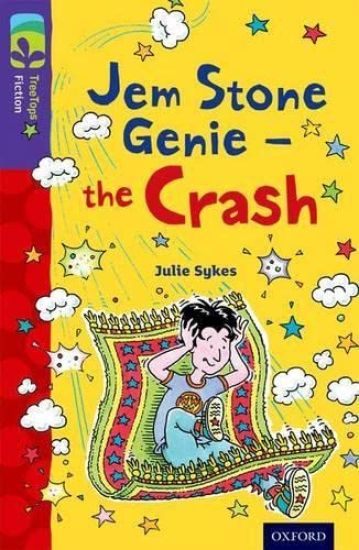
Oxford Reading Tree TreeTops Fiction: Level 11 More Pack B: Jem Stone Genie - the Crash
It is test time at the Three Wishes School in Jem Stone Genie - the Crash. Jem wants to beat his teasing classmate Pearl in a flying carpet race, but he has a hole in his magic carpet. What can Jem do? TreeTops Fiction contains a wide range of quality stories enabling children to explore and develop their own reading tastes and interests. It contains stories from a variety of genres including humour, sci-fi, adventure, mystery and historical fiction. These exciting stories are ideal for introducing children to a wide selection of authors and illustrators. There is huge variety to ensure every reader finds books they will enjoy and can read. Books contain inside cover notes to support children in their reading. Help with children's reading development also available at www.oxfordowl.co.uk. The books are finely levelled, making it easy to match every child to the right book.
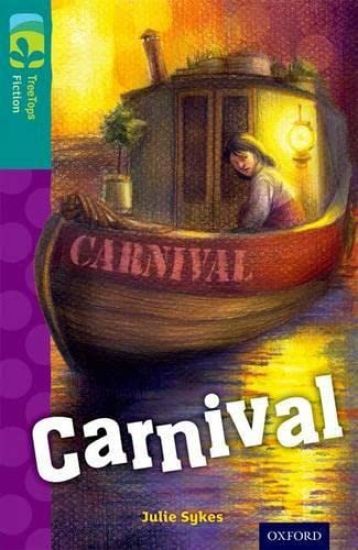
Oxford Reading Tree TreeTops Fiction: Level 16: Carnival
In Carnival Clare loves the canal boat which she learns to sail with her old neighbour, Max. When Max falls ill, her world falls apart. Clare goes in search of the present that Max left her on the boat, but his nephews, Martin and David, are now in charge. Will they let her make one last trip on the boat? TreeTops Fiction contains a wide range of quality stories enabling children to explore and develop their own reading tastes and interests. It contains stories from a variety of genres including humour, sci-fi, adventure, mystery and historical fiction. These exciting stories are ideal for introducing children to a wide selection of authors and illustrators. There is huge variety to ensure every reader finds books they will enjoy and can read. Books contain inside cover notes to support children in their reading. Help with children's reading development also available at www.oxfordowl.co.uk. The books are finely levelled, making it easy to match every child to the right book.
Mediatrix

Mediatrix

Julie Crawford

Oxford University Press
2014
sidottu
Women, Politics, and Literary Production in Early Modern England considers the roles women played as literary patrons, dedicatees, readers, and writers in the late-sixteenth and early-seventeenth centuries, and the intimate relationship between these literary activities and what has often been called 'politically active' humanism. Focusing on the interrelated communities centered on Mary Sidney Herbert, Countess of Pembroke; Lady Margaret Hoby; Lucy Harrington Russell, the Countess of Bedford; and Lady Mary Wroth, Mediatrix argues that women played integral roles not only in the production of some of the most renowned literary texts in the period, including Philip Sidney's Arcadia, John Donne's poetry, and Mary Wroth's Urania, but also in wider networks of intellectual, religious and political activism. Each of the communities discussed was concerned with the cause loosely identified as international or militant Protestantism and frequently mediated through the circulation of texts of all kinds. Illuminating women's constitutive involvement in everything from the genres of the texts produced -- romances, verse letters, texts of religious controversy -- to the places in which those texts were produced and circulated - -the estates of Wilton, Penshurst, Hackness, Twickenham, and Loughton -- and the conditions and hermeneutics by which they were read, Mediatrix offers an account of early modern English literary production with women at the center and political activism as one of its primary, rather than merely topical, concerns.
Elucidating Law

Elucidating Law

Julie Dickson

Oxford University Press
2022
sidottu
What are the aims of legal philosophy? Which questions should it seek to address? How should legal philosophers approach and engage with their subject-matter, and what constraints are incumbent on them as they do so? What are the criteria of success of theories of law, and how do we know if they have been met? Can there be progress in legal philosophy? In Elucidating Law, Julie Dickson addresses these and other questions concerning the methodology, or the philosophy, of legal philosophy and offers her own distinctive response to them. The book advocates that legal philosophers should espouse an approach that Dickson terms 'Indirectly Evaluative Legal Philosophy.' This distinctive approach can facilitate legal philosophers' understanding of aspects of the nature of law, whilst avoiding prematurely or inappropriately regarding law as inherently morally valuable. Law is a powerful, systemic, and institutionalized social tool. It should be understood in a manner appropriate to its character.