Kirjojen hintavertailu. Mukana 11 627 373 kirjaa ja 12 kauppaa.

Kirjahaku

Etsi kirjoja tekijän nimen, kirjan nimen tai ISBN:n perusteella.

1000 tulosta hakusanalla Julie Stone Peters

Family and Friends: 1: Teacher's Book

Family and Friends: 1: Teacher's Book

Julie Penn

Oxford University Press
2009
nidottu
No other course offers you the same benefits as Family and Friends. The exceptionally strong skills training programme includes a focus on real speaking and writing output. Plus - the amazing package of integrated print and digital resources suits all teaching situations and learner types, supporting students, teachers, and parents. Use it with Little Friends and First Friends to make it an eight or nine-year course.
Privacy, Intimacy, and Isolation

Privacy, Intimacy, and Isolation

Julie C. Inness

Oxford University Press Inc
1992
sidottu
In this book Julie Inness presents a powerful new theory of the nature and value of privacy, centred on the concept of intimacy. `Intimate', Inness contends, describes acts and activities which draw their meaning from the individual's love, liking or care. The function of privacy is to provide the individual with control over intimate decisions, including intimate access to oneself and the dissemination of intimate information about oneself. On this account, privacy's value is neither that it promotes close relationships among people, nor that it respects persons as rational choosers. Rather privacy is valuable because it embodies our respect for persons as emotional beings.
Privacy, Intimacy, and Isolation

Privacy, Intimacy, and Isolation

Julie C. Inness

Oxford University Press Inc
1996
nidottu
Privacy is a puzzling concept. From the backyard to the bedroom, everyday life gives rise to an abundance of privacy claims. In the legal sphere, privacy is invoked with respect to issues including abortion, marriage, and sexuality. Yet privacy is surrounded by a mire of theoretical debate. Certain philosophers argue that privacy is neither conceptually nor morally distinct from other interests, while numerous legal scholars point to the apparently disparate interests involved in constitutional and tort privacy law. By arguing that intimacy is the core of privacy, including privacy law, Inness undermines privacy skepticism, providing a strong theoretical foundation for many of our everyday and legal privacy claims, including the controversial constitutional right to privacy.
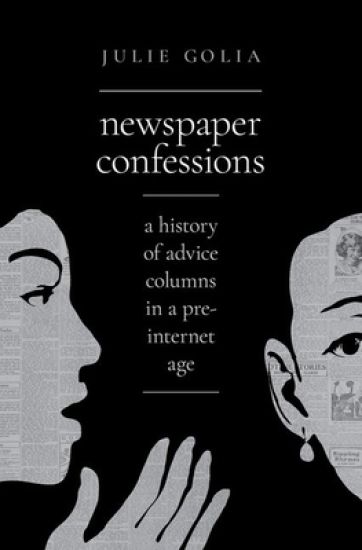
Newspaper Confessions

Newspaper Confessions

Julie Golia

Oxford University Press Inc
2021
sidottu
What can century-old advice columns tell us about the Internet today? This book reveals the little-known history of advice columns in American newspapers and the virtual communities they created among their readers. Imagine a community of people who had never met writing into a media outlet, day after day, to reveal intimate details about their lives, anxieties, and hopes. The original "virtual communities" were born not on the Internet in chat rooms but a century earlier in one of America's most ubiquitous news features: the advice column. Newspaper Confessions is the first history of the newspaper advice column, a genre that has shaped Americans' relationships with media, their experiences with popular therapy, and their virtual interactions across generations. Emerging in the 1890s, advice columns became unprecedented virtual forums where readers could debate the most resonant cultural crises of the day with strangers in an anonymous, yet strikingly public, forum. Early advice columns are essential-and overlooked-precursors to today's digital culture: forums, social media groups, chat rooms, and other online communities that define how present-day American communicate with each other. By charting the economic and cultural motivations behind the rise of this influential genre, Julie Golia offers a nuanced analysis of the advice given by a diverse sample of columns across several decades, emphasizing the ways that advice columnists framed their counsel as modern, yet upheld the racial and gendered status quo of the day. She offers lively, surprising, and poignant case studies, demonstrating how columnists and everyday newspaper readers transformed advice columns into active and participatory virtual communities of confession, advice, debate, and empathy.
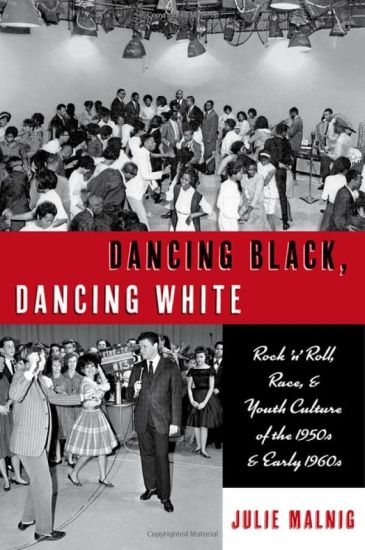
Dancing Black, Dancing White

Dancing Black, Dancing White

Julie Malnig

OXFORD UNIVERSITY PRESS INC
2023
sidottu
Dancing Black, Dancing White: Rock 'n' Roll, Race, and Youth Culture of the 1950s and Early 1960s offers a new look at the highly popular phenomenon of the televised teen dance program. These teen shows were incubators of new styles of social and popular dance and both reflected and shaped pressing social issues of the day. Often referred to as "dance parties," the televised teen dance shows helped cultivate a nascent youth culture in the post-World War II era. The youth culture depicted on the shows, however, was primarily white. Black teenagers certainly had a youth culture of their own, but the injustice was glaring: Black culture was not always in evident display on the airwaves, as television, like the nation at large, was deeply segregated and appealed to a primarily white, homogenous audience. The crux of the book, then, is twofold: to explore how social and popular dance styles were created and disseminated within the new technology of television and to investigate how the shows both reflected and re-affirmed the racial politics and attitudes of the time. The 1950s was a watershed decade for American culture and dance. The era witnessed the ascendancy of rock and roll music and recorded sound, the rise of the teenager as a marketing demographic, the beginnings of television, and a new phase of the country's struggle with race. The story of televised teen dance told here is about Black and white teenagers wanting to dance to rock 'n' roll music despite the barriers placed on their ability to do so. It is also a story that fuses issues of race, morality, and sexuality. Dancing Black, Dancing White weaves together these elements to tell two stories: that of the different experiences of Black and white adolescents and their desires to have a space of their own where they could be seen, heard, appreciated, and understood.
Dancing Black, Dancing White

Dancing Black, Dancing White

Julie Malnig

OXFORD UNIVERSITY PRESS INC
2023
nidottu
Dancing Black, Dancing White: Rock 'n' Roll, Race, and Youth Culture of the 1950s and Early 1960s offers a new look at the highly popular phenomenon of the televised teen dance program. These teen shows were incubators of new styles of social and popular dance and both reflected and shaped pressing social issues of the day. Often referred to as "dance parties," the televised teen dance shows helped cultivate a nascent youth culture in the post-World War II era. The youth culture depicted on the shows, however, was primarily white. Black teenagers certainly had a youth culture of their own, but the injustice was glaring: Black culture was not always in evident display on the airwaves, as television, like the nation at large, was deeply segregated and appealed to a primarily white, homogenous audience. The crux of the book, then, is twofold: to explore how social and popular dance styles were created and disseminated within the new technology of television and to investigate how the shows both reflected and re-affirmed the racial politics and attitudes of the time. The 1950s was a watershed decade for American culture and dance. The era witnessed the ascendancy of rock and roll music and recorded sound, the rise of the teenager as a marketing demographic, the beginnings of television, and a new phase of the country's struggle with race. The story of televised teen dance told here is about Black and white teenagers wanting to dance to rock 'n' roll music despite the barriers placed on their ability to do so. It is also a story that fuses issues of race, morality, and sexuality. Dancing Black, Dancing White weaves together these elements to tell two stories: that of the different experiences of Black and white adolescents and their desires to have a space of their own where they could be seen, heard, appreciated, and understood.
Can You Be a Catholic and a Feminist?

Can You Be a Catholic and a Feminist?

Julie Hanlon Rubio

OXFORD UNIVERSITY PRESS INC
2024
sidottu
An eminent theologian addresses an enduring--but newly urgent--question Is it possible to be both a faithful Catholic and an avowed feminist? Earlier generations of feminists first formulated answers to this question in the 1970s. Their views are still broadly held, but with increasing tentativeness and a growing sense of their inadequacy. Even now, Catholic women and men still say, "It's my Church and I'm not leaving," "Change will only happen if people like me stay and fight," and "The Church's work for social justice is more important than the issues that concern me as a feminist." Yet in a post-#MeToo, #ChurchToo moment, when the Church seems disconnected from struggles for racial justice and LGBTQ inclusion, those answers sound increasingly insufficient. Today, tensions between Catholicism and feminism are more visible and ties to Catholic communities are increasingly weak. Can Catholic feminism survive? Julie Hanlon Rubio argues that it can. But if it is going to do so, it is necessary to rethink how women and men who experience the pull of feminism and Catholicism can credibly claim both identities. In Can You Be a Catholic and a Feminist? Rubio argues that Catholic feminist identity is only tenable if we frankly acknowledge tensions between Catholicism and feminism, bring forward shared concerns, and embrace the future with ambiguity and creativity. Rubio explores the potential for synergy and dialogue between Catholics and feminists through various lenses, including sexual violence, gender theory, pregnancy and pre-natal loss, work-life balance, relationships and family life, spirituality, conscience, and what it means to be human. This book gives those who struggle to balance Catholicism and feminism a credible path to authentic belonging.
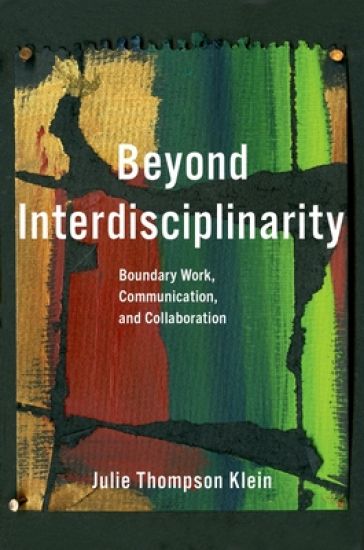
Beyond Interdisciplinarity

Beyond Interdisciplinarity

Julie Thompson Klein

Oxford University Press Inc
2021
sidottu
Beyond Interdisciplinarity examines the broadening meaning of core concept across academic disciplines and other forms of knowledge. In this book, Associate Editor of The Oxford Handbook of Interdisciplinarity and internationally recognized scholar Julie Thompson Klein depicts the heterogeneity and boundary work of inter- and trans-disciplinarity in a conceptual framework based on an ecology of spatializing practices in transaction spaces, including trading zones and communities of practice. The book includes both "crossdisciplinary" work (encompassing multi-, inter-, and trans-disciplinary forms) as well as "cross-sector" work (spanning disciplines, fields, professions, government and industry, and communities). The first section of the book defines and explains boundary work, discourses of interdisciplinarity, and the nature of interdisciplinary fields. In the second section, Klein examines dynamics of working across disciplines, including communication, collaboration, and learning with concrete examples and lessons from research projects and programs that transcend traditional fields. The closing chapter examines reasons for failure and success then presents gateways to literature and other resources. Throughout the book, Klein emphasizes the roles of contextualization and historical change while factoring in the shifting relationship of disciplinarity and interdisciplinarity, ascendancy of transdisciplinarity, and intersections with other constructs including Mode 2 knowledge production, convergence, team science, and postdisciplinarity. The conceptual framework she provides also includes the role of boundary objects, agents, and organizations in brokering differences and creating for platforms for change. Klein further explains why translation, interlanguage, and a communication boundary space are vital to achieving intersubjectivity and collective identity. They foster not only pragmatics of negotiation and integration but also reflexivity, transactivity, and co-production of knowledge with stakeholders beyond the academy. Rhetorics of holism and synthesis compete with instrumentalities of problem solving and transgressive critiques. However, typical warrants today include complexity, contextualization, collaboration, and socially-robust knowledge. Crossing boundaries remains complex, but this book guides readers through the density of pertinent literature while expanding understandings of crossdisciplinary and cross-sector work.
Beyond Interdisciplinarity

Beyond Interdisciplinarity

Julie Thompson Klein

Oxford University Press Inc
2021
nidottu
Beyond Interdisciplinarity examines the broadening meaning of core concept across academic disciplines and other forms of knowledge. In this book, Associate Editor of The Oxford Handbook of Interdisciplinarity and internationally recognized scholar Julie Thompson Klein depicts the heterogeneity and boundary work of inter- and trans-disciplinarity in a conceptual framework based on an ecology of spatializing practices in transaction spaces, including trading zones and communities of practice. The book includes both "crossdisciplinary" work (encompassing multi-, inter-, and trans-disciplinary forms) as well as "cross-sector" work (spanning disciplines, fields, professions, government and industry, and communities). The first section of the book defines and explains boundary work, discourses of interdisciplinarity, and the nature of interdisciplinary fields. In the second section, Klein examines dynamics of working across disciplines, including communication, collaboration, and learning with concrete examples and lessons from research projects and programs that transcend traditional fields. The closing chapter examines reasons for failure and success then presents gateways to literature and other resources. Throughout the book, Klein emphasizes the roles of contextualization and historical change while factoring in the shifting relationship of disciplinarity and interdisciplinarity, ascendancy of transdisciplinarity, and intersections with other constructs including Mode 2 knowledge production, convergence, team science, and postdisciplinarity. The conceptual framework she provides also includes the role of boundary objects, agents, and organizations in brokering differences and creating for platforms for change. Klein further explains why translation, interlanguage, and a communication boundary space are vital to achieving intersubjectivity and collective identity. They foster not only pragmatics of negotiation and integration but also reflexivity, transactivity, and co-production of knowledge with stakeholders beyond the academy. Rhetorics of holism and synthesis compete with instrumentalities of problem solving and transgressive critiques. However, typical warrants today include complexity, contextualization, collaboration, and socially-robust knowledge. Crossing boundaries remains complex, but this book guides readers through the density of pertinent literature while expanding understandings of crossdisciplinary and cross-sector work.

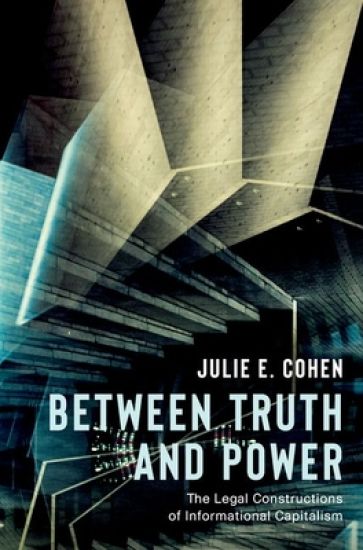
Between Truth and Power: The Legal Constructions of Informational Capitalism
A work of ambitious interdisciplinary scholarship that explores the ways that law and technology interact. Our current legal system is to a great extent the product of an earlier period of social and economic transformation. From the late nineteenth century through the mid-twentieth century, as accountability for industrial-age harms became a pervasive source of conflict, the US legal system underwent profound, tectonic shifts. Today, struggles over ownership of information-age resources and accountability for information-age harms are producing new systemic changes. In Between Truth and Power, Julie E. Cohen explores the relationships between legal institutions and political and economic transformation. Systematically examining struggles over the conditions of information flow and the design of information architectures and business models, she argues that as law is enlisted to help produce the profound economic and sociotechnical shifts that have accompanied the emergence of the informational economy, it is too is transforming in fundamental ways. Drawing on elements from legal theory, science and technology studies, information studies, communication studies and organization studies to develop a complex theory of institutional change, Cohen develops an account of the gradual emergence of legal institutions adapted to the information age and of the power relationships that such institutions reflect and reproduce. A tour de force of ambitious interdisciplinary scholarship, Between Truth and Power will transform our thinking about the possible futures of law and legal institutions in the networked information era.