Kirjojen hintavertailu. Mukana 12 083 983 kirjaa ja 12 kauppaa.

Kirjahaku

Etsi kirjoja tekijän nimen, kirjan nimen tai ISBN:n perusteella.

1000 tulosta hakusanalla Justin MacCarthy

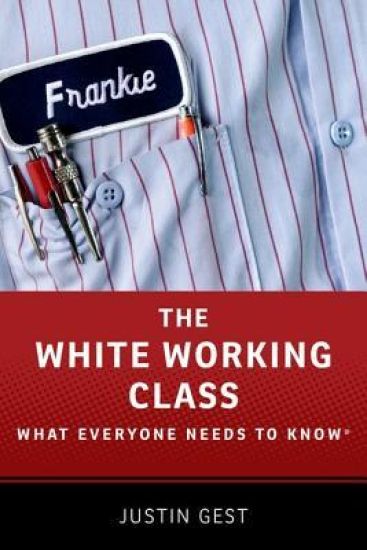
The White Working Class

The White Working Class

Justin Gest

Oxford University Press Inc
2018
sidottu
In recent years, the world has been re-introduced to the constituency of "white working class" people. In a wave of revolutionary populism, far right parties have scored victories across the transatlantic political world: Britain voted to leave the European Union, the United States elected President Donald Trump to enact an "America First" agenda, and Radical Right movements are threatening European centrists in elections across the Continent. In each case, white working class people are driving a broad reaction to the inequities and social change brought by globalization, and its cosmopolitan champions. In the midst of this rebellion, a new group consciousness has emerged among the very people who not so long ago could take their political, economic, and cultural primacy for granted. Who are white working class people? What do they believe? Are white working class people an "interest group"? What has driven them to break so sharply with the world's trajectory toward a more borderless, interconnected meritocracy? How can a group with such enduring power feel marginalized? This perplexing constituency must be understood if the world is to address and respond to the social and political backlash they are driving. The White Working Class: What Everyone Needs to Know® provides the context for understanding the politics of this large, perplexing group of people. The book begins by explaining what "white working class" means in terms of demographics, history, and geography, as well as the ways in which this group defines itself and has been defined by others. It will address whether white identity is on the rise, why white people perceive themselves as marginalized, and the roles of racism and xenophobia in white consciousness. It will also look at whether the white working class has distinct political attitudes, their voting behavior, and their prospects for the future. This accessible book provides a nuanced view into the forces driving one of the most complicated and consequential political constituencies today.
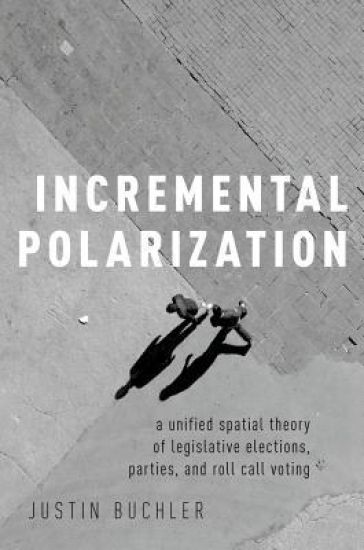
Incremental Polarization

Incremental Polarization

Justin Buchler

Oxford University Press Inc
2018
sidottu
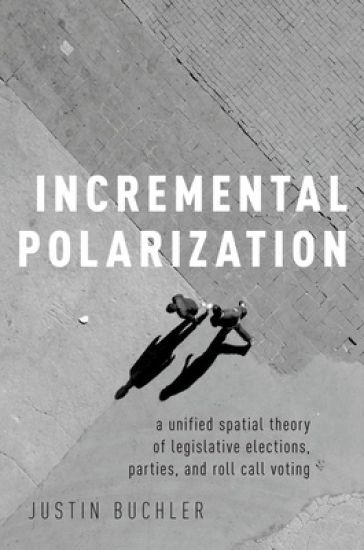
As the last decade has shown, ideological polarization in Congress has reached historic levels. Yet, spatial theory has become increasingly important for how scholars understand Congress and legislative elections. In spatial models, candidates select positions along an ideological spectrum, and voters choose candidates based on those locations. However, the central tendency of these models is for the candidates to converge to the location of the median voter, so polarization has become increasingly problematic for spatial theory, even as scholars have come to rely increasingly on these models. In Incremental Polarization, Justin Buchler provides a unified spatial model of legislative elections, parties, and roll call voting to explain the development of polarization in Congress. His model moves beyond elections and factors in legislators' roll call voting, where a different but related spatial process operates. By linking these models, Incremental Polarization fills a critical gap in our understanding of the strategic, electoral, and procedural roots of polarization-and the role that parties play in the process.
Incremental Polarization

Incremental Polarization

Justin Buchler

Oxford University Press Inc
2018
nidottu
As the last decade has shown, ideological polarization in Congress has reached historic levels. Yet, spatial theory has become increasingly important for how scholars understand Congress and legislative elections. In spatial models, candidates select positions along an ideological spectrum, and voters choose candidates based on those locations. However, the central tendency of these models is for the candidates to converge to the location of the median voter, so polarization has become increasingly problematic for spatial theory, even as scholars have come to rely increasingly on these models. In Incremental Polarization, Justin Buchler provides a unified spatial model of legislative elections, parties, and roll call voting to explain the development of polarization in Congress. His model moves beyond elections and factors in legislators' roll call voting, where a different but related spatial process operates. By linking these models, Incremental Polarization fills a critical gap in our understanding of the strategic, electoral, and procedural roots of polarization-and the role that parties play in the process.
Grandstanding

Grandstanding

Justin Tosi; Brandon Warmke

Oxford University Press Inc
2020
sidottu
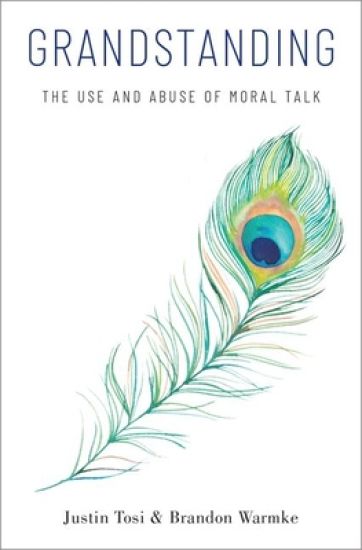
We are all guilty of it. We call people terrible names in conversation or online. We vilify those with whom we disagree, and make bolder claims than we could defend. We want to be seen as taking the moral high ground not just to make a point, or move a debate forward, but to look a certain way--incensed, or compassionate, or committed to a cause. We exaggerate. In other words, we grandstand. Nowhere is this more evident than in public discourse today, and especially as it plays out across the internet. To philosophers Justin Tosi and Brandon Warmke, who have written extensively about moral grandstanding, such one-upmanship is not just annoying, but dangerous. As politics gets more and more polarized, people on both sides of the spectrum move further and further apart when they let grandstanding get in the way of engaging one another. The pollution of our most urgent conversations with self-interest damages the very causes they are meant to forward. Drawing from work in psychology, economics, and political science, and along with contemporary examples spanning the political spectrum, the authors dive deeply into why and how we grandstand. Using the analytic tools of psychology and moral philosophy, they explain what drives us to behave in this way, and what we stand to lose by taking it too far. Most importantly, they show how, by avoiding grandstanding, we can re-build a public square worth participating in.
The Last Word

The Last Word

Justin Gautreau

Oxford University Press Inc
2020
sidottu
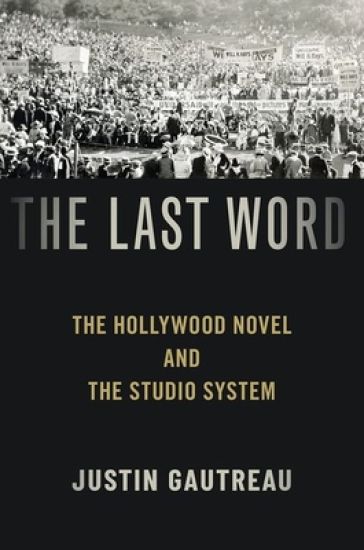
The Last Word argues that the Hollywood novel opened up space for cultural critique of the film industry at a time when the industry lacked the capacity to critique itself. While the young studio system worked tirelessly to burnish its public image in the wake of celebrity scandal, several industry insiders wrote fiction to fill in what newspapers and fan magazines left out. Throughout the 1920s and 1930s, these novels aimed to expose the invisible machinery of classical Hollywood cinema, including not only the evolving artifice of the screen but also the promotional discourse that complemented it. As likeminded filmmakers in the 1940s and 1950s gradually brought the dark side of the industry to the screen, however, the Hollywood novel found itself struggling to live up to its original promise of delivering the unfilmable. By the 1960s, desperate to remain relevant, the genre had devolved into little more than erotic fantasy of movie stars behind closed doors, perhaps the only thing the public couldn't already find elsewhere. Still, given their unique ability to speak beyond the institutional restraints of their time, these earlier works offer a window into the industry's dynamic creation and re-creation of itself in the public imagination.
The Last Word

The Last Word

Justin Gautreau

Oxford University Press Inc
2020
nidottu
The Last Word argues that the Hollywood novel opened up space for cultural critique of the film industry at a time when the industry lacked the capacity to critique itself. While the young studio system worked tirelessly to burnish its public image in the wake of celebrity scandal, several industry insiders wrote fiction to fill in what newspapers and fan magazines left out. Throughout the 1920s and 1930s, these novels aimed to expose the invisible machinery of classical Hollywood cinema, including not only the evolving artifice of the screen but also the promotional discourse that complemented it. As likeminded filmmakers in the 1940s and 1950s gradually brought the dark side of the industry to the screen, however, the Hollywood novel found itself struggling to live up to its original promise of delivering the unfilmable. By the 1960s, desperate to remain relevant, the genre had devolved into little more than erotic fantasy of movie stars behind closed doors, perhaps the only thing the public couldn't already find elsewhere. Still, given their unique ability to speak beyond the institutional restraints of their time, these earlier works offer a window into the industry's dynamic creation and re-creation of itself in the public imagination.
Arete and the Odyssey's Poetics of Interrogation

Arete and the Odyssey's Poetics of Interrogation

Justin Arft

Oxford University Press
2022
sidottu
Arete and the Odyssey's Poetics of Interrogation explores how the enigmatic Phaeacian queen, Arete, is at the heart of an epic-scale "poetics of interrogation" used throughout the Odyssey to negotiate Odysseus' kleos, or epic renown. Arete's interrogation of Odysseus has been especially problematic in scholarship, but diachronic and synchronic analysis of similar interrogations across Indo-European, Orphic, and Greek epigrammatic corpora show that the "stranger's interrogation" is a formula that demands performance and negotiation of status. Within the Odyssey, this interrogation is part of an intraformular network used to generate kleos, and the queen's question initiates the longest and most complex negotiation of Odysseus' status in epic and memory. Arete's role as interrogator not only explains her strange authority and resonance with both Penelope and comparative afterlife figures, but it also establishes a gendered, agonistic tension between she and her husband, Alkinoos, that influences the structure, genre, and narratology of performances across the Phaeacian episode. This book reinterprets the Odyssey's central episode and challenges several assumptions about Nausikaa and Alkinoos' famed hospitality, even demonstrating how the Apologue is organized as a response to competing inquiries into Odysseus' fundamental status in tradition. The Odyssey ultimately navigates away from Odysseus' public reputation and roots his status in private memories, and Arete's carefully arranged interventions signal the larger process by which the Odyssey immortalizes Odysseus in poetry as a nostos hero. The queen and her question invite new applications of oral poetics that shed light on the structure, composition, and reperformance of the Odyssey.
tPA for Stroke

tPA for Stroke

Justin A. Zivin; John Galbraith Simmons

Oxford University Press Inc
2010
sidottu
Each year, nearly 700,000 people in the United States will have a stroke. A drug known as tPA can drastically reduce the long-term disability associated with stroke if it is administered within the first three hours after the event occurs. Many of those who are lucky enough to be treated with tPA have made full recoveries--to the extent that one can hardly believe they suffered a "real" stroke. Others still do not receive the drug; many suffer permanent disabilities, and many die. Authors Zivin and Simmons argue that most Americans have never heard of tPA. Why would such an effective pharmaceutical, one that has a remarkable rate of success with the third leading killer of Americans, be so disregarded? tPA for Stroke: The Story of a Controversial Drug explains the drug's beginnings within pharmaceutical giant Genentech, and its eventual marginalization due to a convergence of unfortunate political, fiscal, and medical circumstances. Readers will learn about an extraordinary treatment for acute stroke that they may then seek if a stroke occurs and anyone interested in the unique process of drug development, marketing, and promotion, told from an insider's perspective, will have an interest intPA for Stroke.
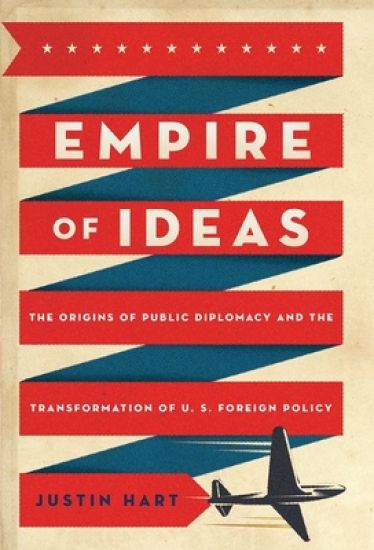
Empire of Ideas

Empire of Ideas

Justin Hart

Oxford University Press Inc
2020
nidottu
Covering the period from 1936 to 1953, Empire of Ideas reveals how and why image first became a component of foreign policy, prompting policymakers to embrace such techniques as propaganda, educational exchanges, cultural exhibits, overseas libraries, and domestic public relations. Drawing upon exhaustive research in official government records and the private papers of top officials in the Roosevelt and Truman administrations, including newly declassified material, Justin Hart takes the reader back to the dawn of what Time-Life publisher Henry Luce would famously call the "American century," when U.S. policymakers first began to think of the nation's image as a foreign policy issue. Beginning with the Buenos Aires Conference in 1936--which grew out of FDR's Good Neighbor Policy toward Latin America--Hart traces the dramatic growth of public diplomacy in the war years and beyond. The book describes how the State Department established the position of Assistant Secretary of State for Public and Cultural Affairs in 1944, with Archibald MacLeish--the Pulitzer Prize-winning poet and Librarian of Congress--the first to fill the post. Hart shows that the ideas of MacLeish became central to the evolution of public diplomacy, and his influence would be felt long after his tenure in government service ended. The book examines a wide variety of propaganda programs, including the Voice of America, and concludes with the creation of the United States Information Agency in 1953, bringing an end to the first phase of U. S. public diplomacy. Empire of Ideas remains highly relevant today, when U. S. officials have launched full-scale propaganda to combat negative perceptions in the Arab world and elsewhere. Hart's study illuminates the similar efforts of a previous generation of policymakers, explaining why our ability to shape our image is, in the end, quite limited.
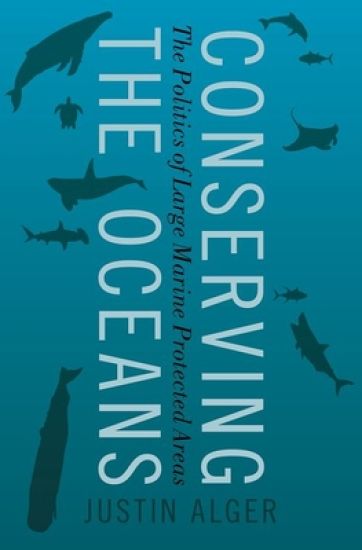
Conserving the Oceans

Conserving the Oceans

Justin Alger

Oxford University Press Inc
2021
sidottu
Large marine protected areas (MPAs) have emerged since the mid-2000s as a popular state response to the overfishing, land run-off, and climate change causing the decline of the world's oceans. As of 2020, there were more than 14,000 MPAs in the world, most of them small, poorly managed, and often amounting to little more than "paper parks" that contribute little to ocean conservation or resource management. However, that is beginning to change. In recent years, governments, including the United States and United Kingdom, have turned their attention to protecting large swaths of ocean through MPAs hundreds of thousands of square kilometers in size. In this book, Justin Alger documents the efforts of activists and states to increase the pace and scale of global ocean protections, leading to a paradigm shift in how states conserve marine biodiversity. Through an analysis of domestic political economies, and based on three original MPA case studies located in the United States, Australia, and Palau, this book explains how states have protected millions of square kilometers of ocean space while remaining highly responsive to the interests of businesses. From the commercial fishing to ecotourism sectors, business heavily influences conservation policy, occasionally leading to robust protections but more often than not to business-as-usual activity on the water. Conserving the Oceans examines the reach and the limits of business influence, examining how the domestic political economy of a given ocean space can reshape a global norm to better suit local economic realities. While recognizing important global progress and growing ambition to conserve ocean ecosystems, Alger provides a critical analysis of the processes by which global environmental norms become domestic policy. Ultimately, the book questions if we are still doing too little to prevent the worst impacts of the global environmental crisis despite the paradigm shift in global ocean conservation.
Perspectives on Community-Based Corrections

Perspectives on Community-Based Corrections

Justin C. Medina; Jillian L. Eidson

OXFORD UNIVERSITY PRESS INC
2024
nidottu
Students generally take this course because they are preparing for a career in the field, so they need to be aware of current policies and practices in community corrections. In addition, given the decarceration trend and the economics of seeking incarceration alternatives, this topic is increasing in popularity and importance. This text takes an applied and practical approach to understanding community corrections, as well as changing data and policies. It will aid in understanding the complexities of community-based corrections with up-to-date data on practice and effectiveness. Finally, its modular approach offers flexibility and versatility for instructors.
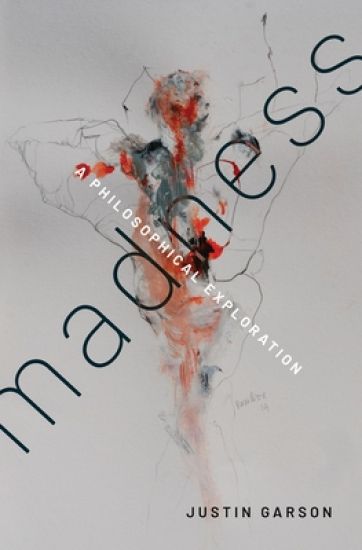
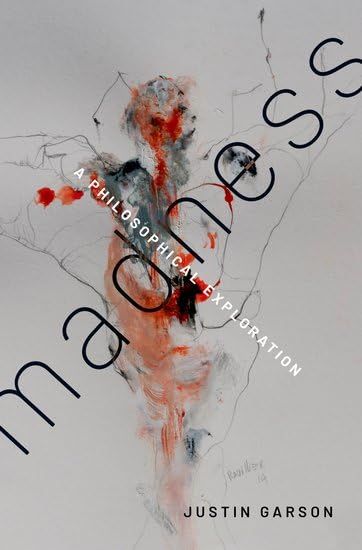
Madness

Madness

Justin Garson

OXFORD UNIVERSITY PRESS INC
2022
sidottu
Since the time of Hippocrates, madness has typically been viewed through the lens of disease, dysfunction, and defect. Madness, like all other disease, happens when something in the mind, or in the brain, does not operate the way that it should or as nature intended. In this paradigm, the role of the healer is simply to find the dysfunction and fix it. This remains the dominant perspective in global psychiatry today. In Madness: A Philosophical Exploration, philosopher of science Justin Garson presents a radically different paradigm for conceiving of madness and the forms that it takes. In this paradigm, which he calls madness-as-strategy, madness is neither a disease nor a defect, but a designed feature, like the heart or lungs. That is to say, at least sometimes, when someone is mad, everything inside of them is working exactly as it should and as nature intended. Through rigorous engagement with texts spanning the classical era to Darwinian medicine, Garson shows that madness-as-strategy is not a new conception. Thus, more than a history of science or a conceptual genealogy, Madness is a recovery mission. In recovering madness-as-strategy, it leads us beyond today's dominant medical paradigm toward a very different form of thinking and practice. This book is essential reading for philosophers of medicine and psychiatry, particularly for those who seek to understand the nature of health, disease, and mental disorder. It will also be a valuable resource for historians and sociologists of medicine for its innovative approach to the history of madness. Most importantly, it will be useful for mental health service users, survivors, and activists, who seek an alternative and liberating vision of what it means to be mad.
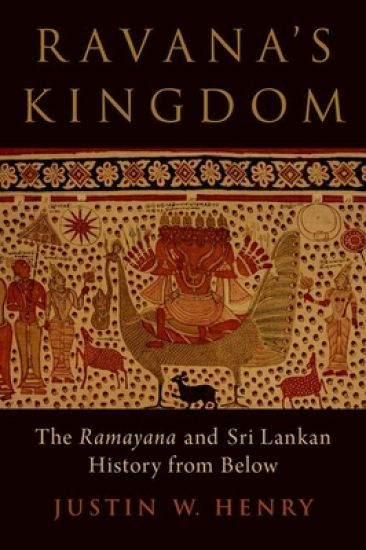
Ravana's Kingdom

Ravana's Kingdom

Justin W. Henry

OXFORD UNIVERSITY PRESS INC
2022
sidottu
Ravana, the demon-king antagonist from the Ramayana, the ancient Hindu epic poem, has become an unlikely cultural hero among Sinhala Buddhists over the past decade. In Ravana's Kingdom, Justin W. Henry delves into the historical literary reception of the epic in Sri Lanka, charting the adaptions of its themes and characters from the 14th century onwards, as many Sri Lankan Hindus and Buddhists developed a sympathetic impression of Ravana's character, and through the contemporary Ravana revival, which has resulted in the development of an alternative mythological history, depicting Ravana as king of the Sri Lanka's indigenous inhabitants, a formative figure of civilizational antiquity, and the direct ancestor of the Sinhala Buddhist people. Henry offers a careful study of the literary history of the Ramayana in Sri Lanka, employing numerous sources and archives that have until now received little to no scholarly attention, as well as the 21st century revision of a narrative of the Sri Lankan people-a narrative incubated by the general public online, facilitated by social media and by the speed of travel of information in the digital age. Ravana's Kingdom offers a glimpse into a centuries-old, living Ramayana tradition among Hindus and Buddhists in Sri Lanka-a case study of the myth-making process in the digital age.
Majority Minority

Majority Minority

Justin Gest

OXFORD UNIVERSITY PRESS INC
2022
sidottu
"Trenchant and groundbreaking work" -- Molly Ball,National Political Correspondent, TIME Magazine "The go-to source for understanding how demographic change is impacting American politics." - Jonathan Capehart, The Washington Post and MSNBC "A treasure trove" -- Thomas B. Edsall, Columnist, The New York Times "A joy to read. . . A tour de force" -- Eric Kaufmann, Professor of Politics, Birkbeck College, University of London How do societies respond to great demographic change? This question lingers over the contemporary politics of the United States and other countries where persistent immigration has altered populations and may soon produce a majority minority milestone, where the original ethnic or religious majority loses its numerical advantage to one or more foreign-origin minority groups. Until now, most of our knowledge about largescale responses to demographic change has been based on studies of individual people's reactions, which tend to be instinctively defensive and intolerant. We know little about why and how these habits are sometimes tempered to promote more successful coexistence. To anticipate and inform future responses to demographic change, Justin Gest looks to the past. In Majority Minority, Gest wields historical analysis and interview-based fieldwork inside six of the world's few societies that have already experienced a majority minority transition to understand what factors produce different social outcomes. Gest concludes that, rather than yield to people's prejudices, states hold great power to shape public responses and perceptions of demographic change through political institutions and the rhetoric of leaders. Through subsequent survey research, Gest also identifies novel ways that leaders can leverage nationalist sentiment to reduce the appeal of nativism--by framing immigration and demographic change in terms of the national interest. Grounded in rich narratives and surprising survey findings, Majority Minority reveals that this contentious milestone and its accompanying identity politics are ultimately subject to unifying or divisive governance.
The Injustice of Noah's Curse

The Injustice of Noah's Curse

Justin Michael Reed

Oxford University Press
2025
sidottu
Following the flood and the rainbow, Genesis 9 has one final story about Noah. The patriarch gets drunk, strips naked, and passes out. One of his sons, Ham, sees Noah naked. When Noah wakes up, he utters a curse of slavery against not Ham, but one of Ham's sons, Canaan. Why is Noah's reaction so severe? And why does he curse Canaan, who did nothing? For more than two thousand years, interpreters have tried to make sense of what seems like an injustice in Noah's reaction. The goal of good interpretation, it would seem, is to show how-if we just understand the right details or context-Noah's curse has hit the target with the proper punishment. The most notorious examples of interpretations following this agenda are appeals to Noah's curse as biblical support for denigrating or subjugating others, especially Black people. Modern scholars with no interest in weaponizing the text take the same interpretive approach but with a slight qualification, their rationale for justifying the curse is that they are trying to read in sync with the Israelite authors who they presume intended to write a just curse against the Canaanites. Although this has been the normative trend in interpretation for centuries, Justin Michael Reed shines light on a different path. Instead of trying to explain away the injustice of Noah's curse, Reed affirms that Noah's curse is unjust, and he uses critical race theory, speech act theory, intertextuality, and irony to make sense of the injustice of Noah's curse in its literary context.
Moral Responsibility and the Flicker of Freedom

Moral Responsibility and the Flicker of Freedom

Justin A. Capes

OXFORD UNIVERSITY PRESS INC
2023
sidottu
Thought experiments of a sort devised by Harry Frankfurt are widely believed to be counterexamples to the principle that a person is morally responsible for what he did only if he could have avoided doing it. In Moral Responsibility and the Flicker of Freedom, Justin A. Capes challenges that widespread belief. He argues that, far from being counterexamples to the principle, Frankfurt cases, as they have come to be known, actually provide further confirmation of it, a conclusion that has important implications for our understanding of free will and moral responsibility. Central to Capes's argument is a version of what's known as the flicker of freedom strategy. Capes contends that while an agent's freedom is significantly curtailed in Frankfurt cases, it isn't extinguished entirely, which is why there is typically something in such cases for which the featured agent is morally responsible (though it's never something the agent couldn't have avoided). This analysis of Frankfurt cases is supported by reflection on vignettes involving omissions (or inaction more generally). Drawing on a detailed analysis of such vignettes, Capes offers a compelling defense of a symmetrical view of moral responsibility, according to which having a fair opportunity to do otherwise is an essential determinant of moral responsibility for both actions and omissions.
Madness

Madness

Justin Garson

OXFORD UNIVERSITY PRESS INC
2025
nidottu
Since the time of Hippocrates, madness has typically been viewed through the lens of disease, dysfunction, and defect. Madness, like all other disease, happens when something in the mind, or in the brain, does not operate the way that it should or as nature intended. In this paradigm, the role of the healer is simply to find the dysfunction and fix it. This remains the dominant perspective in global psychiatry today. In Madness: A Philosophical Exploration, philosopher of science Justin Garson presents a radically different paradigm for conceiving of madness and the forms that it takes. In this paradigm, which he calls madness-as-strategy, madness is neither a disease nor a defect, but a designed feature, like the heart or lungs. That is to say, at least sometimes, when someone is mad, everything inside of them is working exactly as it should and as nature intended. Through rigorous engagement with texts spanning the classical era to Darwinian medicine, Garson shows that madness-as-strategy is not a new conception. Thus, more than a history of science or a conceptual genealogy, Madness is a recovery mission. In recovering madness-as-strategy, it leads us beyond today's dominant medical paradigm toward a very different form of thinking and practice. This book is essential reading for philosophers of medicine and psychiatry, particularly for those who seek to understand the nature of health, disease, and mental disorder. It will also be a valuable resource for historians and sociologists of medicine for its innovative approach to the history of madness. Most importantly, it will be useful for mental health service users, survivors, and activists, who seek an alternative and liberating vision of what it means to be mad.
Applied Statistics with R

Applied Statistics with R

Justin C. Touchon

OXFORD UNIVERSITY PRESS INC
2025
sidottu
Over the past few decades, the life sciences have experienced an analytical revolution. With powerful computers now widely available, students and researchers are expected to perform increasingly advanced statistical analyses--previously the domain of only statistical experts. However, most undergraduate and graduate students still lack the proper formal training needed to succeed. Regardless of your experience level, this book will teach you in an efficient, accessible, and occasionally humorous manner, ensuring you understand how and when to perform your analyses. The book uses the statistical language R, which is the choice of ecologists worldwide and is rapidly becoming the 'go-to' stats program throughout the life sciences. By using a single, real-world dataset throughout the book, readers will become deeply familiar with an imperfect but realistic set of data. Early chapters are designed to teach basic data manipulation skills and build good habits in preparation for learning more advanced analyses. This approach demonstrates the importance of viewing data through different lenses, facilitating an easy and natural progression from linear and generalized linear models through to mixed effects versions of those same analyses. Readers will also learn advanced plotting and data-wrangling techniques and gain an introduction to writing their own functions. Applied Statistics with R is suitable for senior undergraduate and graduate students, professional researchers, and practitioners throughout the life sciences, whether in the fields of ecology, evolution, environmental studies, psychology, or neuroscience.
Applied Statistics with R

Applied Statistics with R

Justin C. Touchon

OXFORD UNIVERSITY PRESS INC
2025
nidottu
Over the past few decades, the life sciences have experienced an analytical revolution. With powerful computers now widely available, students and researchers are expected to perform increasingly advanced statistical analyses--previously the domain of only statistical experts. However, most undergraduate and graduate students still lack the proper formal training needed to succeed. Regardless of your experience level, this book will teach you in an efficient, accessible, and occasionally humorous manner, ensuring you understand how and when to perform your analyses. The book uses the statistical language R, which is the choice of ecologists worldwide and is rapidly becoming the 'go-to' stats program throughout the life sciences. By using a single, real-world dataset throughout the book, readers will become deeply familiar with an imperfect but realistic set of data. Early chapters are designed to teach basic data manipulation skills and build good habits in preparation for learning more advanced analyses. This approach demonstrates the importance of viewing data through different lenses, facilitating an easy and natural progression from linear and generalized linear models through to mixed effects versions of those same analyses. Readers will also learn advanced plotting and data-wrangling techniques and gain an introduction to writing their own functions. Applied Statistics with R is suitable for senior undergraduate and graduate students, professional researchers, and practitioners throughout the life sciences, whether in the fields of ecology, evolution, environmental studies, psychology, or neuroscience.
Mombasa, the Swahili, and the Making of the Mijikenda
This is a history of the Kenyan city of Mombasa and its surrounding settlements from the mid-nineteenth century to the height of colonial rule in the 1930s. Justin Willis sets out to place the island and town of Mombasa in its African context, incorporating the findings of recent historical and anthropological research. Dr Willis examines the institutions and social networks which simultaneously united and divided the people of the region before the colonial period, demonstrating both their interdependence and the creation of distinct population categories. He traces the development of these institutions under British rule, when the demands of the colonial economy caused officials to attempt far-reaching changes to the social structure and physically to remake the town of Mombasa. This is a radical re-interpretation of the history of Mombasa and its hinterland, based on thorough archival research. It offers valuable insights into the nature of ethnic identity, and makes an important contribution to the growing body of scholarly work on the African city.