Kirjojen hintavertailu. Mukana 11 627 463 kirjaa ja 12 kauppaa.

Kirjahaku

Etsi kirjoja tekijän nimen, kirjan nimen tai ISBN:n perusteella.

1000 tulosta hakusanalla Karen Choppa

Fifteenth-Century Lives

Fifteenth-Century Lives

Karen A. Winstead

University of Notre Dame Press
2020
nidottu
In Fifteenth-Century Lives, Karen A. Winstead identifies and explores a major shift in the writing of Middle English saints' lives. As she demonstrates, starting in the 1410s and '20s, hagiography became more character-oriented, more morally complex, more deeply embedded in history, and more politically and socially engaged. Further, it became more self-consciously literary and began to feature women more prominently—and not only traditional virgin martyrs but also matrons and contemporary holy women. Winstead shows that this literature placed a premium on scholarship and teaching. Hagiography celebrated educators and scholars to a greater extent than ever before and became a vehicle for educating readers about Christian dogma. Focusing both on authors well known, such as John Lydgate and Margery Kempe, and on others less known, such as Osbern Bokenham and John Capgrave, Winstead argues that the values promoted by fifteenth-century hagiography helped to shape the reformist impulses that eventually produced the Reformation. Moreover, these values continued to influence post-Reformation hagiography, both Protestant and Catholic, well into the seventeenth century. In exploring these trends in fifteenth-century hagiography, identifying the factors that contributed to their emergence, and tracing their influence in later periods, Fifteenth-Century Lives marks an important contribution to revisionary scholarship on fifteenth-century literature. It will appeal to students and scholars of late medieval English literature and late medieval religion.
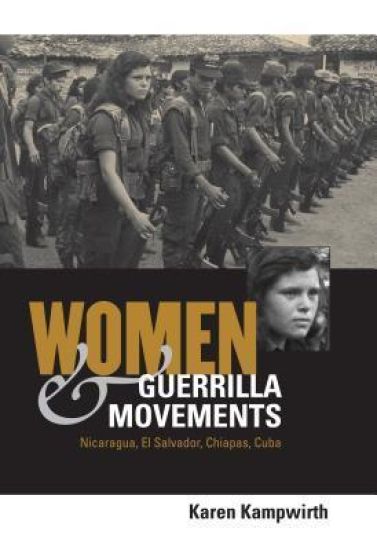
Women and Guerrilla Movements

Women and Guerrilla Movements

Karen Kampwirth

Pennsylvania State University Press
2003
pokkari
The revolutionary movements that emerged frequently in Latin America over the past century promoted goals that included overturning dictatorships, confronting economic inequalities, and creating what Cuban revolutionary hero Che Guevara called the "new man." But, in fact, many of the "new men" who participated in these movements were not men. Thousands of them were women. This book aims to show why a full understanding of revolutions needs to take account of gender. Karen Kampwirth writes here about the women who joined the revolutionary movements in Nicaragua, El Salvador, and the Mexican state of Chiapas, about how they became guerrillas, and how that experience changed their lives. In the last chapter she compares what happened in these countries with Cuba in the 1950s, where few women participated in the guerrilla struggle. Drawing on more than two hundred interviews, Kampwirth examines the political, structural, ideological, and personal factors that allowed many women to escape from the constraints of their traditional roles and led some to participate in guerrilla activities. Her emphasis on the experiences of revolutionaries adds a new dimension to the study of revolution, which has focused mainly on explaining how states are overthrown.
Wives of Steel

Wives of Steel

Karen Olson

Pennsylvania State University Press
2005
sidottu
During its heyday in the 1950s and 1960s, the Bethlehem Steel mill at Sparrows Point near Baltimore was one of the world’s largest steel plants, employing as many as 30,000 workers. But these glory years were short-lived, as the American steel industry soon collapsed, taking with it the high-income industrial jobs that many Sparrows Point workers had come to enjoy. This familiar tale of decline in America’s industrial heartland is only part of the story, however. In response to downsizing and job loss at Sparrows Point, many women entered the workforce to fulfill the needs of their families living in the adjacent communities of Turners Station and Dundalk. Wives of Steel tells the story of these women who broke traditional gender roles and, in the process, contributed to the economic survival of their communities.Wives of Steel is based on more than eighty formal interviews conducted over a fifteen-year period with women and some men, both white and black, all of whom were part of Sparrows Point as workers, spouses, or longtime residents of the local communities. Through the stories they tell, we see how a male-dominated industry has influenced personal, family, and social experiences over several generations. We also see the distinct differences and surprising similarities between the lives of black and white women, which often reflect the complicated relationships among black and white steelworkers in the plant.Deindustrialization has transformed many of America’s cities and communities, often in devastating ways. For women in particular, the changes in family and work life have been far more complex and in many ways more positive in their consequences than many studies have led us to expect. Combining consummate research with vivid firsthand accounts, Wives of Steel tells a story that continues to be played out in communities across America as working-class families are forced to cope with a globalizing economy.
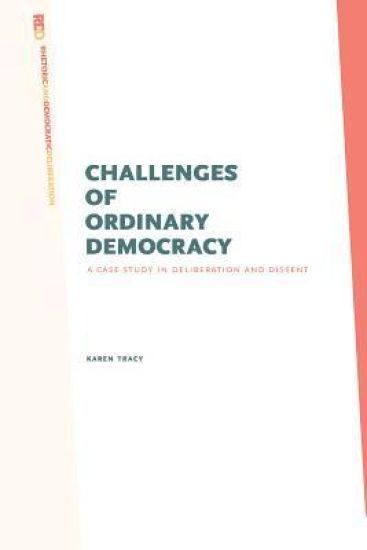
Challenges of Ordinary Democracy

Challenges of Ordinary Democracy

Karen Tracy

Pennsylvania State University Press
2011
pokkari
Is there any place in America where passionate debate plays a more vital role in democratic discourse than local school board meetings? Karen Tracy conducted a thirty-five-month study of the board meetings of the Boulder Valley School District between 1996 and 1999 to analyze just how democracy operates in practice. In Challenges of Ordinary Democracy, she reveals the major role that emotion plays in real-life debate and discerns value in what might easily be seen as negative forms of discourse—voicing platitudes, making contradictory assertions, arguing over a document’s wording, speaking angrily, attacking a person's character. By illuminating this one arena of “ordinary democracy,” Tracy hopes to engender a new appreciation for how what she calls “reasonable hostility” can be a desirable ideal of communication for debating public policy issues.
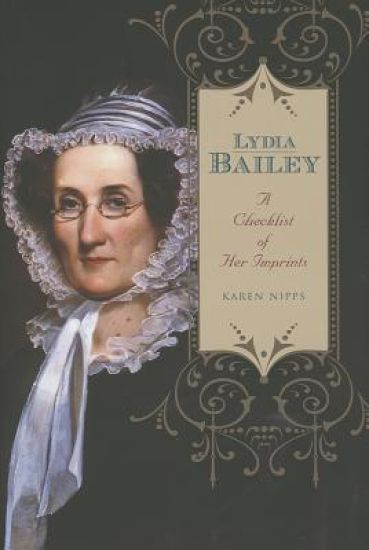
Lydia Bailey

Lydia Bailey

Karen Nipps

Pennsylvania State University Press
2013
sidottu
Little known today, Lydia Bailey was a leading printer in Philadelphia for decades. Her career began in 1808—when her husband, Robert, died, leaving her with the family business to manage—and ended in 1861, when she retired at the age of eighty-two. During her career, she operated a shop that at its height had more than forty employees, acted as city printer for over thirty years, and produced almost a thousand imprints bearing her name. Not surprisingly, sources reveal that she was closely associated with many of her now better-known contemporaries both in the book trade and beyond, people like her father-in-law, Francis Bailey; Mathew Carey; Philip Freneau; and Harriet Livermore. Through a detailed examination and analysis of various sources, Karen Nipps portrays Bailey’s experience within the context of her social, political, religious, and book environments.Lydia Bailey is the first monograph on a woman printer during the handpress period. It consists of a historical essay detailing Bailey’s life and analyzing her role in the contemporary book trade, followed by a checklist of her known imprints. In addition, appendixes offer further statistical information on the activities of her shop. Together, these provide rich material for other book historians as well as for historians of the early Republic, gender, and technology.
Lydia Bailey

Lydia Bailey

Karen Nipps

Pennsylvania State University Press
2016
pokkari
Little known today, Lydia Bailey was a leading printer in Philadelphia for decades. Her career began in 1808—when her husband, Robert, died, leaving her with the family business to manage—and ended in 1861, when she retired at the age of eighty-two. During her career, she operated a shop that at its height had more than forty employees, acted as city printer for over thirty years, and produced almost a thousand imprints bearing her name. Not surprisingly, sources reveal that she was closely associated with many of her now better-known contemporaries both in the book trade and beyond, people like her father-in-law, Francis Bailey; Mathew Carey; Philip Freneau; and Harriet Livermore. Through a detailed examination and analysis of various sources, Karen Nipps portrays Bailey’s experience within the context of her social, political, religious, and book environments.Lydia Bailey is the first monograph on a woman printer during the handpress period. It consists of a historical essay detailing Bailey’s life and analyzing her role in the contemporary book trade, followed by a checklist of her known imprints. In addition, appendixes offer further statistical information on the activities of her shop. Together, these provide rich material for other book historians as well as for historians of the early Republic, gender, and technology.
Wives of Steel

Wives of Steel

Karen Olson

Pennsylvania State University Press
2012
pokkari
During its heyday in the 1950s and 1960s, the Bethlehem Steel mill at Sparrows Point near Baltimore was one of the world’s largest steel plants, employing as many as 30,000 workers. But these glory years were short-lived, as the American steel industry soon collapsed, taking with it the high-income industrial jobs that many Sparrows Point workers had come to enjoy. This familiar tale of decline in America’s industrial heartland is only part of the story, however. In response to downsizing and job loss at Sparrows Point, many women entered the workforce to fulfill the needs of their families living in the adjacent communities of Turners Station and Dundalk. Wives of Steel tells the story of these women who broke traditional gender roles and, in the process, contributed to the economic survival of their communities.Wives of Steel is based on more than eighty formal interviews conducted over a fifteen-year period with women and some men, both white and black, all of whom were part of Sparrows Point as workers, spouses, or longtime residents of the local communities. Through the stories they tell, we see how a male-dominated industry has influenced personal, family, and social experiences over several generations. We also see the distinct differences and surprising similarities between the lives of black and white women, which often reflect the complicated relationships among black and white steelworkers in the plant.Deindustrialization has transformed many of America’s cities and communities, often in devastating ways. For women in particular, the changes in family and work life have been far more complex and in many ways more positive in their consequences than many studies have led us to expect. Combining consummate research with vivid firsthand accounts, Wives of Steel tells a story that continues to be played out in communities across America as working-class families are forced to cope with a globalizing economy.
Critical Shift

Critical Shift

Karen L. Georgi

Pennsylvania State University Press
2013
sidottu
American Civil War–era art critics James Jackson Jarves, Clarence Cook, and William J. Stillman classified styles and defined art in terms that have become fundamental to our modern periodization of the art of the nineteenth century. In Critical Shift, Karen Georgi rereads many of their well-known texts, finding certain key discrepancies between their words and our historiography that point to unrecognized narrative desires. The book also studies ruptures and revolutionary breaks between “old” and “new” art, as well as the issue of the morality of “true” art. Georgi asserts that these concepts and their sometimes loaded expression were part of larger rhetorical structures that gainsay the uses to which the key terms have been put in modern historiography.It has been more than fifty years since a book has been devoted to analyzing the careers of these three critics, and never before has their role in the historiography and periodization of American art been analyzed. The conclusions drawn from this close rereading of well-known texts challenge the fundamental nature of “historical context” in American art history.
Critical Shift

Critical Shift

Karen L. Georgi

Pennsylvania State University Press
2015
pokkari
American Civil War–era art critics James Jackson Jarves, Clarence Cook, and William J. Stillman classified styles and defined art in terms that have become fundamental to our modern periodization of the art of the nineteenth century. In Critical Shift, Karen Georgi rereads many of their well-known texts, finding certain key discrepancies between their words and our historiography that point to unrecognized narrative desires. The book also studies ruptures and revolutionary breaks between “old” and “new” art, as well as the issue of the morality of “true” art. Georgi asserts that these concepts and their sometimes loaded expression were part of larger rhetorical structures that gainsay the uses to which the key terms have been put in modern historiography.It has been more than fifty years since a book has been devoted to analyzing the careers of these three critics, and never before has their role in the historiography and periodization of American art been analyzed. The conclusions drawn from this close rereading of well-known texts challenge the fundamental nature of “historical context” in American art history.
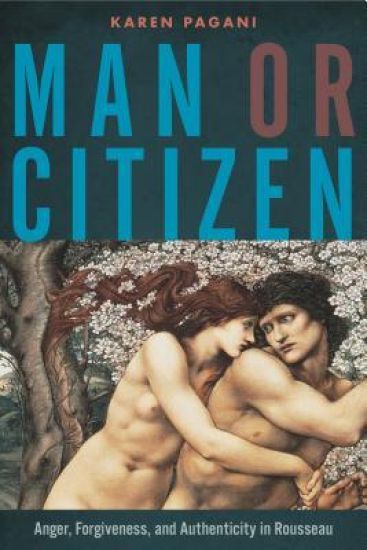
Man or Citizen

Man or Citizen

Karen Pagani

Pennsylvania State University Press
2015
sidottu
The French studies scholar Patrick Coleman made the important observation that over the course of the eighteenth century, the social meanings of anger became increasingly democratized. The work of Jean-Jacques Rousseau is an outstanding example of this change. In Man or Citizen, Karen Pagani expands, in original and fascinating ways, the study of anger in Rousseau’s autobiographical, literary, and philosophical works. Pagani is especially interested in how and to what degree anger—and various reconciliatory responses to anger, such as forgiveness—functions as a defining aspect of one’s identity, both as a private individual and as a public citizen. Rousseau himself was, as Pagani puts it, “unabashed” in his own anger and indignation—toward society on one hand (corrupter of our naturally good and authentic selves) and, on the other, toward certain individuals who had somehow wronged him (his famous philosophical disputes with Voltaire and Diderot, for example). In Rousseau’s work, Pagani finds that the extent to which an individual processes, expresses, and eventually resolves or satisfies anger is very much of moral and political concern. She argues that for Rousseau, anger is not only inevitable but also indispensable, and that the incapacity to experience it renders one amoral, while the ability to experience it is a key element of good citizenship.
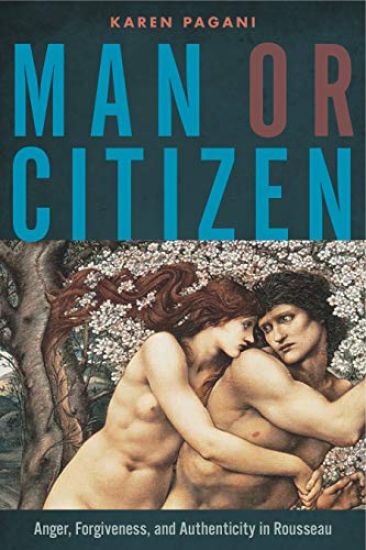
Man or Citizen

Man or Citizen

Karen Pagani

Pennsylvania State University Press
2017
pokkari
The French studies scholar Patrick Coleman made the important observation that over the course of the eighteenth century, the social meanings of anger became increasingly democratized. The work of Jean-Jacques Rousseau is an outstanding example of this change. In Man or Citizen, Karen Pagani expands, in original and fascinating ways, the study of anger in Rousseau’s autobiographical, literary, and philosophical works. Pagani is especially interested in how and to what degree anger—and various reconciliatory responses to anger, such as forgiveness—functions as a defining aspect of one’s identity, both as a private individual and as a public citizen. Rousseau himself was, as Pagani puts it, “unabashed” in his own anger and indignation—toward society on one hand (corrupter of our naturally good and authentic selves) and, on the other, toward certain individuals who had somehow wronged him (his famous philosophical disputes with Voltaire and Diderot, for example). In Rousseau’s work, Pagani finds that the extent to which an individual processes, expresses, and eventually resolves or satisfies anger is very much of moral and political concern. She argues that for Rousseau, anger is not only inevitable but also indispensable, and that the incapacity to experience it renders one amoral, while the ability to experience it is a key element of good citizenship.
Survival of the Black Family

Survival of the Black Family

Karen S. Jewell

Praeger Publishers Inc
1988
sidottu
Survival of the Black Family critically examines the social policies that arose from the civil rights movement. Jewell proposes new steps to economic independence for black families that would place this responsibility within all sectors of society, arguing that social policies and their absence have affected the status of black family structures. She refutes the myths of significant black progress that emanated from the civil rights era, including the belief in equity for minorities in societal institutions. Attention is focused on the extent to which black families have been adversely affected by a process of assimilation, which was sociopsychological rather than economic. Jewell also discusses how neoconservatism in the 1980s has affected the status of black families. Finally, Jewell offers guidelines to the formulation of a social policy that could enhance the status of black families in the United States.
Litigation, Courts, and Women Workers

Litigation, Courts, and Women Workers

Karen J. Maschke

Praeger Publishers Inc
1989
sidottu
From the larger field of women and employment law, Maschke has carved out a study that focuses exclusively on the impact Title VII of the 1964 Civil Rights Act has had on women workers. . . . Maschke focus[es] on the history of women workers from the days of protective laws, through the difficult birth of the Equal Employment Opportunity Commission, to present-day struggles involving pregnant workers, sexual harassment, and comparable worth. Although legalistically oriented, the book is also attuned to the political in noting diverse strategies among women's organizations and the varying congressional and presidential commitments to the promotion of the equality of women's workers. . . . Concise and readable with a select bibliography and index. ChoiceA major contribution to the literature on the legal rights of women workers, this volume combines empirical investigation and case law analysis to provide a thorough study of sex discrimination litigation under Title VII of the Civil Rights Act of 1964. As the author notes at the outset, Title VII, although not a panacea for sex discrimination, is the most important federal statute guaranteeing equality in the workplace for women workers. Her study examines how women have fared in Title VII litigation and how the Equal Employment Opportunity Commission (EEOC), as the government's enforcement agency, played a role in Title VII litigation and in the development of legal policy in this area.Divided into three major sections, the volume begins by exploring the protective labor laws that restricted women's job opportunities at the turn of the century. Maschke goes on to trace the origins of Title VII and to examine the political controversy surrounding the use of litigation to enforce Title VII. The second section analyzes the development of law resulting from cases involving pregnancy discrimination, sexual harassment, wage discrimination, and protective policies. In addition to case law analysis, these chapters examine the EEOC's response to the issues and demonstrate that the agency has often been inconsistent in developing sex discrimination policies. In the final section, Maschke addresses group and EEOC litigation activities in sex discrimination cases, focusing on aspects of decision making in the federal courts. The concluding chapter considers how courts and the litigation process played a role in expanding the rights of women workers.
Expanding the Frontiers

Expanding the Frontiers

Karen Feste

Praeger Publishers Inc
1992
sidottu
Karen A. Feste examines the history of superpower intervention in domestic conflicts around the world during the Cold War era. The historical significance of the role that superpower intervention has played in shaping issues and strategies for many independent nations is thoroughly explored by Feste. Her unique analysis goes beyond a reexamination of dramatic instances of American and Soviet intervention to present a combination of aggregate event data methodology and historical case studies; general patterns in the nature of superpower intervention throughout four decades are highlighted; and U.S.-Soviet behavior is carefully and consistently compared across the entire period of the Cold War.This work will be of great interest to scholars and historians in political science, international relations, military studies, and geopolitics.
Survival of the Black Family

Survival of the Black Family

Karen S. Jewell

Praeger Publishers Inc
1989
nidottu
This volume examines the social policies that arose from the civil rights movement and proposes new steps to economic independence for black families that would place the responsibility within all sectors of society. Jewell argues that social policies and their absence have affected the status of black family structures, and she refutes the myth of significant black progress since the civil rights era. Attention is focused on the extent to which black families have been adversely affected by a process of assimilation, which was sociopsychological rather than economic.Survival of the Black Family critically examines the social policies that arose from the civil rights movement. Jewell proposes new steps to economic independence for black families that would place this responsibility within all sectors of society, arguing that social policies and their absence have affected the status of black family structures. She refutes the myths of significant black progress that emanated from the civil rights era, including the belief in equity for minorities in societal institutions. Attention is focused on the extent to which black families have been adversely affected by a process of assimilation, which was sociopsychological rather than economic. Jewell also discusses how newconservatism in the 1980s has affected the status of black families. Finally, Jewell offers guidelines to the formulation of a social policy that could enhance the status of black families in the United States.
Plans for Peace

Plans for Peace

Karen Feste

Praeger Publishers Inc
1991
nidottu
Although much has been written about the Arab-Israeli conflict and about general theories of negotiation, this analysis and history is unique in linking major issues and peace plans to negotiation theory and strategy. Feste studies the basic structures of conflict and negotiation, offering no suggestions for radical solution but arguing for changes in approach that may bring about steps forward. This overview of all major peace efforts since 1947 and of negotiating strategies is intended for undergraduate and graduate courses in conflict resolution, Middle Eastern politics, and international relations; and for the use of political scientists, sociologists, students, and teachers concerned with ethnoconflict. The text analyzes the framework of the Arab-Israeli conflict, how it has built up, and how it has been maintained. The structure of the negotiation process is then viewed in the same way. Key elements in the Arab-Israeli conflict are considered historically and related directly to the process of negotiation and to theories about positional and principled bargaining and tactics needed in a pre-negotiation period and during negotiation to produce more successful results.
Through Students' Eyes

Through Students' Eyes

Karen B. Donaldson

Praeger Publishers Inc
1996
sidottu
This book explores racism in American schools and provides possible solutions to this widespread problem. Dr. Donaldson documents recent incidents of racism and explores the manifestations of racism and its toll on our society. The major part of Donaldson's work focuses on the role of the arts in antiracist/multicultural education. She brings together the views of leaders in multicultural education with her own insights to substantiate the importance of the arts in fighting racism. Dr. Donaldson focuses her research on high school students, discovering that even high achievers perceive racism as a deterrent to their learning. The students most often perceive racism as a problem caused by adults, and Donaldson shows that multicultural arts can empower students to stand against this racism. Finally, Donaldson explores the reeducation of teachers in an antiracist, interdisciplinary curriculum development and implementation pilot study.
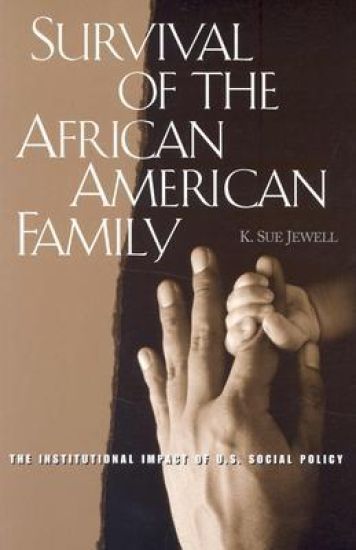
Survival of the African American Family

Survival of the African American Family

Karen S. Jewell

Praeger Publishers Inc
2003
sidottu
Challenging widely held beliefs, this provocative book offers nothing less than a blueprint for enhancing the social and economic status of African American families. Despite the implementation of liberal social policies in the 1960s and '70s, successive U.S. administrations continue to dash the hopes and expectations of African Americans, who remain subject to racism and discrimination. Arguing that social policies—and their absence—have affected the stability of the African American family, Jewell refutes the myth of significant progress for African American families emanating from the civil rights era, exposing the myriad reasons why greater advancement toward equality has not occurred in major societal institutions. Attention is focused on the extent to which African American families have been adversely affected by a process of assimilation that was socio-psychological rather than economic. This new edition builds upon the first edition, and is revised and expanded to reflect new and persistent institutional policies and practices of race, gender and class inequality facing African American families. The revised edition explores such issues as racial profiling, capital punishment, police brutality, predatory lending, No Child Left Behind, welfare reform, affirmative action and racial disparities in healthcare, academic achievement and home ownership. Jewell proposes a variety of strategies and policies that are needed to ensure greater social and economic equality and justice for African American families.
Survival of the African American Family

Survival of the African American Family

Karen S. Jewell

Praeger Publishers Inc
2003
nidottu
Challenging widely held beliefs, this provocative book offers nothing less than a blueprint for enhancing the social and economic status of African American families. Despite the implementation of liberal social policies in the 1960s and '70s, successive U.S. administrations continue to dash the hopes and expectations of African Americans, who remain subject to racism and discrimination. Arguing that social policies—and their absence—have affected the stability of the African American family, Jewell refutes the myth of significant progress for African American families emanating from the civil rights era, exposing the myriad reasons why greater advancement toward equality has not occurred in major societal institutions. Attention is focused on the extent to which African American families have been adversely affected by a process of assimilation that was socio-psychological rather than economic. This new edition builds upon the first edition, and is revised and expanded to reflect new and persistent institutional policies and practices of race, gender and class inequality facing African American families. The revised edition explores such issues as racial profiling, capital punishment, police brutality, predatory lending, No Child Left Behind, welfare reform, affirmative action and racial disparities in healthcare, academic achievement and home ownership. Jewell proposes a variety of strategies and policies that are needed to ensure greater social and economic equality and justice for African American families.
Through Students' Eyes

Through Students' Eyes

Karen B. Donaldson

Praeger Publishers Inc
1996
nidottu
This book explores racism in American schools and provides possible solutions to this widespread problem. Dr. Donaldson documents recent incidents of racism and explores the manifestations of racism and its toll on our society. The major part of Donaldson's work focuses on the role of the arts in antiracist/multicultural education. She brings together the views of leaders in multicultural education with her own insights to substantiate the importance of the arts in fighting racism. Dr. Donaldson focuses her research on high school students, discovering that even high achievers perceive racism as a deterrent to their learning. The students most often perceive racism as a problem caused by adults, and Donaldson shows that multicultural arts can empower students to stand against this racism. Finally, Donaldson explores the reeducation of teachers in an antiracist, interdisciplinary curriculum development and implementation pilot study.