

Kirjahaku
Etsi kirjoja tekijän nimen, kirjan nimen tai ISBN:n perusteella.
1000 tulosta hakusanalla Karin Offender
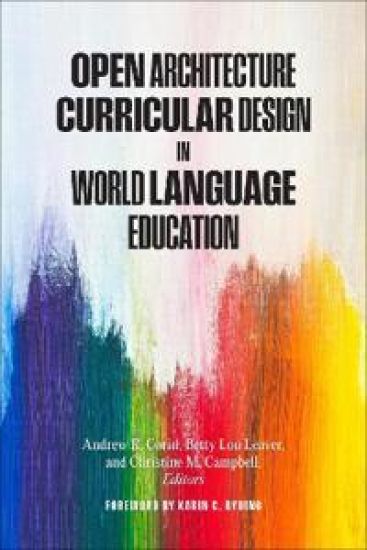
Open Architecture Curricular Design in World Language Education
Karin C. Ryding
GEORGETOWN UNIVERSITY PRESS
2025
sidottu
A guide to a textbook-free approach to world languages curriculums that will improve learning outcomesOpen architecture curricular design (OACD) is a textbook-free curricular design framework for teaching and learning world languages that integrates all the best practices in world language education to enhance learning efficiency and effectiveness. As editors and pioneers of this method, Corin, Leaver, and Campbell define OACD for world language instructors and second language acquisition researchers from middle school through higher education and beyond.The book's chapters demonstrate how to use OACD for a wide variety of languages and proficiency levels in government, service academy, and university programs. Topics covered include the use of authentic texts at all levels, learner involvement in the selection of content and activities, and methods of assessment and program evaluation.
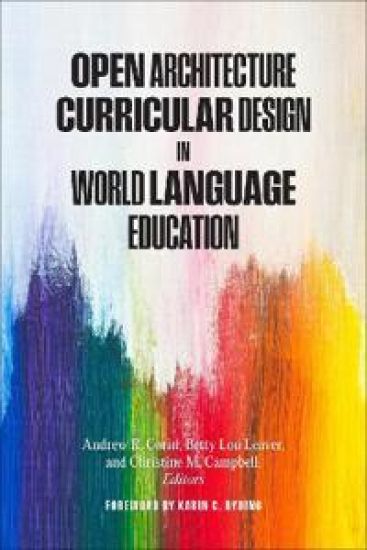
Open Architecture Curricular Design in World Language Education
Karin C. Ryding
GEORGETOWN UNIVERSITY PRESS
2025
pokkari
A guide to a textbook-free approach to world languages curriculums that will improve learning outcomes Open architecture curricular design (OACD) is a textbook-free curricular design framework for teaching and learning world languages that integrates all the best practices in world language education to enhance learning efficiency and effectiveness. As editors and pioneers of this method, Corin, Leaver, and Campbell define OACD for world language instructors and second language acquisition researchers from middle school through higher education and beyond. The book's chapters demonstrate how to use OACD for a wide variety of languages and proficiency levels in government, service academy, and university programs. Topics covered include the use of authentic texts at all levels, learner involvement in the selection of content and activities, and methods of assessment and program evaluation.





Moonlight Confessions: Heartfelt collection of poems dedicated to themes of love & loss.
Karin Cho
Absolute Author Publishing House
2020
nidottu
Moonlight Confessions is a collection of heart wrenching poems written by Karin Cho. Each page is filled with raw emotion and honesty as the author transforms her life struggles into pieces of art with poems, extended prose, and short stories about love, loss, and heartbreak.

Eigentlich sollte Matt eine Lektion erhalten. Er, der Frauen wie eine Ware behandelt. Lexy hatte sich mit ihrer besten Freundin Tess dazu verabredet, es diesem Kerl heimzuzahlen. Sie ahnt nicht, dass die Freundin l ngst dem dominanten Charme des Mannes erlegen ist, und geht so selbst in eine Falle.Hilflos ausgeliefert muss Lexy sich den verruchten Gel sten ihrer besten Freundin und ihres neuen Meisters stellen. Eine erniedrigend und zugleich lustvolle Erfahrung, die gef hrliche Gef hle wecken. Kann Lexy dem Mann auf Dauer widerstehen, oder wird sie am Ende seine Sklavin? Was wird aus ihrer Freundschaft zu Tess?

This book is really for all of you thirteen to twenty-fives out there who are grappling with sexuality. It will help you to get your bearings on all the chaos that's happening inside and out, to understand it better, and to make you more comfortable in taking the clear (and pleasant) actions that tumble out of that perspective. The whole world is all over the place when it comes to sex and sexuality, and so it shouldn't be surprising that we could use a little help. Hey Don't be bashful, open the book





Die Afrikaanse digkuns is lewendig en florerend. Karin Nieuwoudt plaas haar passie - haar lewe - en die hoogste standaarde in po sie op die tafel voor Afrikaanssprekendes en Afrikaanslesendes oor die hele w reld.L s haar treffende en soms ontroerende gedigte - en lees hulle dan weer.

Informed by years of research and on-the-ground reporting, Schools That Succeed is Karin Chenoweth’s most inspiring and compelling book yet—an essential read for educators who seek to break the stubborn connection between academic achievement and socioeconomic status.Chenoweth draws on her decade-long journey into neighborhood schools where low-income students and students of color are learning at unexpectedly high levels to reveal a key ingredient to their success: in one way or another, their leaders have confronted the traditional ways that schools are organized and adopted new systems, all focused on improvement. In vivid profiles of once-embattled schools, Chenoweth shows how school leaders doggedly and patiently reorganized internal systems in order to prioritize teaching and learning, resulting in improved outcomes that in many cases exceeded statewide averages.From how they use time to how they use money, schools that succeed combine a deep belief in the capacity of their students to achieve with deliberate systems focused on student needs. As a result, they create vibrant places “where teachers want to teach and students want to learn.”
Informed by years of research and on-the-ground reporting, Schools That Succeed is Karin Chenoweth’s most inspiring and compelling book yet—an essential read for educators who seek to break the stubborn connection between academic achievement and socioeconomic status.Chenoweth draws on her decade-long journey into neighborhood schools where low-income students and students of color are learning at unexpectedly high levels to reveal a key ingredient to their success: in one way or another, their leaders have confronted the traditional ways that schools are organized and adopted new systems, all focused on improvement. In vivid profiles of once-embattled schools, Chenoweth shows how school leaders doggedly and patiently reorganized internal systems in order to prioritize teaching and learning, resulting in improved outcomes that in many cases exceeded statewide averages.From how they use time to how they use money, schools that succeed combine a deep belief in the capacity of their students to achieve with deliberate systems focused on student needs. As a result, they create vibrant places “where teachers want to teach and students want to learn.”
In Districts That Succeed, long-time education writer Karin Chenoweth turns her attention from effective schools to effective districts. Leveraging new, cutting-edge national research on district performance as well as in-depth reporting, Chenoweth profiles five districts that have successfully broken the correlation between race, poverty, and achievement. Focusing on high performing or rapidly improving districts that serve children of color and children from low-income backgrounds, the book explores the common elements that have led to the districts’ successes, including leadership, processes, and systems. Districts That Succeed reveals that helping more students achieve is not a matter of adopting a program or practice. Rather, it requires developing a district-wide culture where all adults feel responsible for the academic well-being of students and adopt systems and processes that support that culture. Chenoweth explores how districts, from urban Chicago, Illinois to suburban Seaford, Delaware, have organized themselves to look at data to guide improvement. Her research highlights the essential role of districts in closing achievement gaps and illustrates how successful outliers can serve as resources for other districts. With important lessons for district leaders and policy makers alike, Chenoweth offers the hard-won wisdom of educators who understand the power of schools to, as one superintendent says, “change the path of poverty.”
In Districts That Succeed, long-time education writer Karin Chenoweth turns her attention from effective schools to effective districts. Leveraging new, cutting-edge national research on district performance as well as in-depth reporting, Chenoweth profiles five districts that have successfully broken the correlation between race, poverty, and achievement. Focusing on high performing or rapidly improving districts that serve children of color and children from low-income backgrounds, the book explores the common elements that have led to the districts’ successes, including leadership, processes, and systems. Districts That Succeed reveals that helping more students achieve is not a matter of adopting a program or practice. Rather, it requires developing a district-wide culture where all adults feel responsible for the academic well-being of students and adopt systems and processes that support that culture. Chenoweth explores how districts, from urban Chicago, Illinois to suburban Seaford, Delaware, have organized themselves to look at data to guide improvement. Her research highlights the essential role of districts in closing achievement gaps and illustrates how successful outliers can serve as resources for other districts. With important lessons for district leaders and policy makers alike, Chenoweth offers the hard-won wisdom of educators who understand the power of schools to, as one superintendent says, “change the path of poverty.”