Kirjojen hintavertailu. Mukana 11 244 527 kirjaa ja 12 kauppaa.

Kirjahaku

Etsi kirjoja tekijän nimen, kirjan nimen tai ISBN:n perusteella.

1000 tulosta hakusanalla Kay Jaybee

Modern Danish Architecture

Modern Danish Architecture

Kay 1893- Fisker

Hassell Street Press
2021
nidottu
This work has been selected by scholars as being culturally important and is part of the knowledge base of civilization as we know it.This work is in the public domain in the United States of America, and possibly other nations. Within the United States, you may freely copy and distribute this work, as no entity (individual or corporate) has a copyright on the body of the work.Scholars believe, and we concur, that this work is important enough to be preserved, reproduced, and made generally available to the public. To ensure a quality reading experience, this work has been proofread and republished using a format that seamlessly blends the original graphical elements with text in an easy-to-read typeface.We appreciate your support of the preservation process, and thank you for being an important part of keeping this knowledge alive and relevant.
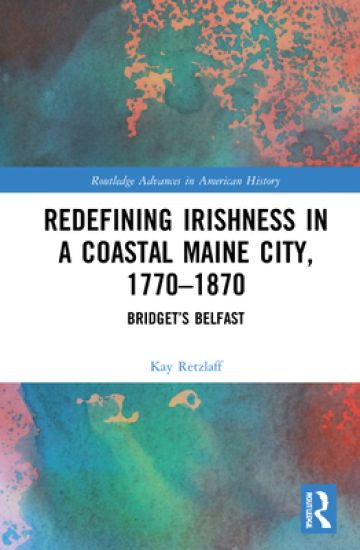
Redefining Irishness in a Coastal Maine City, 1770–1870
Redefining Irishness in a Coastal Maine City, 1770–1870: Bridget's Belfast examines how Irish immigrants shaped and reshaped their identity in a rural New England community. Forty percent of Irish immigrants to the United States settled in rural areas. Achieving success beyond large urban centers required distinctive ways of performing Irishness. Class, status, and gender were more significant than ethnicity. Close reading of diaries, newspapers, local histories, and public papers allows for nuanced understanding of immigrant lives amid stereotype and the nineteenth century evolution of a Scotch-Irish identity.
Redefining Irishness in a Coastal Maine City, 1770–1870
Redefining Irishness in a Coastal Maine City, 1770–1870: Bridget's Belfast examines how Irish immigrants shaped and reshaped their identity in a rural New England community. Forty percent of Irish immigrants to the United States settled in rural areas. Achieving success beyond large urban centers required distinctive ways of performing Irishness. Class, status, and gender were more significant than ethnicity. Close reading of diaries, newspapers, local histories, and public papers allows for nuanced understanding of immigrant lives amid stereotype and the nineteenth century evolution of a Scotch-Irish identity.
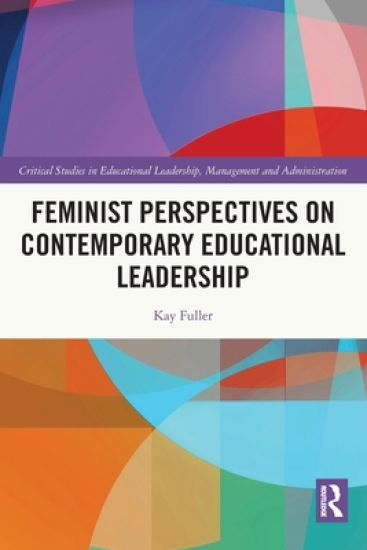
Feminist Perspectives on Contemporary Educational Leadership
This timely book explores how various feminist perspectives fruitfully explain women’s experience of educational leadership, drawing on a contemporary conceptualisation of fourth-wave feminism that is intersectional and inclusive. The book asks which and whose feminist theory is used to explain gender and feminism in educational leadership, management and administration (ELMA): the scholar’s, the research participant’s or a combination of the two in the co-construction of knowledge from an intersectional feminist perspective. It conceptualises intersectional and inclusive feminist perspectives on educational leadership, theorising research through a Black British feminist perspective, a gender and Islamic perspective and a queer theory perspective, depending on the self-identification of participants. It explores digital feminism and men’s pro-feminism. The book identifies feminist leadership praxis as a focus for future research and explores how leaders can draw on funds of knowledge, identity cultural wealth and lead and educate diverse populations of students. Highlighting the importance of intersectional feminist perspectives in ELMA, the book will appeal to scholars, researchers and postgraduate students in the fields of inclusive educational leadership and management, gender studies and feminism.
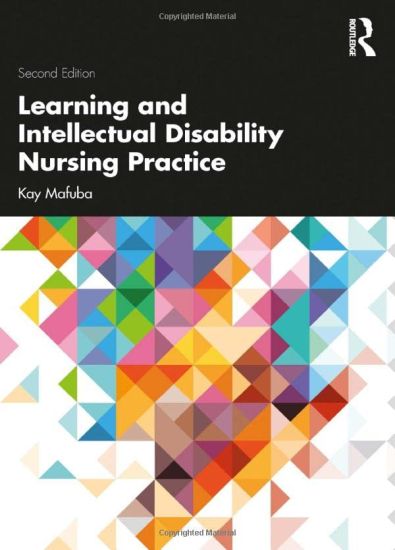
Learning and Intellectual Disability Nursing Practice
This well-respected core text provides a comprehensive solid foundation for students of nursing and practitioners who care for and or support people with learning/intellectual disabilities in a range of health and social care settings and scenarios. This book addresses learning/intellectual disability nursing from various perspectives, including historical and contemporary practice, health promotion, interventions for good mental health, people with profound disabilities and complex needs, care across the lifespan, and forensics. This new edition has been comprehensively updated throughout and now includes two entirely new chapters. One covers liaison nursing, and the other explores the future for learning/intellectual disability nursing. The book includes numerous case studies and learning activities to support the reader, as well as remaining clinically relevant. Uniquely this text is linked and benchmarked to the Nursing and Midwifery Councils, UK – Future Nurse Standards of Proficiency and the Nursing and Midwifery Board of Ireland’s Competencies for nursing students. This text is essential reading for anyone studying learning/intellectual disabilities at undergraduate and post-graduate levels; it will also be a useful resource for the wider family of nursing, as well as health and social care professionals.
Learning and Intellectual Disability Nursing Practice
This well-respected core text provides a comprehensive solid foundation for students of nursing and practitioners who care for and or support people with learning/intellectual disabilities in a range of health and social care settings and scenarios. This book addresses learning/intellectual disability nursing from various perspectives, including historical and contemporary practice, health promotion, interventions for good mental health, people with profound disabilities and complex needs, care across the lifespan, and forensics. This new edition has been comprehensively updated throughout and now includes two entirely new chapters. One covers liaison nursing, and the other explores the future for learning/intellectual disability nursing. The book includes numerous case studies and learning activities to support the reader, as well as remaining clinically relevant. Uniquely this text is linked and benchmarked to the Nursing and Midwifery Councils, UK – Future Nurse Standards of Proficiency and the Nursing and Midwifery Board of Ireland’s Competencies for nursing students. This text is essential reading for anyone studying learning/intellectual disabilities at undergraduate and post-graduate levels; it will also be a useful resource for the wider family of nursing, as well as health and social care professionals.
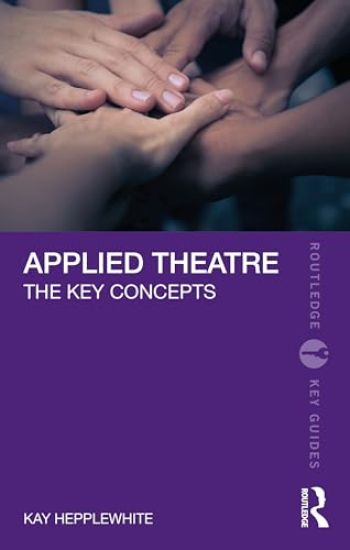
Applied Theatre

Applied Theatre

Kay Hepplewhite

TAYLOR FRANCIS LTD
2024
nidottu
This accessible book outlines the key ideas that define the global phenomenon of applied theatre, not only its theoretical underpinning, its origins and practice, but also providing eight real-life examples drawn from a diversity of forms and settings.The clearly arranged topic sections entitled When, What, Who, Why and Where emphasise the responsive nature of applied theatre, its social context and the importance of a beneficial outcome for participants, which can connect fields as disparate as health, criminal justice, education and migration. Labels and terms are explained, along with applied theatre’s core values, motivations and objectives, allowing the reader to build a coherent understanding of its distinguishing features.Applied Theatre: The Key Concepts is aimed at students, academics, artists and practitioners of applied theatre as well as those with an interest in this vital blend of social and creative practice.
Applied Theatre

Applied Theatre

Kay Hepplewhite

TAYLOR FRANCIS LTD
2024
sidottu
This accessible book outlines the key ideas that define the global phenomenon of applied theatre, not only its theoretical underpinning, its origins and practice, but also providing eight real-life examples drawn from a diversity of forms and settings.The clearly arranged topic sections entitled When, What, Who, Why and Where emphasise the responsive nature of applied theatre, its social context and the importance of a beneficial outcome for participants, which can connect fields as disparate as health, criminal justice, education and migration. Labels and terms are explained, along with applied theatre’s core values, motivations and objectives, allowing the reader to build a coherent understanding of its distinguishing features.Applied Theatre: The Key Concepts is aimed at students, academics, artists and practitioners of applied theatre as well as those with an interest in this vital blend of social and creative practice.
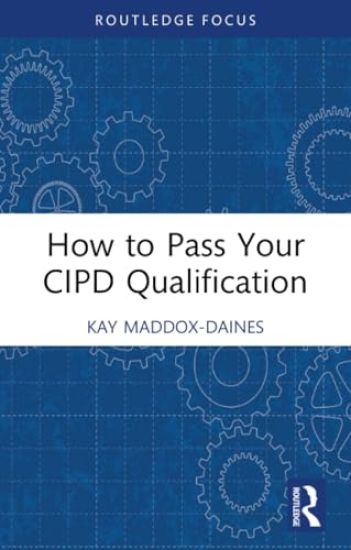
How to Pass Your CIPD Qualification

How to Pass Your CIPD Qualification

Kay Maddox-Daines

TAYLOR FRANCIS LTD
2024
nidottu
How to Pass Your CIPD Qualification is a concise practical, skills-based guide to getting the most out of your CIPD study programme. The step-by-step approach, and extensive knowledge of the author helps the reader plan their study and boost their chances of passing their assessments first time. The author draws on their wealth of experience working with CIPD students to help students decide on the best path for them, as well as how to get the most out of learning whether online or face-to-face.The book provides study tips on how to get started and walks the readers through the assessments at levels 3, 5 and 7. It includes chapters on referencing technique and academic writing, as well as a selection of tutor feedback to provide support in passing assignments. This is an essential guide for students undertaking CIPD assessments.*This book is not affiliated by or endorsed by the CIPD
How to Pass Your CIPD Qualification

How to Pass Your CIPD Qualification

Kay Maddox-Daines

TAYLOR FRANCIS LTD
2023
sidottu
How to Pass Your CIPD Qualification is a concise practical, skills-based guide to getting the most out of your CIPD study programme. The step-by-step approach, and extensive knowledge of the author helps the reader plan their study and boost their chances of passing their assessments first time. The author draws on their wealth of experience working with CIPD students to help students decide on the best path for them, as well as how to get the most out of learning whether online or face-to-face.The book provides study tips on how to get started and walks the readers through the assessments at levels 3, 5 and 7. It includes chapters on referencing technique and academic writing, as well as a selection of tutor feedback to provide support in passing assignments. This is an essential guide for students undertaking CIPD assessments.*This book is not affiliated by or endorsed by the CIPD